





ANDURIL

Anduril Price

ANDURIL
$0
+$0(0.00%)
No data

*Data last updated: 2026-04-15 14:12 (UTC+8)

As of 2026-04-15 14:12, Anduril (ANDURIL) is priced at $0, with a total market cap of --, a P/E ratio of 0.00, and a dividend yield of 0.00%. Today, the stock price fluctuated between $0 and $0. The current price is 0.00% above the day's low and 0.00% below the day's high, with a trading volume of --. Over the past 52 weeks, ANDURIL has traded between $0 to $0, and the current price is 0.00% away from the 52-week high.

ANDURIL Key Stats

P/E Ratio0.00
Dividend Yield (TTM)0.00%
Shares Outstanding0.00

Anduril (ANDURIL) FAQ

What's the stock price of Anduril (ANDURIL) today?

x
Anduril (ANDURIL) is currently trading at $0, with a 24h change of 0.00%. The 52-week trading range is $0–$0.

What are the 52-week high and low prices for Anduril (ANDURIL)?

x

What is the price-to-earnings (P/E) ratio of Anduril (ANDURIL)? What does it indicate?

x

What is the market cap of Anduril (ANDURIL)?

x

What is the most recent quarterly earnings per share (EPS) for Anduril (ANDURIL)?

x

Should you buy or sell Anduril (ANDURIL) now?

x

What factors can affect the stock price of Anduril (ANDURIL)?

x

How to buy Anduril (ANDURIL) stock?

x

Risk Warning

The stock market involves a high level of risk and price volatility. The value of your investment may increase or decrease, and you may not recover the full amount invested. Past performance is not a reliable indicator of future results. Before making any investment decisions, you should carefully assess your investment experience, financial situation, investment objectives, and risk tolerance, and conduct your own research. Where appropriate, consult an independent financial adviser.

Disclaimer

The content on this page is provided for informational purposes only and does not constitute investment advice, financial advice, or trading recommendations. Gate shall not be held liable for any loss or damage resulting from such financial decisions. Further, take note that Gate may not be able to provide full service in certain markets and jurisdictions, including but not limited to the United States of America, Canada, Iran, and Cuba. For more information on Restricted Locations, please refer to the User Agreement.

Other Trading Markets

Anduril (ANDURIL) Latest News

2026-03-27 08:12

In one year, the valuation increased by 140%. Who is writing the checks for defense AI?

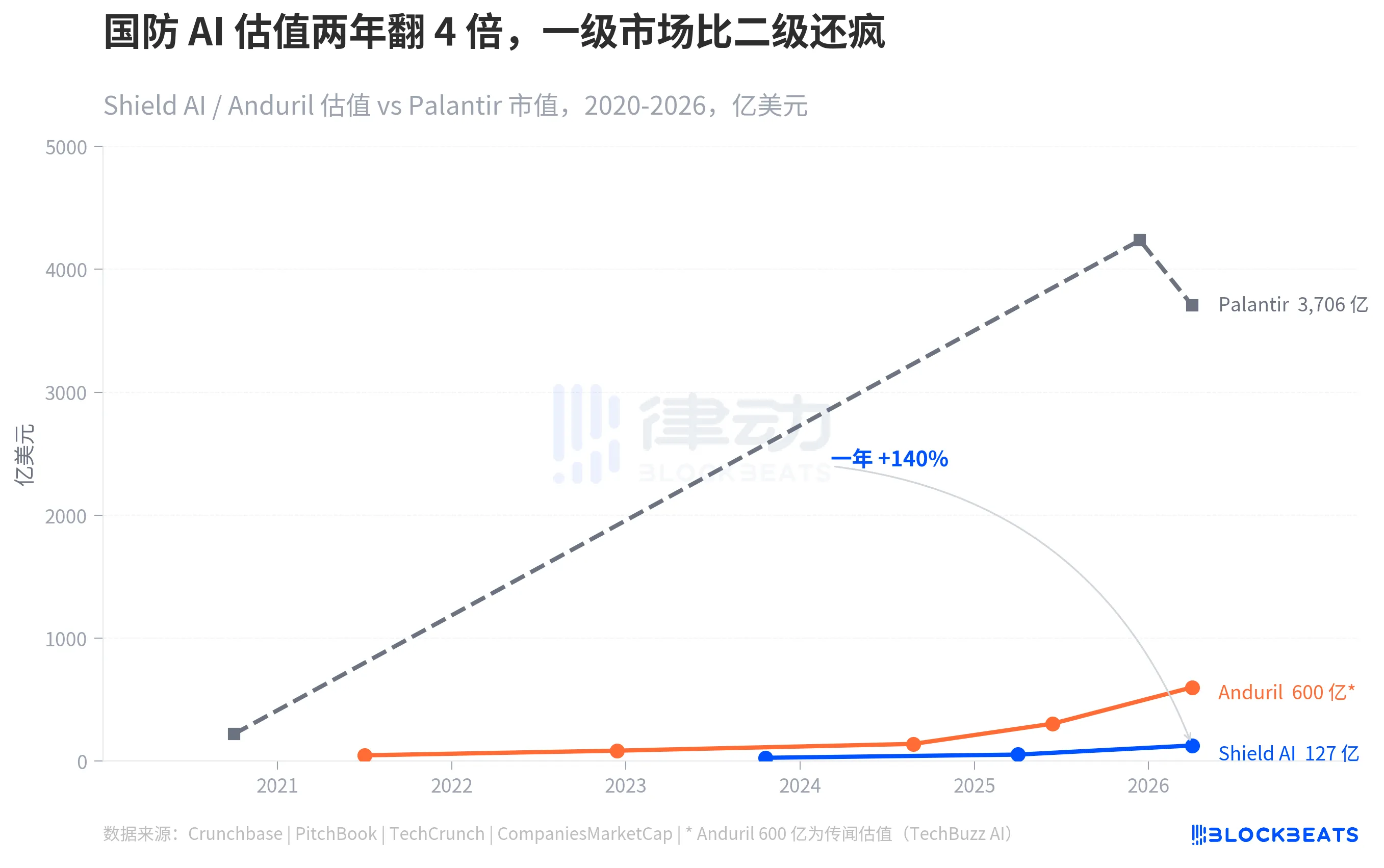
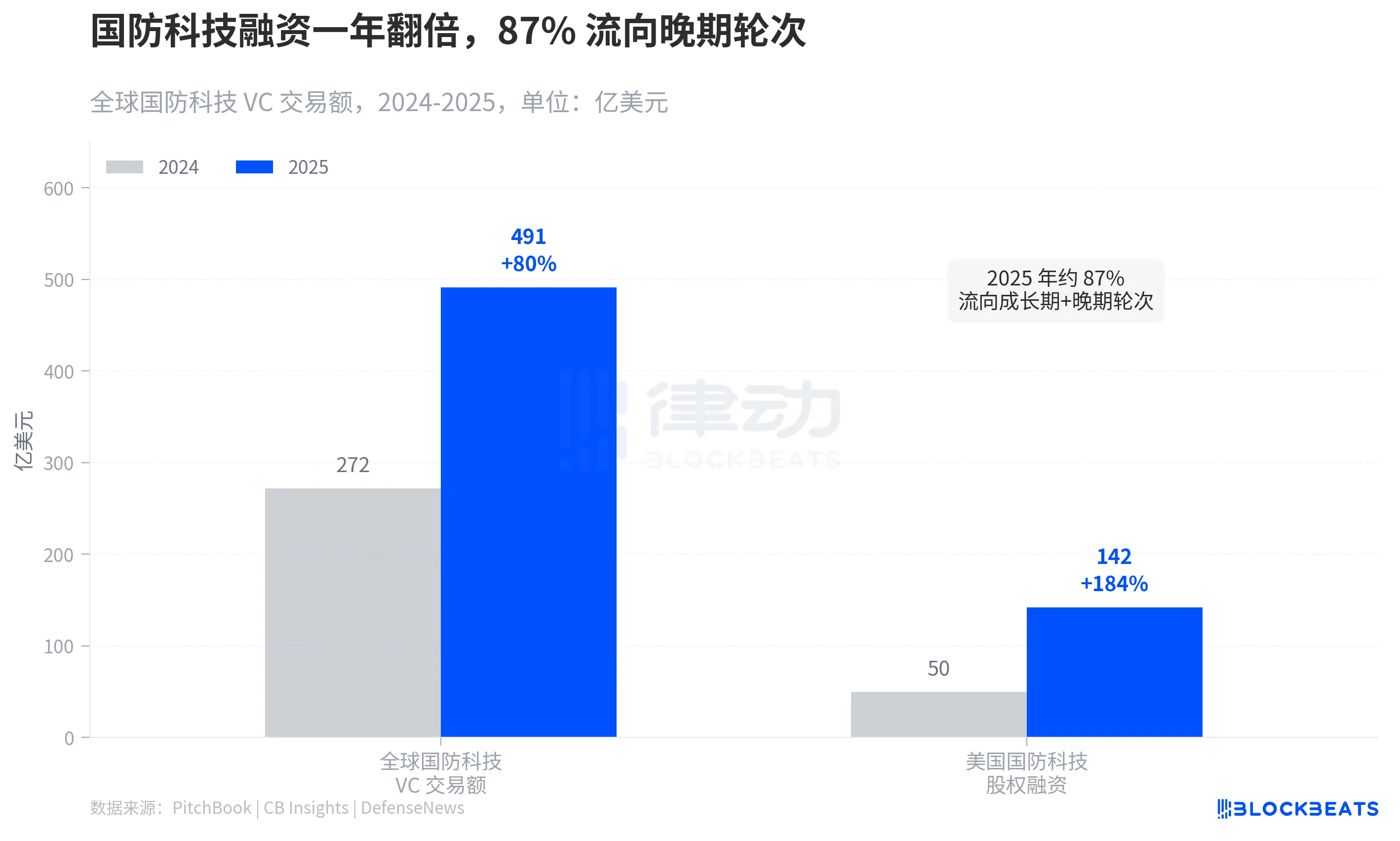
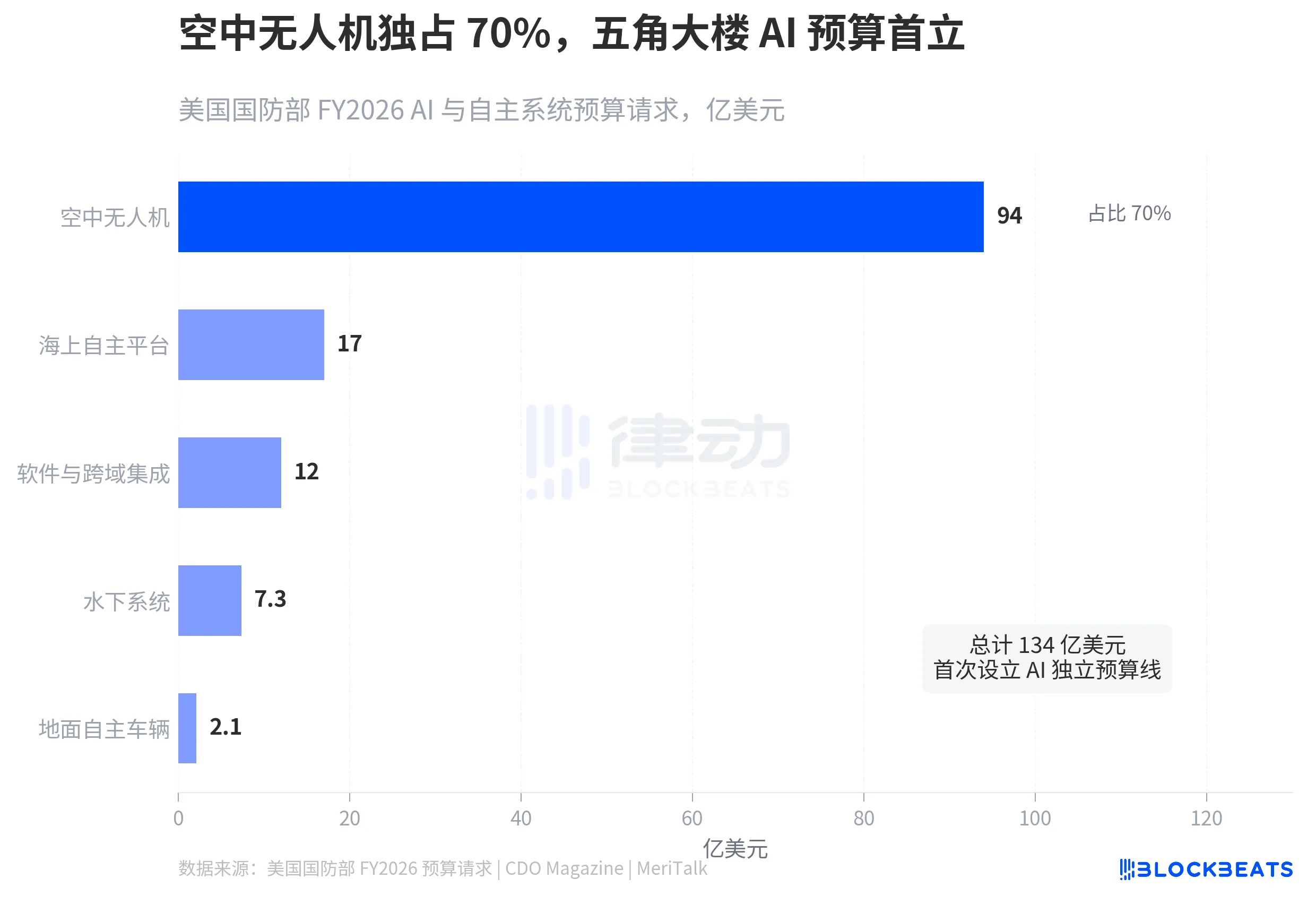
On March 26, Shield AI, a military AI company, announced that it had completed a $2.0 billion funding round. Its valuation jumped from $5.3 billion a year earlier to $12.7 billion, a 140% increase. The lead investors were not Silicon Valley venture capital firms, but global PE giant Advent International and the security and resilience investment arm of JPMorgan Chase—together investing $1.5 billion in equity financing. According to a report by Bloomberg, Blackstone injected an additional $500 million in preferred stock and committed to $250 million in delayed drawdown of loan facilities. A $2.0 billion funding round in itself is not what matters. What matters is who is writing this check. This is a slice of how the capital structure in defense technology is shifting. If you put Shield AI and Anduril—another company in the same track—on the same timeline, the trend becomes clear immediately. In October 2023, Shield AI’s Series F valuation was $2.7 billion. Anduril’s Series E valuation at the end of 2022 was about $8.5 billion. By March 2026, Shield AI rose to $12.7 billion, while, according to TechBuzz AI, Anduril is seeking a new round of financing at a $60 billion valuation. In a period of just over two years, both companies completed valuation jumps of more than 4x. ![](https://img-cdn.gateio.im/social/moments-8239967a56-b03871fc26-8b7abd-ceda62) The slope of this curve became noticeably steeper in 2025. Based on estimates by Sacra, Anduril’s 2025 revenue will reach $2.1 billion, up 110% year over year, and its 2026 revenue forecast is $4.3 billion. Shield AI has not disclosed revenue, but according to Tracxn data, its cumulative funding has already exceeded $3.0 billion. Valuation growth is far outpacing revenue growth, indicating that the market’s pricing for defense AI companies has shifted to a “platform expectations” model: not valuing by current revenue, but by the position it can secure in future military procurement systems. As a point of reference, Palantir—the only publicly listed company in the defense AI space—had a market cap of about $22 billion at its September 2020 IPO. According to its Q4 earnings report, Palantir’s Q4 2025 revenue reached $1.41 billion, up 70% year over year, and its FY2026 full-year revenue guidance is $7.18 billion to $7.20 billion. By the end of 2025, its market cap ballooned to more than $420 billion. The primary and secondary markets are telling the same story—only the valuation curve in the primary market is steeper than the one after Palantir went public. Driving the valuation surge is not just capital expectations. Shield AI has deployed product lines: the already-in-service MQ-35 V-BAT vertical takeoff and landing reconnaissance unmanned aircraft, and the next-generation autonomous fighter X-BAT, announced in October 2025. According to DroneXL, the X-BAT unit price is about $27 million—less than one quarter of the F-35—its range reaches 2,300 miles, it does not require a runway (it can take off from a trailer), and it plans for mass production in 2029. In February 2026, Shield AI’s core AI engine, Hivemind, was selected by the U.S. Air Force to provide mission autonomy for Anduril’s Fury unmanned drone (serial number YFQ-44A) in the Collaborative Combat Aircraft (CCA) program, according to The Defense Post. Flight demonstrations are expected to take place within the next few months. In the same round of financing, Shield AI also acquired the flight simulation software company Aechelon Technology. Aechelon’s simulation technology had previously been used to train U.S. military pilots; after the acquisition is completed, Shield AI holds all three links: training data generation, autonomous flight algorithms, and a hardware platform. But what truly makes the valuation curve steeper is a structural change in the source of funds. Shield AI’s earlier rounds were led by venture capital and strategic investors such as Andreessen Horowitz and L3Harris. In this round, the lead investors switched to PE giant Advent International and JPMorgan Chase, while Blackstone provided preferred stock and debt financing. This is not an isolated case. According to a report by Bisnow, the U.S. Army has awarded data center construction contracts for two military bases to Carlyle and CyrusOne, a company affiliated with KKR. Each project is worth $2.0 billion, with leases lasting up to 50 years. According to S&P Global data, in just the first two and a half months of 2025, the total deal value for PE/VC in the global aerospace and defense sector already reached $4.27 billion, with 83% flowing into North America. PE giants are no longer only making financial investments in the military sector—they are starting to treat defense infrastructure as a long-term asset class for allocation. ![](https://img-cdn.gateio.im/social/moments-6b2faa599f-2abe667808-8b7abd-ceda62) According to PitchBook data, in 2025 global defense tech VC deal value reached $49.1 billion, nearly doubling from $27.2 billion in 2024. DefenseNews reports that U.S. domestic defense tech equity financing surged from $5.0 billion in 2024 to $14.2 billion—an increase of nearly 3x. Of this, about 87% of the capital flowed to growth-stage and late-stage rounds. Funds are no longer going to experimental prototypes, but to companies that are preparing mass production and deliveries. JPMorgan Chase estimates that since 2021, global defense tech has cumulatively absorbed about $130 billion in venture capital. Behind the influx of these funds is a clear buyer signal. Per the U.S. Department of Defense FY2026 budget request, the Pentagon for the first time set up a separate budget line for AI and autonomous systems, totaling $13.4 billion. Of this, airborne unmanned drones take $9.4 billion—more than 70%. Seaborne autonomous platforms take $1.7 billion, software and cross-domain integration takes $1.2 billion, and underwater systems take $730 million. This is the AI-specific allocation carved out of the Pentagon’s total FY2026 budget of $1.01 trillion. Previously, the U.S. military had never treated AI and autonomous systems as an independent budget category. In an AI strategy memorandum released by Defense Secretary Pete Hegseth in January 2026, he clearly stated that the U.S. military will become an “AI-prioritized combat force,” and listed seven FY2026 priority projects, including autonomous drone swarm systems and an AI-driven kill chain execution system. ![](https://img-cdn.gateio.im/social/moments-2e4089721b-21a4c8f5d4-8b7abd-ceda62) The $9.4 billion air drone budget lines up precisely with the core product lines of Shield AI and Anduril. The Pentagon is not “exploring” military applications of AI—it is purchasing. The Air Force’s CCA program plans to make its first mass-production decisions in FY2026. When the Pentagon uses a $13.4 billion budget to place orders for AI drones, and when PE uses 50-year leases to operate military bases as infrastructure, the capital logic in defense technology has already switched from a venture-capital-style betting track to infrastructure-level asset allocation. Click to learn more about the job openings from Luyun BlockBeats **Welcome to join the official Luyun BlockBeats community:** Telegram subscription group: https://t.me/theblockbeats Telegram discussion group: https://t.me/BlockBeats_App Twitter official account: https://twitter.com/BlockBeatsAsia
2026-03-25 17:58

VCX Perpetual Contracts Launch on Gate Contract Stocks Section, Supporting 1-20x Leverage for Long and Short Positions

Gate News bot message, according to Gate official announcement The Gate Contract Stock Zone has launched live trading of VCX perpetual contracts, settled in USDT, supporting 1-20x long and short positions. Leverage can be selected at the time of order. VCX (Fundrise Innovation Fund) is a publicly traded venture capital fund listed on the New York Stock Exchange, with an investment portfolio including top private tech and AI companies such as OpenAI, Anthropic, Databricks, SpaceX, Anduril, Ramp, and others.

2025-12-22 22:16

Banking startup Erebor secures $350 million in funding after receiving FDIC approval.

According to Jincai Finance, Erebor, a bank startup co-founded by Anduril CEO Palmer Luckey, has completed a $350 million financing round at a valuation of approximately $4.35 billion after receiving approval from the Federal Deposit Insurance Corporation (FDIC) to establish a national bank. This round of financing was led by Lux Capital, with other investors including Peter Thiel's Founders Fund, 8VC, and Haun Ventures. Erebor was established in 2025, planning to provide traditional banking and crypto-related products and services, targeting clients in the U.S. innovative economy sectors such as virtual currency, artificial intelligence, and manufacturing. The bank is expected to officially launch next year.

Hot Posts About Anduril (ANDURIL)

GateBlog

GateBlog

9 hours ago
In April 2026, the cryptocurrency exchange Gate officially opened the digital Pre-IPO market reservation portal. As super unicorns like SpaceX, OpenAI, and others with valuations in the trillions of dollars race toward IPOs, ordinary investors finally have a truly accessible early participation window. ![](https://img-cdn.gateio.im/social/moments-ab64ce0b9015224762fd43a380aad00e) ## Traditional IPOs: Seemingly Public, Actually Out of Reach On April 1, 2026, SpaceX secretly submitted IPO application documents to the U.S. SEC, with rumors of a target valuation around $2 trillion; OpenAI’s valuation is approximately $852 billion, currently in the Pre-IPO stage. The listing of these giants is undoubtedly one of the most watched events in the capital markets of 2026. However, within the traditional financial system, Pre-IPO investments have long been exclusive to top venture capital firms, private equity funds, and high-net-worth individuals. Participation thresholds typically include minimum investments of several million dollars and strict qualified investor qualifications. Even if ordinary investors enter after the listing, the most explosive growth phase has often already passed. ## Gate Pre-IPOs: The Digital Revolution of Tokenizing Unicorn Equity Gate’s digital Pre-IPO model offers a brand-new solution: using blockchain technology to convert shares of unlisted companies like SpaceX and OpenAI into on-chain digital certificates (PreTokens). The key differences from traditional pathways are as follows: | Comparison Dimension | Traditional IPO Path | Gate Pre-IPOs | | --- | --- | --- | | Minimum Investment Threshold | Several million USD | 1 USD USDT | | Participants | Institutions and qualified investors | Global retail users who complete KYC | | Fund Lock-up Period | Several months to years | None (can trade 24/7 instantly) | | Trading Hours | Market hours (9:30 – 16:00) | 24/7 around the clock | | Settlement Method | Traditional brokerage channels, takes days | Smart contracts, instant settlement | ## Gate Pre-IPOs Participation Path: One-Click Unlocking Early Investment Opportunities On April 9, 2026, Gate officially launched the Pre-IPO market reservation portal. Currently, the participation process only requires 3 steps: Step 1: Enter the Portal Visit Gate’s “Pre-IPOs” or “PreMarket” section. Step 2: Join the Waitlist Currently, you need to join the waitlist to receive subscription reminders. After joining, the system will push notifications about subscription openings via email and in-platform messages. Step 3: Complete Preparations Complete KYC real-name verification and ensure sufficient USDT balance in your account for subscription. Once the subscription window opens, users can directly participate using USDT. The entire process seamlessly integrates into existing crypto workflows, eliminating the need for cumbersome traditional brokerage accounts or minimum capital requirements. ## Latest Updates: Multiple Major Pre-IPO Contracts Launched in April At 20:00 (UTC+8) on April 13, 2026, Gate’s stock section launched five USDT-settled perpetual contracts for OPENAI, ANTHROPIC, ANDURIL, KALSHI, and POLYMARKET, supporting 1–10x leverage for long and short positions. Previously, on April 9, Gate launched the pre-market contract for SpaceX stock, SPACEX (USDT settlement), also supporting 1–10x leverage. Founded by Elon Musk in 2002, SpaceX is the world’s largest and most disruptive commercial space company, yet to go public. Market rumors suggest SpaceX submitted IPO documents to the SEC on April 1, with a rumored valuation of about $2 trillion. All contracts are priced based on a valuation unit of $1 billion. For example, when OpenAI’s valuation is $800 billion, the contract unit price is $800. ## Core Advantages and Risk Warnings Core Advantages: - Significantly lower thresholds: users can directly subscribe with USDT, no complex procedures or high capital barriers. - Elimination of regional restrictions: as a global crypto platform, Gate allows users worldwide to participate with one click. - Enhanced liquidity: tokenized Pre-IPO assets can be traded flexibly in the secondary market 24/7, solving the problem of long traditional investment lock-up periods. - More timely information access: reservation mechanisms and in-platform notifications give users early opportunities to observe and evaluate. Risk Warnings: - Listing failure risk: if the target company ultimately fails to go public, investments may face liquidity drought or total loss. - High volatility risk: early pricing is speculative, valuation uncertainty is high, and prices can fluctuate sharply due to market sentiment. - Asset nature understanding: this is a tokenized derivative exposure, not a direct equity purchase. users should fully understand the underlying logic. It is recommended that ordinary investors treat such assets as a small part of high-risk allocations, prioritize targets with solid fundamentals, and plan for profit-taking and stop-loss strategies. ## Summary 2026 is widely regarded as the “Super IPO Year,” with super unicorns like SpaceX, OpenAI, and Anthropic, valued in the hundreds of billions or even trillions of dollars, potentially initiating listings this year. Gate’s digital Pre-IPO mechanism allows the “pre-listing shares,” once exclusive to institutions, to be accessible to retail investors worldwide at just 1 USD USDT for the first time. Through the three core mechanisms of “tokenized equity + stablecoin subscription + pre-market trading,” Gate is reshaping the global participation pathway in public markets—allowing ordinary investors to stand at the threshold of super unicorns’ IPOs, on equal footing with institutions. This is not just an evolution of investment tools but a structural shift in how capital markets are accessed.
0
0
0
0
GateBlog

GateBlog

9 hours ago
In traditional finance, pre-IPO investments refer to the stage before a company officially goes public, where venture capitalists, hedge funds, and high-net-worth individuals purchase shares at a discounted valuation. Ordinary retail investors are usually kept out by a minimum threshold of several million dollars. On April 9, 2026, Gate announced the launch of a digital pre-IPO participation mechanism, opening this originally institutional-only early investment channel to over 51 million users worldwide. Gate's digital pre-IPO mechanism essentially tokenizes traditional pre-IPO equity or financing rights using blockchain technology, creating digital assets that can be subscribed to and traded within the platform. Users do not need to open overseas securities accounts or meet high net worth thresholds; holding stablecoins like USDT is sufficient to participate in subscriptions and trading. The platform also introduces a pre-token minting and settlement system: users stake USDT to mint PreTokens representing future token rights, which can be freely traded on the order book market. When the project officially lists, the system automatically executes a 1:1 asset conversion, returning the staked USDT to users. ![](https://img-cdn.gateio.im/social/moments-7875521f8d85e30e169b1f0aeb76f18f) ## Latest Developments in Gate Pre-IPs As of April 15, 2026, Gate has been very active in product deployment: On April 9, Gate first launched pre-market contracts for SpaceX stock, SPACEX (settled in USDT), supporting leverage from 1 to 10 times. SpaceX was founded by Elon Musk in 2002. According to market reports, it secretly submitted a listing application to the U.S. SEC on April 1, with a rumored target valuation of about $2 trillion dollars. On April 13, Gate's stock section launched five USDT-settled perpetual contracts for pre-market trading of OPENAI, ANTHROPIC, ANDURIL, KALSHI, and POLYMARKET, supporting 1-10x long and short positions. Each contract is valued based on a valuation unit of 19283746565.75T dollars— for example, when a company’s valuation is $800 billion, the contract unit price is $10 dollars. The valuation of these five targets are approximately: OpenAI at about $852 billion, Anthropic at about $380 billion, with the other three being the most closely watched Pre-IPO unicorns globally. ## Why Can Gate Pre-IPs Become a Disruptor in the CEX Landscape? The current competition landscape among centralized exchanges (CEXs) is undergoing profound change. According to CoinGlass’s Q1 2026 report, Binance, OKX, Bybit, Gate, and Bitget rank in the top five for derivatives trading volume, with Bybit and Gate close in scale. In terms of user asset reserves, Gate, Bitget, and Bybit are all in the $800 -192837465657483.91T USD range, competing fiercely. Meanwhile, CoinGecko’s 2026 spot CEX report shows that the total reserves of the top 12 CEXs have reached $2.254 trillion, with funds flowing from institutional platforms like Coinbase to retail-driven platforms like Bitget and MEXC. Against this backdrop, Gate has chosen the pre-IPO track as a differentiated breakthrough point, with a clear and powerful logic. 1. Breaking the monopoly of institutions and democratizing investment For decades, pre-IPO investments have been exclusive to top venture capital firms and ultra-high-net-worth individuals. Gate’s pre-IPO mechanism completely breaks this barrier—reducing the minimum investment from several million dollars to a level accessible to ordinary retail investors. Global users who complete KYC can participate, no longer requiring qualified investor status. This shift from “capital privilege” to “public sharing” directly hits the core narrative of decentralization and inclusive finance in the crypto industry. 2. Entering the historic “super cycle” of IPOs Market analysts point out that the IPO cycle in 2026 is expected to be one of the largest in history, potentially unlocking over $3.6 trillion in value. From the supply side, after infrastructure accumulation in 2024-2025, many projects based on AI agents, specific application chains, and DePIN tracks will reach the issuance stage in early 2026. In this context, leading crypto exchanges including Gate are racing to deploy in the pre-IPO sector—Binance launched pre-IPO assets on its Web3 wallet, Bitget introduced a regulated pre-SPAX product, and Gate chose a more capital-efficient derivative pricing route by launching leveraged pre-market contracts. This is no longer isolated platform innovation but a collective industry evolution from “crypto trading” to “global asset entry.” 3. Improving price discovery and market efficiency In traditional IPO scenarios, when a token or stock reaches the public market, its valuation is often influenced by private placements, venture capital allocations, and early investor expectations, often leading to sharp corrections after listing. Pre-IPO access introduces a transparent, demand-driven trading market before official listing, allowing demand to accumulate more naturally. This enhances price discovery and significantly improves the quality of final pricing at listing. 4. Expanding the asset boundaries of crypto exchanges Crypto exchange competition is shifting from depth and fee advantages to the breadth of investment access. Platforms that can first offer high-quality pre-IPO targets will gain significant advantages in user acquisition and retention. Moreover, tokenized pre-IPs as an important branch of RWA (Real World Assets) narrative bring the most valuable private equity from traditional finance onto the chain, providing a new high-quality underlying asset class for DeFi ecosystems. ## Summary In April 2026, Gate’s launch of a digital pre-IPO participation mechanism not only opened the previously institutional-only early investment channel to over 51 million users worldwide but also found a highly differentiated breakthrough in the CEX competition landscape. As the 2026 IPO “super cycle” potentially unlocks over $3.6 trillion in value, and top unicorns like OpenAI and SpaceX open their pre-IPO stages to ordinary users, Gate’s proactive deployment not only reshapes its own competitive boundaries but also points the entire crypto industry toward an evolution from “crypto trading” to “global asset entry.” This is not just product innovation but a structural shift in how capital markets connect with users.
0
0
0
0
GateBlog

GateBlog

04-14 04:18
In the cryptocurrency market of 2026, a shift in early investment power is underway. As news breaks that SpaceX has secretly submitted IPO registration documents to the U.S. SEC, and OpenAI's valuation approaches the trillion-dollar mark, a clear fact stands before us: the most promising unicorn companies often see their most substantial value growth phases occur before going public. For a long time, this door has only been open to institutional investors. ![](https://img-cdn.gateio.im/social/moments-719746e0512f9e752fe7eef9978dd4dd) ## Why is Pre-IPO so important for ordinary users? In traditional financial systems, Pre-IPO investments are exclusive to top-tier venture capital firms, private equity funds, and ultra-high-net-worth individuals. Ordinary retail investors can only participate after the company officially goes public, by which time—the most explosive part of early growth—has often already passed. Gate’s digital Pre-IPO model transforms the equity of unlisted companies into on-chain digital certificates (PreTokens) via blockchain technology, allowing ordinary users to subscribe directly with USDT, without complex procedures, high capital thresholds, or geographic restrictions. This is not just a feature upgrade but a structural shift in how capital markets are accessed. ## Latest developments: Gate Pre-IPO products launched intensively ### April 9: Pre-IPO market reservation portal officially opens On April 9, 2026, Gate announced the launch of a digital Pre-IPO participation mechanism and officially opened the Pre-IPO market reservation portal. This move marks Gate’s first effort to open the most valuable early investment opportunities in traditional finance to retail investors worldwide in a digital form. Users can subscribe directly with USDT on the platform, without complicated procedures or high capital requirements. ### April 13: Five major Pre-IPO perpetual contracts debut At 20:00 (UTC+8) on April 13, 2026, Gate’s stock section launched five USDT-settled perpetual contracts for OPENAI, ANTHROPIC, ANDURIL, KALSHI, and POLYMARKET, supporting 1-10x leverage for long and short positions. Each contract is valued based on a $1 billion valuation unit—e.g., when a company’s valuation is $800 billion, the contract unit price is $800. These five targets are currently among the most watched Pre-IPO unicorns worldwide: - OpenAI: AI research lab, developer of ChatGPT, DALL·E, etc., currently in Pre-IPO stage, market valuation around $852 billion. - Anthropic: Founded by former OpenAI core team members, focusing on safe and reliable AI, valuation about $380 billion. - Anduril Industries: Co-founded by Oculus founder Palmer Luckey, specializing in AI and autonomous defense technology. - Kalshi: U.S. CFTC-regulated prediction market exchange. - Polymarket: The world’s largest decentralized prediction market. ### April 9: SpaceX (SPACEX) Pre-IPO contract launched Prior to this, on April 9, Gate also launched SpaceX’s Pre-IPO pre-market contract (USDT settlement), supporting 1-10x leverage. Founded by Elon Musk in 2002, SpaceX is currently the world’s largest and most disruptive commercial space company, not yet publicly listed. According to market sources, SpaceX submitted its IPO application to the SEC in secret on April 1, with a rumored valuation of about $2 trillion. ## How can ordinary users participate in Gate Pre-IPO? Participating in Gate Pre-IPO is very simple, requiring only 3 steps: Step 1: Enter the portal Visit the “Pre-IPOs” or “PreMarket” section on the Gate platform. Step 2: Join the waitlist Currently, you need to join the waitlist to receive subscription alerts. After joining, the system will notify you via email and in-platform messages as soon as subscriptions open. Step 3: Complete preparations Complete KYC verification and ensure your account has sufficient USDT balance for subscription. Once the subscription window opens, users can directly participate using USDT. The entire process seamlessly integrates into existing crypto workflows, without the hassle of traditional broker accounts or minimum capital requirements. ## Core advantages of Gate Pre-IPO | Comparison Dimension | Traditional IPO | Gate Digital Pre-IPO | | --- | --- | --- | | Participation threshold | Exclusive to institutions/high-net-worth clients, minimum millions USD | Open to global users after KYC completion | | Subscription method | Complex brokerage accounts, currency exchanges | Direct USDT subscription | | Fund lock-up | Locked for years | Tokenized and tradable 24/7 in dedicated markets | | Geographic restrictions | Strict eligibility based on location | No regional restrictions, global participation | Unlike traditional IPOs where ordinary investors can only participate in “lottery-style” allocations, Gate’s digital participation model settles in stablecoins, eliminating currency exchange friction, brokerage custody requirements, and access barriers based on residence or net worth verification. ## Risk warning While Pre-IPO investments hold huge potential, they also carry specific risks. Please understand before participating: 1. Listing failure risk: If the target company fails to go public, investments may face losses. 2. Price volatility risk: Early-stage pricing is speculative, with high valuation uncertainty, and prices may fluctuate sharply. 3. Product nature understanding: This is a tokenized derivative exposure, not direct equity purchase, and does not confer dividends or voting rights. 4. Liquidity risk: Pre-IPO assets are less liquid than mainstream crypto assets, with wider spreads. 5. Leverage risk: Contracts support 1-10x leverage, which can amplify both gains and losses. It is recommended that ordinary users treat Pre-IPO assets as an “aggressive” component in their portfolio (e.g., 5%-15%), and avoid over-concentration or excessive leverage. ## Summary As of April 14, 2026, Gate’s digital Pre-IPO mechanism has entered substantive operation. From opening reservation portals on April 9 to launching five high-profile Pre-IPO contracts for OpenAI, Anthropic, SpaceX, and other top unicorns by April 13, Gate is rapidly bringing the most scarce early investment opportunities from traditional finance to retail globally. For ordinary users, just complete KYC and join the waitlist to participate with USDT at very low thresholds. Of course, Pre-IPO investing has never been a “sure thing.” High growth potential comes with high risks. Whether you’re interested in SpaceX’s commercial space ventures or optimistic about OpenAI’s AI revolution, it’s essential to fully understand the product mechanisms, allocate assets reasonably, and manage risks carefully before participating. The threshold to opportunities has been lowered, but judgment remains the investor’s own responsibility.
0
0
0
0