# rsETHAttackUpdate

92.38K
#rsETHAttackUpdate
#rsETHAttackUpdate: The Bridge Failure That Shook DeFi
The rsETH exploit has become one of the most serious security incidents in DeFi during 2026, exposing how dangerous weak cross-chain infrastructure can be. On April 18, KelpDAO’s rsETH protocol suffered a massive $292 million exploit after attackers manipulated its LayerZero bridge system and minted 116,500 unbacked rsETH tokens—equal to nearly 18% of total supply.
This was not a simple smart contract bug. It was a deep infrastructure-level attack that targeted the trust layer of cross-chain verification itself.
The cor
ZRO-2.76%
AAVE-0.76%
ETH-0.43%
ARB-1.35%
post-image
  • Reward
  • Comment
  • Repost
  • Share
#rsETHAttackUpdate : Technical Analysis of DeFi's Largest Cross-Chain Attack
On April18,2026, KelpDAO's rsETH protocol suffered a $292 million exploit through its LayerZero bridge, marking one of DeFi's most significant security failures. This briefing examines the attack vectors, cascading effects, and structural vulnerabilities exposed.
Attack Overview
The attacker minted116,500 unbacked rsETH tokens (18% of total supply) by compromising KelpDAO's cross-chain infrastructure. The exploit targeted a critical architectural weakness: KelpDAO's bridge operated with a1-of-1 DVN (Decentralized Vali
ZRO-2.76%
AAVE-0.76%
ETH-0.43%
ARB-1.35%
Dubai_Prince
#rsETHAttackUpdate : Technical Analysis of DeFi's Largest Cross-Chain Attack
On April18,2026, KelpDAO's rsETH protocol suffered a $292 million exploit through its LayerZero bridge, marking one of DeFi's most significant security failures. This briefing examines the attack vectors, cascading effects, and structural vulnerabilities exposed.
Attack Overview
The attacker minted116,500 unbacked rsETH tokens (18% of total supply) by compromising KelpDAO's cross-chain infrastructure. The exploit targeted a critical architectural weakness: KelpDAO's bridge operated with a1-of-1 DVN (Decentralized Validator Network) configuration, making LayerZero Labs the sole verification entity for cross-chain messages.
Technical Execution
The attack followed a sophisticated multi-phase approach:
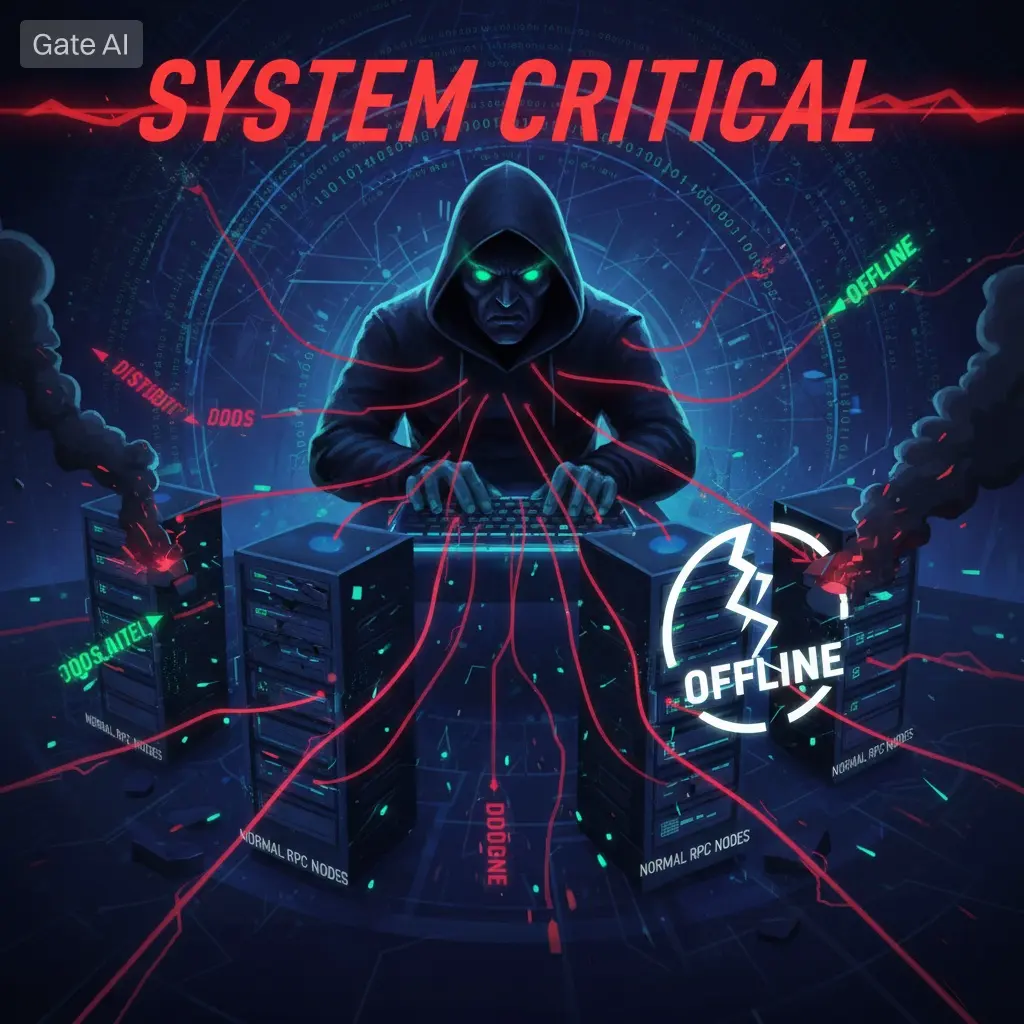
1. Infrastructure Penetration: Attackers gained access to RPC nodes used by the LayerZero DVN, replacing legitimate op-geth binaries with malicious versions that served forged data exclusively to the DVN's IP addresses.
2. Traffic Manipulation: Through DDoS attacks on clean nodes, attackers forced complete failover to compromised infrastructure, ensuring all verification traffic routed through poisoned endpoints.
3. Message Forgery: A fabricated cross-chain message claiming origin from KelpDAO's Unichain deployment was validated against manipulated on-chain state, passing the2-of-3 multisig quorum.
4. Token Extraction: The bridge released116,500 rsETH to attacker-controlled addresses in a single transaction, creating unbacked tokens with no underlying collateral.
Attribution analysis points to North Korea's Lazarus Group (TraderTraitor), known for advanced cryptocurrency exploits targeting financial infrastructure.
Financial Cascading Effects
The attacker immediately deployed unbacked rsETH as collateral across Aave V3 and V4 markets:
- Borrowed52,834 WETH on Ethereum mainnet
- Borrowed29,782 WETH plus821 wstETH on Arbitrum
- Total extraction: approximately83,427 WETH and wstETHThis created substantial bad debt within Aave's lending markets. The protocol responded within hours by freezing rsETH markets and removing borrowing power, but damage extended across DeFi:
- Over $7 billion withdrawn from leading protocols
- Aave lost $6.2 billion (23% of TVL)
- Similar outflows hit Morpho, Sky, and Jupiter Lend
- Panic withdrawals affected even unaffected protocols on Solana Emergency Responses
Multiple protocols and networks implemented damage control measures:
- KelpDAO paused rsETH contracts across mainnet and L2s
- Arbitrum froze30,000 ETH ($71 million) linked to exploit addresses
- Tether froze $344 million USDT across two Tron wallets
- Aave community initiated discussions on permanent rsETH delisting Structural Vulnerabilities Exposed
The exploit reveals fundamental weaknesses in DeFi's cross-chain architecture:
Centralized Validation: Despite decentralization marketing, bridges often rely on concentrated verification. The1-of-1 DVN configuration created a catastrophic single point of failure.
Trust Boundary Failures: The exploit occurred at LayerZero's message verification and KelpDAO's bridge acceptance intersection, demonstrating how modular security without robust standards creates systemic risk.
Composability Amplification: Attackers leveraged unbacked tokens across multiple protocols, showing how DeFi's interconnected nature magnifies individual failures.
Governance Reality Gap: DeFi operates where theoretical decentralization masks practical control concentration, complicating accountability and emergency response.
Industry Implications
This incident carries significant consequences for DeFi development:
Security Standards: Cross-chain bridges require distributed validation mechanisms and elimination of single points of failure. The industry must establish minimum security standards for bridge architecture.
Risk Assessment: Lending protocols need real-time collateral verification and stricter assessment of bridged asset backing before accepting deposits.
Emergency Protocols: Rapid market freezing capabilities are essential, but reactive measures cannot substitute for preventive security architecture.
Regulatory Scrutiny: Exploits of this scale accelerate regulatory attention and compliance pressure on DeFi protocols.
Accounting Challenges: Auditors face fundamental difficulties evaluating control effectiveness when validation relies on potentially compromised off-chain infrastructure.
Key Lessons
For developers and participants:
1. Bridge security architecture demands multi-signature distributed validation, not single-entity verification.
2. Collateral backing must be verifiable in real-time, particularly for cross-chain assets.
3. Protocol composability creates systemic risk requiring comprehensive security assessment.
4. Emergency response capabilities must be balanced with preventive security measures.
5. Due diligence on underlying infrastructure security is essential before depositing funds.
Conclusion
The rsETH exploit demonstrates that in DeFi, bridge design inseparably determines asset security. Distribution across chains does not distribute risk automatically. This incident exposes the tension between rapid scalability and robust security architecture that defines DeFi's current evolution.
The attack reveals a fundamental truth: decentralized governance in theory often masks concentrated control in practice. For DeFi to achieve resilient financial infrastructure, the industry must address these architectural vulnerabilities through stronger standards, distributed validation mechanisms, and protocols prioritizing security over deployment speed.
The cascading effects across Aave and other protocols show how quickly individual bridge failures become systemic crises. As DeFi matures, cross-chain security must evolve from an afterthought to a foundational design principle.
Preliminary attribution to state-sponsored actors adds geopolitical dimension to DeFi security challenges. The sophistication demonstrated suggests future attacks may increase in complexity and impact, making proactive security investment essential for protocol survival.
This incident will likely accelerate development of more resilient cross-chain solutions while prompting comprehensive reassessment of bridge-related risk exposure across the DeFi ecosystem. The question is no longer whether bridges can be secured, but whether the industry can implement adequate security standards before the next exploit occurs.
#rsETHExploit #DeFiSecurity #CrossChainRisk #KelpDAOHack
repost-content-media
  • Reward
  • Comment
  • Repost
  • Share
#加密市场行情震荡rsETH ATTACK UPDATE HOW A SINGLE FORGED MESSAGE SHATTERED $10 BILLION IN DEFI
THE ATTACK THAT CHANGED DEFI FOREVER
At exactly 17:35 UTC on April 18, 2026, a single forged cross-chain message triggered the largest DeFi exploit of the year. KelpDAO's LayerZero-powered rsETH bridge was drained of 116,500 rsETH approximately $292 million in a matter of minutes. No smart contract was broken. No Solidity code was exploited. The entire attack happened in the invisible layer between blockchains, in the off-chain verification infrastructure that DeFi has quietly depended on without fully under
Falcon_Official
#加密市场行情震荡rsETH ATTACK UPDATE HOW A SINGLE FORGED MESSAGE SHATTERED $10 BILLION IN DEFI
THE ATTACK THAT CHANGED DEFI FOREVER
At exactly 17:35 UTC on April 18, 2026, a single forged cross-chain message triggered the largest DeFi exploit of the year. KelpDAO's LayerZero-powered rsETH bridge was drained of 116,500 rsETH approximately $292 million in a matter of minutes. No smart contract was broken. No Solidity code was exploited. The entire attack happened in the invisible layer between blockchains, in the off-chain verification infrastructure that DeFi has quietly depended on without fully understanding its vulnerability. By the time the dust settled 24 hours later, total DeFi value locked had collapsed from $99.5 billion to $85.21 billion a $14 billion destruction of value from a single exploit. This is the rsETH attack update that every DeFi participant needs to understand completely.
WHAT IS KELPDAO AND WHY DID IT MATTER
KelpDAO is a liquid restaking protocol built on Ethereum and EigenLayer. Users deposit ETH, the protocol routes it through EigenLayer's restaking infrastructure to earn additional yield on top of standard staking rewards, and issues rsETH a tradeable receipt token representing the restaked position plus accrued rewards. By April 2026, rsETH had crossed $1 billion in total value locked and was integrated as collateral across most of the major lending markets and yield platforms in DeFi. rsETH was live across more than 20 blockchain networks including Arbitrum, Base, Linea, Mantle, Blast, and Scroll, using LayerZero's OFT standard to move between chains. The bridge that was drained held the reserves backing every single one of those wrapped rsETH tokens across every Layer 2 deployment. When that bridge was emptied, 18% of the entire rsETH circulating supply became unbacked simultaneously across 20+ chains.
HOW THE ATTACK WAS EXECUTED THE TECHNICAL BREAKDOWN
The attack was not a smart contract hack. Every on-chain transaction looked completely valid. Signatures were verified. Messages were properly formatted. The exploit was against the off-chain infrastructure layer — specifically LayerZero's Decentralized Verifier Network, the system that confirms whether cross-chain messages are legitimate before the destination chain acts on them.
KelpDAO's rsETH bridge used a 1-of-1 DVN configuration. This meant only one entity the LayerZero Labs DVN was required to verify and approve cross-chain messages. No second verifier, no independent confirmation, no redundancy. One verifier. One point of failure.
The Lazarus Group North Korea's state-sponsored hacking unit identified this seam and executed a three-part infrastructure attack. First, they compromised two internal RPC nodes that fed market data to the LayerZero verifier, poisoning the data feed with false information. Second, they launched a DDoS attack against the clean backup nodes, forcing the system to failover to the already-compromised infrastructure. Third, with the verifier now running entirely on poisoned nodes, they injected a forged LayerZero cross-chain message nonce 308 that told the Ethereum bridge contract a valid burn had occurred on the source chain, triggering the release of 116,500 rsETH to an attacker-controlled wallet. The entire operation used pre-funded wallets sourced through Tornado Cash approximately 10 hours before the attack, confirming this was a long-planned, state-level operation and not an opportunistic exploit.
Within minutes, the attacker deposited the stolen rsETH as collateral on Aave and borrowed over $236 million in WETH against it using unbacked tokens as collateral for a real loan. The $292 million theft had turned into a $236 million WETH extraction before most users knew anything had happened.
THE 46-MINUTE RESPONSE THAT SAVED $100 MILLION
KelpDAO's emergency response team identified the attack and activated the emergency pauser multisig at 18:21 UTC exactly 46 minutes after the initial drain. The protocol-wide pause froze deposits, withdrawals, and the rsETH token itself across mainnet and all L2 deployments. At 18:26 UTC and 18:28 UTC, two follow-up drain attempts by the attacker each targeting an additional 40,000 rsETH worth approximately $100 million both reverted against the frozen contracts. The 46-minute response window is the difference between a $292 million exploit and a $492 million catastrophe. The quick action of KelpDAO's emergency team is the only reason the damage was not almost double.
THE CONTAGION THAT SWEPT THROUGH DEFI
The downstream damage moved faster than any emergency pause could contain. Aave the largest lending protocol in DeFi with over $20 billion in total value locked froze rsETH markets on both V3 and V4 within hours. ETH utilization on Aave briefly spiked to 100% as users scrambled to withdraw. The AAVE token dropped approximately 10-20% as traders priced in potential bad debt exposure. SparkLend and Fluid both froze their rsETH markets. Lido Finance paused deposits into its earnETH product due to rsETH exposure. Ethena temporarily paused its LayerZero OFT bridges from Ethereum mainnet as a precautionary measure. The total DeFi TVL collapsed from $99.5 billion to $85.21 billion in a single day $14 billion erased from across the ecosystem by one exploit on one bridge.
Aave's own incident analysis found that the exploit created unbacked collateral used to borrow roughly $190 million, leaving the protocol facing potential bad debt between $123 million and $230 million depending on how KelpDAO allocates the shortfall across rsETH holders.
THE LAZARUS GROUP ATTRIBUTION
This was not a random hack. LayerZero formally attributed the attack to North Korea's Lazarus Group the same state-sponsored hacking unit linked to the $285 million Drift exploit on April 1, 2026, and dozens of prior crypto thefts totaling billions of dollars across multiple years. The Lazarus Group is the most prolific and technically sophisticated crypto hacking operation in the world, and their involvement in two of the three largest DeFi exploits of 2026 within 18 days confirms a systematic, coordinated campaign targeting DeFi infrastructure at the infrastructure layer rather than the contract layer.
ARBITRUM'S EMERGENCY FREEZE UNPRECEDENTED INTERVENTION
On April 21, 2026 three days after the exploit the Arbitrum Security Council executed the most significant emergency intervention in Layer 2 history. The 12-member council, operating under a 9-of-12 multisig, seized 30,766 ETH from the attacker's address on Arbitrum One and transferred it to a frozen intermediary wallet. The transfer completed at 11:26 p.m. ET on April 21. Those funds cannot move again without a formal Arbitrum governance vote. The intervention recovered approximately $71.15 million roughly 29% of the ETH the attacker had accumulated on Arbitrum. The remaining 75,701 ETH worth approximately $175 million on Ethereum mainnet had already been moved and was being laundered through Thorchain and other privacy tools before the freeze could be extended.
The freeze sparked immediate debate about decentralization. If a 12-person council can freeze assets on Arbitrum, what does that mean for the permissionless ownership guarantee that Layer 2 promises? Supporters called it DeFi defending itself against state-sponsored crime. Critics called it proof that Arbitrum is ultimately a multisig wallet with the power to override user asset control.
THE LAYERZERO VS KELPDAO BLAME WAR
The post-exploit period produced a full public dispute between LayerZero and KelpDAO over who bears responsibility. LayerZero published a post-mortem stating that KelpDAO chose a 1-of-1 DVN configuration despite explicit recommendations to adopt multi-verifier redundancy, and announced it would immediately stop signing messages for any application running a single-verifier setup forcing a broad migration across all LayerZero integrations.
KelpDAO fired back, claiming the 1-of-1 configuration was the default setup shipped by LayerZero for new deployments, that LayerZero's own documentation and public deployment code promotes single-source verification, and that the compromised infrastructure the RPC nodes and DVN servers was built and operated entirely by LayerZero, not Kelp. Security researchers sided partially with Kelp, with prominent developer banteg publishing a technical review confirming that LayerZero's reference deployment code ships with single-source verification as the default across major chains.
The result is a damage-splitting standoff with no clear resolution. Both parties have promised full root-cause post-mortems. The deeper question whether every other 1-of-1 OFT application currently running on LayerZero is exposed to the same class of attack remains unanswered.
WHAT THIS MEANS FOR DEFI GOING FORWARD
The KelpDAO exploit is not just another hack. It is a category-defining event that exposed a structural blind spot across the entire cross-chain DeFi ecosystem. The attack sits in the same historical family as Ronin and Nomad bridge failures where central verification checkpoints became the high-value target. But it goes further, because the on-chain contracts were never touched. Every transaction on-chain was valid. The failure was in the invisible off-chain infrastructure that DeFi has treated as a solved problem for years.
The lessons are clear and immediate. Multi-verifier DVN configurations are now non-negotiable for any bridge holding significant value. Configuration audits reviewing deployment settings, not just smart contract code must become standard practice. Cross-chain invariant monitoring that continuously verifies tokens released on destination chains match tokens burned on source chains is the new minimum bar for bridge security. And the question of how DeFi handles state-sponsored hacking operations with the resources and patience of a national government has no clean answer yet.
The $292 million theft. The $14 billion TVL destruction. The $230 million in potential Aave bad debt. The 30,766 ETH frozen by Arbitrum. The Lazarus Group attribution. All of it points to one conclusion DeFi's cross-chain infrastructure layer is the most underprotected surface in the entire ecosystem, and the most sophisticated hackers in the world have identified that fact and are systematically exploiting it.
The rsETH attack is not a warning. It is a verdict. Fix the infrastructure layer, or lose everything that sits on top of it.
#rsETHAttackUpdate
repost-content-media
  • Reward
  • Comment
  • Repost
  • Share
🚨 #rsETHAttackUpdate
The rsETH exploit has shaken the entire DeFi ecosystem in 2026, exposing serious weaknesses in cross-chain infrastructure security.
Key Impact:
• ~$293.7M in losses from KelpDAO’s rsETH exploit
• Exploit traced to LayerZero DVN 1-of-1 verification flaw
• Cross-chain message forgery enabled unauthorized asset minting
• Funds rapidly deployed into lending protocols like Aave
Systemic Risks Exposed:
• Bridges are now proven high-risk attack surfaces
• Composability amplified losses across multiple protocols
• Infrastructure layers (DVN, RPC, messaging) are critical weak poi
AAVE-0.76%
ETH-0.43%
ZRO-2.76%
DragonFlyOfficial
#rsETHAttackUpdate
🚨 The rsETH Exploit: A $293M Wake-Up Call for Cross-Chain DeFi Infrastructure
The recent exploit targeting KelpDAO’s liquid restaking token rsETH has emerged as one of the most significant DeFi security failures of 2026, resulting in approximately $293.7 million in losses and exposing deep structural risks across cross-chain finance.
This incident is not just a protocol-level hack — it represents a systemic breakdown in cross-chain infrastructure security, particularly within bridge and verification mechanisms that underpin modern DeFi ecosystems.
🔍 Incident Overview
On April 18, 2026, attackers exploited a critical vulnerability in KelpDAO’s LayerZero-powered bridge system, draining around 116,500 rsETH (~$293M).
The attack leveraged a weakness in Decentralized Verifier Network (DVN) configuration, specifically a 1-of-1 verification setup, which created a single point of failure in cross-chain message validation.
This design flaw allowed attackers to forge verification data and execute unauthorized cross-chain transfers, ultimately draining a significant portion of circulating rsETH supply.
⚙️ How the Exploit Worked
The attack followed a carefully structured sequence:
Funding via privacy channels (Tornado Cash)
Exploitation of LayerZero’s EndpointV2 lzReceive function
Forged DVN verification data injection
Cross-chain extraction of rsETH across multiple networks
Once extracted, the stolen assets were not idle. Instead, they were actively deployed across lending markets such as Aave, creating a cascading liquidity and collateral crisis.
💥 Contagion Across DeFi Markets
The exploit rapidly expanded beyond KelpDAO:
~89,567 rsETH deposited into lending protocols
~$190M in WETH borrowed against unbacked collateral
Positions distributed across Ethereum and L2 ecosystems
Because the collateral was not backed by real ETH, these positions became structurally unliquidatable, introducing permanent bad debt into DeFi lending pools.
📉 Aave’s Bad Debt Exposure
Internal assessments from protocol analysts estimate:
$123M–$230M potential bad debt
Up to 15%+ haircut scenarios across rsETH markets
Concentrated losses in L2 ecosystems such as Arbitrum, Base, and Mantle
In worst-case simulations, additional market stress could trigger another $100M+ exposure if ETH prices decline further.
This event has already forced emergency freezes and governance discussions across major DeFi protocols.
🧠 Core Structural Failures Identified
1. Bridge ≠ Just Infrastructure
Cross-chain bridges are now proven to be core asset risk vectors, not peripheral systems.
2. Composability Risk
DeFi protocols functioned correctly individually — but system-wide interaction failure caused collapse propagation.
3. Infrastructure Blind Spots
The exploit bypassed smart contracts entirely and targeted:
RPC nodes
DVN verification layers
Cross-chain messaging infrastructure
⚖️ Industry Response & Recovery Efforts
The DeFi ecosystem has responded rapidly:
Emergency market freezes across lending protocols
Partial recovery of stolen assets (~40K rsETH)
Multi-party recovery pledges totaling ~38,500 ETH
Governance-driven recovery proposals underway
Key contributors include major DeFi stakeholders and infrastructure providers, signaling unprecedented collaboration.
⚠️ Market Impact
The exploit triggered:
Sharp price volatility in DeFi tokens
Temporary liquidity crunch across lending pools
rsETH depeg pressure across multiple chains
Elevated stress across stablecoin lending markets
🧭 What This Means for DeFi
This incident highlights a fundamental shift in risk understanding:
DeFi security is no longer just about smart contract audits — it now includes:
Cross-chain bridge design
Verification network integrity
Infrastructure dependency mapping
Default configuration risk
As one analyst noted:
“Most protocols are completely exposed at the infrastructure layer.”
🔮 Final Takeaway
The rsETH exploit is not simply a $293M loss — it is a stress test of DeFi’s interconnected architecture.
It demonstrates that:
Risk is no longer isolated per protocol
Cross-chain design increases systemic exposure
Infrastructure security is now mission-critical
The recovery process may stabilize markets temporarily, but the structural questions raised by this exploit will shape the next era of DeFi development.
⚠️ Risk Warning
Cryptocurrency and DeFi investments involve high risk and extreme volatility. Past performance does not guarantee future results. Always conduct independent research and apply strict risk management.
Dragon Fly Official
repost-content-media
  • Reward
  • 2
  • Repost
  • Share
Yusfirah:
1000x VIbes 🤑
View More
#加密市场行情震荡rsETH ATTACK UPDATE HOW A SINGLE FORGED MESSAGE SHATTERED $10 BILLION IN DEFI
THE ATTACK THAT CHANGED DEFI FOREVER
At exactly 17:35 UTC on April 18, 2026, a single forged cross-chain message triggered the largest DeFi exploit of the year. KelpDAO's LayerZero-powered rsETH bridge was drained of 116,500 rsETH approximately $292 million in a matter of minutes. No smart contract was broken. No Solidity code was exploited. The entire attack happened in the invisible layer between blockchains, in the off-chain verification infrastructure that DeFi has quietly depended on without fully under
post-image
post-image
  • Reward
  • 15
  • Repost
  • Share
discovery:
To The Moon 🌕
View More
#加密市场行情震荡rsETH ATTACK UPDATE HOW A SINGLE FORGED MESSAGE SHATTERED $10 BILLION IN DEFI
THE ATTACK THAT CHANGED DEFI FOREVER
At exactly 17:35 UTC on April 18, 2026, a single forged cross-chain message triggered the largest DeFi exploit of the year. KelpDAO's LayerZero-powered rsETH bridge was drained of 116,500 rsETH approximately $292 million in a matter of minutes. No smart contract was broken. No Solidity code was exploited. The entire attack happened in the invisible layer between blockchains, in the off-chain verification infrastructure that DeFi has quietly depended on without fully under
Falcon_Official
#加密市场行情震荡rsETH ATTACK UPDATE HOW A SINGLE FORGED MESSAGE SHATTERED $10 BILLION IN DEFI
THE ATTACK THAT CHANGED DEFI FOREVER
At exactly 17:35 UTC on April 18, 2026, a single forged cross-chain message triggered the largest DeFi exploit of the year. KelpDAO's LayerZero-powered rsETH bridge was drained of 116,500 rsETH approximately $292 million in a matter of minutes. No smart contract was broken. No Solidity code was exploited. The entire attack happened in the invisible layer between blockchains, in the off-chain verification infrastructure that DeFi has quietly depended on without fully understanding its vulnerability. By the time the dust settled 24 hours later, total DeFi value locked had collapsed from $99.5 billion to $85.21 billion a $14 billion destruction of value from a single exploit. This is the rsETH attack update that every DeFi participant needs to understand completely.
WHAT IS KELPDAO AND WHY DID IT MATTER
KelpDAO is a liquid restaking protocol built on Ethereum and EigenLayer. Users deposit ETH, the protocol routes it through EigenLayer's restaking infrastructure to earn additional yield on top of standard staking rewards, and issues rsETH a tradeable receipt token representing the restaked position plus accrued rewards. By April 2026, rsETH had crossed $1 billion in total value locked and was integrated as collateral across most of the major lending markets and yield platforms in DeFi. rsETH was live across more than 20 blockchain networks including Arbitrum, Base, Linea, Mantle, Blast, and Scroll, using LayerZero's OFT standard to move between chains. The bridge that was drained held the reserves backing every single one of those wrapped rsETH tokens across every Layer 2 deployment. When that bridge was emptied, 18% of the entire rsETH circulating supply became unbacked simultaneously across 20+ chains.
HOW THE ATTACK WAS EXECUTED THE TECHNICAL BREAKDOWN
The attack was not a smart contract hack. Every on-chain transaction looked completely valid. Signatures were verified. Messages were properly formatted. The exploit was against the off-chain infrastructure layer — specifically LayerZero's Decentralized Verifier Network, the system that confirms whether cross-chain messages are legitimate before the destination chain acts on them.
KelpDAO's rsETH bridge used a 1-of-1 DVN configuration. This meant only one entity the LayerZero Labs DVN was required to verify and approve cross-chain messages. No second verifier, no independent confirmation, no redundancy. One verifier. One point of failure.
The Lazarus Group North Korea's state-sponsored hacking unit identified this seam and executed a three-part infrastructure attack. First, they compromised two internal RPC nodes that fed market data to the LayerZero verifier, poisoning the data feed with false information. Second, they launched a DDoS attack against the clean backup nodes, forcing the system to failover to the already-compromised infrastructure. Third, with the verifier now running entirely on poisoned nodes, they injected a forged LayerZero cross-chain message nonce 308 that told the Ethereum bridge contract a valid burn had occurred on the source chain, triggering the release of 116,500 rsETH to an attacker-controlled wallet. The entire operation used pre-funded wallets sourced through Tornado Cash approximately 10 hours before the attack, confirming this was a long-planned, state-level operation and not an opportunistic exploit.
Within minutes, the attacker deposited the stolen rsETH as collateral on Aave and borrowed over $236 million in WETH against it using unbacked tokens as collateral for a real loan. The $292 million theft had turned into a $236 million WETH extraction before most users knew anything had happened.
THE 46-MINUTE RESPONSE THAT SAVED $100 MILLION
KelpDAO's emergency response team identified the attack and activated the emergency pauser multisig at 18:21 UTC exactly 46 minutes after the initial drain. The protocol-wide pause froze deposits, withdrawals, and the rsETH token itself across mainnet and all L2 deployments. At 18:26 UTC and 18:28 UTC, two follow-up drain attempts by the attacker each targeting an additional 40,000 rsETH worth approximately $100 million both reverted against the frozen contracts. The 46-minute response window is the difference between a $292 million exploit and a $492 million catastrophe. The quick action of KelpDAO's emergency team is the only reason the damage was not almost double.
THE CONTAGION THAT SWEPT THROUGH DEFI
The downstream damage moved faster than any emergency pause could contain. Aave the largest lending protocol in DeFi with over $20 billion in total value locked froze rsETH markets on both V3 and V4 within hours. ETH utilization on Aave briefly spiked to 100% as users scrambled to withdraw. The AAVE token dropped approximately 10-20% as traders priced in potential bad debt exposure. SparkLend and Fluid both froze their rsETH markets. Lido Finance paused deposits into its earnETH product due to rsETH exposure. Ethena temporarily paused its LayerZero OFT bridges from Ethereum mainnet as a precautionary measure. The total DeFi TVL collapsed from $99.5 billion to $85.21 billion in a single day $14 billion erased from across the ecosystem by one exploit on one bridge.
Aave's own incident analysis found that the exploit created unbacked collateral used to borrow roughly $190 million, leaving the protocol facing potential bad debt between $123 million and $230 million depending on how KelpDAO allocates the shortfall across rsETH holders.
THE LAZARUS GROUP ATTRIBUTION
This was not a random hack. LayerZero formally attributed the attack to North Korea's Lazarus Group the same state-sponsored hacking unit linked to the $285 million Drift exploit on April 1, 2026, and dozens of prior crypto thefts totaling billions of dollars across multiple years. The Lazarus Group is the most prolific and technically sophisticated crypto hacking operation in the world, and their involvement in two of the three largest DeFi exploits of 2026 within 18 days confirms a systematic, coordinated campaign targeting DeFi infrastructure at the infrastructure layer rather than the contract layer.
ARBITRUM'S EMERGENCY FREEZE UNPRECEDENTED INTERVENTION
On April 21, 2026 three days after the exploit the Arbitrum Security Council executed the most significant emergency intervention in Layer 2 history. The 12-member council, operating under a 9-of-12 multisig, seized 30,766 ETH from the attacker's address on Arbitrum One and transferred it to a frozen intermediary wallet. The transfer completed at 11:26 p.m. ET on April 21. Those funds cannot move again without a formal Arbitrum governance vote. The intervention recovered approximately $71.15 million roughly 29% of the ETH the attacker had accumulated on Arbitrum. The remaining 75,701 ETH worth approximately $175 million on Ethereum mainnet had already been moved and was being laundered through Thorchain and other privacy tools before the freeze could be extended.
The freeze sparked immediate debate about decentralization. If a 12-person council can freeze assets on Arbitrum, what does that mean for the permissionless ownership guarantee that Layer 2 promises? Supporters called it DeFi defending itself against state-sponsored crime. Critics called it proof that Arbitrum is ultimately a multisig wallet with the power to override user asset control.
THE LAYERZERO VS KELPDAO BLAME WAR
The post-exploit period produced a full public dispute between LayerZero and KelpDAO over who bears responsibility. LayerZero published a post-mortem stating that KelpDAO chose a 1-of-1 DVN configuration despite explicit recommendations to adopt multi-verifier redundancy, and announced it would immediately stop signing messages for any application running a single-verifier setup forcing a broad migration across all LayerZero integrations.
KelpDAO fired back, claiming the 1-of-1 configuration was the default setup shipped by LayerZero for new deployments, that LayerZero's own documentation and public deployment code promotes single-source verification, and that the compromised infrastructure the RPC nodes and DVN servers was built and operated entirely by LayerZero, not Kelp. Security researchers sided partially with Kelp, with prominent developer banteg publishing a technical review confirming that LayerZero's reference deployment code ships with single-source verification as the default across major chains.
The result is a damage-splitting standoff with no clear resolution. Both parties have promised full root-cause post-mortems. The deeper question whether every other 1-of-1 OFT application currently running on LayerZero is exposed to the same class of attack remains unanswered.
WHAT THIS MEANS FOR DEFI GOING FORWARD
The KelpDAO exploit is not just another hack. It is a category-defining event that exposed a structural blind spot across the entire cross-chain DeFi ecosystem. The attack sits in the same historical family as Ronin and Nomad bridge failures where central verification checkpoints became the high-value target. But it goes further, because the on-chain contracts were never touched. Every transaction on-chain was valid. The failure was in the invisible off-chain infrastructure that DeFi has treated as a solved problem for years.
The lessons are clear and immediate. Multi-verifier DVN configurations are now non-negotiable for any bridge holding significant value. Configuration audits reviewing deployment settings, not just smart contract code must become standard practice. Cross-chain invariant monitoring that continuously verifies tokens released on destination chains match tokens burned on source chains is the new minimum bar for bridge security. And the question of how DeFi handles state-sponsored hacking operations with the resources and patience of a national government has no clean answer yet.
The $292 million theft. The $14 billion TVL destruction. The $230 million in potential Aave bad debt. The 30,766 ETH frozen by Arbitrum. The Lazarus Group attribution. All of it points to one conclusion DeFi's cross-chain infrastructure layer is the most underprotected surface in the entire ecosystem, and the most sophisticated hackers in the world have identified that fact and are systematically exploiting it.
The rsETH attack is not a warning. It is a verdict. Fix the infrastructure layer, or lose everything that sits on top of it.
#rsETHAttackUpdate
repost-content-media
  • Reward
  • 3
  • Repost
  • Share
ybaser:
2026 GOGOGO 👊
View More
#rsETHAttackUpdate
🚨 rsETH Incident 2026 – The Day DeFi Didn’t Break… But Everyone Realized It Can
There are days in crypto when nothing really changes — charts move, traders trade, noise continues — and then there are days like this, when suddenly the market goes quiet for a moment, not because nothing is happening, but because everyone is thinking at the same time, trying to process whether what just happened is a temporary disruption… or a deeper warning about the system itself.
The rsETH incident was not just another event — it was a reality check, a moment where confidence didn’t collap
ETH-0.43%
post-image
  • Reward
  • 2
  • Repost
  • Share
QueenOfTheDay:
LFG 🔥
View More
#rsETHAttackUpdate
🚨 rsETH Incident 2026 – The Day DeFi Didn’t Break… But Everyone Realized It Can
There are days in crypto when nothing really changes — charts move, traders trade, noise continues — and then there are days like this, when suddenly the market goes quiet for a moment, not because nothing is happening, but because everyone is thinking at the same time, trying to process whether what just happened is a temporary disruption… or a deeper warning about the system itself.
The rsETH incident was not just another event — it was a reality check, a moment where confidence didn’t collap
ETH-0.43%
post-image
  • Reward
  • 3
  • Repost
  • Share
discovery:
LFG 🔥
View More
#rsETHAttackUpdate
April 2026 will likely be remembered as a turning point for DeFi security. What initially appeared to be a protocol-specific exploit has now evolved into a full-scale stress test of cross-chain infrastructure, liquidity systems, and risk management across the entire crypto ecosystem.
The Incident: More Than Just a Hack
On April 18, the liquid restaking protocol KelpDAO became the target of one of the largest DeFi exploits of the year, with approximately 292–294 million dollars worth of rsETH drained.
But what makes this attack fundamentally different is this:
It wasn’t a
BTC-0.36%
ETH-0.43%
SOL-0.71%
post-image
post-image
  • Reward
  • 11
  • Repost
  • Share
Vortex_King:
Ape In 🚀
View More
#rsETHAttackUpdate
RSETH ATTACK UPDATE — THE COMPLETE AND DEEPLY DETAILED ANALYSIS OF THE LARGEST DEFI EXPLOIT OF 2026
WHAT HAPPENED — THE INCIDENT IN FULL CONTEXT
The decentralized finance world experienced one of its most damaging security breaches of 2026 on April 18, and the effects are still rippling through the ecosystem. An attacker drained approximately 116,500 rsETH from Kelp DAO’s LayerZero-powered bridge, worth around 292 million dollars and representing a significant portion of the circulating supply. The breach did not remain isolated. It triggered a chain reaction across lending
post-image
post-image
  • Reward
  • 4
  • Repost
  • Share
SoominStar:
To The Moon 🌕
View More
Load More