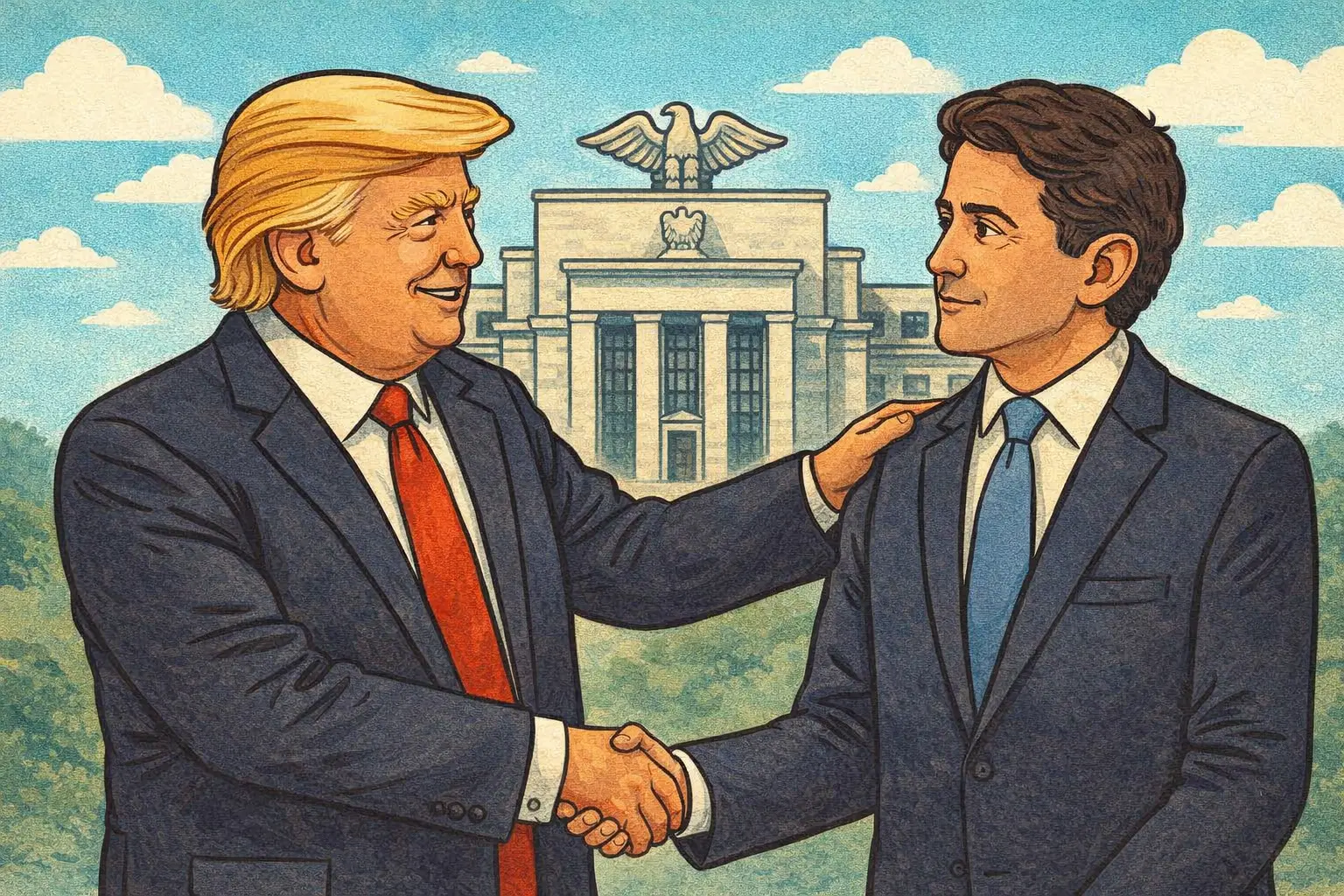
U.S. Treasury Secretary Scott Bessent said on June 23 after delivering remarks at the New York Economic Club that Trump has complete confidence in the newly appointed Federal Reserve Chair Kevin Warsh to do the right thing, and noted that Trump has pledged Warsh will maintain the Fed’s independence. Bessent cited the saying, “There are more governments overturned by bond markets than by cannons,” to explain that Trump understands the political consequences of inflation pushing up long-term borrowing costs.
Warsh chaired his first Fed policy meeting last week, with a vote to keep rates unchanged
Kevin Warsh chaired his first Federal Open Market Committee policy meeting for the Fed last week and, together with other members, voted to keep interest rates unchanged, even though Trump has long been openly calling for rate cuts. With a new round of inflation, policymakers are now less inclined to consider cutting rates; in his speech, Bessent said, “I believe the Fed Chair will optimize the path between inflation and economic growth.”
When asked whether Warsh is facing pressure to cut rates, Bessent stressed that Trump’s remarks at Warsh’s swearing-in ceremony made the point clear, and quoted: “He has complete trust that the Fed Chair will do the right thing.”
Markets expect May PCE data to rise 4.1% year over year
The Fed’s preferred inflation gauge for May—the Personal Consumption Expenditures Price Index (PCE)—has been scheduled for release on Thursday, June 25, 2026. A Bloomberg survey of economists shows that the expected year-over-year increase in overall PCE is 4.1%, more than double the Fed’s 2% target; core PCE (excluding food and energy) is expected to rise 3.4%.
In his speech, Bessent said he expects inflation to gradually ease, and explained: “Now that we’ve, I think, gotten past this phase of the conflict, gasoline prices will fall, and inflation will return to target levels.”
Senate vote ends war with Iran, with a 60-day exemption for Iranian oil sales approved
The Senate, led by Republicans, held its first vote on Tuesday (June 24, 2026) to end the war with Iran, signaling opposition within the party to Trump’s Middle East actions. On the same day, Bessent said that the 60-day exemption for Iranian oil sales is “overall beneficial for global markets,” while also being “part of the process of negotiating with Iran.”
On the topic of a stronger dollar, Bessent said the idea of a “strong dollar” does not refer to the exchange-rate level of the U.S. Dollar Index (DXY). He noted that the dollar has fallen since the beginning of last year and said: “I’m not going to wake up and think, great, that helped the economy. I just think that’s a price on a screen.”
Frequently asked questions
What is the background behind Warsh’s first Fed policy meeting vote to keep rates unchanged?
Kevin Warsh chaired the Fed’s first Federal Open Market Committee policy meeting last week, and the vote was to keep rates unchanged. The decision backdrop is that a new round of inflation has made committee members less inclined to cut rates; some members believe there is a case to raise borrowing costs in 2026, and May PCE is scheduled to be released this Thursday, with an expected year-over-year increase of 4.1%, more than double the Fed’s 2% target.
What was Bessent trying to convey by citing the line “there are more governments overturned by bond markets than by cannons”?
Bessent used the quote to highlight the political risk that Trump understands: inflation getting out of control would raise long-term borrowing costs. If long-term interest rates rise because inflation spirals, it would hurt the government’s fiscal sustainability, leading to serious political consequences. He used this to explain that Trump has an inherent incentive to respect the Fed’s responsibility for inflation control, and therefore “completely trusts” Warsh to do the right thing.
How could the 60-day exemption for Iranian oil sales affect global markets?
Bessent said the 60-day exemption for Iranian oil sales is “overall beneficial for global markets” and is part of the process of negotiations with Iran. Previously, the U.S.-Iran conflict had driven up energy costs; Bessent expects that as the conflict gradually eases, gasoline prices will decline and inflation pressure will also ease.


