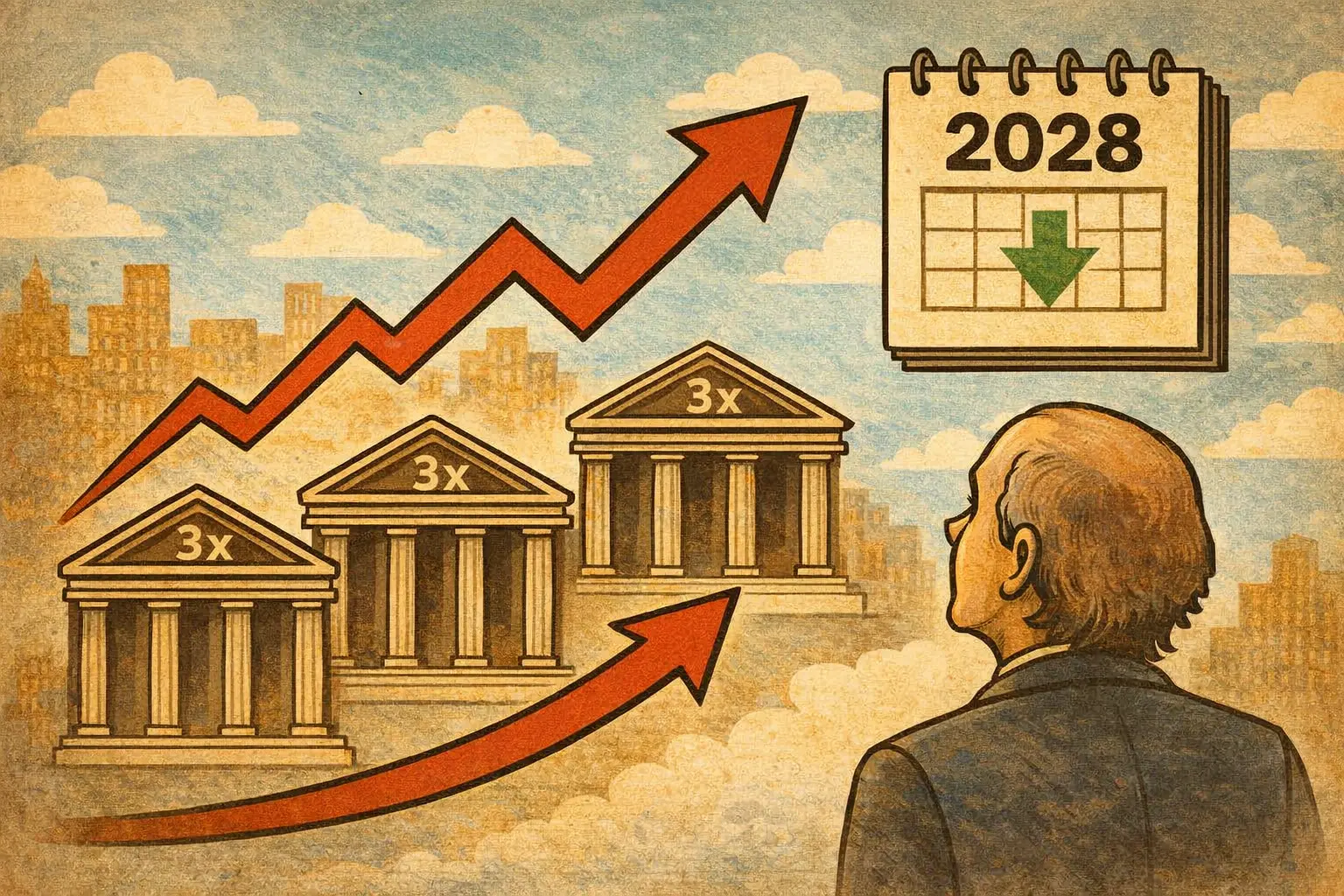
Bank of America (BoA) is expected on June 22 to raise rates 3 times this year, for a total of 75 basis points (25 basis points each time), under the leadership of the newly appointed chair Kevin Warsh. Rates are expected to remain unchanged through 2027, with rate cuts not expected until 2028. This differs sharply from the bank’s view only a few days earlier, when its economists believed the Fed would hold steady.
Aditya Bhave at Bank of America: Core PCE expected to rise 3.5% year over year, 75 basis points of rate hikes this year
According to analysis by Bank of America economist Aditya Bhave, the main reasons behind this shift in outlook are as follows:
· Core PCE (the Fed’s most closely watched inflation gauge) is expected to grow 3.5% this year versus the same period last year;
· The disinflationary drag from rents and housing expenditures is about to end;
· Other core service prices are sticky, meaning prices in most areas will trend toward stability rather than decline.
Bank of America believes a rate hike in July is possible, but expects the Fed is more likely to wait until after summer data are released before taking action, and may wait until after the midterm elections in November. Bhave also did not rule out the possibility of hikes exceeding 75 basis points.
CME FedWatch: Rate hike likely in September, probability of another hike in December exceeds 50%
Based on data from the Chicago Mercantile Exchange Group’s (CME) FedWatch tool, after Warsh’s first FOMC meeting, traders now broadly expect the Fed to raise rates at least once this year. September is viewed as a likely month for a hike, and the probability of another hike in December is also above 50%. About 12 times during his first FOMC meeting, Warsh mentioned “price stability,” prompting traders to factor at least one rate hike into this year’s expectations.
Deutsche Bank: Warsh’s policy reverses transparency reforms “backward” since the global financial crisis
Matthew Luzzetti, chief U.S. economist at Deutsche Bank, said: “This is a major shift in how the Fed has operated since the global financial crisis.” He noted that for many years, the Fed has been providing more guidance, strengthening communication, and improving transparency, but that Warsh now “has let all of this go backward.”
Warsh said a communications working group will review the Fed’s quarterly economic projections (SEP) and study new tools, including press conferences. Previously, at his first FOMC meeting, Warsh chose not to submit dot-plot projections, and cut the policy statement from more than 340 words to about 130 words.
FAQ
Why did Bank of America change its forecast for the Fed?
According to reports, Bank of America’s shift is directly driven by the hawkish signals after Warsh’s first FOMC meeting and the worsening of core PCE inflation expectations. Bank of America economist Aditya Bhave said that the Fed’s inflation problem has deteriorated: the disinflationary effect from rents and housing is about to end, and other core service prices are sticky. He said Bank of America’s prior view that the Fed would tolerate inflation no longer holds.
What are the specific timing details of Bank of America’s rate-hike forecast?
Based on Bank of America’s analysis, a rate hike in July is possible, but Bank of America expects the Fed to wait until after summer data are released before acting. CME FedWatch shows September is considered a possible month for a hike, and the probability of another hike in December exceeds 50%. Bank of America’s current baseline expectation is that the Fed will raise rates three times this year for a total of 75 basis points, keep rates unchanged in 2027, and begin cutting rates only in 2028.
What changes did Warsh make to the Fed’s communication framework?
According to reports, at his first FOMC meeting, Warsh: did not submit interest-rate projections in the dot plot (becoming the only missing point in the dot plot); cut the policy statement from more than 340 words to about 130 words, removing almost all forward guidance; and announced the formation of a working group to review the Fed’s quarterly economic projections. Deutsche Bank’s Matthew Luzzetti assessed that this is a major shift in how the Fed has operated since the global financial crisis.


