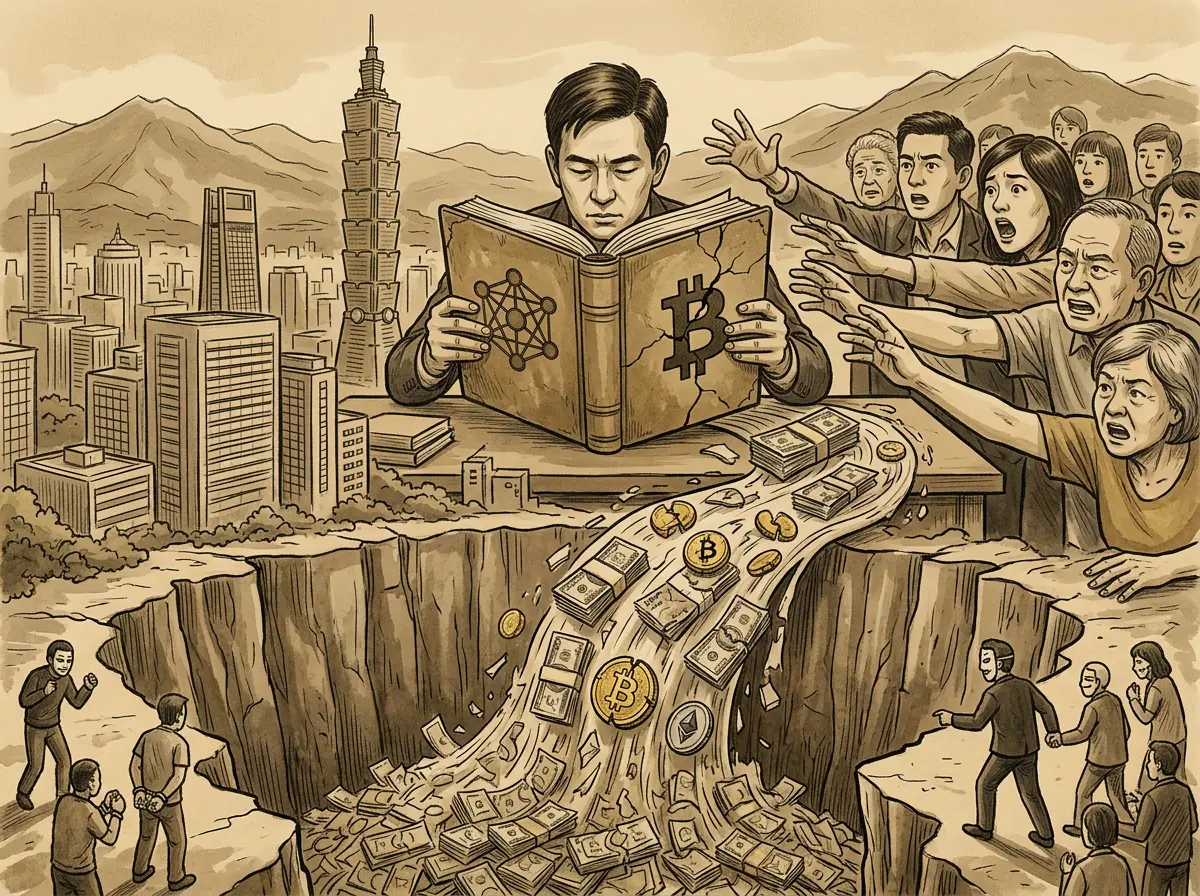
According to BlockTempo on June 10, a Huangshan Liao novel review video by Taiwanese YouTuber Duoduo Daluo has sparked discussion. Duoduo Daluo noticed that the male character setups in Huangshan Liao novels are frequently described as “making regular recurring investments in virtual currencies and blockchains,” touching off debate in Taiwanese society about perceptions of cryptocurrencies. From 2020 to 2023, Taiwan saw more than 600 cases of virtual currency fraud, with financial losses exceeding NT$70 billion.
Confirmation of what Duoduo Daluo’s book review stated
In the video, Duoduo Daluo said that after finishing Huangshan Liao’s six novels, it felt “like he only read two books.” Each book has the same plot structure, cycling through “sweet, heartbreaking, all’s well”; he noted that the characters lack individuality, with labels replacing personalities. He also gave examples: when describing trauma scenes, the text repeats in loops, lacks sensory details, and he gave a zero-point rating.
Duoduo Daluo also pointed out that in Huangshan Liao’s character setups, terms such as “passive income,” “regular recurring [investments],” and “investing in blockchains” appear frequently. Huangshan Liao responded, “I will continue to learn and grow.”
Confirmed statistical data on Taiwan’s virtual currency scams
Based on the public data cited in the BlockTempo article:
2020-2023: More than 600 cases of scams directly related to virtual currencies in Taiwan, with financial losses exceeding NT$70 billion
2025: Taiwan’s total scam financial losses of about NT$89 billion, with more than half of the amount moving through virtual currencies to process fund flows
Threads community records: In a string of posts titled “victims of virtual currency scams,” one person lost NT$60 million, while another, after taking out a loan, could only live day by day on toast
Impact of the FTX collapse: Taiwanese investors lost more than NT$50 billion, affecting about 155,000 people
August 2024: Nearly 15,300 cases reported in a single month, with an average of nearly 500 per day
Taiwan’s crypto-asset regulation status: Legislative progress confirmed for 2026
According to BlockTempo, Taiwan currently has legally operating crypto-asset exchanges and virtual asset service providers that have registered with the Financial Supervisory Commission (FSC). Taiwan’s “Virtual Asset Service Act” completed the first reading in the Legislative Yuan in 2026. The bill is expected to allow stablecoins and permit publicly listed companies to accept cryptocurrency payments.
Common questions
Why did Duoduo Daluo’s book review spark millions of views?
According to BlockTempo, Duoduo Daluo’s video title criticizes Huangshan Liao’s work as “the ugliest in history.” He points out structural repetition and a lack of depth in the characters, while also highlighting the repeated implanting of concepts such as “passive income” and “blockchain investment.” The double-topic appeal helped the video exceed one million views in a short period of time, and Huangshan Liao himself also issued a public response.
What are the specific figures for Taiwan’s 2020-2023 virtual currency scam statistics?
Based on the public data cited in the article, over the four years from 2020 to 2023 in Taiwan, scams directly related to virtual currencies exceeded 600 cases, with financial losses of more than NT$70 billion. In 2025 alone, total scam financial losses were about NT$89 billion, with more than half of the amount moving through virtual currencies to process fund flows.
At what stage is Taiwan’s “Virtual Asset Service Act” currently?
According to BlockTempo’s June 10 report, Taiwan’s “Virtual Asset Service Act” has completed the first reading in the Legislative Yuan in 2026. The bill is expected to include allowing stablecoins and permitting publicly listed companies to accept cryptocurrencies; further legislative progress remains to be confirmed.


