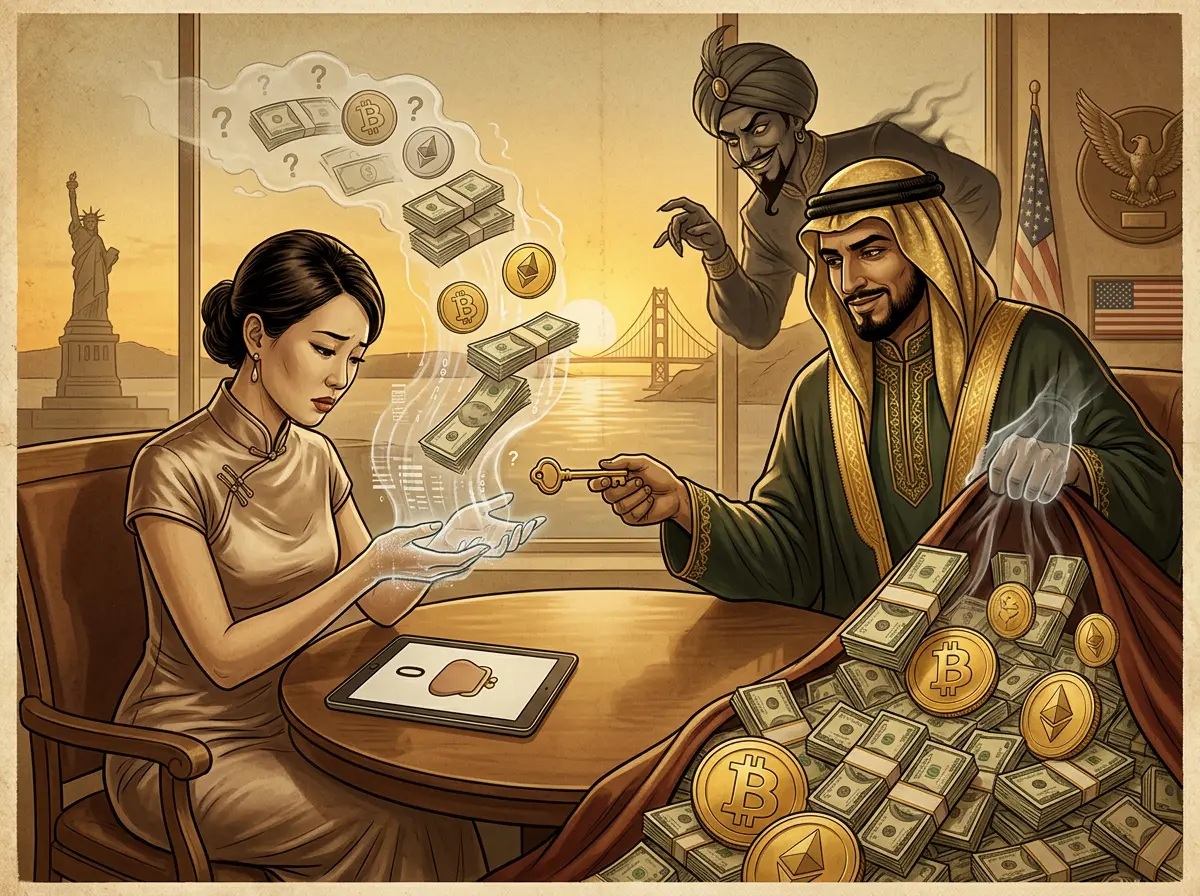
Caixin.com disclosed on June 11 that a CEO surnamed Lü of a computing-power technology company in southwest China was targeted by a carefully designed scam in the United States, suffering losses of more than $9.4 million (about RMB 60 million). The perpetrators were the Zubair brothers; the older brother claimed to be the “Middle East royal consort.” The victim, Lü, is a veteran practitioner in China’s coin-circle industry, and his mining pool, at its peak, accounted for about 9% of the world’s total Bitcoin hashrate.
The Zubair Brothers’ Three-Layer Scam Structure: Caixin.com Confirms Details
According to Caixin.com’s June 11 report, the scam scheme is divided into three levels:
Identity Packaging Layer: The older brother claimed to be the “Middle East royal consort,” saying that his uncle was the Saudi defense minister and that he had access to Middle Eastern family funds and international business resources. The younger brother modeled himself after the hedge fund character in the U.S. TV series Billions, packaging himself as a top fund manager on Wall Street.
Official Endorsement Layer: The two men won over Michael Smedley, the mayor of East Cleveland, Ohio, and his chief of staff, and publicly endorsed them at City Hall. Caixin.com’s report did not explain whether Smedley was aware of the specific role he played in the scam plan.
Contract Setup Layer: With public testimony by U.S. officials, Lü signed a fake “cryptocurrency mining farm development contract,” which led to even deeper losses.
Victim Background: A Coin-Circle Person Whose Mining Pool Once Accounted for 9% of Global Bitcoin Hashrate
According to Caixin.com’s report, Lü, the victim, is the CEO of a computing-power technology company in southwest China and a veteran practitioner in China’s coin-circle industry. His mining pool, at its peak, accounted for about 9% of the world’s total Bitcoin hashrate. Caixin.com used an anonymous handling approach—“Lü”—for the victim’s identity, and it also did not fully disclose the company name.
Common Questions
How did the Zubair brothers obtain public endorsements from local officials?
According to Caixin.com’s disclosure, the Zubair brothers successfully won over Michael Smedley, mayor of East Cleveland, Ohio, and his chief of staff, and publicly supported them at City Hall. Lü signed the fake “cryptocurrency mining farm development contract” under the mayor’s testimony. Caixin.com’s report did not explain whether Smedley knew the scam’s nature in advance.
What is the current status of U.S. law enforcement involvement?
Caixin.com’s June 11 report did not disclose whether any U.S. federal or local law enforcement agencies have launched a criminal investigation into this case, nor did it explain whether Lü has already filed a civil lawsuit in the United States.
Why was this scam able to successfully break through the victim’s trust defenses?
Based on Caixin.com’s analysis, this case shows “investment-banking-level” scam characteristics: the scam group tailored the packaging to Lü’s coin-circle background, combining a narrative of “Middle Eastern family funds” resources, professional packaging based on characters from a TV drama, and public endorsements by local officials. With these three layers of trust mechanisms stacked together, the victim’s alertness was effectively lowered.


