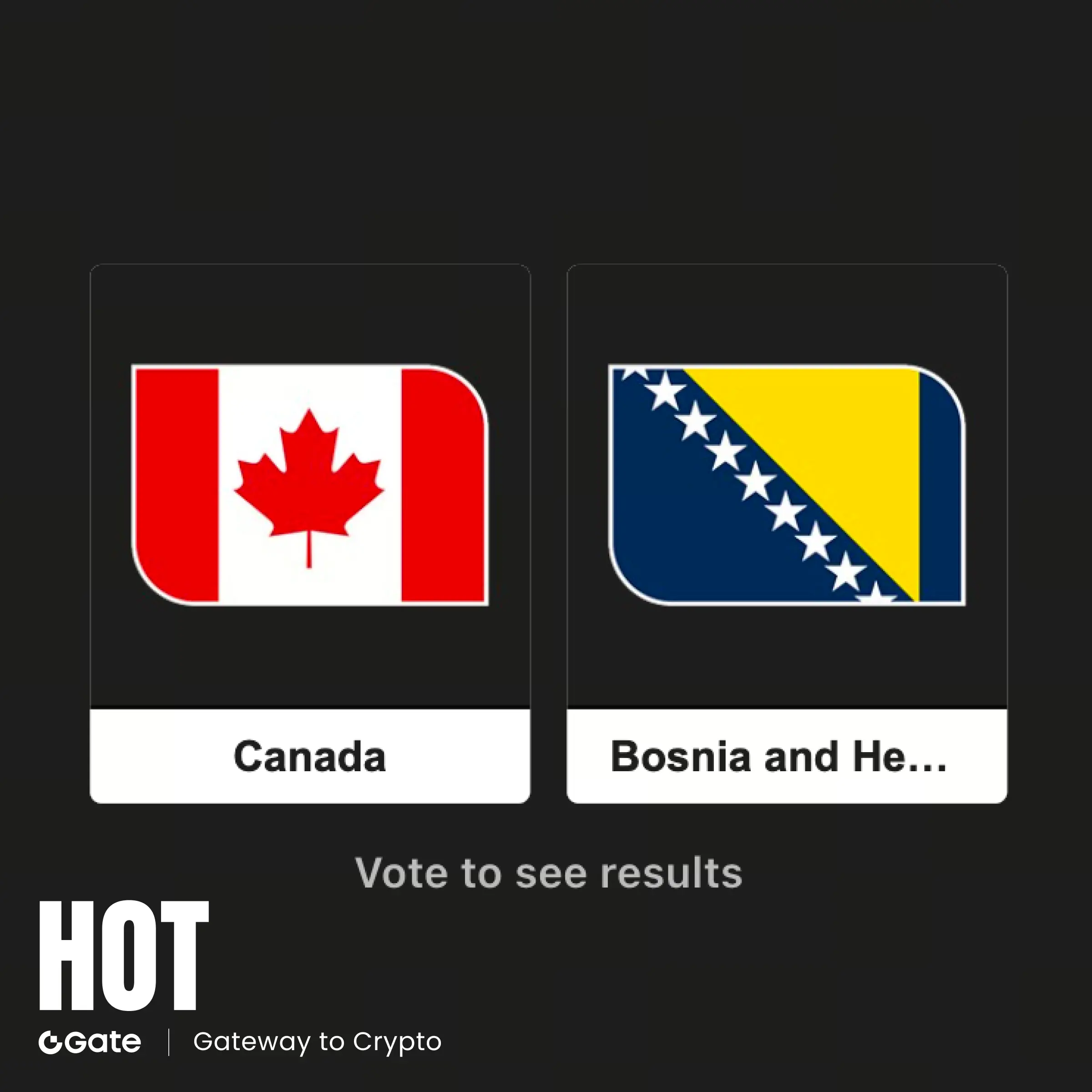
Second, Canada’s recent record has been stable. Since October 2025, Canada has maintained an unbeaten run of 8 matches. In the past year, the team lost only once, in a friendly against Australia. Overall, the team’s form has been excellent. Under Jesse Marsch’s coaching, this squad—dubbed the “track-and-field team”—is known for its extremely fast transitions between defense and attack. The biggest tactical weapon is its rapid counterattacks launched from the midfield after regaining possession, led by Alphonso Davies (though he misses the starting lineup in this match due to injury) and Jonathan David.
Third, Canada has a relative advantage in squad depth. Canada’s roster includes several players competing in top European leagues, including Jonathan David from Juventus, Buchanan from Villarreal, Oustakio from LAFC, and others. Although the team’s top star, Alphonso Davies, will be absent from the opening match due to a leg injury, Canada’s attacking line still has considerable threat. Youngster Jayden Nelson also was added as a late pre-match replacement, giving the head coach an additional option on the flanks.
Why is Bosnia and Herzegovina undervalued by the market? The “underdog” logic behind 21%
Compared with Canada’s 53%, Bosnia and Herzegovina’s 21% win probability looks weak in the market. But does that mean the market is entirely writing off this Balkan side? Not necessarily.
Bosnia and Herzegovina’s route to qualification has plenty of value. In the European zone playoff of the World Cup qualifiers, Bosnia and Herzegovina fought four-time World Cup champion Italy for 120 minutes, finishing 1:1. They then eliminated the “Azzurri” in a penalty shootout, securing a World Cup berth in a near-miraculous way. That alone is the best proof of the team’s fighting spirit.
Džeko’s leadership value cannot be ignored. At 40 years old, the veteran Džeko is still the team’s attacking core and spiritual leader. He has played 148 matches for the Bosnia and Herzegovina national team, scoring 73 goals, while also leading both the all-time appearance chart and the all-time top scorer chart. Even though his age is on the higher side, Džeko’s instincts inside the box and experience in big matches are often the key variables that decide the course of games at tournaments like the World Cup. In addition, Stuttgart striker Demilović is also in strong form, making him a threat on Bosnia and Herzegovina’s forward line that cannot be overlooked.
Why does the market give only 21%? Aside from the ranking gap and the disadvantage of playing away, Bosnia and Herzegovina has relatively limited experience in international major tournaments—this is only their second time reaching the World Cup finals since their independence. By contrast, Canada, despite having only one win they’ve been able to find across World Cup history (all six matches in their first two appearances ended in losses), has very different psychological expectations as the host. The market pricing of Bosnia and Herzegovina at 21% can be understood as a combined reflection of “lack of experience” and “playing away,” two disadvantages.
The 27% draw probability: the scripts the market thinks might happen
Notably, the probability of a draw is 27%, sitting between Canada’s win probability and Bosnia and Herzegovina’s win probability. This is not a low number. Based on the style of play, Bosnia and Herzegovina are known for their physicality and aggressive duels, and they excel at dragging matches into high-intensity “grind-and-suffocate” battles. Meanwhile, with Alphonso Davies missing, Canada’s counterattack pace is bound to be weakened. Both sides have their own shortcomings, which leads the market to believe that a low-scoring draw (such as 1:1 or 0:0) is the most likely non-Canada-win outcome.
Multiple media previews also point in the same direction—believing Canada may end the match with a narrow scoreline of 1:0 or 1:1. In essence, the 27% draw probability is a weighted average of two possibilities: “Canada narrowly wins” and “Bosnia and Herzegovina forces a draw.”
Gate prediction market: voting with capital, more perceptive than public opinion
Gate prediction market data comes from Polymarket, the world’s largest decentralized prediction platform. In March 2026, Gate officially completed its integration with Polymarket, becoming the world’s first centralized exchange to access the platform. Users can participate directly in prediction trading inside the Gate App with USDT without needing an on-chain wallet, significantly lowering the participation barrier.
Unlike traditional World Cup prediction games, Gate prediction market has selected 35 featured matches across the entire World Cup schedule, creating daily prediction challenges that run throughout the event period. Users only need to participate in predictions to qualify for the prize pool—each daily featured match has a $1,000 USDT prize pool, with a total cumulative share of 35,000 USDT rewards. For new users, after making their first prediction in any featured World Cup match and with a trading amount not less than 20 USDT, they can also receive an additional exclusive reward of 10 USDT.
More importantly, Gate prediction market has two advantages that traditional prediction platforms do not.
First, it reflects market information in real time. Prediction market prices change dynamically—as updates come in about team injuries, training information leaks before the match, and even when starting lineups are confirmed, the probabilities adjust accordingly. This creates trading windows for users who can interpret information.
Second, it leverages collective intelligence voted by capital. The 53%, 27%, and 21% are not a subjective judgment from any expert; they are “market consensus” formed after global users truly stake money. Historically, prediction markets that aggregate the wisdom of large numbers of traders often achieve higher accuracy in event outcome predictions than individual experts—even than traditional polls.
Third, innovation in gameplay and incentives go hand in hand. In addition to single-match predictions, Gate has launched a themed activity called “Green Field Prophets, World Cup Prediction Frenzy,” offering diverse ways to predict across all 104 matches, including match predictions and championship predictions. The total prize pool exceeds 500,000 USDT. Users can also obtain more prediction coupons by completing tasks such as spot and futures trading, truly closing the loop of “watching games, guessing games, and earning from them.”
Compared with traditional prediction platforms: the unique value of crypto prediction markets
If you compare the Gate prediction market probabilities with mainstream odds from traditional prediction platforms (such as Moneyline odds conversions), you’ll find that the core numbers are roughly similar: Canada win probability in the 50%–55% range, draw probability at 25%–27%, and Bosnia and Herzegovina win probability around 20%–24%. But from the underlying logic, there is an essential difference.
Traditional prediction platforms use a bookmaker model, where odds are priced by the platform’s own model and risk-control system, and users assume the risk of betting against the bookmaker. Meanwhile, Polymarket—integrated via Gate—uses an order book trading model: users trade directly with each other on “Yes/No contracts,” with prices determined entirely by market supply and demand, and the platform itself does not bear the risk exposure. In addition, another unique value of prediction markets is that users can buy or sell their own positions in real time during the event—for example, if Canada scores early in the first half, its win probability will rise quickly. Users holding Canada “Yes” shares can choose to lock in profits at higher probability levels ahead of time, without waiting for the final whistle. This flexible exit mechanism in a secondary market greatly improves capital efficiency and diversifies trading strategies.
As of early June 2026, the “2026 World Cup Champion” prediction event on Polymarket has already surpassed $908 million in total volume, making it the largest single event by size among sports prediction markets. Prediction markets are rapidly expanding from a niche scenario for crypto-native users into a new market model that blends information interpretation, data analysis, and trading strategies.
Frequently Asked Questions (FAQ)
Are the Canada vs Bosnia and Herzegovina win-rate data updated in real time? Where can I see it?
Yes. After Gate integrates Polymarket, the probabilities for all events are updated in real time based on the actual trading prices on the order book. You can search for the “prediction market” or “World Cup” related activity page directly inside the Gate App to find the specific event “Canada vs Bosnia and Herzegovina” and view the latest win/draw/lose probabilities. As pre-match injury suspension info, starting lineup announcements, and other messages are released, the probability numbers will continue to change. It’s recommended to check again 1–2 hours before kickoff.
Do I need to open a special wallet or perform on-chain operations to participate in the Gate prediction market?
No. Gate is the first centralized exchange platform to integrate Polymarket. You only need to have a Gate account and deposit USDT (or transfer from your spot account) to place orders in the App and participate in predictions—no need to touch an on-chain wallet or pay Gas fees throughout the process. This significantly lowers the participation barrier for crypto prediction markets.
If I change my view on the result during the match, can I sell my prediction shares early?
Yes. This is one of the key differences between prediction markets and traditional prediction platforms. In the Gate prediction market, the “Yes” or “No” shares you buy are essentially tradable digital assets. During the match (for example, if Canada is leading in the first half), its win probability will rise in real time. You can sell your shares at the current market price at any time to lock in profits or cut losses early, without waiting for the final whistle.
Does a 21% Bosnia and Herzegovina win probability mean the market is totally not backing Bosnia and Herzegovina?
Not entirely. A 21% win probability corresponds to implied odds of about 4.76x, which in football is a range indicating “there is a possibility of an upset, but the probability is low.” The market capital believes Bosnia and Herzegovina winning is a low-probability event, but it’s still not impossible—especially considering the resilience Bosnia and Herzegovina showed by eliminating Italy in the playoffs, and the decisive role Džeko plays in big tournaments. The 21% pricing more reflects the market’s respect for the “host advantage + Canada’s current form,” rather than a complete denial of Bosnia and Herzegovina.
Besides single-match outcomes, what other World Cup-related gameplay does the Gate prediction market offer?
Gate has rolled out a full suite of “Green Field Prophets” theme activities around the 2026 World Cup, including:
- Daily featured match predictions: for the daily selected fixtures (such as Canada vs Bosnia and Herzegovina), users can participate in win/loss predictions and share a $1,000 USDT daily prize pool.
- Championship predictions: predicting which team will be the final champion of this World Cup. At the moment, the largest trading volume is held by Brazil, Argentina, and France.
- Group advance predictions: for highly competitive groups such as Group B, predicting which teams can advance to the Round of 16.
- Top goalscorer predictions: predicting the player who will score the most goals in this World Cup. All games combined have a total prize pool exceeding 500,000 USDT, and new users can receive an additional 10 USDT reward when participating for the first time.