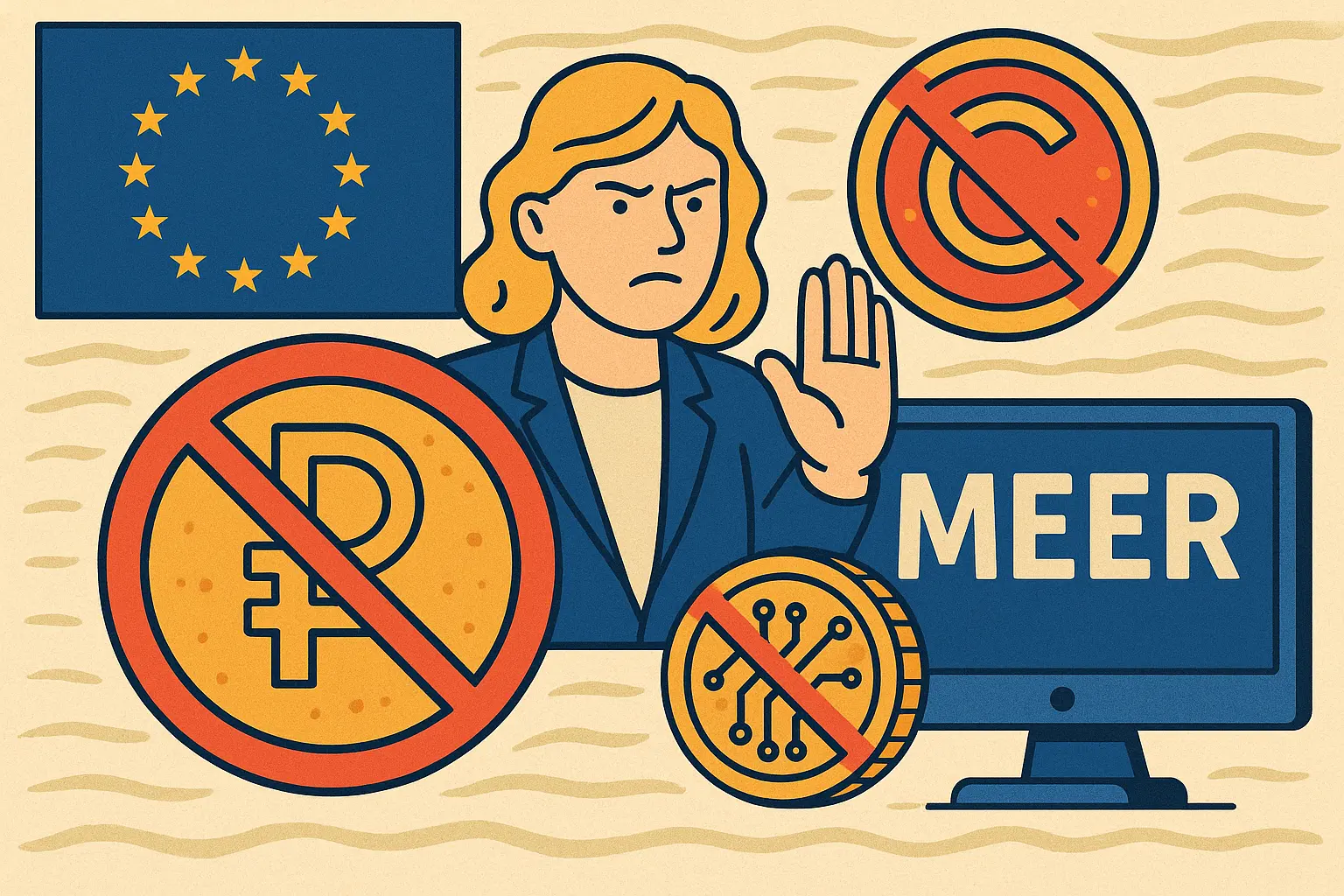
According to an analysis published on April 24 by blockchain intelligence firm Chainalysis, the EU has recently issued its 20th round of sanctions proposals against Russia. For the first time, the entire Russian cryptocurrency industry is treated as the target of the sanctions as a whole, rather than only individual entities. This round of sanctions covers the Kyrgyzstan-based exchange Meer, the Russia-ruble-backed stablecoin RUBx, and the Russian central bank’s digital currency (CBDC) “Digital Ruble.”
The core targets and scope of the 20th round of sanctions
According to Chainalysis’ April 24 analysis report, the main crypto-related sanctions targets in this round include:
Meer exchange: a virtual asset service provider (VASP) located in Kyrgyzstan, providing A7A5 trading pairs
RUBx: a stablecoin backed by the Russian ruble
Digital Ruble: the Russian central bank’s digital currency; the EU sanctions documents clearly state that it is used to evade sanctions
According to the Chainalysis report, this round of sanctions prohibits any EU individual or entity from transacting with any Russian centralized or decentralized cryptocurrency entity. Previously, in the 19th round of sanctions, the EU had already listed another stablecoin linked to the Russian ruble as a sanctions target; the EU sanctions documents describe it as “a prominent tool for funding activities in an aggressive war.”
The A7A5 ecosystem: $93 billion in transaction volume and third-country VASP risk
According to the Chainalysis report, the A7A5 ecosystem facilitated transaction volume of $93.3B within less than a year. Chainalysis’ analysis indicates that it served as a conduit connecting sanctioned entities to the global financial system, and the Meer exchange was included in the list of the 20th round of sanctions because it provides A7A5 trading pairs.
In the report, Chainalysis points out that virtual asset service providers in Central Asia, the Caucasus region, and the United Arab Emirates face the risk of being listed in subsequent sanctions, due to the nature of their business.
Chainalysis’ assessment of law-enforcement trends
According to Chainalysis’ public statement dated April 24, 2026: “The signal sent to the world’s crypto compliance community is very clear: the permissive operating environment relied on by Russia-related crypto activity is shrinking, and the law-enforcement infrastructure supporting this trend has been firmly established.”
Chainalysis characterizes this round of sanctions as a structural shift in crypto law-enforcement patterns. It believes that this action marks an upgrade of sanctions—from targeting individual entities to a new enforcement model aimed at the entire Russian crypto industry.
Frequently Asked Questions
Which crypto-related entities were listed in the EU’s 20th round of sanctions?
According to Chainalysis’ April 24, 2026 analysis report, the crypto-related sanctions targets in the 20th round include: the Kyrgyzstan-based exchange Meer, the Russia-ruble-backed stablecoin RUBx, and the Russian central bank’s digital currency “Digital Ruble.” The scope of the sanctions prohibits any EU individual or entity from transacting with any Russian crypto entity.
What is the trading scale of the A7A5 ecosystem, and why did it draw sanctions attention?
According to the Chainalysis report, the A7A5 ecosystem facilitated transaction volume of $9.33 billion within less than a year; Chainalysis’ analysis indicates that it served as a conduit connecting sanctioned entities to the global financial system. Previously, in the 19th round of sanctions, the EU had listed the A7A5 stablecoin as a sanctions target. The Meer exchange, which provides A7A5 trading pairs, was then subsequently listed in the 20th round of sanctions.
How does Chainalysis assess the impact of this round of sanctions on the global crypto compliance environment?
According to Chainalysis’ public statement on April 24, the organization believes that this round of sanctions marks a new era of crypto enforcement, with the enforcement model upgrading from targeting individual entities to targeting the entire Russian crypto industry; Chainalysis also stated that “the permissive operating environment relied on by Russia-related crypto activity is shrinking.”


