The risk control system in Venus Protocol is an on-chain protective framework built around loan-to-value ratios (LTV), liquidation mechanisms, and a risk fund. Its core objective is to maintain the solvency of borrowing positions and safeguard the overall liquidity pool in a highly volatile crypto environment.
2026-04-09 11:31:43
Both Unitas and Ethena are yield-generating stablecoin protocols built on Delta Neutral strategies, but their core difference lies in how they achieve this. Unitas primarily relies on liquidity pools and structured strategies to earn trading fees and liquidity rewards, while Ethena uses spot assets paired with short perpetual contracts, deriving yield from funding rates and staking returns. Because their underlying assets and strategic approaches differ, the two protocols exhibit distinct characteristics in risk structure, stability mechanisms, and user experience.
2026-04-09 11:30:53
The rise of Hyperliquid, the launch of the TradFi section on Gate, and the parallel expansion of CEX and on-chain perpetuals are driving Perp DEX from crypto derivatives toward multi-asset trading. This article explores how, in 2026, on-chain perpetuals will define new boundaries among users, liquidity, and TradFi assets.
2026-04-09 11:22:09
World Liberty Financial (WLFI) has announced a partnership with Aster DEX, with plans to introduce the Stablecoin USD1 as the settlement asset for TradFi Perpetual Futures on their decentralized trading platform. This integration offers traders new ways to use USD1 and further expands its applications within the DeFi marketplace.
2026-04-09 11:19:39
With the ongoing growth of the Solana ecosystem, security concerns are becoming more critical. In response, the Solana Foundation has launched several new security programs, such as the STRIDE security framework and the SIRN incident response network. Additionally, developers are being offered security tools and support to strengthen the ecosystem's overall defense and transparency.
2026-04-09 11:19:06
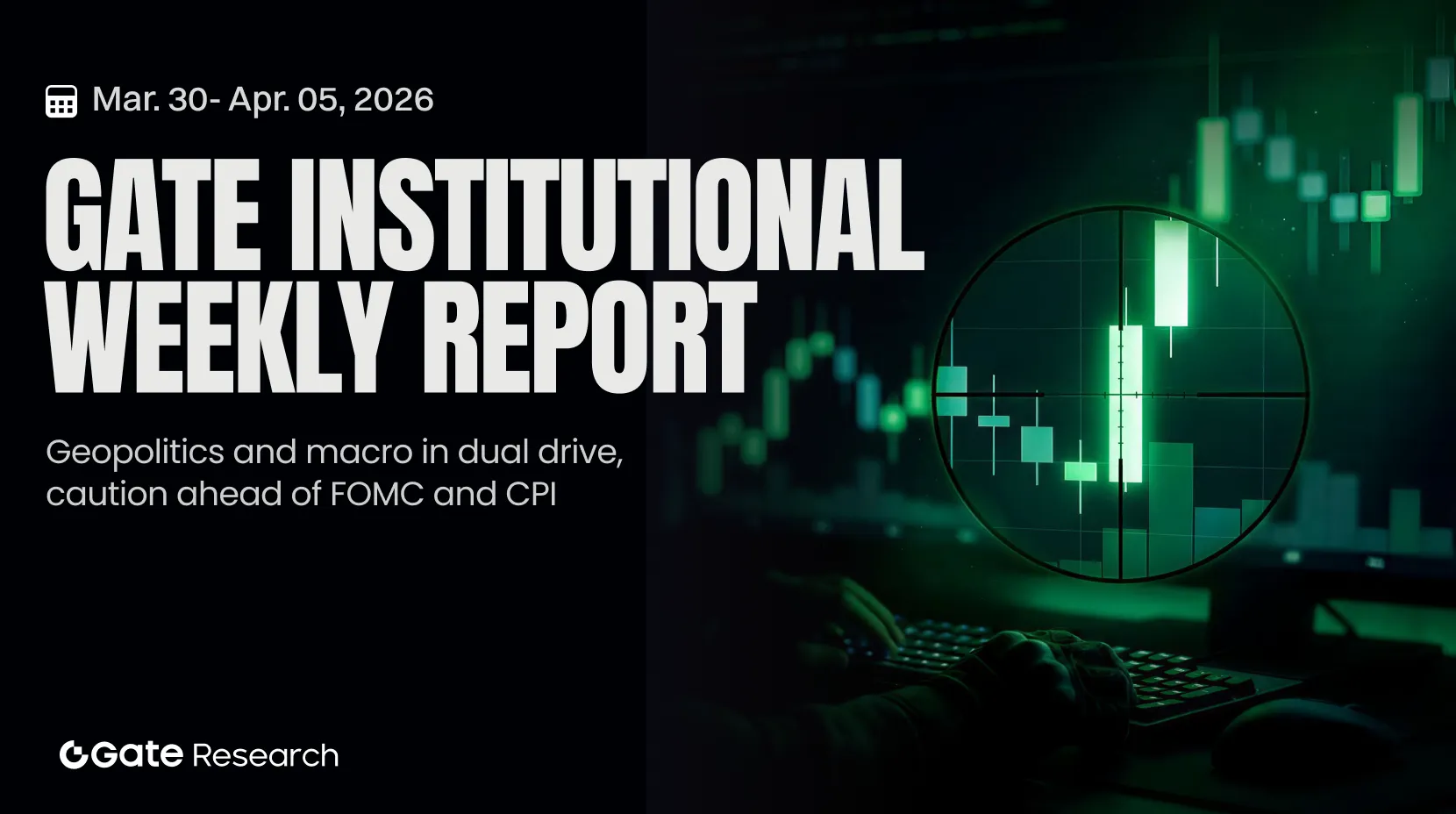
Over the past week, markets saw heightened volatility driven by recurring geopolitical tensions and stronger than expected economic data. Shifting signals from the United States and Iran pushed oil prices higher, with WTI rising more than 7% on the week. Solid retail sales, ISM readings, and nonfarm payrolls supported a rebound in equities, while precious metals reached new highs. Crypto assets moved in line with improving risk appetite, with Bitcoin approaching the $70k resistance level. On the flow side, BTC ETFs recorded modest weekly net inflows of about $22.3 million, an improvement from the prior week but still limited, while ETH ETFs continued to see net outflows. Quarter end rebalancing and holiday effects led to quick reversals after initial inflows. On chain and trading activity concentrated in oil and precious metals, DEX structure reshuffled, and Meteora volumes increased significantly. Stablecoin supply remained elevated, with USDC edging lower while DAI and USDS absorbed incremental flows, and A
2026-04-09 11:17:25
Zcash (ZEC) is a privacy focused cryptocurrency that uses zero knowledge proofs, specifically zk SNARKs, to verify transactions without revealing the sender, receiver, or transaction amount. Its design allows users to choose between transparent and private transactions, achieving a balance between verifiability and privacy. Beyond personal payments, Zcash’s privacy model is widely used in research on on-chain data protection and practical applications of zero knowledge proofs.
2026-04-09 11:13:42
Zcash uses zk-SNARKs (Zero-Knowledge Succinct Non-Interactive Arguments of Knowledge) to enable private transactions, allowing them to be verified without revealing the sender, receiver, or transaction amount. This approach replaces data disclosure with mathematical proofs, ensuring transaction validity while keeping critical information hidden. At its core, zk-SNARKs make it possible to prove that a condition is true without exposing any underlying data. In Zcash, this mechanism is used to verify fund origins, enforce balance constraints, and prevent double spending, allowing private transactions to operate securely on a public blockchain.
2026-04-09 11:12:49
Zcash and Monero are both cryptocurrencies designed to enable on-chain privacy, but they take fundamentally different technical approaches. Zcash uses zk-SNARKs, a zero-knowledge proof system, to create transactions that are verifiable yet completely hidden. Monero, by contrast, relies on ring signatures and obfuscation techniques to deliver a default-anonymous transaction model. These differences lead to distinct characteristics in privacy implementation, traceability, performance structure, and regulatory compatibility.
2026-04-09 11:12:06
Privacy coins provide data protection for blockchains by hiding the sender, receiver, and transaction amount. Their use cases go far beyond anonymous payments, extending into commercial transactions, asset security management, and identity privacy protection. Zcash, which uses zero-knowledge proofs, introduces an “optional privacy” model that allows users to choose between transparent and private transactions, making it adaptable to a wide range of real-world needs.
2026-04-09 11:10:32
A parachain auction, as it is also known, involves two types of crypto coins: Polkadot (DOT) and Kusama (KSM).
2026-04-09 10:44:07
Lend or borrow crypto at your desired prices, without intermediaries
2026-04-09 10:39:09
Use MetaMask to interact with Ethereum or other blockchains directly from your browser.
2026-04-09 10:27:34
What blockchain is, its utility, the meaning behind layers and rollups, blockchain comparisons and how different crypto ecosystems are being built?
2026-04-09 10:24:20
Liquidity Farming is a new trend in Decentralized Finance (DeFi), which enables crypto investors to fully utilize their crypto assets and obtain high returns.
2026-04-09 10:18:19