juttmunda

vip
Age 0.7 Year
Peak Tier 0
No content yet
#AnthropicReleasesFable5Model
Anthropic has officially unveiled Claude Fable 5, marking a significant milestone in artificial intelligence development. This release represents the company's most powerful publicly accessible model to date, built upon the advanced Mythos-class architecture. Here is a detailed breakdown of what this means for the AI landscape and the cryptocurrency market.
1. The Mythos-Class Architecture
Claude Fable 5 is constructed on the same foundational technology that powers the more advanced Mythos 5 model. The core architecture remains identical between both versions, b
HighAmbition
#AnthropicReleasesFable5Model
Anthropic has officially unveiled Claude Fable 5, marking a significant milestone in artificial intelligence development. This release represents the company's most powerful publicly accessible model to date, built upon the advanced Mythos-class architecture. Here is a detailed breakdown of what this means for the AI landscape and the cryptocurrency market.
1. The Mythos-Class Architecture
Claude Fable 5 is constructed on the same foundational technology that powers the more advanced Mythos 5 model. The core architecture remains identical between both versions, but Fable 5 incorporates substantial safety modifications. These modifications ensure that general users can access cutting-edge AI capabilities without encountering unnecessary risks. The model represents a new tier in Anthropic's product lineup, positioned above the traditional Opus, Sonnet, and Haiku classifications.
2. Enhanced Safety Guardrails
The defining characteristic of Fable 5 lies in its comprehensive safety framework. When users attempt to query sensitive topics such as cybersecurity vulnerabilities, dangerous biological research, or other high-risk domains, the system automatically restricts responses. Instead of providing potentially harmful information, Fable 5 either blocks the request entirely or redirects users to less capable but more secure model alternatives. This approach demonstrates Anthropic's commitment to responsible AI deployment.
3. Superior Performance Metrics
According to Anthropic's official claims, Fable 5 achieves state-of-the-art results across nearly all major AI benchmarks. The model demonstrates particular strength in software engineering tasks, scoring 80.3% on SWE-bench Pro, which evaluates real-world coding capabilities. This performance represents a substantial improvement over previous Claude iterations and positions Fable 5 competitively against other leading AI models in the market.
4. Extended Autonomous Operation
One of the most impressive capabilities of Fable 5 is its ability to maintain autonomous operation over extended periods. Unlike earlier models that required frequent human intervention for complex tasks, Fable 5 can work independently on challenging projects for longer durations. This characteristic makes it particularly valuable for professionals who need AI assistance with substantial workloads without constant oversight.
5. Target Professional Audiences
Anthropic has specifically designed Fable 5 to serve software developers, researchers, business professionals, and engineers. The model excels at managing large-scale projects that would overwhelm previous AI systems. Organizations can leverage Fable 5 for code migration, data analysis, scientific research, and complex problem-solving scenarios that demand sustained cognitive effort and precision.
6. Real-World Enterprise Applications
The practical applications of Fable 5 extend beyond theoretical capabilities. Stripe, a major payment processing company, successfully utilized Fable 5 to migrate a 50-million-line codebase in a single day. This task would have required approximately two months of work from a dedicated human team. Such demonstrations illustrate the transformative potential of advanced AI models in enterprise environments.
7. Comprehensive Safety Testing
Prior to public release, Anthropic conducted extensive safety evaluations and testing protocols for Fable 5. The company invested significant resources in identifying and mitigating potential misuse scenarios. This thorough approach reflects growing industry awareness that powerful AI systems require robust safeguards to prevent malicious applications while preserving legitimate utility.
8. Democratization of Advanced AI
The release of Fable 5 represents Anthropic's effort to make sophisticated AI capabilities accessible to broader audiences. By packaging Mythos-level technology with appropriate safety measures, the company enables general users to benefit from cutting-edge AI development. This democratization strategy balances innovation accessibility with risk management considerations.
9. Government Collaboration and Future Releases
Anthropic has established collaborative relationships with United States government agencies to ensure responsible deployment of its most advanced models. The company plans to gradually expand access to the full Mythos 5 model for select cybersecurity defenders and infrastructure providers. This measured approach suggests a long-term vision for AI development that prioritizes societal safety alongside technological progress.
Impact on the Cryptocurrency Market
The release of Claude Fable 5 carries significant implications for the cryptocurrency ecosystem. Understanding these effects requires examining both direct and indirect market dynamics.
Direct Impact on AI-Related Cryptocurrency Tokens
The AI sector within cryptocurrency markets has demonstrated notable sensitivity to developments in artificial intelligence technology. Recent market data indicates that AI-focused tokens such as Humanity Protocol and Near Protocol have experienced substantial price movements following major AI announcements. This correlation suggests that Fable 5's release could generate renewed interest in AI-cryptocurrency intersections, potentially driving capital inflows toward projects that integrate advanced AI capabilities with blockchain technology.
Trading Algorithm Evolution
Advanced AI models like Fable 5 possess the analytical sophistication necessary to enhance cryptocurrency trading strategies. The model's capabilities in pattern recognition, data analysis, and predictive modeling could enable more sophisticated algorithmic trading systems. Research indicates that AI-driven trading strategies have achieved returns exceeding 1,640% in Bitcoin markets over extended periods, significantly outperforming traditional buy-and-hold approaches. Fable 5's enhanced capabilities may accelerate this trend, making AI-powered trading more accessible and effective for institutional and retail participants alike.
Capital Rotation Dynamics
Recent market analysis from K33 Research reveals a concerning pattern of capital rotation from cryptocurrency markets into AI-related stocks. This rotation reflects investor perception that AI equities offer superior risk-adjusted returns compared to digital assets. The release of Fable 5 could intensify this dynamic in the short term, as investors seek exposure to cutting-edge AI technology through traditional equity markets. However, the integration of advanced AI with blockchain applications may eventually reverse this trend by creating compelling use cases that combine both technological domains.
Enhanced Market Analysis Capabilities
Fable 5's superior analytical capabilities could improve market sentiment analysis and price prediction models for cryptocurrency markets. The model's ability to process vast amounts of unstructured data, including social media sentiment, news articles, and technical indicators, may enable more accurate forecasting of cryptocurrency price movements. This improvement could benefit both individual traders and institutional investors seeking data-driven insights into volatile digital asset markets.
Smart Contract Development and Security
The software engineering capabilities demonstrated by Fable 5 have direct applications in cryptocurrency ecosystem development. Smart contract creation, auditing, and security analysis represent critical areas where advanced AI assistance could reduce vulnerabilities and improve code quality. As blockchain platforms increasingly compete on developer experience and security guarantees, AI-powered development tools may become significant competitive advantages.
Regulatory and Compliance Implications
Anthropic's approach to safety and responsible AI deployment may influence regulatory perspectives on cryptocurrency-AI intersections. As governments worldwide develop frameworks for both artificial intelligence and digital assets, companies that demonstrate proactive safety measures may face more favorable regulatory treatment. This dynamic could encourage cryptocurrency projects to adopt similar safety-first approaches in their AI integrations.
Institutional Adoption Catalyst
The professional-grade capabilities of Fable 5 may accelerate institutional adoption of AI-enhanced cryptocurrency services. Financial institutions that have been hesitant to engage with digital assets may find the combination of advanced AI analytics and blockchain technology more compelling than either component individually. This convergence could drive the development of new financial products that bridge traditional finance and cryptocurrency markets.
Long-Term Market Structure Evolution
Over extended time horizons, the integration of models like Fable 5 into cryptocurrency infrastructure may fundamentally alter market structures. Improved analytical capabilities could reduce information asymmetries, enhance price discovery mechanisms, and increase market efficiency. These developments would benefit sophisticated participants while potentially reducing opportunities for arbitrage and speculative gains that currently attract many cryptocurrency traders.
Conclusion
Anthropic's release of Claude Fable 5 represents a significant advancement in publicly available artificial intelligence technology. The model's combination of Mythos-class capabilities with comprehensive safety measures demonstrates that powerful AI can be deployed responsibly. For the cryptocurrency market, this release carries multifaceted implications ranging from immediate price effects on AI-related tokens to long-term structural changes in how digital assets are analyzed, traded, and developed. Investors and industry participants should monitor both the direct applications of Fable 5 in cryptocurrency contexts and the broader competitive dynamics it creates between AI and blockchain technology sectors. The convergence of these transformative technologies will likely define the next phase of digital asset evolution.#CertifiedCreatorPromotionTask @Gate_Square

repost-content-media
  • Reward
  • Comment
  • Repost
  • Share
#AnthropicReleasesFable5Model
Anthropic has officially unveiled Claude Fable 5, marking a significant milestone in artificial intelligence development. This release represents the company's most powerful publicly accessible model to date, built upon the advanced Mythos-class architecture. Here is a detailed breakdown of what this means for the AI landscape and the cryptocurrency market.
1. The Mythos-Class Architecture
Claude Fable 5 is constructed on the same foundational technology that powers the more advanced Mythos 5 model. The core architecture remains identical between both versions, b
HighAmbition
#AnthropicReleasesFable5Model
Anthropic has officially unveiled Claude Fable 5, marking a significant milestone in artificial intelligence development. This release represents the company's most powerful publicly accessible model to date, built upon the advanced Mythos-class architecture. Here is a detailed breakdown of what this means for the AI landscape and the cryptocurrency market.
1. The Mythos-Class Architecture
Claude Fable 5 is constructed on the same foundational technology that powers the more advanced Mythos 5 model. The core architecture remains identical between both versions, but Fable 5 incorporates substantial safety modifications. These modifications ensure that general users can access cutting-edge AI capabilities without encountering unnecessary risks. The model represents a new tier in Anthropic's product lineup, positioned above the traditional Opus, Sonnet, and Haiku classifications.
2. Enhanced Safety Guardrails
The defining characteristic of Fable 5 lies in its comprehensive safety framework. When users attempt to query sensitive topics such as cybersecurity vulnerabilities, dangerous biological research, or other high-risk domains, the system automatically restricts responses. Instead of providing potentially harmful information, Fable 5 either blocks the request entirely or redirects users to less capable but more secure model alternatives. This approach demonstrates Anthropic's commitment to responsible AI deployment.
3. Superior Performance Metrics
According to Anthropic's official claims, Fable 5 achieves state-of-the-art results across nearly all major AI benchmarks. The model demonstrates particular strength in software engineering tasks, scoring 80.3% on SWE-bench Pro, which evaluates real-world coding capabilities. This performance represents a substantial improvement over previous Claude iterations and positions Fable 5 competitively against other leading AI models in the market.
4. Extended Autonomous Operation
One of the most impressive capabilities of Fable 5 is its ability to maintain autonomous operation over extended periods. Unlike earlier models that required frequent human intervention for complex tasks, Fable 5 can work independently on challenging projects for longer durations. This characteristic makes it particularly valuable for professionals who need AI assistance with substantial workloads without constant oversight.
5. Target Professional Audiences
Anthropic has specifically designed Fable 5 to serve software developers, researchers, business professionals, and engineers. The model excels at managing large-scale projects that would overwhelm previous AI systems. Organizations can leverage Fable 5 for code migration, data analysis, scientific research, and complex problem-solving scenarios that demand sustained cognitive effort and precision.
6. Real-World Enterprise Applications
The practical applications of Fable 5 extend beyond theoretical capabilities. Stripe, a major payment processing company, successfully utilized Fable 5 to migrate a 50-million-line codebase in a single day. This task would have required approximately two months of work from a dedicated human team. Such demonstrations illustrate the transformative potential of advanced AI models in enterprise environments.
7. Comprehensive Safety Testing
Prior to public release, Anthropic conducted extensive safety evaluations and testing protocols for Fable 5. The company invested significant resources in identifying and mitigating potential misuse scenarios. This thorough approach reflects growing industry awareness that powerful AI systems require robust safeguards to prevent malicious applications while preserving legitimate utility.
8. Democratization of Advanced AI
The release of Fable 5 represents Anthropic's effort to make sophisticated AI capabilities accessible to broader audiences. By packaging Mythos-level technology with appropriate safety measures, the company enables general users to benefit from cutting-edge AI development. This democratization strategy balances innovation accessibility with risk management considerations.
9. Government Collaboration and Future Releases
Anthropic has established collaborative relationships with United States government agencies to ensure responsible deployment of its most advanced models. The company plans to gradually expand access to the full Mythos 5 model for select cybersecurity defenders and infrastructure providers. This measured approach suggests a long-term vision for AI development that prioritizes societal safety alongside technological progress.
Impact on the Cryptocurrency Market
The release of Claude Fable 5 carries significant implications for the cryptocurrency ecosystem. Understanding these effects requires examining both direct and indirect market dynamics.
Direct Impact on AI-Related Cryptocurrency Tokens
The AI sector within cryptocurrency markets has demonstrated notable sensitivity to developments in artificial intelligence technology. Recent market data indicates that AI-focused tokens such as Humanity Protocol and Near Protocol have experienced substantial price movements following major AI announcements. This correlation suggests that Fable 5's release could generate renewed interest in AI-cryptocurrency intersections, potentially driving capital inflows toward projects that integrate advanced AI capabilities with blockchain technology.
Trading Algorithm Evolution
Advanced AI models like Fable 5 possess the analytical sophistication necessary to enhance cryptocurrency trading strategies. The model's capabilities in pattern recognition, data analysis, and predictive modeling could enable more sophisticated algorithmic trading systems. Research indicates that AI-driven trading strategies have achieved returns exceeding 1,640% in Bitcoin markets over extended periods, significantly outperforming traditional buy-and-hold approaches. Fable 5's enhanced capabilities may accelerate this trend, making AI-powered trading more accessible and effective for institutional and retail participants alike.
Capital Rotation Dynamics
Recent market analysis from K33 Research reveals a concerning pattern of capital rotation from cryptocurrency markets into AI-related stocks. This rotation reflects investor perception that AI equities offer superior risk-adjusted returns compared to digital assets. The release of Fable 5 could intensify this dynamic in the short term, as investors seek exposure to cutting-edge AI technology through traditional equity markets. However, the integration of advanced AI with blockchain applications may eventually reverse this trend by creating compelling use cases that combine both technological domains.
Enhanced Market Analysis Capabilities
Fable 5's superior analytical capabilities could improve market sentiment analysis and price prediction models for cryptocurrency markets. The model's ability to process vast amounts of unstructured data, including social media sentiment, news articles, and technical indicators, may enable more accurate forecasting of cryptocurrency price movements. This improvement could benefit both individual traders and institutional investors seeking data-driven insights into volatile digital asset markets.
Smart Contract Development and Security
The software engineering capabilities demonstrated by Fable 5 have direct applications in cryptocurrency ecosystem development. Smart contract creation, auditing, and security analysis represent critical areas where advanced AI assistance could reduce vulnerabilities and improve code quality. As blockchain platforms increasingly compete on developer experience and security guarantees, AI-powered development tools may become significant competitive advantages.
Regulatory and Compliance Implications
Anthropic's approach to safety and responsible AI deployment may influence regulatory perspectives on cryptocurrency-AI intersections. As governments worldwide develop frameworks for both artificial intelligence and digital assets, companies that demonstrate proactive safety measures may face more favorable regulatory treatment. This dynamic could encourage cryptocurrency projects to adopt similar safety-first approaches in their AI integrations.
Institutional Adoption Catalyst
The professional-grade capabilities of Fable 5 may accelerate institutional adoption of AI-enhanced cryptocurrency services. Financial institutions that have been hesitant to engage with digital assets may find the combination of advanced AI analytics and blockchain technology more compelling than either component individually. This convergence could drive the development of new financial products that bridge traditional finance and cryptocurrency markets.
Long-Term Market Structure Evolution
Over extended time horizons, the integration of models like Fable 5 into cryptocurrency infrastructure may fundamentally alter market structures. Improved analytical capabilities could reduce information asymmetries, enhance price discovery mechanisms, and increase market efficiency. These developments would benefit sophisticated participants while potentially reducing opportunities for arbitrage and speculative gains that currently attract many cryptocurrency traders.
Conclusion
Anthropic's release of Claude Fable 5 represents a significant advancement in publicly available artificial intelligence technology. The model's combination of Mythos-class capabilities with comprehensive safety measures demonstrates that powerful AI can be deployed responsibly. For the cryptocurrency market, this release carries multifaceted implications ranging from immediate price effects on AI-related tokens to long-term structural changes in how digital assets are analyzed, traded, and developed. Investors and industry participants should monitor both the direct applications of Fable 5 in cryptocurrency contexts and the broader competitive dynamics it creates between AI and blockchain technology sectors. The convergence of these transformative technologies will likely define the next phase of digital asset evolution.#CertifiedCreatorPromotionTask @Gate_Square
repost-content-media
  • Reward
  • Comment
  • Repost
  • Share
#MyGateTradeStory
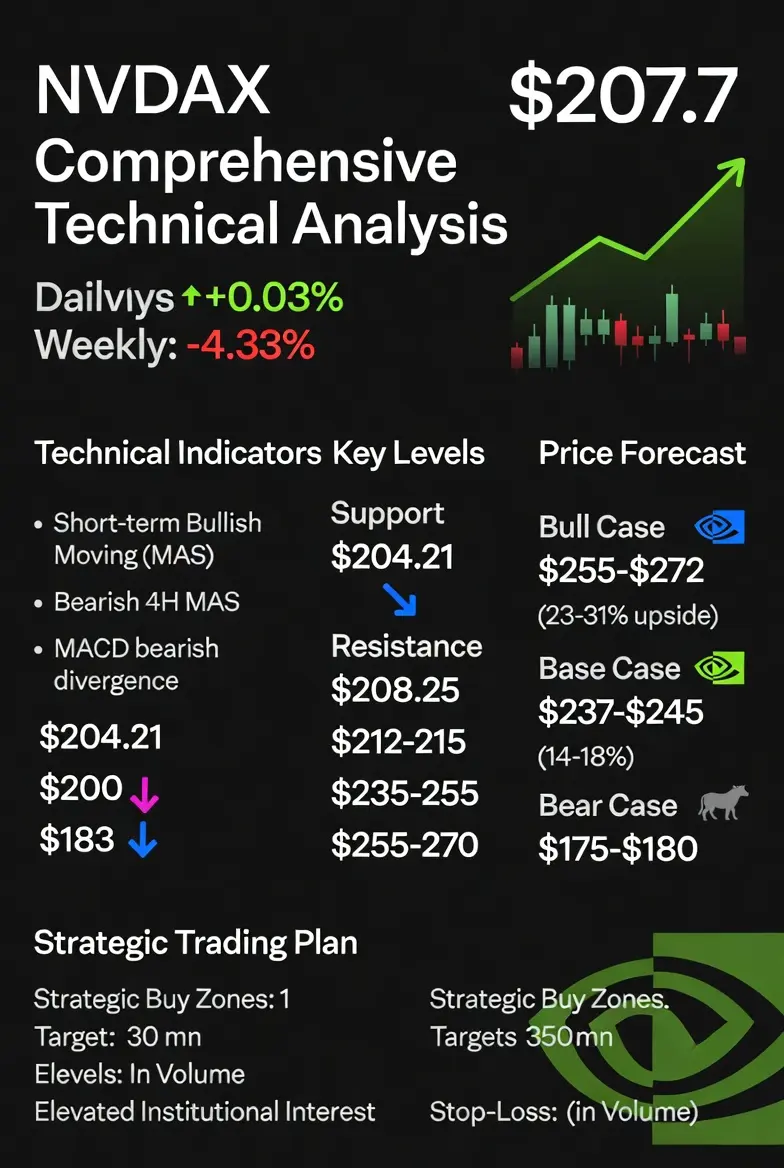
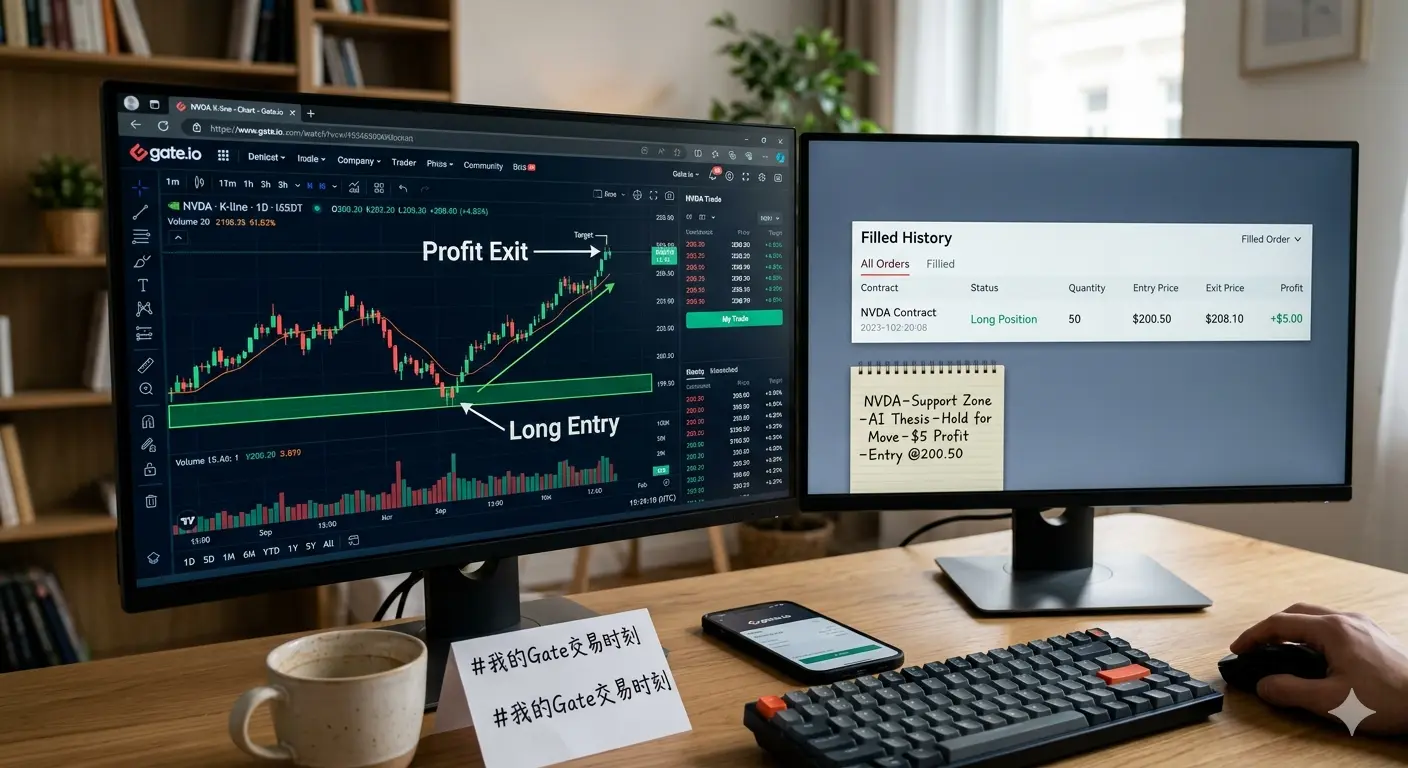
That one trade on NVDA changed everything for me. I had been watching NVIDIA for weeks, tracking every move, every dip, every rally, but I kept hesitating. The chart was calling me, the setup was right there, yet my fingers refused to click the button. Fear of the unknown, fear of being wrong, fear of losing what I had worked so hard to build. But then something shifted.
It was a quiet afternoon, the market barely moving, most traders half asleep at their desks. NVDA had pulled back to a level I had marked on my chart days before. The support zone was clean, the volume was d
HighAmbition
#MyGateTradeStory
That one trade on NVDA changed everything for me. I had been watching NVIDIA for weeks, tracking every move, every dip, every rally, but I kept hesitating. The chart was calling me, the setup was right there, yet my fingers refused to click the button. Fear of the unknown, fear of being wrong, fear of losing what I had worked so hard to build. But then something shifted.
It was a quiet afternoon, the market barely moving, most traders half asleep at their desks. NVDA had pulled back to a level I had marked on my chart days before. The support zone was clean, the volume was drying up on the selling side, and the momentum indicators were whispering the same thing: this dip was running out of fuel. I remember staring at the screen for what felt like an hour, my cursor hovering over the buy button, my heart doing things it should not be doing over a trade. Then I pulled the trigger. I went long on NVDA through Gate's contract trading, sized the position carefully, not too aggressive, not too timid, just enough to make it count if the trade worked and survivable if it did not.
The first few minutes were agonizing. The price wiggled, teased, dipped a fraction lower, and I felt that familiar knot in my stomach questioning every decision I had ever made in markets. But I held. Not because I was brave, but because the logic behind the trade was solid. NVIDIA was and still is the backbone of the AI revolution. Every major tech company is building on their chips, their data centers, their ecosystem. A short-term pullback does not erase a long-term thesis, and I reminded myself of that fact over and over while the price sorted itself out.
Then the move came. It was not a dramatic rocket launch, not a screen-shaking green candle that makes you jump out of your chair. It was a steady, methodical climb, the kind of move that rewards patience and punishes impulsiveness. NVDA pushed higher, tick by tick, and my position shifted from floating in uncertainty to sitting in profit. I watched the profit counter climb, and when it hit $5, I closed the trade. Five dollars. Some would laugh at that number. Five dollars is barely a cup of coffee in most cities. But for me, that $5 was everything.
Why? Because that $5 was not about the money. It was about proof. Proof that my analysis was not just theory. Proof that I could act when the moment arrived instead of watching it pass and then drowning in regret. Proof that discipline, patience, and trusting your setup actually pays off, even in small increments. Before that NVDA trade, I was a trader who overthought everything, who second-guessed every entry, who spent more time replaying missed opportunities than executing new ones. After that trade, something broke open inside me, not recklessly, but with a quiet confidence that said: you can do this, you can read the market, you can act on what you see.
NVDA is trading around $208 right now, up nearly 5% from its April lows near $199, and the AI narrative continues to fuel momentum across the entire semiconductor space. NVIDIA is not just a stock, it is the engine behind the most transformative technology shift of our generation. Understanding that thesis gave me the conviction to enter, and the discipline to exit with a modest but meaningful profit. The best trade is not always the biggest one. Sometimes the best trade is the one that teaches you who you are as a trader.
For anyone just starting out in crypto or traditional markets, here is what I learned from that single NVDA position. First, mark your levels before the market gets there, not during the move when emotions are running hot. Second, size your trades so that even a loss does not knock you out of the game entirely. Third, let the setup breathe. Once you enter, give it room to work. A trade that dips slightly against you before heading in your direction is normal, not a failure. Fourth, take profit when your target is hit. Do not turn a good trade into a bad one by holding for a fantasy move that may never come. And fifth, remember that every profitable trade, no matter how small, is a building block. Stack enough of them and the compound effect takes care of the rest.
Trading is not about hitting home runs every day. It is about showing up, doing the work, trusting your process, and learning from every single click of that button. My $5 on NVDA was not a jackpot, but it was the trade that made me believe I belonged in this market. And that belief is worth far more than any dollar amount on a screen.
This is my Gate trading moment. That one NVDA trade turned hesitation into conviction, and that conviction is what I carry into every position I take today.
#我的Gate交易时刻
@Gate_Square
repost-content-media
  • Reward
  • Comment
  • Repost
  • Share
#MyGateTradeStory
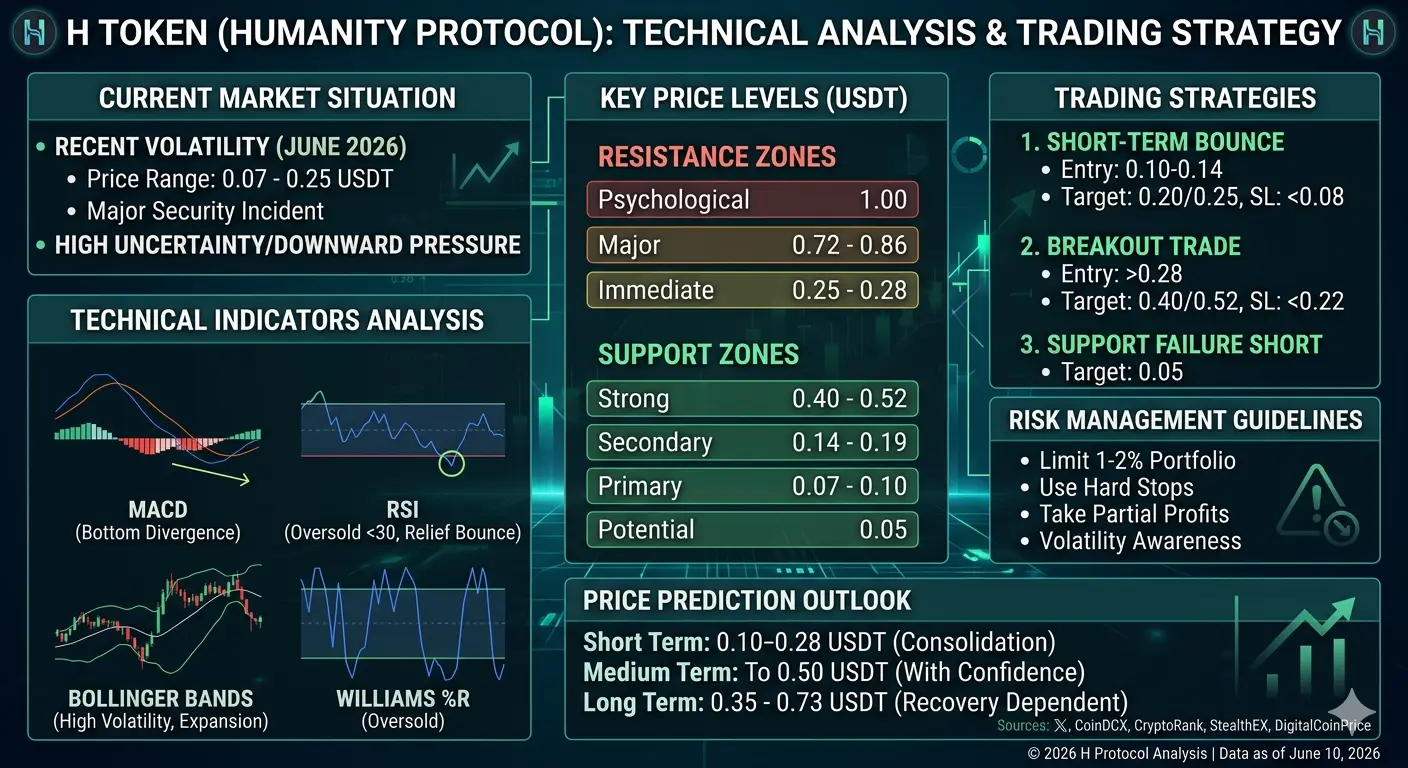
H Token (Humanity Protocol) Technical Analysis and Trading Strategy
H token traders.
Current Market Situation
H token has experienced significant volatility recently. The price has fluctuated between approximately 0.07 and 0.25 USDT in recent sessions, with substantial downward pressure following a major security incident in early June 2026. This has created a highly uncertain trading environment that requires careful risk management.
Key Support Levels
For H token, the critical support zones to monitor are:
1. **Primary Support**: 0.07 - 0.10 USDT - This range represents t
H15.22%
HighAmbition
#MyGateTradeStory
H Token (Humanity Protocol) Technical Analysis and Trading Strategy
H token traders.
Current Market Situation
H token has experienced significant volatility recently. The price has fluctuated between approximately 0.07 and 0.25 USDT in recent sessions, with substantial downward pressure following a major security incident in early June 2026. This has created a highly uncertain trading environment that requires careful risk management.
Key Support Levels
For H token, the critical support zones to monitor are:
1. **Primary Support**: 0.07 - 0.10 USDT - This range represents the recent low where buying interest emerged following the security incident. A break below this level could see further downside toward 0.05 USDT.
2. **Secondary Support**: 0.14 - 0.19 USDT - Based on historical consolidation patterns, this zone previously acted as accumulation areas before the major price movements.
3. **Strong Support**: 0.40 - 0.52 USDT - These levels represent pre-incident support zones that may come into play if recovery momentum builds.
Key Resistance Levels
1. **Immediate Resistance**: 0.25 - 0.28 USDT - The recent rejection zone where selling pressure intensified.
2. **Major Resistance**: 0.72 - 0.86 USDT - These levels represent significant overhead supply from previous price action.
3. **Psychological Resistance**: 1.00 USDT - A major round number that previously attracted significant attention from traders.
Technical Indicators Analysis
**MACD (Moving Average Convergence Divergence)**: Currently showing bottom divergence on shorter timeframes, which could indicate potential short-term reversal opportunities. However, the overall trend remains bearish on higher timeframes.
**RSI (Relative Strength Index)**: The RSI has been in oversold territory, suggesting the possibility of a relief bounce. However, in strong downtrends, RSI can remain oversold for extended periods.
**Bollinger Bands**: The bands are showing expansion with high volatility readings, indicating that price swings may continue to be significant. The bandwidth is elevated compared to historical averages.
**Williams Percent Range (WR)**: Currently in oversold conditions, which aligns with the RSI reading and suggests potential for short-term mean reversion.
Trading Strategies for Different Scenarios
**Scenario 1: Short-Term Bounce Play**
If price holds above 0.10 USDT and shows bullish candlestick patterns:
- Entry: 0.10 - 0.14 USDT with confirmation
- Target 1: 0.20 USDT
- Target 2: 0.25 USDT
- Stop Loss: Below 0.08 USDT
- Risk/Reward: Approximately 1:2 to 1:3
**Scenario 2: Breakout Trade**
If price breaks above 0.28 USDT with volume:
- Entry: Above 0.28 USDT on confirmed breakout
- Target 1: 0.40 USDT
- Target 2: 0.52 USDT
- Stop Loss: Below 0.22 USDT
**Scenario 3: Support Failure Short**
If price breaks below 0.07 USDT:
- Avoid long positions
- Wait for price stabilization before considering entries
- Potential short-term target: 0.05 USDT or lower
Risk Management Guidelines
Given the current high volatility environment:
1. **Position Sizing**: Limit exposure to 1-2% of total portfolio per trade
2. **Stop Losses**: Always use hard stops, preferably below key support levels
3. **Take Profits**: Consider taking partial profits at each target level
4. **Volatility Awareness**: Expect 20-30% intraday moves and size positions accordingly
Market Sentiment Considerations
The recent security incident has significantly impacted trader confidence. Community sentiment has turned cautious, and many experienced traders are advising caution until security concerns are fully addressed. This means recovery may be slower and more volatile than typical market cycles.
Price Prediction Outlook
**Short Term (1-4 weeks)**: Price likely to remain in a consolidation range between 0.10 and 0.28 USDT, with potential for sharp moves in either direction based on news flow.
**Medium Term (1-3 months)**: If security issues are resolved and confidence returns, price could attempt to reclaim higher levels toward 0.50 USDT. However, this depends heavily on fundamental developments.
**Long Term**: Predictions vary widely, with some analysts suggesting potential for 0.35 to 0.73 USDT if the project recovers strongly, while others remain skeptical given recent events.
Final Recommendations for Traders
1. **Wait for Confirmation**: Do not enter positions without clear technical confirmation
2. **Monitor News**: Stay updated on security developments and official communications
3. **Use Tight Stops**: Given volatility, risk management is more important than entry precision
4. **Consider Dollar-Cost Averaging**: For long-term believers, small incremental entries may be safer than large single entries
5. **Stay Liquid**: Keep sufficient capital available for better opportunities
The current environment requires patience and discipline. Traders should focus on high-probability setups with clear risk parameters rather than trying to catch every move. The technical picture will become clearer once price establishes a stable trading range above key support levels.@Gate_Square
repost-content-media
  • Reward
  • 1
  • Repost
  • Share
CryptoSat:
Is Humanity Still Alive?
#MyGateTradeStory
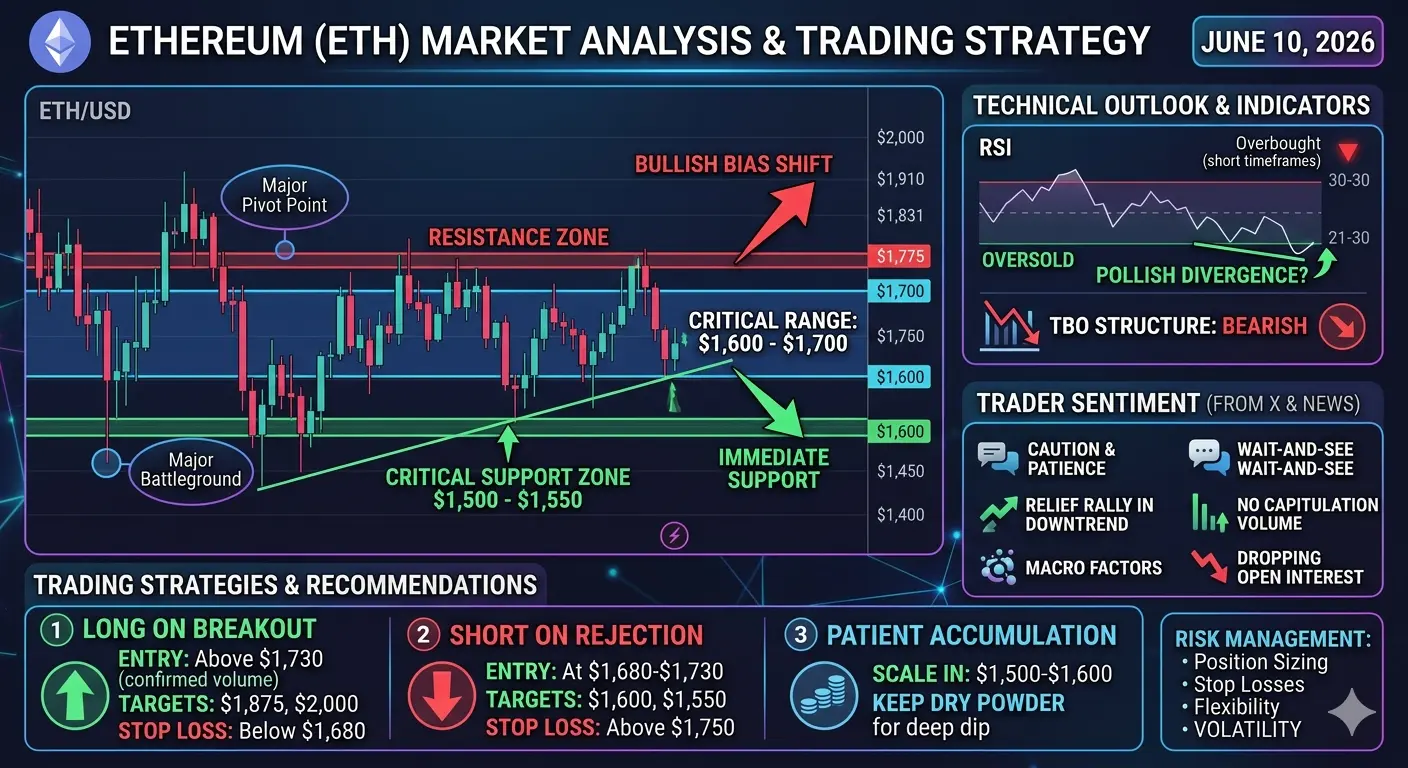
Ethereum Market Analysis and Trading Strategy - June 10, 2026
Ethereum is currently trading in a critical range between $1,600 and $1,700, presenting both opportunities and risks for traders. The market is showing mixed signals with a predominantly bearish short-term bias, though some analysts are identifying potential bullish divergences that could signal a recovery.
Current Price Situation
ETH has experienced a pullback from higher levels and is now consolidating near the $1,600-$1,700 zone. Recent price action shows a bounce from the $1,500-$1,550 support area, but the re
ETH3.23%
HighAmbition
#MyGateTradeStory
Ethereum Market Analysis and Trading Strategy - June 10, 2026
Ethereum is currently trading in a critical range between $1,600 and $1,700, presenting both opportunities and risks for traders. The market is showing mixed signals with a predominantly bearish short-term bias, though some analysts are identifying potential bullish divergences that could signal a recovery.
Current Price Situation
ETH has experienced a pullback from higher levels and is now consolidating near the $1,600-$1,700 zone. Recent price action shows a bounce from the $1,500-$1,550 support area, but the recovery faces significant overhead resistance. Traders on X are closely watching whether this bounce develops into a sustainable rally or proves to be another lower high within the ongoing downtrend.
Key Support Levels
The most critical support zone lies between $1,500 and $1,550. This area has been tested multiple times and represents a major battleground for bulls and bears. A decisive break below $1,550 could open the door for a deeper decline toward $1,450 or even the $1,400 level. The multi-year ascending trendline around current levels also provides structural support that traders are monitoring closely.
Immediate support sits at $1,600, which has acted as a pivot point in recent sessions. Below that, the $1,544-$1,547 zone represents the next line of defense before the critical $1,500 psychological level.
Key Resistance Levels
On the upside, immediate resistance is found between $1,680 and $1,730. This zone has seen repeated rejections and represents a convergence of supply where selling pressure intensifies. A clean break above $1,730 would shift the short-term bias toward bullish and could trigger a relief rally.
The next resistance targets above $1,730 include $1,775-$1,831, followed by the psychological $1,900-$1,910 zone. Stronger overhead resistance exists between $1,938 and $1,967, with the $2,000 level representing a major structural barrier that previously supported price before breaking down.
Technical Outlook and Indicators
The technical picture remains complex. Daily and weekly RSI readings show heavily oversold conditions in the 21-30 range, suggesting potential bullish divergence and the possibility of a bounce from these depressed levels. However, some analysts point to overbought readings in shorter timeframes, indicating conflicting signals across different periods.
The TBO structure remains bearish for ETH, with short-term support having broken down. Until ETH can reclaim lost support levels and reverse the bearish price structure, the overall technical outlook remains defensive and aligned with broader downside pressure in cryptocurrency markets.
Trader Sentiment Analysis
Market sentiment on X reflects caution and patience. Many experienced traders are adopting a wait-and-see approach, looking for confirmation signals before committing to directional positions. The dominant theme among active traders is that the current move represents a relief rally within a larger downtrend, with sellers maintaining control below major moving averages.
Common trader concerns include the lack of true capitulation volume, which keeps downside risk alive, and the need for bullish confirmation through a close above $1,700-$1,900 with significant volume. Open interest has been dropping, and macro factors continue to add volatility pressure to the market.
Trading Strategies and Recommendations
For short-term traders, the current environment favors a range-bound approach until a clear breakout occurs. Consider these strategies:
Strategy one involves waiting for a confirmed break above $1,730 with volume before entering long positions, targeting $1,875 and potentially $2,000. Place stop losses below $1,680 to protect against false breakouts.
Strategy two focuses on shorting rejections at the $1,680-$1,730 resistance zone, targeting a return to $1,600 and potentially $1,550. Use tight risk management with stops above $1,750.
Strategy three is a patient accumulation approach for longer-term holders, scaling into positions between $1,500 and $1,600 while maintaining dry powder for a potential breakdown toward $1,450 or lower.
Risk Management Considerations
Risk management remains paramount in current conditions. Use stops beyond recent swing points and avoid overleveraging. The market is at a critical inflection point where holding $1,500-$1,550 support could fuel a meaningful bounce, but failure at these levels risks a much deeper decline.
Consider position sizing carefully and maintain flexibility to adapt as price action develops. The conflicting technical signals suggest volatility will remain elevated, creating both opportunity and risk for active traders.
Market Outlook Summary
Ethereum faces a pivotal moment. The confluence of oversold technical conditions, critical support levels, and resistance zones creates a high-probability setup for a significant move in either direction. Traders should remain patient, wait for confirmation signals, and avoid trying to predict the outcome before price reveals its intention through volume and structure.
The path forward depends on whether bulls can defend the $1,500-$1,550 support zone and eventually reclaim $1,700-$1,730. Success here would open the door for a relief rally toward $1,900 and beyond. Failure risks a deeper decline that could test lower support levels and extend the ongoing bearish trend.
Remember that markets move quickly and analysis reflects community views only. Always conduct your own research and never risk more than you can afford to lose. The cryptocurrency market remains highly volatile and unpredictable, requiring constant vigilance and adaptive strategies.@Gate_Square
repost-content-media
  • Reward
  • Comment
  • Repost
  • Share
#USMayCPIHits3YearHigh
On June 10, 2026, the US Bureau of Labor Statistics released the May Consumer Price Index report that sent shockwaves through global markets. The CPI surged to an annual rate of 4.2%, up from 3.8% in April, marking the highest inflation reading since April 2023. This is not just a number on a government spreadsheet. It is a signal that the economic landscape has fundamentally shifted, and the ripple effects are already crashing into the cryptocurrency market at a time when it is already under siege from geopolitical conflict, rising interest rate expectations, and extre
HighAmbition
#USMayCPIHits3YearHigh
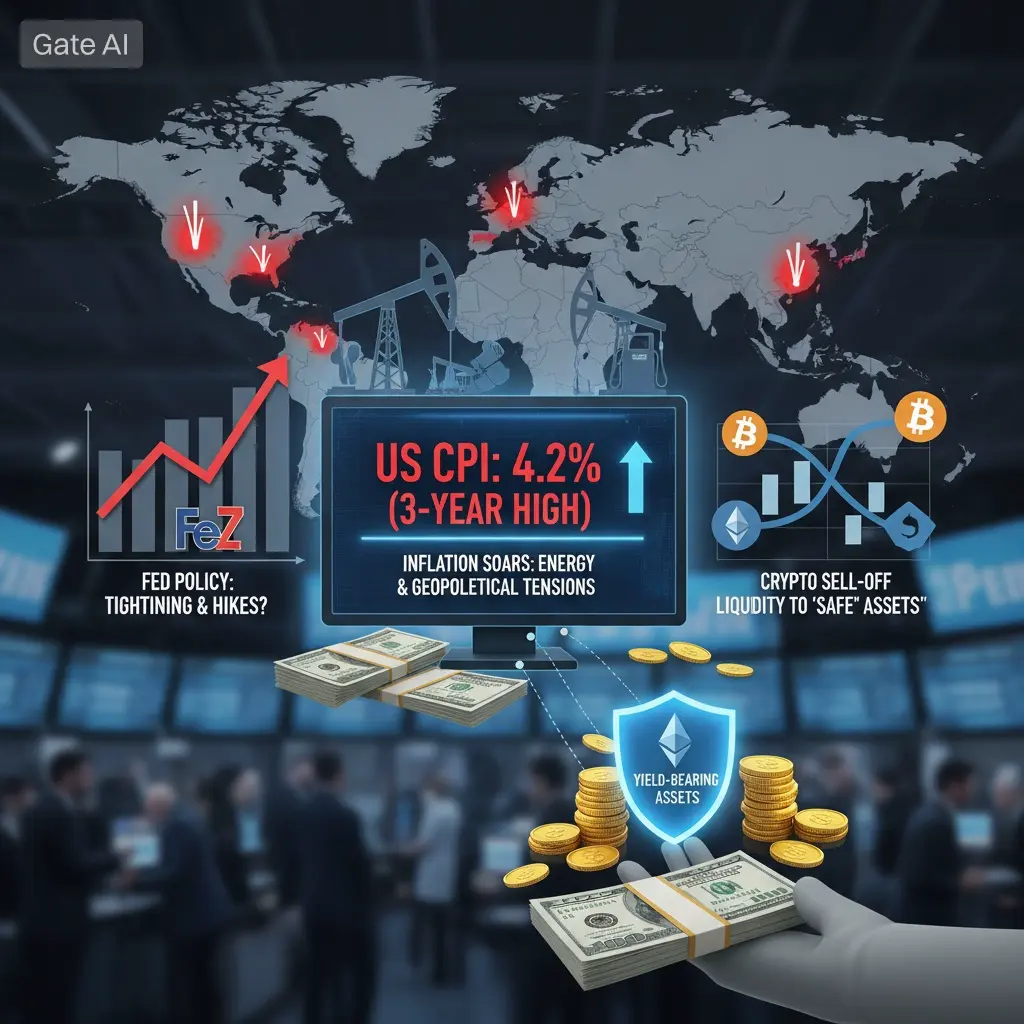
On June 10, 2026, the US Bureau of Labor Statistics released the May Consumer Price Index report that sent shockwaves through global markets. The CPI surged to an annual rate of 4.2%, up from 3.8% in April, marking the highest inflation reading since April 2023. This is not just a number on a government spreadsheet. It is a signal that the economic landscape has fundamentally shifted, and the ripple effects are already crashing into the cryptocurrency market at a time when it is already under siege from geopolitical conflict, rising interest rate expectations, and extreme volatility. Let us break down the ten critical points that explain what this means and how deeply it will affect crypto.
Point 1: US May CPI = 4.2% Annual Inflation Rate. The headline CPI figure of 4.2% year-over-year is the most significant inflation reading in over three years. On a monthly basis, prices rose 0.5% in May, slightly below the 0.6% monthly increase seen in April, but still a substantial acceleration. The CPI, which tracks the cost of a basket of goods and services that typical American consumers purchase, has been climbing steadily since January 2026, when the annual rate was just 2.4%. That means inflation has nearly doubled in just five months. This rapid ascent has caught the attention of every market participant from Wall Street to crypto traders, because it signals that the Federal Reserve's battle against inflation is far from won.
Point 2: CPI is the Consumer Price Index, the primary gauge that measures inflation across the US economy. It tracks price changes across hundreds of categories including housing, food, transportation, medical care, education, and recreation. When CPI rises, it means the cost of living is increasing. Every dollar you hold buys less than it did before. For investors, especially those in assets like Bitcoin and Ethereum that do not yield interest or dividends, rising CPI erodes the real value of holdings unless the asset price appreciates faster than inflation. A 4.2% CPI means that any crypto asset sitting flat is actually losing 4.2% in real purchasing power each year.
Point 3: This CPI reading hits a 3-year high, surpassing every reading since April 2023 when inflation was 4.9%. The significance of crossing the 4% threshold cannot be overstated. For the past two years, inflation had been gradually declining from its 2022 peaks, giving markets hope that the Federal Reserve would eventually cut interest rates. That hope is now shattered. The trajectory from 2.4% in January to 3.3% in March, to 3.8% in April, and now 4.2% in May shows an unmistakable upward trend that is moving in the wrong direction relative to the Fed's 2% target.
Point 4: Higher inflation means things are getting more expensive. Energy prices accounted for more than 60% of the monthly CPI increase in May. US energy inflation surged to 23.5% year-over-year, driven by gasoline prices that have skyrocketed due to the Iran war disrupting global oil supplies. The national average for unleaded gas has risen over $1.20 per gallon since the war began, reaching $4.12 per gallon according to AAA. Electricity costs have also jumped significantly. Beyond energy, "supercore" services inflation, which excludes energy services and housing, recorded its worst month-to-month surge in over two years, indicating that price pressures are spreading beyond just oil and gas into the broader economy.
Point 5: The direct impact on the stock market has been severe. On June 10, the S&P 500 dropped 1.6%, the Dow Jones Industrial Average sank 1.9%, and the Nasdaq composite lost 2%. The VIX volatility index surged 7.85% to 21.43, reflecting heightened fear among investors. Tech stocks and semiconductor shares led the decline, with the PHLX Semiconductor Index falling 5%. AI-related stocks that had been the market leaders throughout 2026 experienced a sharp sell-off. When equities fall, risk appetite shrinks, and capital tends to rotate out of speculative assets like cryptocurrencies into safer havens or cash.
Point 6: The crypto market is directly affected because digital assets are classified as risk assets, similar to tech stocks and growth equities. Bitcoin is currently trading around $62,037, down roughly 50% from its all-time high of $126,080. Ethereum has collapsed to approximately $1,645, a dramatic decline from its October 2025 level near $3,847 and its January 2026 price of $2,445. Solana is around $63, struggling to hold above critical support levels. The total crypto market is under extreme pressure, and a hot CPI report only intensifies the selling pressure by reinforcing the narrative that tighter monetary policy is ahead.
Point 7: When CPI is already elevated and rising, the probability of interest rate hikes increases dramatically. Before the May CPI data, bond traders had already begun pricing in a Fed rate hike by year-end. After the report, CME Group's FedWatch tool showed a 43% probability of a 25-basis-point rate hike by December, versus a 32% chance that rates would stay unchanged. Some FOMC members have already floated the possibility that rates may need to rise later this year. The two-year Treasury yield touched 4.18%, the highest since February 2025. Reuters reported that the Federal Reserve is now expected to hold rates unchanged into 2027, with rate cuts all but priced out for 2026. Higher interest rates make borrowing more expensive, reduce liquidity in the financial system, and make yield-bearing assets like bonds more attractive relative to non-yielding assets like Bitcoin and Ethereum.
Point 8: Market volatility is escalating across all asset classes. Oil prices are extremely volatile, with WTI crude trading around $89.82 per barrel and Brent crude around $91 to $92.55, swinging wildly on every geopolitical development. Gold, which initially saw a relief rally after the CPI data came in line with expectations, is trading around $4,142 to $4,192 per ounce, down significantly from its January peak of $5,608. Silver has plunged 44% from its high above $121 to around $67.30. The VIX is elevated, and crypto volatility is equally intense. Bitcoin has been oscillating between $61,800 and $63,000 with no clear directional trend, reflecting a market caught between macro headwinds and institutional accumulation.
Point 9: Investors are pulling money from risk assets. The data is unmistakable. Gold has shed 23% from its January 2026 peak, losing hundreds of billions in market value alongside silver, despite conditions that traditionally push precious metals higher. Crypto markets have seen similar outflows. Ethereum's monthly average price dropped from $2,445 in January to $2,256 in April, and then collapsed to approximately $1,619 in June. When inflation surges and rate hikes loom, capital allocators shift from risk-on positions to risk-off or yield-bearing alternatives. This rotation directly drains liquidity from crypto markets, suppressing prices and extending bearish trends.
Point 10: The combined effect of 3-year-high inflation and the Iran-Israel conflict creates a uniquely hostile environment for crypto. The Iran war, which reignited on June 7-8 with Iran launching missiles at Israel and Israel retaliating with airstrikes on central and western Iran, has triggered the largest oil supply disruption in history. The Strait of Hormuz, which carried about 15.6 million barrels of crude per day before the war, is now nearly paralyzed. Only about 2.1 to 2.9 million barrels per day are leaking through via clandestine routes. On June 9, Iran shot down a US Army Apache helicopter near the Strait, and the US launched retaliatory strikes on June 10. Trump warned that Iran would "pay the price" for taking too long to negotiate. The EIA projects the war will slash world petroleum production from 106.1 million barrels per day in 2025 to an average of 99 million barrels per day in 2026. Meanwhile, the SpaceX IPO on June 12 is drawing $250 billion in investor demand, potentially pulling even more capital away from crypto markets. Bitcoin at $62,250, Ethereum at $1,640, gold at $4,110, and oil near $90 paint a picture of a market under simultaneous pressure from inflation, war, monetary tightening, and capital rotation. The path forward for crypto depends on whether the Iran conflict deescalates allowing energy prices and CPI to retreat, or whether further escalation pushes inflation even higher and triggers an actual Fed rate hike that could drive Bitcoin toward the $60,000 support level and Ethereum toward $1,500 or below.
In summary, the US May CPI at 4.2% is not merely an economic data point. It is the convergence point where inflation, geopolitics, and monetary policy collide with maximum force on the crypto market. The inflation surge driven by the Iran war's energy shock, combined with rising rate hike expectations and already battered crypto prices, creates a deeply challenging environment. Traders and investors should monitor three key variables going forward: the trajectory of the Iran conflict and its impact on oil and CPI, the Federal Reserve's response at the June 17 FOMC meeting, and institutional capital flows particularly around the SpaceX IPO. Each of these factors will determine whether the crypto market stabilizes or faces further downside pressure in the weeks ahead.
@Gate_Square #MyGateTradeStory #Web3SecurityGuide #StrongNonfarmPayrollsRekindleRateHikeFear #USIranConflictEscalates
repost-content-media
  • Reward
  • Comment
  • Repost
  • Share
#USIranConflictEscalates
The geopolitical landscape has shifted dramatically as tensions between the United States and Iran have intensified to levels not seen in decades. Recent military actions, including coordinated strikes and retaliatory measures, have created ripple effects across global financial markets. Current Geopolitical Situation.
The conflict has evolved from isolated incidents into what analysts are calling the broadest Middle Eastern military confrontation in decades. The United States and Israel launched coordinated military strikes against Iranian targets, prompting swift re
HighAmbition
#USIranConflictEscalates
The geopolitical landscape has shifted dramatically as tensions between the United States and Iran have intensified to levels not seen in decades. Recent military actions, including coordinated strikes and retaliatory measures, have created ripple effects across global financial markets. Current Geopolitical Situation.
The conflict has evolved from isolated incidents into what analysts are calling the broadest Middle Eastern military confrontation in decades. The United States and Israel launched coordinated military strikes against Iranian targets, prompting swift retaliation from Tehran. The situation has been further complicated by Iran launching drones toward the Strait of Hormuz, prompting US forces to strike Iranian coastal radar installations. A third wave of airstrikes has reportedly been executed, indicating that military operations are ongoing rather than de-escalating.
The Strait of Hormuz, through which approximately 20% of global daily oil supply flows, remains a critical flashpoint. While not completely closed, shipping lanes have experienced significant disruptions, creating supply uncertainties that markets are struggling to price accurately.
Gold Market Analysis
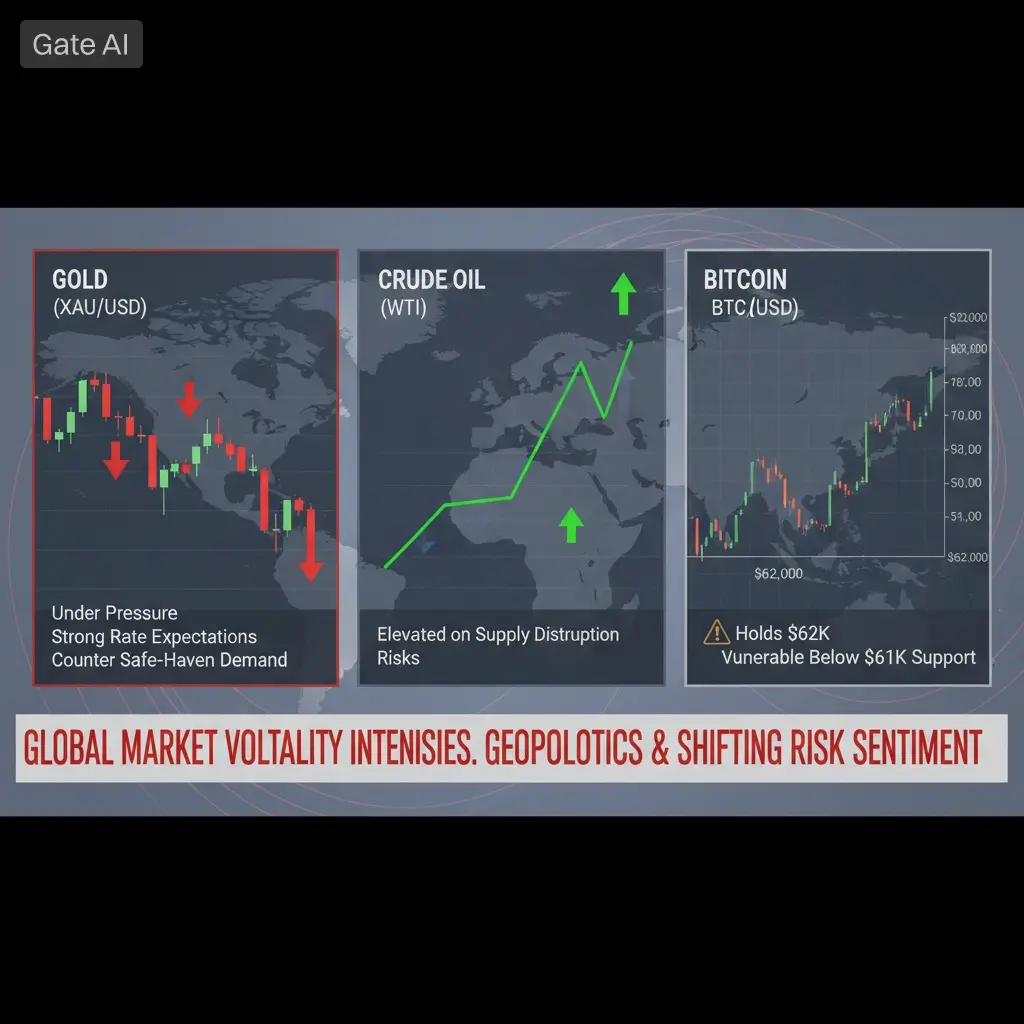
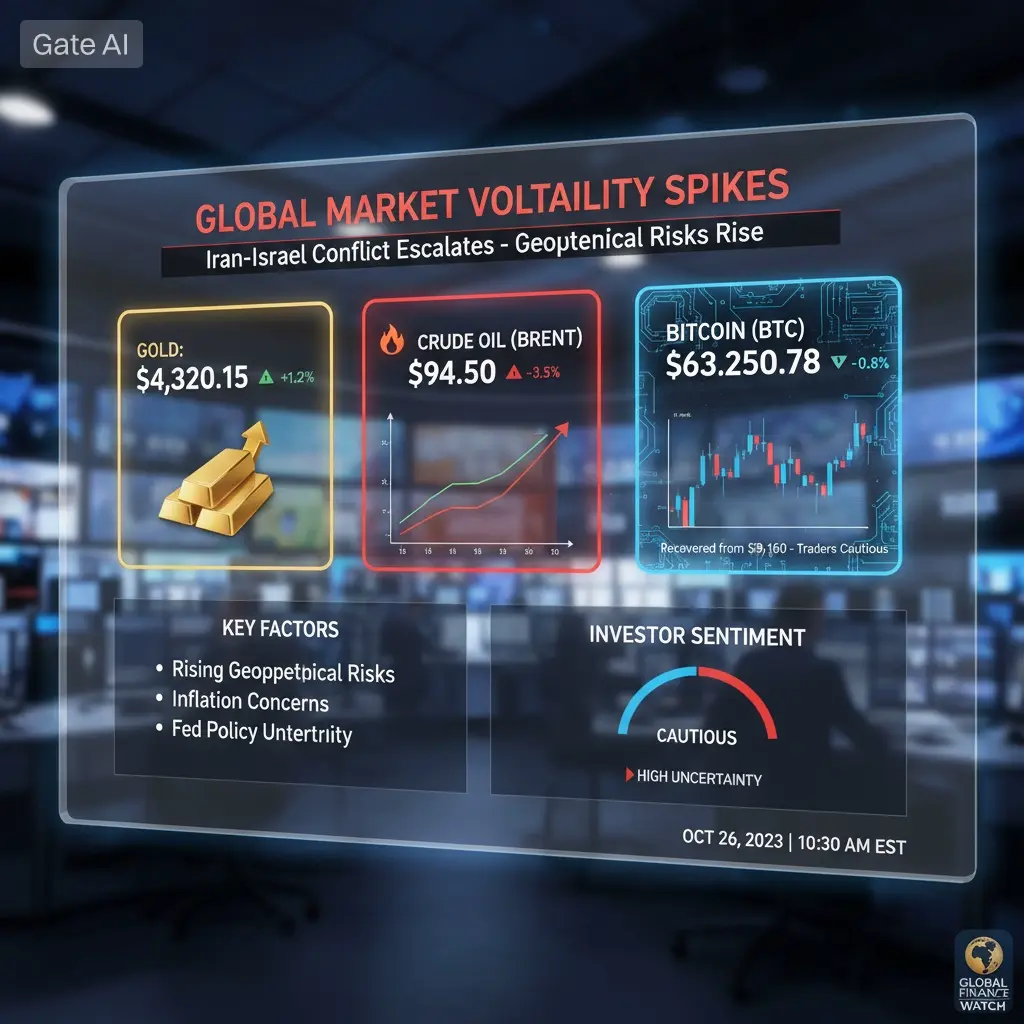
Gold has experienced significant downward pressure despite the geopolitical turmoil, which traditionally would support safe-haven assets. Currently trading near $4,331, gold has declined approximately 23% from its January peak of $5,608 per ounce. This counterintuitive price action reflects several competing forces at play.
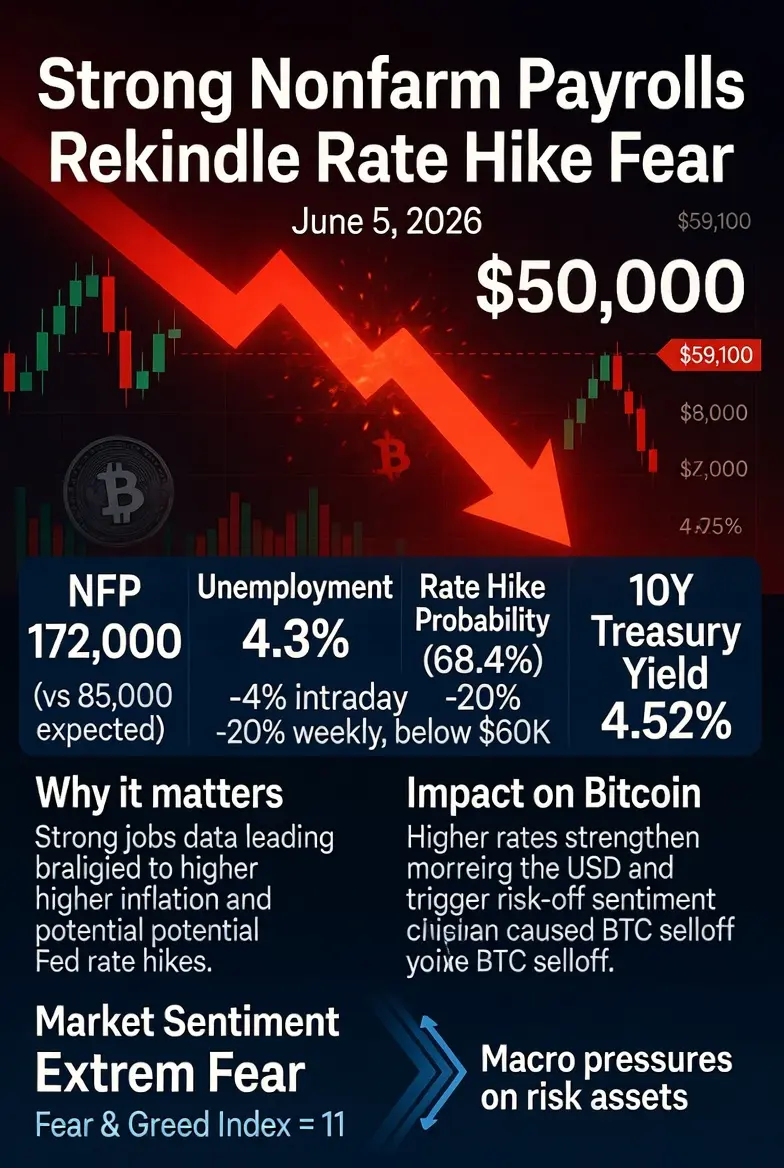
The primary headwind for gold has been shifting Federal Reserve expectations under Kevin Warsh's leadership. Stronger than expected payroll data, with 172,000 jobs added in May, has increased the probability of interest rate hikes. Rising real yields have made US Treasury securities more attractive relative to non-yielding assets like gold, triggering substantial Western outflows from precious metals exchange traded funds.
From a technical perspective, gold has broken below its 200-day moving average for the first time since October 2023, signaling significant weakening of the bullish structure. Key support levels are now being tested at the 78.6% Fibonacci retracement near $4,262, with additional support from the 10-period moving average at $4,246 on weekly charts.
If these support levels fail, the next downside targets include the March swing low at $4,097 and potentially the October low near $3,929. Resistance on any rebound would be encountered first at $4,366, followed by the 200-day moving average near $4,442.
Despite near term weakness, Metals Focus forecasts gold reaching an annual average of $4,920 in 2026, representing a 43% increase. Physical investment demand is expected to surpass jewelry consumption for the first time, driven by central bank acquisitions averaging approximately 585 tonnes quarterly.
Oil Market Dynamics
Oil prices have demonstrated the volatility expected during Middle East conflicts, though the magnitude of price movements has been somewhat contained relative to historical precedents. Brent crude reached approximately $93.09 per barrel, while West Texas Intermediate trades around $99.85. These levels represent a significant retreat from March peaks near $120 when conflict fears were at their highest.
The apparent disconnect between supply disruptions and price levels reflects complex market dynamics. Goldman Sachs estimates that 4-5 million barrels per day of global oil demand has been destroyed since April, representing a 4-5% reduction in global consumption. This demand destruction has partially offset the supply constraints from Strait of Hormuz disruptions.
The Energy Information Administration reports that the de facto closure of the Strait has now exceeded three months, representing the largest oil supply disruption in history. Trading houses like Trafigura have capitalized on these conditions, reporting net profits of $4.1 billion for the period from October 2025 through March 2026.
Looking forward, Goldman Sachs maintains Q4 2026 forecasts of $90 for Brent and $83 for West Texas Intermediate, though they acknowledge two-sided risks to these projections. The critical factor remains whether military escalation expands to threaten regional oil infrastructure or triggers broader conflict that would fundamentally alter supply calculations.
Bitcoin and Cryptocurrency Markets
Bitcoin has exhibited resilience relative to other risk assets, recovering from $59,000 lows to trade near $62,072. However, technical indicators suggest caution remains warranted. Bitcoin has formed a bearish pennant pattern on daily charts, defined by higher lows and lower highs creating a triangular consolidation after the prior decline.
Key support resides near $61,000, with a break below this level potentially triggering a rapid move toward $49,000. Daily RSI has fallen below 25 into oversold territory, while both On Balance Volume and Trend Breakout indicators remain strongly bearish without meaningful trend structure changes.
Ethereum has already confirmed Trend Breakout breakdowns and trades with short term support broken, targeting $1,385 as the next artificial support level. The total cryptocurrency market capitalization excluding stablecoins is also working on daily Trend Breakout breakdowns, with February 6th levels at $1.77 trillion representing critical support.
Bitcoin dominance has remained relatively stable near 60%, which has historically provided some insulation for the broader cryptocurrency market during risk off periods. However, rising stablecoin dominance above 13% would signal capital flight from risk assets and potentially trigger broader altcoin weakness.
Comparative Analysis: Gold vs Oil vs Bitcoin
Each asset class is responding to the conflict through different mechanisms, creating distinct trading opportunities and risks.
Gold represents the traditional safe haven, yet it is currently underperforming due to monetary policy headwinds. The metal faces the paradox of geopolitical support conflicting with interest rate pressures. Historical patterns suggest that if military escalation expands to ground operations or threatens major supply routes, gold could rapidly reclaim its safe haven status regardless of Federal Reserve policy.
Oil embodies the immediate economic impact of Middle East conflicts through supply disruption channels. However, demand destruction has complicated the typical wartime premium narrative. The commodity remains highly sensitive to any escalation affecting production facilities or export terminals, with potential for rapid price spikes if infrastructure comes under threat.
Bitcoin occupies an evolving position in crisis markets. While initially conceived as digital gold, correlations with risk assets have increased during recent volatility. The cryptocurrency has shown some decoupling tendencies during this conflict, outperforming equities while remaining vulnerable to broad risk off sentiment. Institutional adoption and regulatory developments continue shaping its crisis response characteristics.
Scenario Analysis and Price Targets
Three primary scenarios warrant consideration for trading strategy development.
In a de-escalation scenario where diplomatic channels reopen and military operations wind down, gold could stabilize near current levels before gradually recovering toward $4,600. Oil would likely retreat toward $85 for Brent as the geopolitical risk premium deflates. Bitcoin might consolidate in the $55,000-$65,000 range as risk sentiment improves.
Under the current baseline scenario of continued low intensity conflict without major infrastructure damage, gold faces continued pressure toward $4,000 unless Federal Reserve policy shifts. Oil maintains an elevated trading range between $90-$105 reflecting ongoing supply uncertainty. Bitcoin tests the $61,000 support with downside risk toward $50,000 if technical breakdowns confirm.
A severe escalation scenario involving ground military operations or threats to major oil facilities would trigger significant repricing across all markets. Gold could rapidly advance toward $5,000 as traditional safe haven demand overwhelms interest rate concerns. Oil might spike above $120 temporarily as supply fears intensify. Bitcoin would face conflicting pressures between risk off liquidation and potential safe haven positioning, likely testing $50,000 support before determining direction.
Trading Strategy Recommendations
For gold traders, current conditions favor defensive positioning with tight risk management. Short positions on rallies toward $4,400 with stops above $4,500 target initial support at $4,200. Long positions should await confirmation of support holding with entries near $4,100 and stops below $4,000. Position sizing should account for potential volatility expansion during weekend gaps when geopolitical developments often occur.
Oil traders should monitor Strait of Hormuz shipping data and military communications closely. Long positions remain justified on dips below $90 for Brent with stops near $85, targeting $110 on escalation. However, demand destruction concerns warrant caution on extended rallies above $105. Calendar spreads may offer better risk reward than outright directional positions given the contango structure in futures markets.
Bitcoin traders face the challenge of technical breakdown risk against potential geopolitical hedging demand. Defensive positioning is warranted with stops below $61,000 for long positions. Short term traders might consider range trading between $59,000 and $63,000 until directional clarity emerges. Longer term accumulators should prepare for potential tests of $49,000-$50,000 support levels before considering significant position building.
Risk Management Considerations
Volatility across all three markets has expanded significantly, requiring adjustments to position sizing and leverage. Geopolitical events frequently occur during illiquid trading hours, creating gap risk that stop losses may not effectively manage. Traders should consider options strategies or reduced position sizes to account for these tail risks.
Correlation breakdowns during crisis periods can invalidate traditional portfolio diversification assumptions. Assets that typically move independently may exhibit temporary synchronization during stress events, compounding portfolio risk. Monitoring cross asset correlations in real time becomes essential during conflict periods.
Liquidity conditions warrant attention as institutional participants may reduce market making activity during uncertainty. Wider bid ask spreads and increased slippage can impact execution quality, particularly for larger position sizes.
Conclusion
The US-Iran conflict represents a complex market environment where traditional relationships between geopolitical risk and asset prices are being tested. Gold faces unusual headwinds from monetary policy despite conflict support. Oil balances supply disruption against demand destruction in unprecedented ways. Bitcoin continues defining its role in crisis markets somewhere between risk asset and alternative store of value.
Traders should maintain flexible strategies with clear risk management protocols, recognizing that rapid repricing remains possible as military developments unfold. The current equilibrium appears fragile, with potential for significant moves in either direction depending on whether diplomacy or escalation dominates the coming weeks. Monitoring real time developments while maintaining disciplined position management will be essential for navigating these uncertain markets successfully.
@Gate_Square #MyGateTradeStory #Web3SecurityGuide
repost-content-media
  • Reward
  • Comment
  • Repost
  • Share
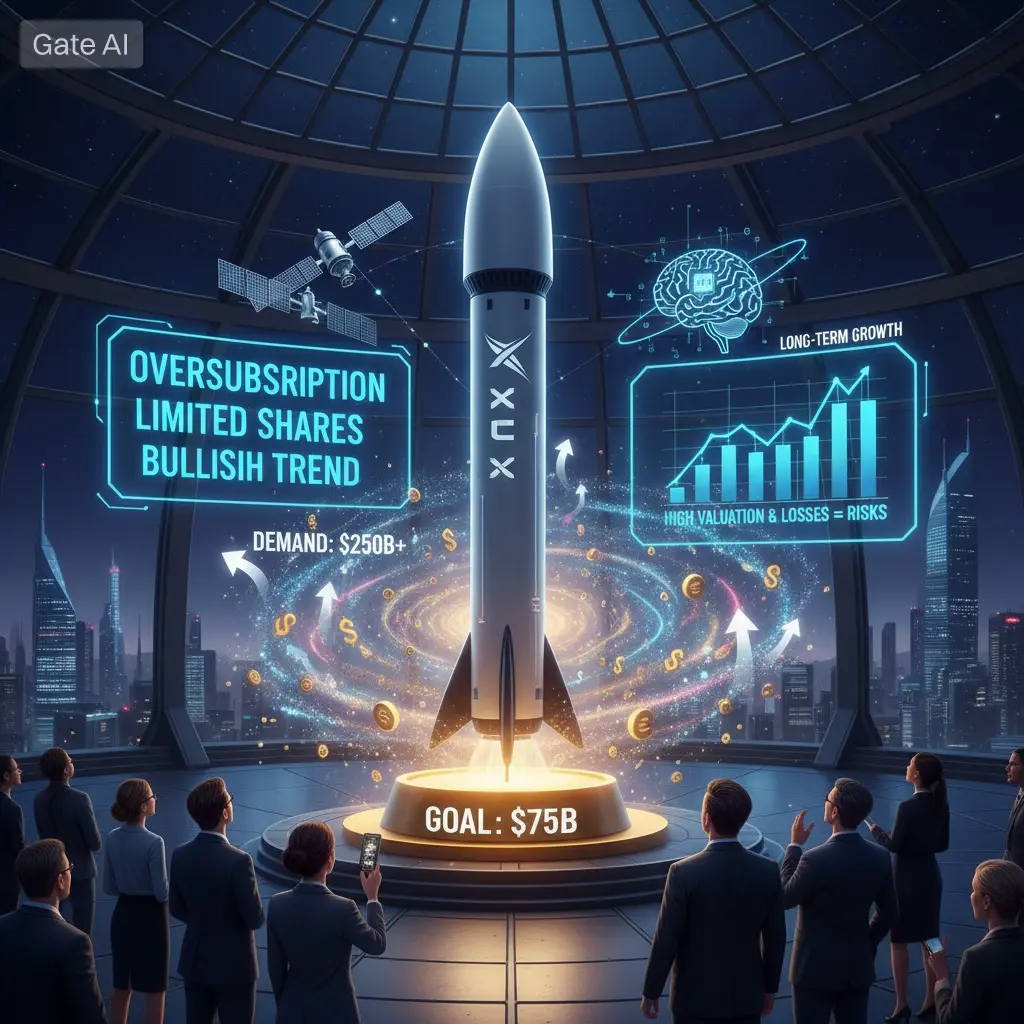
#SpaceXIPOAttractsOver250BillionInOrders
SpaceX is making history with its upcoming initial public offering, which has already captured the attention of investors worldwide. The company founded by Elon Musk has attracted over 250 billion dollars in investor orders, far exceeding its target of 75 billion dollars. This unprecedented demand reflects the massive confidence investors have in SpaceX and its future growth potential. Let us explore the ten key aspects of this monumental IPO in detail.
Understanding the IPO Structure and Pricing
SpaceX plans to sell approximately 555.6 million shares
HighAmbition
#SpaceXIPOAttractsOver250BillionInOrders
SpaceX is making history with its upcoming initial public offering, which has already captured the attention of investors worldwide. The company founded by Elon Musk has attracted over 250 billion dollars in investor orders, far exceeding its target of 75 billion dollars. This unprecedented demand reflects the massive confidence investors have in SpaceX and its future growth potential. Let us explore the ten key aspects of this monumental IPO in detail.
Understanding the IPO Structure and Pricing
SpaceX plans to sell approximately 555.6 million shares at a price of 135 dollars per share. This pricing strategy aims to raise roughly 75 billion dollars, which would value the company at approximately 1.77 trillion dollars. The company intends to list under the ticker symbol SPCX on the Nasdaq exchange, with trading expected to begin on June 12, 2026. This valuation would position SpaceX among the most valuable publicly traded companies globally, surpassing the previous IPO record held by Saudi Aramco at 1.7 trillion dollars set seven years ago.
The Phenomenon of Oversubscription
The oversubscription rate for SpaceX IPO is running at approximately three and a half to four times the planned offering size. This means that investor demand of 250 billion dollars significantly dwarfs the 75 billion dollars the company seeks to raise. Such massive oversubscription indicates that not every investor will receive their desired allocation of shares. The high demand demonstrates strong institutional and retail investor interest, reflecting confidence in SpaceX business model and growth trajectory. This oversubscription scenario typically results in the company potentially issuing additional shares or raising the offering price to accommodate the extraordinary demand.
Market Sentiment and Bullish Signals
The market interprets this overwhelming demand as a highly bullish signal for SpaceX future prospects. When an IPO attracts orders more than three times its offering size, it signals that investors believe the company is undervalued at its proposed price point. This sentiment suggests that future growth expectations are exceptionally strong. The enthusiasm spans across both institutional investors such as pension funds, mutual funds, and hedge funds, as well as retail investors who see SpaceX as a transformative company. This broad-based interest creates a positive feedback loop that could drive the stock price higher once trading begins.
Current Valuation and Price Analysis
At the proposed IPO price of 135 dollars per share, SpaceX would achieve a valuation of approximately 1.77 trillion dollars. However, some analysts believe this valuation may represent a premium of around 29 percent over the median forecasted fair value. Research from FutureSearch suggests that a more conservative sum-of-the-parts valuation might place SpaceX value closer to 1.25 trillion dollars. The company reported revenue of 18.7 billion dollars in 2025, which would give it a price-to-sales ratio of approximately 93.6 at the proposed valuation. This high ratio indicates that investors are paying a significant premium for future growth potential.
Business Segments and Revenue Streams
SpaceX operates through multiple business segments that contribute to its overall valuation. Starlink Consumer Broadband represents the largest segment with an estimated value of 380 billion dollars, serving approximately 9.2 million subscribers. The xAI and Grok artificial intelligence segment is valued at around 258 billion dollars, reflecting the recent merger that brought xAI under the SpaceX umbrella. Starship Commercial Launch carries an estimated value of 170 billion dollars despite being pre-revenue, representing option value for future space commercialization. Starlink Enterprise, Maritime, and Aviation services are valued at 147 billion dollars, while Government and Defense contracts worth approximately 22 billion dollars contribute 123 billion dollars to the valuation. The proven Falcon 9 and Heavy launch services are valued at 100 billion dollars, and Starlink Direct-to-Cell services hold an estimated value of 75 billion dollars backed by spectrum acquisitions.
Elon Musk Role and Trillionaire Status
Elon Musk ownership stake in SpaceX plays a crucial role in both the IPO dynamics and his personal wealth trajectory. Musk owns 42 percent of SpaceX common stock along with 350 million stock options. At the proposed IPO price of 135 dollars per share, his stake would be worth approximately 688 billion dollars. Combined with his existing wealth estimated at 792.8 billion dollars by Forbes, this IPO could potentially make Elon Musk the first trillionaire in history. His continued leadership and vision are seen as key drivers of investor confidence, as his track record with Tesla and other ventures demonstrates an ability to execute ambitious projects successfully.
Financial Performance and Challenges
Despite the overwhelming IPO demand, SpaceX faces significant financial challenges that investors must consider. The company recorded a net loss of 4.28 billion dollars in the most recent quarter, following a loss of 4.94 billion dollars in 2025. The artificial intelligence segment generated an operating loss of 6.36 billion dollars in 2025, even before the xAI acquisition was completed in February 2026. These losses reflect the capital-intensive nature of space exploration, satellite deployment, and artificial intelligence development. Investors are essentially betting that SpaceX can achieve profitability at scale while maintaining its technological leadership position.
Trading Strategy Considerations
For investors considering participation in the SpaceX IPO, several strategic factors deserve attention. The massive oversubscription means that retail investors may receive only a fraction of their requested shares, if any. Those who do receive allocations should consider the potential for significant price volatility in the initial trading days. Historical patterns suggest that highly anticipated IPOs often experience price surges on the first day of trading, followed by potential corrections as the market finds equilibrium. Long-term investors should focus on SpaceX fundamentals rather than short-term price movements, considering the company multi-decade vision for space commercialization and global connectivity.
Future Growth Prospects and Catalysts
SpaceX has outlined ambitious plans that could drive future valuation growth. The company plans to launch its first specialized computing satellites by 2028, expanding the Starlink constellation capabilities beyond internet connectivity. The Starship program aims to enable commercial space travel, lunar missions, and eventually Mars colonization. The integration of xAI artificial intelligence capabilities with Starlink satellite infrastructure creates opportunities for edge computing and global AI services. Government contracts for national security launches and space exploration partnerships provide stable revenue streams. The Direct-to-Cell service could disrupt traditional telecommunications by providing global cellular coverage without ground-based towers.
Risk Factors and Investment Considerations
While the IPO enthusiasm is understandable, investors should carefully evaluate the risks associated with SpaceX. The company operates in highly regulated industries including aerospace, telecommunications, and artificial intelligence, which could face increased scrutiny. Competition from other space companies, satellite operators, and AI developers could erode market share. The capital requirements for Starship development and Starlink expansion remain substantial and may require additional fundraising. Economic downturns could reduce demand for commercial launch services and consumer broadband subscriptions. Regulatory changes regarding spectrum allocation, space debris, or national security could impact operations. The high valuation multiple leaves limited room for execution errors or market sentiment shifts.
Conclusion
The SpaceX IPO represents a watershed moment in financial markets, attracting over 250 billion dollars in orders for a 75 billion dollar offering. This four-times oversubscription reflects extraordinary investor confidence in Elon Musk vision and SpaceX potential to transform multiple industries. The proposed valuation of 1.77 trillion dollars would make this the largest IPO in history, positioning SpaceX among the most valuable companies globally. While the current price of 135 dollars per share represents a significant premium to some analysts fair value estimates, the market clearly believes in the company long-term growth story spanning satellite internet, space launch, artificial intelligence, and future space colonization. Investors should approach this opportunity with a balanced perspective, recognizing both the transformative potential and the substantial risks inherent in such an ambitious enterprise. The success of this IPO will likely influence capital markets for years to come, potentially opening the floodgates for other space and technology companies to pursue public offerings.
@Gate_Square #MyGateTradeStory
repost-content-media
  • Reward
  • Comment
  • Repost
  • Share
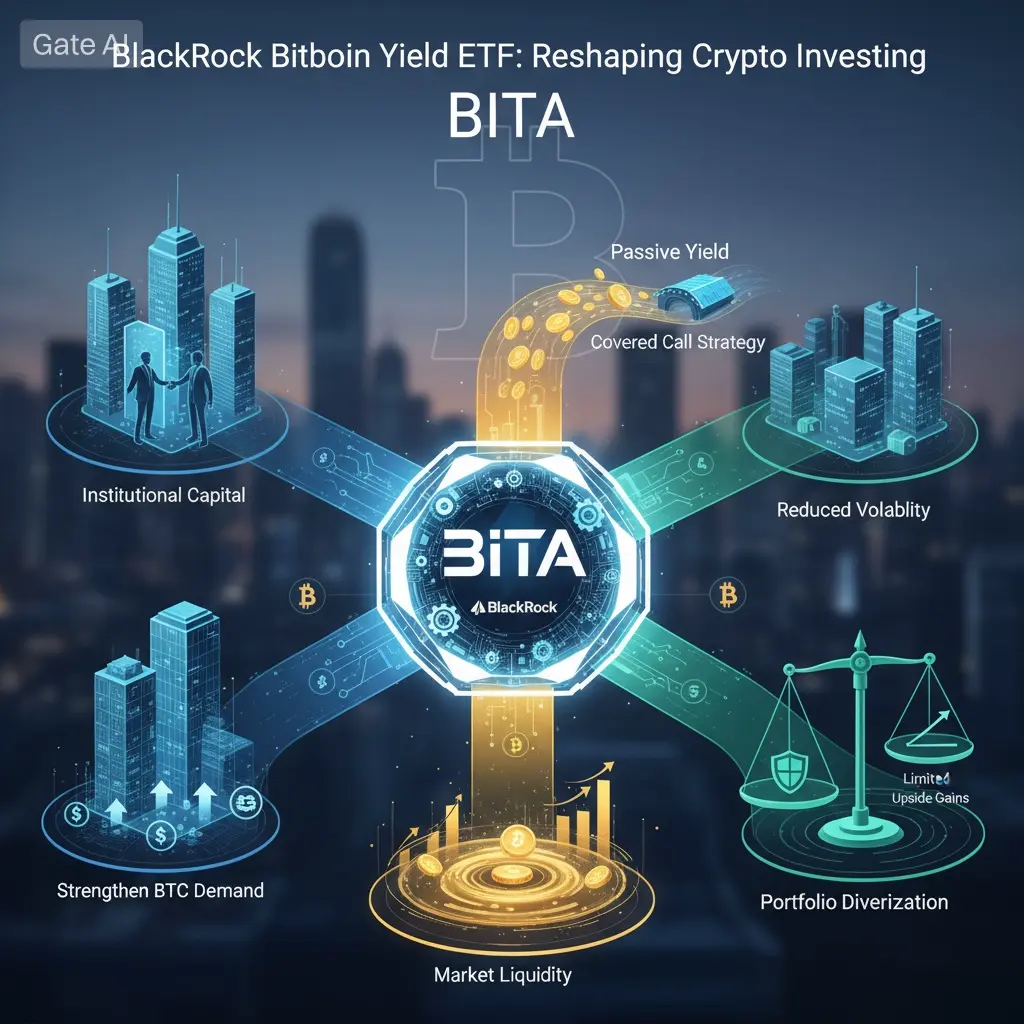
#BlackRockBitcoinYieldETFSetToLaunch
BlackRock, the world's largest asset manager with over $10 trillion in assets under management, is preparing to launch its iShares Bitcoin Premium Income ETF under the ticker BITA. This innovative financial product represents a significant evolution in cryptocurrency investment vehicles, combining Bitcoin exposure with income generation strategies. This comprehensive analysis examines the ten key aspects of this development and its multifaceted impact on Bitcoin price dynamics, trading behavior, and investment patterns.
Understanding BlackRock Bitcoin Yiel
HighAmbition
#BlackRockBitcoinYieldETFSetToLaunch
BlackRock, the world's largest asset manager with over $10 trillion in assets under management, is preparing to launch its iShares Bitcoin Premium Income ETF under the ticker BITA. This innovative financial product represents a significant evolution in cryptocurrency investment vehicles, combining Bitcoin exposure with income generation strategies. This comprehensive analysis examines the ten key aspects of this development and its multifaceted impact on Bitcoin price dynamics, trading behavior, and investment patterns.
Understanding BlackRock Bitcoin Yield ETF Structure
BlackRock has established itself as the dominant player in the Bitcoin ETF space since launching IBIT in January 2024, which has accumulated over $50 billion in assets under management. The new Bitcoin Yield ETF will employ covered call strategies to generate income for investors while maintaining Bitcoin price exposure. Unlike traditional spot Bitcoin ETFs that only track price movements, this yield-focused product actively manages options positions to capture premiums from Bitcoin's inherent volatility. The fund leverages BlackRock's massive liquidity pool through IBIT holdings, giving it structural advantages over competing covered-call products already in the market.
Impact on Bitcoin Price Dynamics
The launch of BlackRock's Bitcoin Yield ETF is expected to create sustained buying pressure on Bitcoin. As institutional investors allocate capital to this product, BlackRock must acquire underlying Bitcoin to hedge its positions, directly increasing spot market demand. Historical data from IBIT's launch demonstrates this effect, with the ETF attracting over $25 billion in inflows despite Bitcoin's price volatility in 2025. The income-generating nature of BITA may attract a broader investor base seeking yield in the current interest rate environment, potentially creating more consistent inflows than pure price-exposure products.
Institutional Capital Inflows
Institutional adoption of Bitcoin has accelerated dramatically following regulatory clarity from the SEC. Research indicates that institutional investors and wealth managers collectively overseeing more than $14 trillion in assets view crypto ETFs as the primary catalyst for comprehensive global regulatory frameworks. The introduction of a yield-generating Bitcoin product addresses a key institutional requirement for income-producing assets, potentially unlocking significant new capital pools from pension funds, insurance companies, and endowments that previously avoided non-yielding cryptocurrency investments.
Effects on Bitcoin Volatility Profile
Bitcoin ETFs have fundamentally transformed Bitcoin's volatility characteristics. The continuous inflow of institutional capital through regulated vehicles has reduced price swings compared to earlier market cycles. However, the covered call strategy employed by BITA introduces new dynamics. When BlackRock sells call options against its Bitcoin holdings, it effectively caps upside participation while generating premium income. This mechanism may dampen extreme price movements during bull markets while providing downside support through continuous rebalancing activities.
Impact on Active Traders
Short-term traders will face a transformed market environment following BITA's launch. The increased institutional participation typically reduces intraday volatility, potentially compressing profit margins for day traders and scalpers who rely on price swings. However, options market activity associated with the ETF's covered call strategy will create new opportunities. Traders may find expanded liquidity in Bitcoin options markets, tighter bid-ask spreads, and more sophisticated derivatives products emerging as market makers respond to institutional demand. The correlation between Bitcoin and traditional equity markets has increased significantly post-ETF approval, meaning traders must monitor broader macroeconomic factors more closely.
Long-Term Investor Considerations
For long-term Bitcoin holders, the BlackRock Yield ETF presents both opportunities and considerations. The product offers exposure to Bitcoin's price appreciation potential while generating additional income through option premiums. This dual benefit may appeal to conservative investors seeking cryptocurrency exposure with reduced risk profiles. However, covered call strategies inherently limit upside capture during strong bull markets. Investors must weigh the trade-off between immediate income generation and potential missed gains during periods of rapid Bitcoin appreciation. The convenience of traditional brokerage account access eliminates custody concerns and technical barriers associated with direct Bitcoin ownership.
Regulatory Environment Evolution
The proliferation of Bitcoin ETF products continues to pressure regulators toward comprehensive digital asset frameworks. Industry surveys indicate that 54 percent of institutional participants believe crypto ETF adoption will lead to standardized definitions and classifications, resolving longstanding debates about whether digital assets constitute securities or commodities. BlackRock's continued expansion into yield-generating Bitcoin products signals confidence in the regulatory trajectory and may accelerate the development of additional cryptocurrency investment vehicles.
Market Liquidity Enhancements
Bitcoin ETF flows directly influence market liquidity conditions. Large-scale institutional buying or selling through regulated channels affects spot market depth and price discovery mechanisms. BlackRock's entry into the yield ETF space will likely increase overall market liquidity by attracting new participant categories. Enhanced liquidity benefits all market participants through reduced slippage, improved execution quality, and more efficient price formation. The ETF's requirement to maintain underlying Bitcoin reserves creates a consistent demand floor that supports market stability.
Competitive Landscape Transformation
BlackRock's dominance in the Bitcoin ETF market creates competitive pressures on existing products. The firm's scale advantages, brand recognition, and distribution capabilities position BITA to capture significant market share from smaller covered-call competitors. This consolidation trend may reduce product diversity but improve operational efficiency and cost structures for investors. The success of yield-focused products could prompt additional innovation, potentially leading to leveraged, inverse, and thematic Bitcoin ETFs that cater to specialized investment strategies.
Risk Considerations for Market Participants
Despite the benefits of regulated Bitcoin exposure, significant risks remain. Bitcoin's price volatility persists regardless of the investment vehicle wrapper. Covered call strategies expose investors to opportunity costs during strong upward price movements. Regulatory changes could impact ETF operations or tax treatment. Counterparty risks exist within the options market infrastructure. Investors must understand that yield generation through option writing involves trade-offs and does not eliminate Bitcoin's inherent price volatility. The correlation between Bitcoin and traditional assets has increased, potentially reducing portfolio diversification benefits during market stress periods.
Future Market Development Trajectory
The launch of BlackRock's Bitcoin Yield ETF represents another milestone in cryptocurrency's integration with traditional finance. This development strengthens the bridge between conventional investment frameworks and digital asset markets. As institutional adoption continues accelerating, Bitcoin's role in global portfolios will likely expand beyond speculative allocation toward strategic asset class status. The introduction of income-generating cryptocurrency products addresses historical objections about Bitcoin's lack of yield, potentially accelerating adoption among income-focused investors and retirement accounts.
Conclusion
BlackRock's Bitcoin Yield ETF launch marks a significant evolution in cryptocurrency investment infrastructure. For Bitcoin itself, the product creates additional demand channels and price support mechanisms. Traders must adapt to evolving market structures with increased institutional participation and modified volatility patterns. Investors gain access to sophisticated strategies that combine Bitcoin exposure with income generation, though they must understand the trade-offs involved. This development reinforces cryptocurrency's transition from experimental technology to mainstream financial asset, with implications that will resonate across global markets for years to come.@Gate_Square #MyGateTradeStory
repost-content-media
  • Reward
  • Comment
  • Repost
  • Share
#GateLaunchesHongKongStockTrading
Gate Launches Hong Kong Stock Trading: A New Era of All-in-One Investment Platform
Gate has officially launched Hong Kong stock trading services, marking a significant milestone in the platform's evolution from a cryptocurrency exchange to a comprehensive multi-asset investment platform. This expansion allows users to access Hong Kong-listed stocks alongside cryptocurrencies, creating a unified trading experience that was previously unavailable on most platforms.
The Evolution of Gate: From Crypto Exchange to Multi-Asset Platform
Gate began its journey in 201
HighAmbition
#GateLaunchesHongKongStockTrading
Gate Launches Hong Kong Stock Trading: A New Era of All-in-One Investment Platform
Gate has officially launched Hong Kong stock trading services, marking a significant milestone in the platform's evolution from a cryptocurrency exchange to a comprehensive multi-asset investment platform. This expansion allows users to access Hong Kong-listed stocks alongside cryptocurrencies, creating a unified trading experience that was previously unavailable on most platforms.
The Evolution of Gate: From Crypto Exchange to Multi-Asset Platform
Gate began its journey in 2013 as one of the world's earliest cryptocurrency exchanges. Over the years, it has grown to serve over 17 million users worldwide and consistently ranks among the top 3 exchanges globally by trading volume and liquidity. The platform first expanded into traditional finance by introducing US stock trading, and now with the addition of Hong Kong stocks, Gate is positioning itself as a true all-in-one investment platform where users can manage diverse portfolios from a single account.
Access to Premium Hong Kong Stocks
The new Hong Kong stock trading service provides access to over 1,000 stocks listed on the Main Board and GEM of the Hong Kong Stock Exchange. This includes some of Asia's most prominent companies such as Tencent Holdings, HSBC Holdings, CATL, China Mobile, Xiaomi Corporation, Meituan, BYD Company, Ping An Insurance, AIA Group, and Hong Kong Exchanges and Clearing. These companies represent diverse sectors including technology, finance, automotive, telecommunications, and consumer services, giving investors exposure to the dynamic Asian economy.
Unified Account Management
One of the most significant advantages for traders is the unified account system. Users can manage their cryptocurrency holdings and stock investments through a single account without needing separate brokerage accounts or currency conversions. The system allows seamless transfers between Spot Account or Unified Account and the Stock Account using USDT. This eliminates the complexity of managing multiple platforms and reduces the friction associated with traditional stock trading setups.
Fractional Trading and Accessibility
Gate has introduced fractional trading starting from just 0.01 shares, making high-value stocks accessible to investors with smaller capital. This feature democratizes access to premium stocks that might otherwise be out of reach for many retail investors. For example, instead of needing thousands of dollars to buy a full share of expensive stocks, users can invest amounts that suit their budget while still gaining exposure to these quality assets.
Competitive Trading Fees
The platform offers competitive fee structures with VIP tiers that provide exclusive trading fees as low as 0.023 percent. Users can upgrade their VIP status with holdings of 2,000 USDT, unlocking additional benefits including dedicated one-on-one account manager services. These fee structures are designed to be attractive to both casual traders and high-volume investors.
Portfolio Diversification Benefits
For cryptocurrency traders, the ability to diversify into traditional stocks provides a hedge against crypto market volatility. When cryptocurrency markets experience downturns, investors can reallocate funds to Hong Kong stocks, creating a more balanced risk profile. This diversification across asset classes helps traders manage risk more effectively while maintaining exposure to growth opportunities in different markets.
Simplified Trading Process
Trading Hong Kong stocks on Gate is straightforward. Users need to update their Gate App to version 8.23.5 or above, navigate to TradFi then Stocks then Hong Kong Stocks, transfer USDT to their Stock Account, and begin trading. All prices and portfolio values are displayed in Hong Kong dollars, providing clarity for investment decisions. Trading is available during regular Hong Kong market hours from 01:30 to 04:00 and 05:00 to 08:00 UTC.
Launch Rewards and Promotions
To celebrate the launch, Gate is offering substantial rewards totaling over 182,000 USDT in stock giveaways. The Welcome Gift event provides 0.2 Tencent shares to the first 5,000 users who complete their first Hong Kong stock trade. Users who trade 500 USDT or more have a chance to win additional Tencent shares through random selection. The Value Investment Plan rewards users based on their average daily holdings, offering up to 60 Meituan shares for those maintaining 10,000 USDT or more in holdings. The Trading Challenge provides BYD shares proportional to trading volume, with up to 80 shares available for high-volume traders. Additionally, the Top Gainer Prediction event allows users to predict which stock will perform best among selected companies, with Xiaomi shares as rewards for correct predictions.
USDT-Based Convenience
A unique advantage of Gate's Hong Kong stock trading is the ability to trade using USDT without converting to Hong Kong dollars. This eliminates currency exchange hassles and allows crypto-native users to leverage their existing stablecoin holdings. The seamless integration of digital assets with traditional stocks represents a bridge between the crypto and traditional finance worlds.
Risk Management and Transparency
Gate maintains its commitment to security and transparency with 100 percent user-verifiable Proof of Reserves. The platform utilizes zero-knowledge technology to ensure asset backing, providing confidence to users that their investments are secure. This level of transparency is crucial when expanding into traditional financial markets where trust and security are paramount.
Strategic Vision for the Future
Gate's expansion into Hong Kong stocks is part of a broader strategy to become a comprehensive financial platform rather than just a cryptocurrency exchange. By offering access to US stocks, Hong Kong stocks, and over 3,500 cryptocurrencies, Gate is creating an ecosystem where users can build diversified portfolios across multiple asset classes. This approach aligns with the growing institutional interest in bridging traditional finance with digital assets.
Benefits for Different Trader Profiles
For retail investors, the platform offers accessibility through fractional shares and competitive fees. For active traders, the unified account system and USDT-based trading provide efficiency and convenience. For long-term investors, the ability to hold both crypto and traditional stocks in one place simplifies portfolio management. For institutional clients, Gate's institutional services and lending center provide specialized solutions that support large-scale operations.
Regulatory Considerations
While Gate is actively pursuing licenses and regulatory compliance in various jurisdictions, it is important to note that availability may vary by region based on local regulations and compliance requirements. Users should verify service availability in their location and ensure they meet all KYC requirements before trading.
The launch of Hong Kong stock trading on Gate represents a significant step forward in the convergence of cryptocurrency and traditional finance. By providing access to over 1,000 Hong Kong-listed stocks alongside its extensive cryptocurrency offerings, Gate is delivering on its vision of becoming the ultimate all-in-one investment platform. Traders can now manage diverse portfolios, access premium Asian equities, and benefit from competitive fees and promotional rewards, all through a single, secure platform. This expansion demonstrates Gate's commitment to innovation and user-centric services, making it an increasingly attractive choice for investors seeking comprehensive financial solutions.@Gate_Square #MyGateTradeStory
repost-content-media
  • Reward
  • Comment
  • Repost
  • Share
#PredictNBAFinalsWin20000U
2026 NBA Finals Game 4: The Pivotal Battle at Madison Square Garden
The 2026 NBA Finals has reached a critical juncture as the San Antonio Spurs face the New York Knicks in Game 4 at Madison Square Garden. With the Knicks holding a 2-1 series lead, this matchup represents one of the most consequential games in recent NBA Finals history. The stakes could not be higher - a Knicks victory would give them a commanding 3-1 advantage and put them on the brink of their first championship since 1973, while a Spurs win would level the series at 2-2 and shift the momentum ba
HighAmbition
#PredictNBAFinalsWin20000U
2026 NBA Finals Game 4: The Pivotal Battle at Madison Square Garden
The 2026 NBA Finals has reached a critical juncture as the San Antonio Spurs face the New York Knicks in Game 4 at Madison Square Garden. With the Knicks holding a 2-1 series lead, this matchup represents one of the most consequential games in recent NBA Finals history. The stakes could not be higher - a Knicks victory would give them a commanding 3-1 advantage and put them on the brink of their first championship since 1973, while a Spurs win would level the series at 2-2 and shift the momentum back to San Antonio with home court advantage restored.
Series Context and Historical Significance
The 2026 NBA Finals has already produced remarkable storylines that transcend typical championship matchups. The Knicks are making their first Finals appearance since 1999, ironically against the same Spurs franchise they faced 27 years ago. For New York, this represents the culmination of a carefully constructed contender built around superstar acquisitions and shrewd roster management. The Spurs, meanwhile, have exceeded all expectations by reaching the Finals in what many considered a rebuilding year, led by the transcendent talent of Victor Wembanyama.
One of the most fascinating aspects of this series has been the dominance of road teams. Through the first three games, the visiting team has won every contest - a phenomenon that has occurred only once before in NBA Finals history. This unusual trend has added an extra layer of intrigue to Game 4, as conventional wisdom about home court advantage has been turned on its head.
New York Knicks: The Established Power
The Knicks enter Game 4 with the confidence of a team that has been the best in basketball throughout the postseason. They carried a 13-game playoff winning streak into Game 3, a testament to their dominance since the opening round. Their roster construction represents the modern NBA ideal - a blend of established stars, defensive versatility, and offensive firepower that has proven difficult for opponents to solve.
Jalen Brunson has been the engine that powers the Knicks offense. The point guard has demonstrated why he is considered among the elite players at his position, delivering clutch performances when his team needs them most. In Game 1, Brunson scored 30 points and orchestrated an 11-0 closing run that stole the victory from San Antonio. His ability to control tempo, create for others, and score in critical moments has made him the unquestioned leader of this Knicks squad.
However, it is Karl-Anthony Towns who has arguably been the most impactful player in this series. The big man has been a revelation on both ends of the floor, averaging impressive numbers while providing the interior presence that has long eluded the Knicks in their championship pursuits. Towns has not only scored efficiently but has also defended Victor Wembanyama better than anyone anticipated, using his size, strength, and basketball intelligence to make life difficult for the Spurs phenom. His performance has elevated him to the top of the Finals MVP conversation, a remarkable achievement for a player who arrived in New York just two seasons ago.
The supporting cast has been equally crucial to New York success. Mikal Bridges provides elite perimeter defense and timely scoring, OG Anunoby brings physicality and defensive versatility, and Josh Hart contributes across the board with his relentless energy and hustle. Landry Shamet has emerged as a valuable bench contributor, providing spacing and shot-making when called upon. This depth has allowed the Knicks to weather moments when their stars have struggled, a luxury that becomes increasingly important as series wear on.
From a strategic perspective, the Knicks have succeeded by controlling the pace and dictating matchups. Coach Mike Brown has deployed schemes that force Wembanyama away from the rim, using Towns three-point shooting and playmaking ability to pull the Spurs defensive anchor into uncomfortable positions. This approach has opened driving lanes for Brunson and created opportunities for the Knicks wings to attack closeouts. The defensive game plan has been equally sophisticated, utilizing multiple bodies to contest Wembanyama while maintaining integrity against San Antonio perimeter threats.
San Antonio Spurs: The Resilient Contenders
The Spurs showed their championship mettle in Game 3, delivering a 115-111 victory that prevented a potentially insurmountable 3-0 deficit. This win was particularly significant as it marked San Antonio first NBA Finals victory since 2014, ending a 12-year drought for a franchise accustomed to championship success. The performance served as a reminder that despite their youth and relative inexperience, the Spurs possess the talent and resolve to compete with anyone.
Victor Wembanyama has been the focal point of San Antonio attack, and rightfully so. The 22-year-old phenom has validated every bit of hype that surrounded his arrival in the NBA, displaying a skill set that seems to expand with each game. In Game 3, Wembanyama delivered a masterful performance with 32 points, 8 rebounds, and 6 assists, demonstrating his ability to impact the game in multiple ways. His combination of size, skill, and basketball intelligence has created matchup problems that the Knicks have struggled to solve consistently.
What makes Wembanyama particularly dangerous is his adaptability. After struggling to find his rhythm in Games 1 and 2, he adjusted his approach in Game 3 by finding ways to get closer to the rim and exploiting gaps in the Knicks defensive scheme. His pick-and-roll partnership with DeAaron Fox has become increasingly effective, creating a two-man game that forces defenses to choose between allowing Wembanyama rolls to the basket or conceding open looks to Fox and other Spurs shooters.
The Spurs supporting cast has shown flashes of the depth that carried them through the Western Conference. Devin Vassell provides scoring punch and defensive versatility on the wing, while the veteran presence of players who have been through playoff wars adds stability to a young roster. The challenge for San Antonio has been finding consistency from game to game, a common issue for teams led by young stars experiencing their first deep playoff run.
Coach Mitch Johnson faces the strategic challenge of maximizing Wembanyama impact while preventing the Knicks from dictating terms. The Spurs have experimented with various defensive schemes, including using Wembanyama as a roving help defender and matching him up against different Knicks players to find favorable situations. The key has been finding the right balance between protecting the paint and contesting New York three-point shooters.
**Game 4 Keys to Victory**
For the Knicks, success in Game 4 will depend on several critical factors. First, they must continue to make life difficult for Wembanyama by keeping him away from the rim and forcing him into contested jump shots. Towns has proven capable of executing this game plan, but it requires discipline and help defense from the entire team. Second, New York needs to maintain their offensive efficiency by moving the ball and finding high-percentage looks. When the Knicks have struggled, it has often been due to stagnant offense and over-reliance on isolation plays. Finally, the Knicks must capitalize on their home court advantage, using the energy of the Madison Square Garden crowd to fuel their performance and withstand any early Spurs surge.
For the Spurs, the path to victory runs through Wembanyama. They must find ways to get him the ball in positions where he can be most effective, whether that means rolling to the rim, posting up, or facing up from the elbow. San Antonio also needs to shoot the three-pointer with confidence, as spacing the floor is essential to opening up driving lanes and creating opportunities for Wembanyama. Defensively, the Spurs must continue to make Brunson work for every basket while preventing Towns from dominating the paint. The rebounding battle will be particularly crucial, as second-chance opportunities could swing the momentum in either direction.
**My Analysis and Prediction**
After carefully analyzing both teams and the series dynamics, I believe the New York Knicks will emerge victorious in Game 4 and take a commanding 3-1 series lead. Several factors support this prediction.
First, the Knicks have demonstrated superior consistency throughout the series. While the Spurs have shown flashes of brilliance, they have struggled to maintain their performance level from game to game. The Knicks, by contrast, have been steady and reliable, weathering San Antonio best punches and finding ways to win even when not at their best.
Second, the matchup advantages favor New York. Towns has proven capable of defending Wembanyama effectively while still contributing significantly on offense. This two-way impact creates a difficult equation for the Spurs, who must account for Towns scoring while also dealing with his defensive presence. The Knicks perimeter defense, led by Bridges and Anunoby, has made it challenging for San Antonio to generate consistent outside shooting.
Third, the Knicks have shown superior mental toughness in clutch situations. Their ability to close out Game 1 with an 11-0 run and their resilience in Game 2, when they overcame a double-digit deficit, speaks to a team that believes in itself and trusts its process. This confidence becomes self-fulfilling in high-pressure playoff environments.
However, I would be remiss not to acknowledge the Spurs capabilities. Wembanyama is a generational talent capable of taking over any game, and the Spurs have shown they can win on the road in hostile environments. If San Antonio can replicate their Game 3 performance and get contributions from their supporting cast, they are fully capable of evening the series.
The betting markets reflect this uncertainty, with the Knicks favored by approximately 2.5 points. This relatively narrow spread suggests that oddsmakers recognize the Spurs potential while still acknowledging New York advantages.
**Final Thoughts**
Game 4 of the 2026 NBA Finals represents everything that makes basketball great - two talented teams competing at the highest level, with championship glory hanging in the balance. The Knicks seek to capitalize on their 2-1 lead and move within one victory of ending a 53-year championship drought. The Spurs aim to prove that their Game 3 victory was not an aberration but rather the beginning of a series comeback.
Regardless of the outcome, this game will be remembered as a pivotal moment in what has already been a memorable NBA Finals. The contrast between New York established stars and San Antonio emerging dynasty creates a compelling narrative that transcends the sport itself. For fans of basketball, this is the kind of matchup that reminds us why we watch - the drama, the tension, and the possibility of witnessing history.
My prediction: New York Knicks 108, San Antonio Spurs 103. The Knicks will leverage their home court advantage and superior depth to pull away in the fourth quarter, putting themselves in position to potentially clinch the championship in Game 5.@Gate_Square
repost-content-media
  • Reward
  • Comment
  • Repost
  • Share
#MyGateTradeStory
1. That transaction that changed your perception is worth being seen, and my Gate trading moment with HYPE is exactly that story. I watched Hyperliquid climb from $4.31 at launch in November 2024 to its all-time high of $75.62 on June 2, 2026, then saw it crash to $55.60 in just one week after a $700 million token unlock on June 6. That single week rewired everything I believed about timing, conviction, and risk. Current price $55.60, down 26% from ATH, and this is where the real opportunity begins.
2. On June 6, approximately 9.92 million HYPE tokens worth $564 to $700 mill
HighAmbition
#MyGateTradeStory
1. That transaction that changed your perception is worth being seen, and my Gate trading moment with HYPE is exactly that story. I watched Hyperliquid climb from $4.31 at launch in November 2024 to its all-time high of $75.62 on June 2, 2026, then saw it crash to $55.60 in just one week after a $700 million token unlock on June 6. That single week rewired everything I believed about timing, conviction, and risk. Current price $55.60, down 26% from ATH, and this is where the real opportunity begins.
2. On June 6, approximately 9.92 million HYPE tokens worth $564 to $700 million were unlocked as part of the monthly core contributor vesting running on the 6th of every month since January 2026. Around 238 million tokens, 23.8% of the 1 billion total supply, have been distributed to core contributors. With only 222.45 million initially circulating versus 1 billion maximum, the dilution factor is 4.3x. HYPE dropped 12% within days as new supply shifted the balance. But futures inflows surged 124% simultaneously, showing leveraged traders aggressively re-entering at discounted levels. The sell pressure was real, but buy pressure was equally aggressive. That contrast revealed the strength of Hyperliquid fundamentals.
3. Hyperliquid is a purpose-built Layer 1 combining HyperCore for native trading at 200,000 orders per second and HyperEVM for Ethereum-compatible smart contracts. The project is self-funded with no VC backing. 31% of supply went to 94,000 early users via airdrop. The critical differentiator: 99% of trading fees flow into the Assistance Fund which buys HYPE on the open market. Cumulative revenue exceeds $1.16 billion since launch, and virtually all of it has been recycled into token buybacks. Q3 2025 buybacks were $316.76 million, Q4 was $255.05 million, Q1 2026 was $192.25 million. Current 24h holders revenue is $2.24 million, cumulative holders revenue is $1.152 billion, 24h perp volume is $10.743 billion, and 24h HYPE token volume is $1.041 billion. This is real revenue creating permanent demand for the token.
4. The SpaceX pre-IPO perpetual futures launched on Hyperliquid in May, with the contract currently trading around $162, about 20% above SpaceX's fixed IPO price of $135. CNBC covered this extensively, noting that crypto traders are pricing a big first day for SpaceX through Hyperliquid's platform. This brought massive new volume and institutional attention. Crude oil perp volume exceeded $1.1 billion in a single session. Bitwise and 21Shares launched HYPE ETFs in May, attracting nearly $160 million in inflows within days even as bitcoin and ether ETFs dropped. CNBC called HYPE ETFs a bridge between TradFi and DeFi, specifically citing the buyback model as the key attraction.
5. Now the key levels every trader must memorize. Immediate support: $54 to $55.60, the current zone and the critical neckline of a potential head-and-shoulders pattern. $55.45 is a specific bounce point cited by multiple traders for relief rallies toward $60. Secondary support: $50 to $52.50, the next demand zone if the neckline fails. $50 is a psychological floor plus long-term SMA at $50.33, making it structurally important. Deep support: $46 to $49, then $42 to $43.50 as the extreme order block. The most bearish H&S breakdown scenario targets $36, though most traders consider this unlikely unless macro deteriorates significantly.
6. Resistance starts at $60, the level CoinMarketCap says must be reclaimed to stabilize the short-term picture. Next is $63 to $65 where SMA 100, SMA 150, and SuperTrend converge. Reclaiming this zone signals trend continuation. Then $70 to $75, the recent high area and potential short squeeze trigger. ATH resistance at $75.40 to $75.62. Beyond that, $78 to $90 becomes achievable if momentum returns. CoinDCX and CoinPedia target $80 to $85 for June 2026. Arthur Hayes targets $150 by August, which Forbes analysis calls internally consistent given the buyback mechanics. CoinStats base case is $135 to $225 assuming sustained market share, optimistic ceiling $337 to $540 requiring perps dominance.
7. What traders are thinking right now on X: Whales are aggressively staking and withdrawing from exchanges, signaling high conviction despite unlock concerns. Perp traders have near-unanimous long bias but advise against forcing longs without clean setups. The $54 to $59 range is described as a no-trade zone lacking directional momentum. Spot traders wait for confirmation rather than holding through prolonged dips. Some analysts flag bearish divergences and the H&S pattern risk, while others note declining OI and CVD showing sellers in control. The overall vibe: strong fundamentals support a higher floor, but patience and disciplined entry timing outweigh aggressive positioning.
8. My trading plan: At $55.60, I watch closely but do not rush. A confirmed bounce at $55.45 with volume toward $60 is my first entry signal for 15 to 20% of intended allocation, targeting $60 first then $63 to $67. If HYPE slides to $50 to $52.50, I scale in with 30 to 40% allocation targeting $60, $67, and $75 as ambitious target. At $50 with fundamentals intact, I go aggressive with 50 to 60% allocation. Risk management: positions stay moderate until $60 reclaimed. Monthly unlocks on the 6th create recurring volatility. BTC correlation matters for hedging. Stop-loss logic: below $50 with volume, reduce exposure 50%. Below $46, reduce another 30%. Below $42, full exit on swings and wait for confirmed reversal.
9. Realistic price targets: Short-term 1 to 2 weeks, $60 to $67 if $55 support holds and futures inflow momentum continues. $80 requires a strong catalyst like a major protocol announcement or broader market rally. Medium-term June to July, $75 to $80 achievable if unlock absorption completes and ecosystem expansion continues with SpaceX, commodities, and ETF inflows as tailwinds. Long-term 2026 to 2028, $100 is the next major milestone. CoinLore projects $163.85 by 2028. CoinStats projects $135 to $225 base case. Wildcard catalysts: HIP-4 Outcome Trading, new governance proposals enhancing buybacks, SpaceX IPO event driving massive platform volume, commodity and RWA perp expansion, ETF inflow acceleration.
10. Risk factors: First, monthly unlocks continue, each one a potential sell event. Second, the Hyperliquid Policy Center and Paradigm warned on June 10 that a Treasury proposal under the GENIUS Act could force stablecoins out of DeFi by January 2027. Third, H&S pattern with neckline at $54 to $55 could trigger measured moves lower. Fourth, 30% drop from ATH in one week shows sell pressure can overwhelm fundamentals quickly. Fifth, RSI at 52.5 is neutral, meaning no directional decision yet. Patience is warranted.
11. My ten trading tips for HYPE now: First, do not force entries in the $54 to $59 no-trade zone. Second, watch $55.45 for bounce confirmation toward $60. Third, use VWAP as dynamic support for intraday entries. Fourth, keep positions small until $60 is reclaimed. Fifth, track whale staking and exchange withdrawals for conviction signals. Sixth, set clear stops: below $50 with volume reduce 50%, below $42 full exit. Seventh, monitor protocol catalysts including HIP proposals, fee milestones, and ETF inflows. Eighth, remember Hyperliquid is expanding into TradFi with SpaceX perps at $162 and crude oil volume over $1.1 billion per session. Ninth, diversify exposure and keep reserves for better entries if deeper supports are tested. Tenth, the buyback flywheel is HYPE's most powerful structural advantage. Every dollar of platform revenue creates permanent demand that systematically absorbs unlock supply over time.
12. This is my Gate trading moment. The transaction that changed my perception was watching HYPE absorb a $700 million unlock without collapsing below critical support. That resilience told me fundamentals are stronger than fear. The $1.152 billion cumulative holders revenue, 99% fee-to-buyback mechanism, SpaceX and commodity TradFi expansion, $160 million ETF inflows, and aggressive whale staking all point to structural advantages most projects lack. I am positioned patiently, watching $55, ready to act when the market gives a clear signal. The journey from $4.31 to $75.62 was chapter one. Chapter two is being written at $55.60, and I intend to be part of it with discipline and conviction. This is not financial advice. Always manage your risk, do your own research, and trade within your means.
#我的Gate交易时刻 @Gate_Square
repost-content-media
  • Reward
  • 2
  • Repost
  • Share
Falcon_Official:
2026 GOGOGO 👊
View More
🏆 #我的Gate交易时刻 Ongoing!
Many users have already started sharing their trading stories.
If you also want to improve your chances of winning, we mainly consider the following dimensions👇
✅ Content authenticity
Real trading experience, real judgment, and real thoughts
✅ Market perspective and logic
Trading reviews, investment insights, and market judgment are all welcome
✅ Reference value for Crypto newcomers
Content that helps others get inspired is more likely to stand out
✅ Content reach
Views, interactions, shares, and discussion activity will all be included in the evaluation
📌 Du
BTC3.41%
MEME9.68%
HighAmbition
🏆 #我的Gate交易时刻 Ongoing!
Many users have already started sharing their trading stories.
If you also want to improve your chances of winning, we mainly consider the following dimensions👇
✅ Content authenticity
Real trading experience, real judgment, and real thoughts
✅ Market perspective and logic
Trading reviews, investment insights, and market judgment are all welcome
✅ Reference value for Crypto newcomers
Content that helps others get inspired is more likely to stand out
✅ Content reach
Views, interactions, shares, and discussion activity will all be included in the evaluation
📌 During the event, there is no limit to the number of submissions—each user may submit multiple times
We will select the best-performing piece of content for the final evaluation.
💡 Not sure what to write?
A trading experience that left the deepest impression
A reflection after a loss
Your views on BTC, Meme, US stocks, or prediction markets
The one sentence you most want to say to Crypto newcomers
Any of the above can become your #MyGateTradingMoment.
👇 Participate now
https://www.gate.com/post
repost-content-media
  • Reward
  • Comment
  • Repost
  • Share
#MyGateTradeStory
The Winning Moment: How I Turned a $70 Lab Coin Trade into a Memorable Victory
Trading is an emotional rollercoaster, and every trader has stories that define their journey. Today, I want to share one of my most exhilarating experiences with Lab coin that transformed a modest $70 position into a moment of pure triumph.
It all started when I noticed Lab coin showing signs of weakness after a prolonged uptrend. With seventy dollars in my account, I decided this was the perfect opportunity to execute a short position. The market was showing clear exhaustion signals, and the tec
LAB11.50%
HighAmbition
#MyGateTradeStory
The Winning Moment: How I Turned a $70 Lab Coin Trade into a Memorable Victory
Trading is an emotional rollercoaster, and every trader has stories that define their journey. Today, I want to share one of my most exhilarating experiences with Lab coin that transformed a modest $70 position into a moment of pure triumph.
It all started when I noticed Lab coin showing signs of weakness after a prolonged uptrend. With seventy dollars in my account, I decided this was the perfect opportunity to execute a short position. The market was showing clear exhaustion signals, and the technical indicators were aligning perfectly for a potential reversal. I entered my short position at 3.5, feeling confident that the momentum was about to shift in my favor.
What happened next was nothing short of spectacular. Instead of continuing its upward trajectory, Lab coin began to retrace as I had anticipated. The price action started moving favorably, and with each passing minute, my position grew stronger. The market was responding exactly as my analysis had predicted, and the satisfaction of seeing your strategy work in real-time is an unmatched feeling in the world of trading.
As the trade developed, I watched my account balance transform. The winning movement was unfolding before my eyes, and the adrenaline was pumping through my veins. This is what traders live for, those moments when preparation meets opportunity and everything clicks into place. The short position that I had carefully planned was now delivering results beyond my expectations.
The beauty of this trade was not just in the financial gains, but in the validation of my trading strategy. When you spend hours analyzing charts, studying patterns, and waiting for the perfect setup, moments like these make all the effort worthwhile. Lab coin continued its descent, and my position strengthened with every tick.
What made this trade particularly special was the risk management aspect. Starting with seventy dollars meant I had to be precise and disciplined. There was no room for emotional decisions or impulsive moves. Every aspect of this trade was calculated, from entry to exit strategy. The winning moment was not just about luck, it was about executing a well-thought-out plan with precision and patience.
As the trade reached its peak profitability, I felt a sense of accomplishment that goes beyond monetary gains. This was a testament to the power of technical analysis and disciplined trading. The market had tested my resolve, and I had emerged victorious. The Lab coin short position became a cornerstone experience in my trading career, one that I would reference in future trades and share with fellow traders.
Looking back at this winning moment, several key lessons emerge that every trader can benefit from. First, patience is paramount. Waiting for the right setup at 3.5 instead of chasing the market made all the difference. Second, proper risk management allowed me to stay in the game even when uncertainty loomed. Third, trusting your analysis while remaining adaptable is crucial for long-term success.
The emotional aspect of this winning trade cannot be understated. There is a unique satisfaction that comes from seeing your hard work translate into tangible results. The hours spent studying Lab coin's price action, understanding its volatility patterns, and identifying key support and resistance levels all culminated in this victorious moment. It is these experiences that keep traders coming back to the markets, day after day, seeking that next winning opportunity.
This Lab coin trade represents more than just a successful short position. It symbolizes the potential that exists in the cryptocurrency markets for those who approach trading with discipline and dedication. The winning moment I experienced serves as a reminder that with the right strategy and mindset, even modest accounts can achieve remarkable results.
For anyone reading this who is just starting their trading journey, remember that every expert was once a beginner. This winning trade with Lab coin came after numerous learning experiences and setbacks. The key is to remain persistent, continuously educate yourself, and never stop refining your approach to the markets.
In conclusion, this seventy dollar Lab coin short position taught me invaluable lessons about trading psychology, risk management, and the importance of timing. The winning moment was not just about the financial outcome, but about growing as a trader and gaining confidence in my abilities. As I continue my trading journey, I carry these lessons forward, always seeking that next perfect setup and the winning moments that make this profession so incredibly rewarding.
Trading is not just about numbers on a screen. It is about the journey, the growth, and those magical moments when everything aligns perfectly. My Lab coin trade will forever remain a highlight in my trading story, a reminder of what is possible when preparation meets opportunity in the exciting world of cryptocurrency trading.
#MyGateTradingMovement @Gate_Square
repost-content-media
  • Reward
  • Comment
  • Repost
  • Share
#MyGateTradeStory
SIREN Trade Setup (10x Leverage)
Current Price:~$0.58
Entry Zone: $0.56 – $0.60
Take Profit Targets:
- TP1: $0.65
- TP2: $0.72
- TP3: $0.80
Stop Loss:$0.52
Key Support and Resistance Levels:
Support Levels:
- Immediate Support: $0.55 (current holding zone)
- Strong Support: $0.52 (stop loss level, must hold)
- Major Support: $0.48 (breakdown would invalidate bullish setup)
Resistance Levels:
- R1: $0.65 (first target, initial resistance)
- R2: $0.72 (previous consolidation high)
- R3: $0.80 (major psychological resistance)
- R4: $0.90 (extended target on strong breakout)
Tec
SIREN-21.93%
HighAmbition
#MyGateTradeStory
SIREN Trade Setup (10x Leverage)
Current Price:~$0.58
Entry Zone: $0.56 – $0.60
Take Profit Targets:
- TP1: $0.65
- TP2: $0.72
- TP3: $0.80
Stop Loss:$0.52
Key Support and Resistance Levels:
Support Levels:
- Immediate Support: $0.55 (current holding zone)
- Strong Support: $0.52 (stop loss level, must hold)
- Major Support: $0.48 (breakdown would invalidate bullish setup)
Resistance Levels:
- R1: $0.65 (first target, initial resistance)
- R2: $0.72 (previous consolidation high)
- R3: $0.80 (major psychological resistance)
- R4: $0.90 (extended target on strong breakout)
Technical Analysis:
SIREN is currently trading around $0.58, showing consolidation above the $0.55 support zone. The price action indicates buyers are defending this level while absorbing selling pressure. A breakout above $0.60 could accelerate bullish momentum toward the first target at $0.65.
The $0.52 stop loss protects against a breakdown below the strong support cluster. If price holds above $0.55 and breaks $0.60, the path opens toward $0.72 and potentially $0.80.
Risk Management:
- Entry: $0.56-$0.60 range
- Stop Loss: $0.52 (approximately 10-15% below entry)
- Risk-Reward: 1:1.5 to 1:3 depending on entry and target selection
@Gate_Square #MyGateTradeStory
repost-content-media
  • Reward
  • Comment
  • Repost
  • Share
#ShareYourUSStocksWinNvidia
The SAMSUNG/USD Perpetual Futures contract trading on Hyperliquid represents a derivative instrument that tracks the performance of Samsung Electronics stock without requiring direct equity ownership. This perpetual contract allows traders to gain exposure to Samsung price movements with the flexibility of cryptocurrency-style trading mechanics including leverage and continuous trading hours. The current trading environment shows significant activity with the contract experiencing a positive daily movement of over two percent, indicating healthy market participatio
SAMSUNG14.04%
HighAmbition
#ShareYourUSStocksWinNvidia
The SAMSUNG/USD Perpetual Futures contract trading on Hyperliquid represents a derivative instrument that tracks the performance of Samsung Electronics stock without requiring direct equity ownership. This perpetual contract allows traders to gain exposure to Samsung price movements with the flexibility of cryptocurrency-style trading mechanics including leverage and continuous trading hours. The current trading environment shows significant activity with the contract experiencing a positive daily movement of over two percent, indicating healthy market participation and interest from traders seeking exposure to the Korean technology giant.
Understanding the current price action is essential for developing an effective trading strategy. The contract opened at 192.54 and has traded within a daily range of 192.54 to 201.49, demonstrating reasonable volatility that creates opportunities for both short-term scalpers and longer-term position traders. The previous close at 192.54 provides context for overnight sentiment, while the current price level near 199 suggests the market is maintaining bullish momentum with buyers showing willingness to push prices higher throughout the trading session.
Support and resistance analysis forms the foundation of any sound trading approach. At the current price level around 199, several key technical levels demand attention. Immediate support can be identified around the daily open of 192.54, which represents the session low and a level where buyers initially stepped in. Below this, psychological support exists at 190, followed by stronger technical support near 185. These levels become critical for risk management as they represent areas where selling pressure historically encounters buying interest.
On the resistance side, the immediate challenge appears at the daily high of 201.49, which represents the upper boundary of current price exploration. A decisive break above this level could open the path toward the next psychological resistance at 205, followed by more substantial resistance near 210. These resistance levels are not arbitrary numbers but represent zones where supply has previously overwhelmed demand, requiring significant buying conviction to overcome.
The trading plan for SAMSUNG perpetual futures at current levels requires careful consideration of multiple factors. Entry strategy should focus on identifying optimal risk-reward setups. For bullish positions, waiting for a pullback toward the 195 to 197 range offers better entry pricing than chasing at current levels. This approach allows traders to position themselves near support while maintaining logical stop placement below the 192 session low. Alternatively, momentum traders might consider entries on confirmed breaks above 201.50 with the expectation of continued upward movement.
Risk management remains paramount when trading perpetual futures due to the leverage typically available and the funding rate mechanics that affect holding costs. Position sizing should never exceed comfortable risk parameters, with individual trades representing no more than two to five percent of total trading capital. Stop loss placement requires balancing protection against normal market noise while allowing sufficient room for the trade to develop. For long positions entered near 199, stops below 192 provide reasonable protection while acknowledging the daily range volatility.
Target setting should follow a tiered approach to maximize profitability while managing risk. Initial profit targets near 205 capture the first resistance level and represent a three percent gain from current levels. Secondary targets at 210 offer more substantial returns of approximately five to six percent while requiring sustained bullish momentum. Traders employing this approach should consider partial profit-taking at each target level, reducing exposure while letting remaining positions run with trailing stops to capture extended moves.
The broader market context significantly impacts SAMSUNG perpetual futures performance. Samsung Electronics operates as a major semiconductor and technology conglomerate with exposure to multiple growth sectors including artificial intelligence memory solutions, smartphone manufacturing, and display technologies. Recent analyst upgrades and positive sentiment surrounding high-bandwidth memory demand create a favorable fundamental backdrop that supports higher valuations. Goldman Sachs has notably raised price targets significantly, reflecting confidence in the company's ability to capitalize on artificial intelligence infrastructure spending.
Funding rates on perpetual contracts require constant monitoring as they represent the cost of holding positions overnight. Positive funding rates indicate long positions paying shorts, suggesting bullish sentiment but also increasing holding costs for extended positions. Traders should factor these costs into their holding period calculations and adjust position sizes accordingly. Periods of elevated funding rates might suggest crowded positioning, increasing the risk of sudden reversals.
Technical indicators can provide additional confirmation for trading decisions. Moving averages help identify trend direction with the fifty-period and two-hundred-period averages serving as dynamic support and resistance levels. Volume analysis reveals the conviction behind price movements, with breakouts on high volume carrying more significance than those on low participation. Momentum indicators such as relative strength index help identify overbought or oversold conditions that might signal potential reversal points.
Market sentiment analysis extends beyond technical indicators to include broader risk appetite measures. Technology sector performance, Korean won exchange rate movements, and global semiconductor demand all influence Samsung stock performance and by extension the perpetual contract. Traders should monitor these macro factors alongside technical levels to develop a complete market understanding.
Execution considerations for SAMSUNG perpetual futures include understanding the specific contract specifications on Hyperliquid. Tick sizes, minimum order quantities, and available leverage all impact trading decisions. Using limit orders rather than market orders helps avoid slippage, particularly important in less liquid periods or during volatile news events. Traders should also familiarize themselves with the platform's liquidation mechanics to avoid forced position closures during adverse moves.
Psychological factors play a crucial role in trading success. The fear of missing out can drive poor entry decisions, while loss aversion might cause premature exits from profitable positions. Developing and adhering to a predetermined trading plan helps mitigate these emotional responses. Recording trade rationales and outcomes facilitates continuous improvement and pattern recognition.
The path forward for SAMSUNG perpetual futures appears constructive based on current technical positioning and fundamental tailwinds. However, traders must remain vigilant for changes in market conditions that could invalidate current assumptions. Regular reassessment of support and resistance levels as price action develops ensures the trading plan remains relevant and responsive to evolving market dynamics.
In conclusion, trading SAMSUNG perpetual futures at current price levels around 199 offers opportunities for disciplined traders who approach the market with proper risk management and clear strategic objectives. The combination of favorable technical positioning, supportive fundamental factors, and reasonable volatility creates an environment where well-planned trades can achieve attractive risk-adjusted returns. Success requires patience in waiting for optimal entry points, discipline in adhering to stop losses, and flexibility in adapting to changing market conditions.@Gate_Square #ShareYourUSStocksWinNvidia #TradeCFDWinGold
repost-content-media
  • Reward
  • Comment
  • Repost
  • Share
#ShareYourUSStocksWinNvidia
#NVDAX
NVDAX is currently trading at $207.7, showing resilience after fluctuating between $204.21 and $208.25 over the past 24 hours. The stock has registered a modest gain of 0.03% in the daily timeframe while experiencing a pullback of 4.33% over the past week. Trading volume has seen significant expansion alongside price movements, indicating heightened institutional participation and stronger capital flows into the asset.
Technical Analysis Across Multiple Timeframes
On the 15-minute chart, NVDAX displays a bullish moving average alignment with MA7 positioned
NVDAX3.53%
HighAmbition
#ShareYourUSStocksWinNvidia
#NVDAX
NVDAX is currently trading at $207.7, showing resilience after fluctuating between $204.21 and $208.25 over the past 24 hours. The stock has registered a modest gain of 0.03% in the daily timeframe while experiencing a pullback of 4.33% over the past week. Trading volume has seen significant expansion alongside price movements, indicating heightened institutional participation and stronger capital flows into the asset.
Technical Analysis Across Multiple Timeframes
On the 15-minute chart, NVDAX displays a bullish moving average alignment with MA7 positioned above MA30 and MA120, suggesting short-term upward momentum. However, both the CCI and Williams Percentage Range indicators have entered overbought territory, signaling potential exhaustion in buying pressure and the possibility of a near-term correction. Traders should exercise caution as these oscillators approach extreme levels.
The 4-hour timeframe presents a contrasting picture with a bearish moving average configuration where MA7 sits below MA30 and MA120, indicating a clear downtrend in the medium-term perspective. This divergence between short-term and medium-term signals suggests consolidation or range-bound behavior may persist in the immediate future.
Daily timeframe analysis reveals a concerning MACD bearish divergence pattern where price has achieved new highs while the DIF line failed to confirm this movement. This classic technical signal often precedes short-term pullbacks and warrants defensive positioning for risk-averse traders.
Critical Support and Resistance Levels
Immediate support is established at approximately $204.21, representing the recent 24-hour low and a key demand zone where buyers have previously stepped in. A secondary support level exists around $200, which aligns with psychological round-number support and previous consolidation areas. The major support floor is located at $183, based on medium-term trend analysis, where substantial buying interest would be expected to emerge.
On the resistance side, immediate resistance stands at $208.25, marking the recent 24-hour high. A decisive break above this level could open the path toward $212-$215, representing the next congestion zone. The significant resistance cluster exists between $235 and $255, where prior price rejection and profit-taking activities have been observed. Analyst price targets from major institutions cluster around $255-$270, with some bullish projections extending toward $272 based on fundamental catalysts.
Price Forecast and Scenario Analysis
The bull case for NVDAX remains compelling despite recent consolidation. Fundamental drivers include the ongoing Blackwell architecture ramp, accelerating agentic AI demand, and full-stack platform stickiness that increases customer switching costs. Meta Platforms has committed to millions of Blackwell and Rubin GPUs, while OpenAI is building more than 10 gigawatts of NVIDIA systems. CEO Jensen Huang has indicated the company sees at least $1 trillion in orders for Blackwell and Vera Rubin through 2027. Under this optimistic scenario, price targets of $255-$272 appear achievable over the next 12 months, representing upside potential of approximately 23-31% from current levels.
The base case scenario assumes continued execution on revenue guidance of approximately $78 billion for Q1 FY2027, stable gross margins around 75%, and gradual recovery in China Data Center contributions. This outlook supports a price target of $237-$245, consistent with consensus analyst estimates and representing 14-18% upside potential.
The bear case centers on geopolitical risks, particularly the complete exclusion of China Data Center compute contribution from guidance, estimated at approximately $50 billion in addressable market. Concentration risk from hyperscalers representing 50% of Data Center revenue presents additional vulnerability. Should these headwinds materialize alongside broader tech sector weakness, support at $183 becomes critical, with potential downside extending toward $175-$180 in a risk-off environment.
Strategic Trading Plan
For active traders, the current price action suggests a range-bound approach between $204 support and $208 resistance. Consider initiating long positions on confirmed breaks above $208.25 with targets at $212, $215, and eventually $235. Stop-loss orders should be placed below $203 to protect against false breakouts.
Swing traders might accumulate positions near the $204-$205 support zone with a medium-term horizon targeting $235-$255. Risk management remains paramount given the bearish MACD divergence on the daily chart, suggesting position sizing should reflect elevated volatility expectations.
Investors with longer time horizons can view current levels as accumulation opportunities, particularly on any weakness toward $200 or the $183 support level. The structural AI infrastructure demand narrative remains intact, and valuation compression from previous highs has improved the risk-reward profile for patient capital.
Volume analysis confirms institutional interest remains robust, with 24-hour trading activity significantly elevated. This liquidity environment supports efficient execution for both entry and exit strategies. Monitor earnings announcements, guidance updates, and geopolitical developments closely as these catalysts will likely determine the next directional move.
Risk management protocols should include strict stop-loss discipline, position sizing appropriate for account risk tolerance, and awareness of the 4-hour bearish trend alignment that may produce headwinds for bullish positions in the near term.@Gate_Square #Web3SecurityGuide #GMTokenLaunchAndPromotion #CryptoSurvivalGuide
repost-content-media
  • Reward
  • Comment
  • Repost
  • Share
#StrongNonfarmPayrollsRekindleRateHikeFear
On June 5, 2026, the United States Bureau of Labor Statistics released the May Nonfarm Payrolls report, and the numbers shocked the market. The US economy added 172,000 jobs in May, which was roughly double what economists had predicted. The consensus forecast was only 85,000 jobs, with some estimates clustering between 80,000 and 88,000. The unemployment rate held steady at 4.3 percent, right in line with expectations. This was not just a small beat; it was a blowout. The previous month of April had already been revised upward to 179,000 jobs, so th
HighAmbition
#StrongNonfarmPayrollsRekindleRateHikeFear
On June 5, 2026, the United States Bureau of Labor Statistics released the May Nonfarm Payrolls report, and the numbers shocked the market. The US economy added 172,000 jobs in May, which was roughly double what economists had predicted. The consensus forecast was only 85,000 jobs, with some estimates clustering between 80,000 and 88,000. The unemployment rate held steady at 4.3 percent, right in line with expectations. This was not just a small beat; it was a blowout. The previous month of April had already been revised upward to 179,000 jobs, so the labor market was showing no signs of slowing down whatsoever. The three-month average of job gains remained solid, painting a picture of an economy that was still humming along at a steady pace, with companies continuing to hire, consumers continuing to spend, and wages continuing to rise.
The key term in the headline is "Rekindle." This word means to reignite or bring back something that had previously faded. In this context, it means that the fear of interest rate hikes, which had somewhat diminished in earlier months as the market hoped for rate cuts, has now come roaring back to life. Before this NFP report, many investors and market participants had been building their strategies around the expectation that the Federal Reserve would eventually cut interest rates. The narrative was that the labor market was stagnating, layoffs were increasing, and the economy was slowing down, all of which would push the Fed toward easing monetary policy. Wall Street was pricing in a gradual path of rate reductions. But the 172,000 jobs number shattered that narrative completely.
Here is why strong employment data rekindles rate hike fear, step by step. First, when job growth is robust, it signals that the economy is still strong and businesses are confident enough to hire more workers. Second, a strong economy with more people earning wages means more consumer spending, which drives demand for goods and services. Third, when demand outpaces supply, businesses can raise prices, which fuels inflation. Fourth, the Federal Reserve's primary mandate is to keep inflation under control, ideally around 2 percent. When inflation is running above target, as it was at 3.8 percent year-over-year in April 2026, the Fed cannot afford to lower interest rates because that would make borrowing even cheaper and further stimulate spending and inflation. Fifth, instead of cutting rates, the Fed may need to either keep rates elevated for longer or actually raise them further to cool down the economy and bring inflation back toward its target.
The reaction in the interest rate futures market was immediate and dramatic. According to CME's FedWatch tool, the probability of a Federal Reserve rate hike by the December 2026 policy meeting jumped to 68.4 percent, up from just 52 percent the day before the NFP report. For the June meeting, the market still expected the Fed to hold rates steady in the 3.50 to 3.75 percent range, but the December outlook shifted sharply toward tightening. The 10-year Treasury yield surged to 4.52 percent, and the 2-year yield jumped 7 basis points to 4.12 percent. Cleveland Fed President Beth Hammack, considered the most hawkish voting member on the Federal Open Market Committee, stated after the jobs report that it may soon be appropriate to raise rates, given that the labor market appears to be in balance and inflationary pressures remain elevated. Even JPMorgan's chief global strategist David Kelly acknowledged the situation, though he cautioned that it would be dangerous for the Fed to hike rates given the broader context.
The phrase "rekindle" is particularly important because the fear of rate hikes had existed before. In 2023 and early 2024, the Fed had already undertaken a series of rate hikes to combat rising inflation. By 2026, rates had come down from their peak to the 3.50 to 3.75 percent range, and many investors had started to believe the tightening cycle was over. The market had begun to look forward to rate cuts, which would make borrowing cheaper, encourage investment in risk assets like crypto and stocks, and generally create a more favorable environment for growth-oriented investments. But the strong NFP report reminded everyone that the Fed's battle against inflation is not yet won, and that the central bank might need to return to a more aggressive posture.
Now let us discuss what this all means for Bitcoin and the crypto market, step by step, in detail. When the NFP report was released on June 5, Bitcoin was already under pressure from multiple headwinds. The crypto had been declining for about 10 days, losing roughly 19,000 dollars from recent highs. But the NFP data accelerated the sell-off dramatically. Bitcoin dropped approximately 4 percent in the hours immediately following the report. It fell below the critical 60,000 dollar support level, reaching an intraday low of around 59,100 dollars before stabilizing near 59,400 dollars. This marked the weakest price for Bitcoin since October 2024. Over the past week alone, Bitcoin had fallen nearly 20 percent, and from its October peak above 126,000 dollars, it had lost more than 52 percent of its value.
The mechanism through which strong NFP data hits Bitcoin operates through several interconnected channels. The first channel is the interest rate channel. When rate hike expectations increase, borrowing costs rise across the economy. Higher interest rates make it more expensive to finance investments, and they reduce the attractiveness of risk assets like Bitcoin, which do not generate interest or dividends. Investors can earn a safer, guaranteed return by holding Treasury bonds or keeping money in savings accounts, so the relative appeal of risky speculative assets diminishes. The second channel is the dollar strength channel. Strong NFP data typically boosts confidence in the US economy, which strengthens the US dollar. A stronger dollar makes Bitcoin, which is priced in dollars, relatively more expensive for international buyers, reducing global demand. The third channel is the risk appetite channel. When investors fear that monetary policy will tighten, they tend to reduce their exposure to risk assets across the board. This means they pull capital not just from Bitcoin but from stocks, especially high-growth tech stocks, and from other speculative investments. The fourth channel is the liquidity channel. Higher interest rates drain liquidity from the financial system. Less liquidity means less money flowing into markets, which reduces buying pressure and can amplify selling pressure. The fifth channel is the sentiment channel. The psychological impact of rate hike fears creates a negative feedback loop. As prices fall, more investors panic and sell, driving prices even lower, which scares even more investors, and the cycle continues.
The broader crypto market also suffered. Crypto-linked stocks fell sharply after US markets opened on Friday, and the Fear and Greed Index had been sitting at 11, firmly in "Extreme Fear" territory. This reading is significant because it indicates that the market is psychologically positioned at a very pessimistic level, meaning most participants are too fearful to buy. However, historically, such extreme fear readings have sometimes preceded reversals, because once the selling exhausts itself, even a small positive catalyst can spark a rebound.
It is also worth noting that the NFP shock was not the only headwind facing Bitcoin at this time. Multiple negative factors converged simultaneously. Michael Saylor's Strategy, which had been Bitcoin's largest single buyer, had turned seller, removing a major source of demand. Bitcoin ETF investors were heading for the exits, with significant outflows reported. The prospect of interest rate hikes was adding macroeconomic pressure. And speculative capital was increasingly focused on the AI trade rather than crypto, drawing money away from digital assets. The combination of all these factors created what market analysts described as a "good news is bad news" scenario, where strong economic data was actually detrimental to risk assets because it implied tighter monetary policy ahead.
The geopolitical context also matters. The US-Iran conflict had disrupted Strait of Hormuz shipping lanes and pushed oil prices above 100 dollars per barrel at its peak, contributing to CPI inflation running at 3.8 percent year-over-year. This elevated inflation, combined with a resilient labor market, created a difficult situation for the Fed. The central bank was essentially trapped: inflation was above target and being fueled by both domestic demand and geopolitical energy shocks, while the job market showed no signs of weakening that would naturally slow down the economy. This dual pressure meant the Fed had little room to ease policy, which was precisely why rate hike fears were rekindled so strongly.
In summary, the headline "Strong Nonfarm Payrolls Rekindle Rate Hike Fear" captures a critical dynamic. The robust May jobs number of 172,000, double the expected 85,000, forced investors to completely reassess their assumptions about Federal Reserve policy. Where the market had been pricing in gradual rate cuts, it now had to confront the possibility of rate hikes. This shift rippled through every asset class. The dollar strengthened, Treasury yields spiked, gold fell 3.27 percent on the day, equities dropped, and Bitcoin broke below 60,000 dollars to its weakest level since October 2024. The crypto market entered extreme fear territory as multiple headwinds converged. The essential lesson is that in the current macro environment, strong economic data is bad news for risk assets because it implies the Fed will maintain or even increase its restrictive monetary policy stance, keeping the cost of capital high and reducing the attractiveness of speculative investments like Bitcoin.@Gate_Square #ShareYourUSStocksWinNvidia #IranAttacksIsrael #TradeCFDWinGold #Web3SecurityGuide
repost-content-media
  • Reward
  • Comment
  • Repost
  • Share
#BitcoinRalliesOver5Percent
Bitcoin Rallies Over 5 Percent: Is This the Beginning of a Larger Recovery?
Bitcoin has staged an impressive comeback, rallying more than 5 percent after finding strong support near $59,160 and reclaiming the $63,000 level. The recovery has reignited optimism across the cryptocurrency market after weeks of intense selling pressure that pushed Bitcoin to its lowest levels in many months. While the broader market remains cautious due to macroeconomic uncertainty and geopolitical risks, the latest rebound suggests that buyers are once again willing to step into the ma
  • Reward
  • Comment
  • Repost
  • Share
#IranAttacksIsrael
The escalating Iran-Israel conflict has emerged as the dominant macroeconomic and geopolitical driver of global financial markets, triggering significant volatility across cryptocurrencies, precious metals, energy commodities, and equities. As military tensions intensify and uncertainty surrounding the Strait of Hormuz continues to grow, investors are rapidly reassessing risk exposure and repositioning capital across asset classes.
The current market environment reflects a classic geopolitical risk event where fear, uncertainty, and liquidity concerns are dictating short-te
HighAmbition
#IranAttacksIsrael
The escalating Iran-Israel conflict has emerged as the dominant macroeconomic and geopolitical driver of global financial markets, triggering significant volatility across cryptocurrencies, precious metals, energy commodities, and equities. As military tensions intensify and uncertainty surrounding the Strait of Hormuz continues to grow, investors are rapidly reassessing risk exposure and repositioning capital across asset classes.
The current market environment reflects a classic geopolitical risk event where fear, uncertainty, and liquidity concerns are dictating short-term price action. Bitcoin, gold, and crude oil have all reacted sharply, although each asset has responded differently depending on investor expectations, capital flows, and broader macroeconomic conditions.
Current Market Snapshot
Bitcoin (BTC): $63,250
Gold (XAU/USD): $4,320
WTI Crude Oil (XTI/USD): $94.50
These three assets are now acting as the primary barometers of global investor sentiment, making their price behavior particularly important for traders seeking to understand where markets may head next.
Bitcoin: Recovery Amid Fear and Uncertainty
Bitcoin remains one of the most closely watched assets during periods of geopolitical stress. Following a sharp decline that pushed prices to approximately $59,160, Bitcoin has recovered above $63,000, signaling that buyers remain willing to accumulate during periods of extreme pessimism.
The recent recovery is particularly noteworthy because it occurred despite multiple bearish catalysts hitting the market simultaneously. Rising geopolitical tensions, elevated inflation concerns, stronger-than-expected US economic data, and uncertainty surrounding Federal Reserve policy have all contributed to an environment that would traditionally pressure risk assets.
The fact that Bitcoin managed to rebound under these conditions highlights the growing maturity of the asset class. Unlike previous cycles, institutional participation remains significantly stronger. Long-term holders continue to absorb supply, and large investors appear increasingly willing to view sharp corrections as strategic accumulation opportunities.
Another important factor is the changing perception of Bitcoin during global crises. While Bitcoin initially behaves like a risk asset during sudden geopolitical shocks, prolonged uncertainty often strengthens its appeal as an alternative financial asset operating outside traditional banking systems and sovereign monetary policies.
From a technical perspective, Bitcoin's recovery above $63,000 places the market at a critical crossroads. Holding above the $60,000 support region remains essential for maintaining bullish momentum. If buyers continue defending this zone, Bitcoin could challenge resistance levels at $65,000, $68,000, and eventually $70,000.
A successful breakout above $70,000 would likely trigger renewed institutional participation and strengthen confidence that the recent correction phase has largely run its course.
However, downside risks remain. A deterioration in geopolitical conditions, stronger US dollar performance, rising Treasury yields, or continued ETF outflows could pressure Bitcoin back toward the $60,000 support region. A breakdown below that level could expose the market to further declines toward $57,000 and potentially $55,000.
Gold: Safe-Haven Demand Meets Profit Taking
Gold continues to occupy a central role in investor portfolios during periods of uncertainty. Historically, geopolitical conflicts have supported demand for precious metals as investors seek protection against inflation, currency weakness, and financial instability.
Despite these traditional safe-haven characteristics, gold has experienced notable volatility throughout recent weeks. After reaching record highs earlier this year, prices corrected sharply before stabilizing near the $4,320 level.
The current consolidation reflects competing forces. On one side, geopolitical risks and inflation concerns continue supporting long-term demand. On the other side, profit-taking by institutional investors and shifting expectations regarding interest rates have limited immediate upside momentum.
Nevertheless, the broader trend remains constructive. Gold continues to trade well above major long-term support levels, and central bank demand remains robust across multiple regions. If Middle East tensions intensify further or inflation accelerates due to higher energy prices, gold could once again attract substantial safe-haven inflows.
Technically, the $4,300 zone remains a critical support area. Maintaining this level could allow buyers to target $4,500, $4,600, and eventually higher levels if geopolitical risks continue escalating.
Oil: The Market's Biggest Geopolitical Casualty
Among all major asset classes, oil has experienced the most direct impact from the conflict.
WTI crude oil currently trades around $94.50 per barrel, reflecting mounting concerns about potential disruptions to global energy supplies. The Strait of Hormuz remains the focal point of market attention, as roughly one-fifth of global oil transportation passes through this strategically critical waterway.
Any disruption to shipping activity could dramatically tighten global supply conditions and push energy prices significantly higher. Markets are already pricing in a risk premium as traders attempt to assess the probability of further escalation.
Higher oil prices carry broader implications for the global economy. Rising energy costs contribute directly to inflation, increase transportation expenses, and reduce consumer purchasing power. These effects can slow economic growth while simultaneously making inflation more difficult for central banks to control.
This dynamic creates a particularly challenging environment for policymakers. If oil remains elevated above $90 per barrel, inflationary pressures could intensify, reducing the likelihood of interest-rate cuts and potentially forcing central banks to maintain restrictive monetary policies for longer than markets currently expect.
The Federal Reserve Factor
The Federal Reserve remains a critical variable influencing all major asset classes.
Recent US economic data has demonstrated surprising resilience, particularly in the labor market. Strong employment growth and persistent inflation have revived concerns that policymakers may delay monetary easing or maintain higher interest rates for an extended period.
For Bitcoin and other risk assets, this creates a difficult backdrop. Higher rates generally reduce liquidity and increase the attractiveness of lower-risk investments such as government bonds. For gold, elevated rates can limit upside momentum because the metal does not generate yield. For oil, the impact is more complex, as supply disruptions may offset any demand weakness caused by slower economic growth.
The interaction between Federal Reserve policy and geopolitical developments will likely determine market direction throughout the remainder of the year.
Trading Strategy and Market Outlook
Bitcoin Strategy
Support Levels: $60,000 $59,160 $57,000 $55,000
Resistance Levels: $65,000 $68,000 $70,000 $75,000
As long as Bitcoin remains above $60,000, the broader recovery structure remains intact. A breakout above $65,000 would strengthen the bullish case considerably.
Gold Strategy
Support Levels: $4,300 $4,200 $4,000
Resistance Levels: $4,500 $4,600 $4,800
Gold remains attractive during periods of uncertainty, particularly if energy-driven inflation continues accelerating.
Oil Strategy
Support Levels: $90 $85
Resistance Levels: $100 $105 $110
Oil remains highly sensitive to geopolitical headlines. Any escalation involving shipping routes or energy infrastructure could rapidly push prices into triple-digit territory.
The Iran-Israel conflict has become the defining macroeconomic story for global markets. Bitcoin's recovery above $63,000, gold's resilience near $4,320, and oil's surge toward $95 all reflect a market attempting to balance geopolitical risks, inflation concerns, and monetary policy uncertainty.
For traders and investors, flexibility and disciplined risk management remain essential. Markets are likely to remain highly volatile as diplomatic developments, military actions, and central bank decisions continue shaping investor sentiment.
In the near term, Bitcoin's ability to hold above $60,000, gold's defense of $4,300, and oil's behavior around the $100 level may provide the clearest signals regarding the next major move across global financial markets.@Gate_Square
repost-content-media
  • Reward
  • Comment
  • Repost
  • Share
  • Pinned