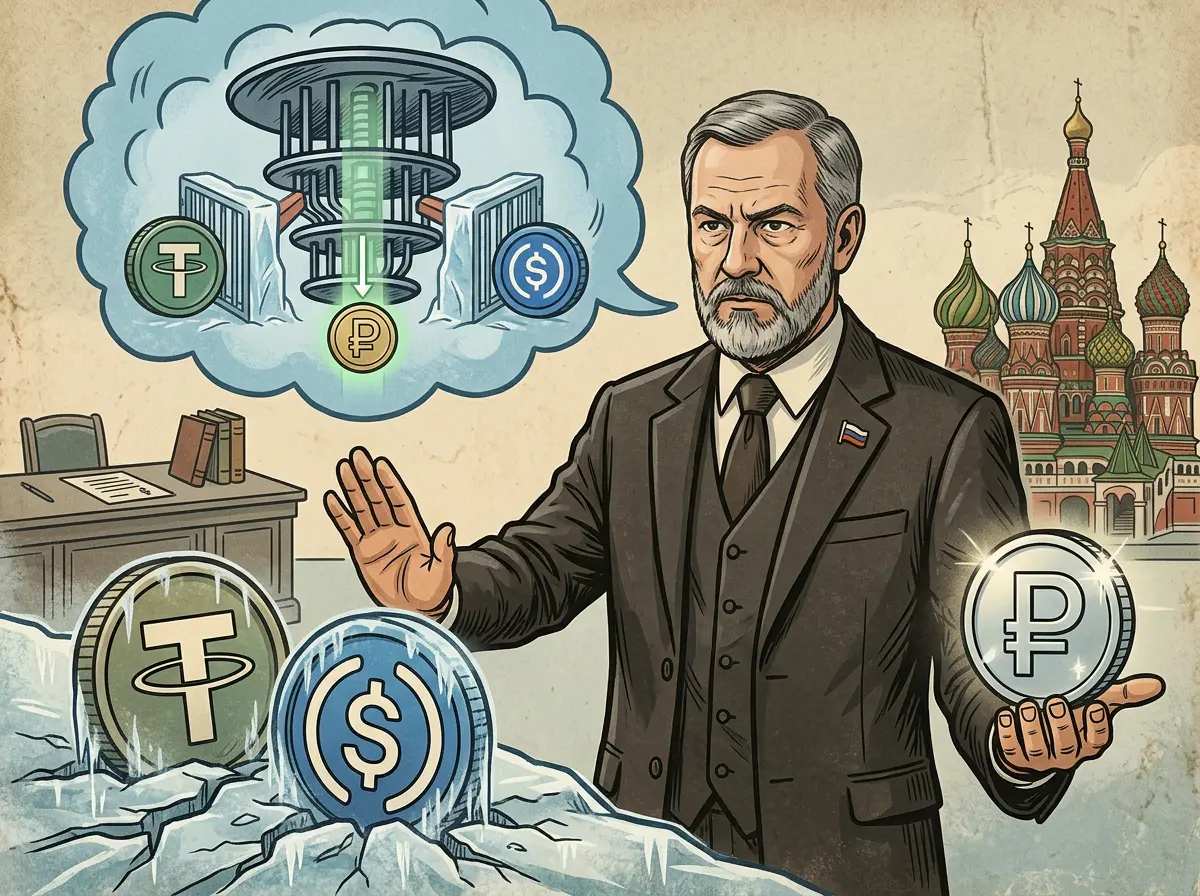
On June 3, Ivan Chebetskov, Deputy Minister of Finance of Russia, said on RBC Radio that if foreign-currency-denominated stablecoins (mainly USDT and USDC) are allowed to be traded on platforms authorized by the Bank of Russia, holders’ wallets face the risk of being frozen. Once the relevant wallets begin interacting in transactions with the authorized platforms, holders’ risk would increase sharply. The Ministry of Finance confirmed that there have been cases in which Russian legal entities froze dollar-denominated stablecoins.
The Freeze-Risk Mechanism Explained by Chebetskov
Chebetskov said on RBC Radio that the trigger conditions for freeze risk are as follows: once a stablecoin holder’s wallet starts interacting with the central bank’s authorized platforms, the risk increases sharply. The Ministry of Finance confirmed that cases have occurred in which Russian corporate entities froze dollar-denominated stablecoins. There are currently no similar freeze cases involving Bitcoin or Ethereum. Chebetskov explained the reason as technical limitations rather than policy exemptions.
Standards for Approved Stablecoins: Official Priority on Ruble and “Friendly Nations” Currency Pegged Tokens
Chebetskov explained that the Russian government is currently actively discussing which stablecoins will be allowed to enter the state-controlled market. The official priority is stablecoins pegged to the ruble and to the currencies of “friendly nations.” Dollar-denominated stablecoins (USDT, USDC) are not within the priority acceptance scope. Both the Russian Ministry of Finance and the central bank initially argued for excluding stablecoins from the list of legal investment instruments; market participants, in the discussions, insisted that the ability to invest in foreign stablecoins should be retained.
Current Status of Russia’s Crypto Bill: Passed First Reading; Annual Caps Proposed for Non-Professional Investors
Current status and key provisions of the bill regulating cryptocurrency circulation are as follows:
Legislative process: The State Duma has passed the first reading and is preparing for the second reading
Non-professional investors: Plan to set an annual cap of 300,000 rubles on purchases of crypto assets
Cooling-off period for withdrawals: The Ministry of Finance proposes a mandatory cooling-off period for licensed-platform account holders to withdraw digital currencies
Special stablecoin legislation: The Ministry of Finance believes there may be special legislation for stablecoins, but no specific content has been released yet
FAQ
What specific risks do USDT and USDC holders face in Russia?
According to Chebetskov’s remarks on RBC Radio, the risk is that once a wallet holding USDT or USDC begins trading with platforms authorized by the Bank of Russia, the wallet’s freeze risk will increase sharply. The Ministry of Finance confirmed that there are cases in which Russian legal entities froze dollar-denominated stablecoins.
Why are there no similar freeze cases for Bitcoin and Ethereum?
Chebetskov said that there are currently no cases of Bitcoin or Ethereum being frozen because of technical limitations—existing technical methods do not currently support directly freezing Bitcoin or Ethereum.
At what stage is Russia’s crypto legislation currently?
The bill regulating cryptocurrency circulation has passed the first reading in the State Duma and is preparing for the second reading. The bill includes: an annual purchase cap of 300,000 rubles for non-professional investors, and a mandatory cooling-off period for withdrawing digital assets from accounts at licensed platforms.


