On June 16, 2026, SpaceX continued its strong uptrend on the second trading day after its listing. Intraday gains widened to 19.5%, and the price moved above about $192.5. By the close of that trading session, SpaceX’s share price closed at $192.46, representing a cumulative gain of more than 42% from the $135 IPO offering price. The company’s market capitalization increased by $412 billion in a single day, pushing its valuation beyond $2.5 trillion.
This price action has drawn widespread attention from the market. With only two days since listing and a free-float ratio of less than 5%, SpaceX has already ranked among the top six listed companies globally by market value.
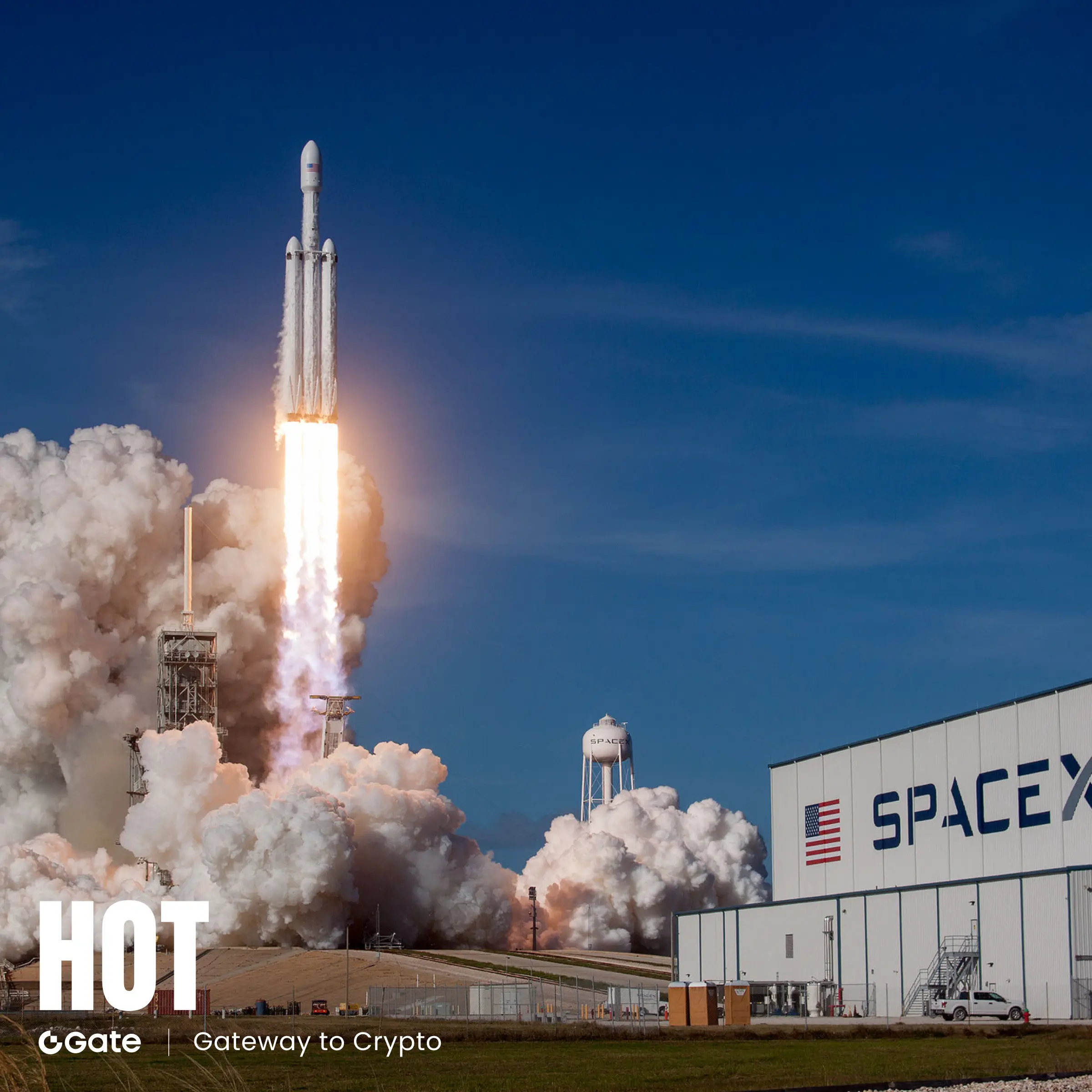
What fundamental drivers support the price right now
SpaceX’s revenue structure is shifting from a single focus on space launches toward a multi-business coordination model. According to audited data disclosed in the offering documents, in 2025 the company generated revenue of $18.67 billion, up about 33% year over year, but its net loss widened to $4.94 billion, mainly due to heavy spending on AI infrastructure, Starship development, and expansion of its satellite constellation.
Breaking it down by segment, Starlink is currently the largest source of cash flow. In 2025, it contributed $11.39 billion in revenue, with operating profit of about $4.42 billion and a profit margin of about 38.6%. The global user base has reached 12 million. Full-year revenue from space launch services was about $4.09 billion. Still, it remains loss-making due to the drag from Starship development costs, but launch frequency for Falcon 9 continues to rise. SpaceX is expected to conduct about 165 launches in 2025, accounting for 80% of global orbital payloads. In 2025, the AI and compute capacity business (xAI) generated about $3.2 billion in revenue, but its losses totaled $6.36 billion—currently the primary direction of cash consumption.
Of note, SpaceX has signed a GPU leasing agreement with Anthropic. The contract term is four years and covers 325,000 H100/H200-class GPUs. Based on preliminary estimates, the annualized rent is about $15 billion. If this leasing revenue is gradually realized, xAI could see a profitability turnaround in the medium term, giving the market growth expectations that go beyond the current financial figures.
What valuation logic lies behind the market split
There is a significant divergence in how SpaceX is valued right now. Using the $135 offering price, a $1.77 trillion valuation implies a price-to-sales multiple of over 90x, far above the historical levels of most large-tech IPOs. The market’s judgment on this valuation level is sharply split.
Supporters argue that SpaceX’s global dominance in the space launch sector is unlikely to be shaken in the near term. Starlink is still in the early stage of increasing user penetration, and the rapid ramp-up of the AI compute leasing business will substantially improve the earnings profile. Wedbush analysts view this IPO as a “watershed event,” believing it sets the tone for future IPOs of major AI companies such as Anthropic and OpenAI.
Opponents point out that the offering valuation benchmarked at $1.77 trillion includes a large amount of narrative premium. A senior analyst at PitchBook said SpaceX’s reasonable valuation is about $1.5 trillion. The premium above that figure, in essence, is the market “paying in advance” for future plans such as AI business and space data centers. Morningstar’s discounted cash flow model is more conservative, estimating the company’s true valuation might be only $780 billion, with the value of AI-related businesses at about $170 billion.
How an ultra-low free float affects the current pricing mechanism
To understand the current price action, it’s essential to first understand the structure of the free float. For this IPO, SpaceX issued about 555.6 million Class A shares. Based on total shares outstanding after the offering of about 7.38 billion Class A shares and 5.696 billion Class B shares, the shares entering public trading through the IPO account for only about 4.3% of total shares.
With such low tradable liquidity, any incremental buy orders can create a significant price impact. The closing price on the first day of trading was about $160.95, up about 19% from the offering price. The following day, it continued to climb to $192.46, bringing the cumulative two-day gain to more than 42%. This move was not driven by a fundamental change over just two days. Instead, it reflects the supply-demand structure of “more people wanting to buy and fewer people able to sell.” With current free float of roughly 4%, even a small inflow of capital could trigger reactions far beyond normal levels.
Why two key upcoming time windows are worth watching
As trading enthusiasm in the early days of listing continues, the market is about to face two time points that could significantly influence the price.
First time window: July 7—index inclusion and passive buying. July 7 is the first trading day after Independence Day and also the 15th trading day since listing. The Nasdaq 100 Index will formally include SpaceX as a component. Estimates suggest that because major indexes plan to add this stock quickly, the proportion of shares held by passive investors after 15 trading days could surge to about 30%. At that time, index funds such as Vanguard CRSP and FTSE Russell will build positions according to rules. The market estimates that the size of this passive buying will fall between $8 billion and $18 billion.
In today’s environment of extremely low free float, this scale could produce a pronounced supply-demand imbalance effect. Because early shareholders are still in lock-up and therefore cannot sell in the secondary market, passive capital’s position-building demand may collide directly with limited tradable supply.
Second time window: late July—post-earnings lock-up expiration window. The company is expected to release its second-quarter earnings in late July. Two business days after the earnings release, some shareholders’ lock-up periods will expire, introducing additional supply into the secondary market. There are two camps on how to interpret this: bulls believe that even if quality companies unlock shares, as long as fundamentals continue to deliver, buyers’ willingness to absorb remains strong; bears worry that the exit of low-cost positions could create selling pressure on the price.
How to understand SpaceX’s current return-and-risk structure
To analyze the return and risk profile in the current phase, it helps to separate short-, medium-, and long-term perspectives.
In the short term, the narrative heat around the early listing period, extremely low free float, and retail FOMO (fear of missing out) are still present. Vanda Research data shows that the number of SpaceX shares bought by retail investors in the first two trading days is comparable to the total amount of retail buying across the entire U.S. stock market in the preceding week. On the macro front, shifting expectations for Fed policy and easing geopolitical risks also provide a favorable backdrop for risk assets. Together, these factors form near-term price support.
The medium-term variables center on two areas: first, the actual scale and pace at which passive funds build positions; second, how the market digests the incremental supply after lock-ups end for long-term shareholders. As the free float gradually rises from the current 4%, whether the premium driven by scarcity can be maintained is the core question that needs ongoing validation.
From a long-term perspective, SpaceX’s valuation foundation depends on the engineering progress of Starship, Starlink’s user growth and ARPU trends, and whether the AI compute leasing business can translate into sustained profitability as expected. The delivery timeline for these fundamentals has significant uncertainty. As disclosed in the prospectus, the company’s net loss expanded to $4.94 billion in 2025, and heavy capital expenditures are expected to remain the norm over the next several fiscal years. With forward growth expectations already incorporated fairly fully into the current valuation level, any major negative news on technology or operations could trigger sharp volatility in a market where free liquidity is still relatively limited.
FAQ
Q: What is SpaceX’s IPO offering price? How big is the fundraising?
A: SpaceX’s IPO offering price is $135 per share. The company plans to issue about 555.6 million shares, with a base fundraising size of $75 billion. After the underwriters fully exercise their option to purchase additional shares, the total offering amount reaches $86.2 billion. Net proceeds after underwriting fees are $85.7 billion. Based on the offering price, the company’s valuation is $1.77 trillion.
Q: What proportion of total shares is currently available for trading?
A: According to the prospectus figures, about 738 million Class A shares and about 569.6 million Class B shares after the offering. The newly issued shares through the IPO account for about 4.3% of total shares. This means that only a small fraction of the shares truly entered public-market trading in the early period after listing.
Q: Why is July 7 a key time point?
A: July 7 is the first trading day after the U.S. Independence Day holiday and the 15th trading day since SpaceX began trading. The Nasdaq 100 Index will officially include SpaceX on that day, and multiple index funds will build positions passively according to their rules. The market estimates that the size of this passive buying will be between $8 billion and $18 billion. Meanwhile, early shareholders are still in lock-up and cannot sell, which could lead to a serious supply-demand imbalance in the short term.
Q: Where is the main disagreement in the market about SpaceX’s valuation right now?
A: The focus of the controversy is the reasonableness of the “narrative premium.” Supporters believe SpaceX has non-substitutable competitive advantages in space launches and satellite internet. They also argue that the rapid ramp-up of the AI compute leasing business will further improve the earnings structure. Opponents counter that the valuation implied by current pricing corresponds to a price-to-sales multiple above 90x, and that a substantial portion of the pricing comes from the market paying in advance for future plans rather than being based on current financial performance.
Q: What fundamental indicators should be重点 to watch next?
A: Three dimensions of indicators are worth continuous tracking: the technical testing progress of the Starship V3 version; Starlink’s user growth trend, ARPU changes, and the actual satellite deployment pace; and whether xAI’s GPU leasing revenue is being realized and how quickly losses are narrowing. The prospectus shows that the company’s net loss reached $4.94 billion in 2025, and heavy capital expenditures are expected to continue.


