This probability distribution is broadly aligned with the pricing in mainstream sports betting markets. In terms of implied probabilities, the market as a whole gives Brazil roughly a 60% chance of winning, while Morocco is under 20%. However, beneath this apparent consensus, fund flows and the positioning structure show significant divergence—some large traders have placed odds as high as 58% on Brazil, while another group of funds continues to build positions toward Morocco, with probabilities exceeding 75%.
This internal tug-of-war structure suggests that the prediction market is not a simple one-way narrative of “Brazil as the favorite,” but rather multiple judgment logics operating in parallel.
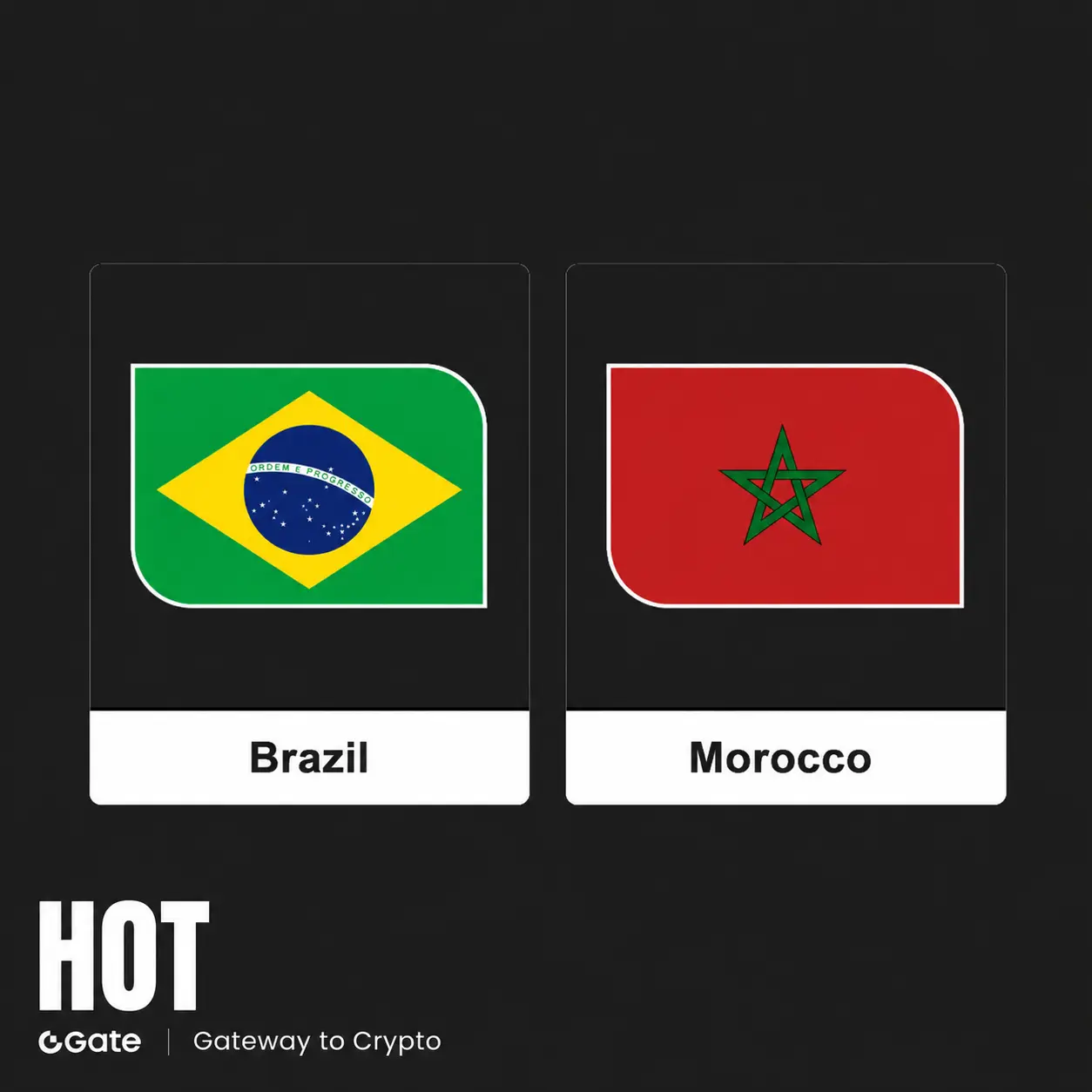
Is there a big gap in the on-paper strength between Brazil and Morocco?
Brazil’s squad’s total valuation is about €928 million, ranking sixth among the participating teams, while Morocco’s valuation is under $500 million, roughly half of Brazil’s. In FIFA world rankings, Brazil is ranked 6th and Morocco 7th, with an insignificant gap.
Brazil has shown strong offensive firepower in the warm-up stage. Since qualifying for the World Cup, Brazil has played 8 friendly matches, recording 5 wins, 1 draw, and 2 losses, with 22 goals scored and 10 conceded. All their opponents have been World Cup participants. In their most recent two friendlies, Brazil followed up with a resounding 8-1 victory over Panama and then a 2-1 win over Egypt, with their form continuing to rise.
Morocco has sustained a steady performance since reaching the semifinals at the 2022 World Cup. Since March of this year, they have remained unbeaten in friendlies, with a record of 3 wins and 2 draws. Over the past 20 matches, Morocco has maintained an unbeaten record, taking 14 wins and 6 draws (including a final decision of a loss for Senegal, their African Cup of Nations final opponent). Morocco’s defense has conceded only 0.67 goals per game on average, demonstrating strong defensive discipline.
How will pre-match concerns and variables affect market judgment?
Beyond on-paper strength, both teams have risks that cannot be ignored.
Brazil faces a manpower crisis at right-back—there is currently no natural starter available for the position. The first-choice right-back has withdrawn from this tournament due to injury. Ancelotti may have Danilo as a stand-in, or deploy a diamond midfield to strengthen coverage and protection. In addition, Neymar is confirmed to miss the opening match due to a calf muscle injury, weakening Brazil’s creativity and explosive threat in the front line.
Morocco is also hit by injuries. Their main center-back Aggaid and winger both withdrew from the World Cup due to injuries, weakening defensive stability and the threat of counterattacks in the front line. Morocco’s head coach only took over the team temporarily in March this year. Although he previously led the U20 national team to win the U20 World Cup, the senior national team’s experience in major tournaments is relatively limited, and the team’s level of cohesion remains an unknown variable.
Pre-match weather is also worth watching. The match will be played in New Jersey; high temperatures may test the stamina of Brazil’s older players in the midfield and defense. Overall analysis suggests that Brazil’s defensive vulnerabilities, together with Morocco’s unbeaten resilience, both become important variables in market pricing.
What market sentiment is implied by this narrative battle?
Market sentiment is often released through multiple dimensions at the same time.
On the sentiment level, mainstream polling shows about 71% of netizens predicting a Brazil win, with 9% expecting a draw and 20% favoring Morocco. This differs somewhat from the prediction market’s Brazil win probability of 59%, draw probability of 26%, and Morocco win probability of 18%—the deviation mainly shows up as a downward adjustment to Brazil’s win probability and a significant upward revision of the draw probability.
In terms of historical head-to-head meetings, the two teams have faced each other in World Cup history only once before: Brazil beat them 3-0 in 1998. But in a 2023 friendly, Morocco defeated Brazil 2-1, proving that this North African powerhouse already has the psychological capital to contend with top-tier teams. The dual-sided nature of historical reference further expands the space for market pricing battles.
In addition, the match is held in New York. The large Brazilian immigrant community gives Brazil a home-like atmosphere that is close to half of a home advantage, imposing higher requirements on Morocco’s ability to withstand pressure away from home.
How does the Gate prediction market lower the participation threshold for users?
Crypto prediction markets reached a key development milestone in 2026. Gate, as a leading global cryptocurrency exchange, completed integration with Polymarket—the world’s largest decentralized prediction market—back in March 2026, becoming the first centralized exchange to connect to a prediction market.
The core value of this integration is that it significantly lowers the barrier for users to participate. Users do not need to create an on-chain wallet, and they do not need to pay Gas fees. They can directly use USDT from the exchange’s spot account to participate in event predictions. For high-attention events such as Brazil vs. Morocco, users can directly enter the Polymarket page from the Alpha section on the Gate App home page to place orders.
For the 2026 World Cup, Gate launched a World Cup专区 within the app, providing an end-to-end aggregation of match schedules, points rankings, qualification scenarios, and related prediction events. The专区 also offers an intelligent fund monitoring feature that can track position changes of smart money and whales.
According to Polymarket Builders data, Gate’s daily nominal trading volume in prediction markets has climbed to the #1 spot across all channels, with an average of 54,325 trades per day, demonstrating strong user participation and market activity.
What are the overall trends for crypto prediction markets during the World Cup?
The 2026 World Cup has become a systemic stress test for the crypto prediction market sector. As of early June 2026, the total trading volume for the Polymarket event “2026 World Cup Champion” had already surpassed $908 million, making it the single largest event by volume among sports prediction markets. On-chain data shows that global crypto wagering on World Cup prediction markets has exceeded $2 billion.
Analysts at Wall Street investment bank Bernstein expect that during the 2026 World Cup, prediction markets will gain an additional $5 billion to $10 billion in trading volume, and noted that this tournament will test platform liquidity, time to launch, and settlement reliability. From a more macro perspective, in 2025, the annualized trading volume of prediction markets already surpassed the trillion-dollar scale. The combined monthly trading volume of Kalshi and Polymarket surged from less than $5 billion in September 2025 to around $24 billion in April 2026.
Sports events have become the category with the strongest liquidity and highest participation in prediction markets. For example, on Polymarket, sports contracts account for about 39% of its market mix. As the World Cup schedule progresses, long-tail markets such as group stage, knockout rounds, top scorers, and qualification scenarios will continue to inject trading momentum into the platform.
FAQ
Q:Will the win rates shown in the prediction market change in real time?
Yes. Crypto prediction markets use an order book mechanism, so win rates (i.e., the price of YES shares) fluctuate in real time based on the trading actions of both buyers and sellers. The latest data before the match starts can be viewed in real time in the prediction market专区 of the Gate App.
Q:What is the data source for Gate prediction markets?
Gate, as the first centralized exchange to integrate with Polymarket, allows users to directly participate in event prediction trading on Polymarket using USDT from the exchange account. Pricing and trading data for prediction market event contracts both come from on-chain markets.
Q:Why is the market underestimating Morocco’s chances of beating Brazil?
The prediction market’s 18% Morocco win probability already reflects the market pricing for the possibility of an upset. Morocco has the most robust defensive system among African teams, and the captain Ashraf’s threat on the right wing could pose a danger to Brazil’s right-back position, given its personnel weakness. But the market also believes that Brazil’s individual advantages in attack and their historical pedigree still dominate.
Q:How are crypto prediction markets different from traditional sports betting?
Crypto prediction markets are based on smart contracts and on-chain settlement, with fund flows and position structures fully open and transparent, allowing users to track the movements of smart money. Traditional sports betting is mostly centralized; odds mechanisms and fund flows are not disclosed publicly. In addition, Gate has enabled a direct connection between exchange accounts and prediction markets, greatly reducing the participation barrier.
Q:How can I participate in Gate prediction market World Cup event predictions?
Users should update the Gate App to v8.12.5 or higher, enter the Polymarket page from the Alpha section on the home screen, and use USDT from the spot account to participate directly in event predictions, without an on-chain wallet or Gas fees.