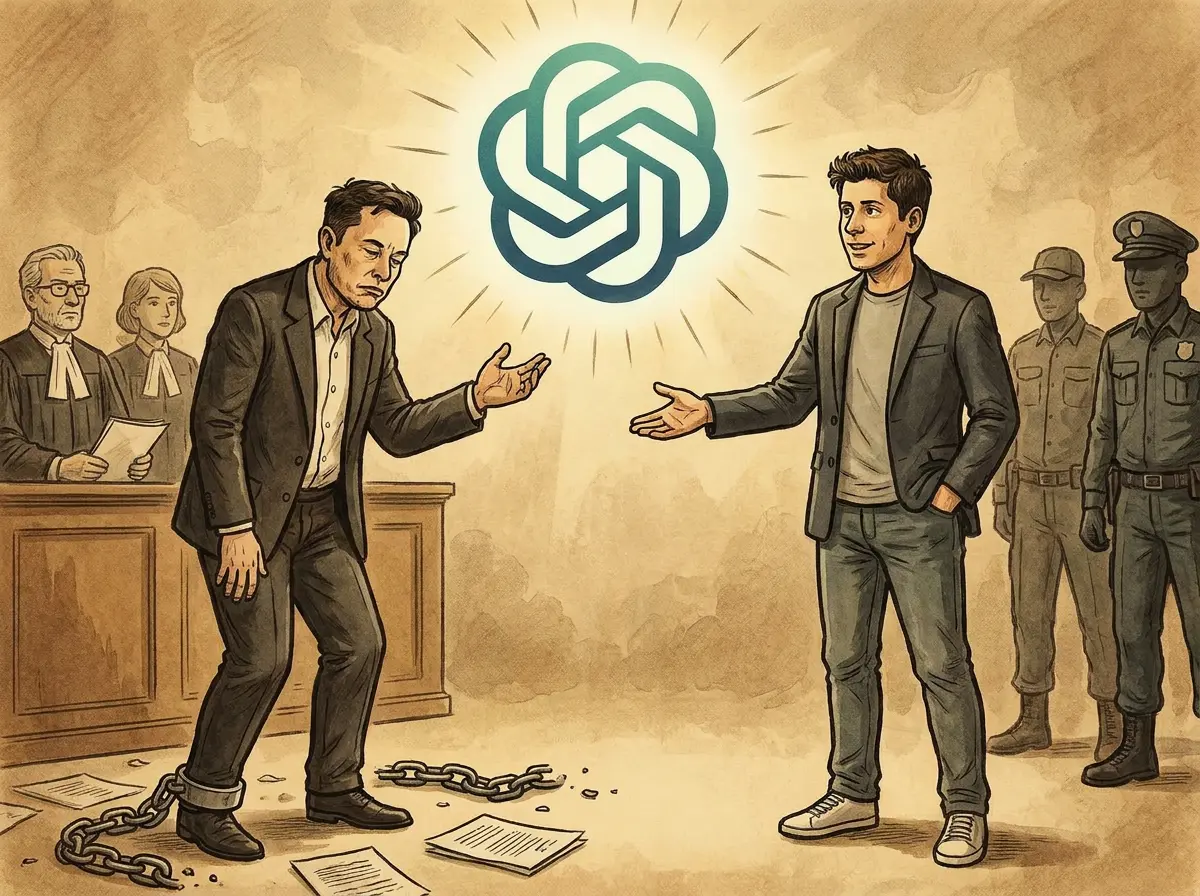
On May 18, a nine-member federal jury in the U.S. District Court for the Northern District of California unanimously ruled against Elon Musk in his lawsuit against OpenAI and CEO Sam Altman due to the lawsuit being filed after the three-year statute of limitations expired. Judge Yvonne Gonzalez Rogers dismissed all of Musk’s claims on the spot. On X, Musk called the ruling a “calendar gimmick,” and his lawyer announced an “appeal.”
The legal core of the jury’s ruling: the three-year statute of limitations ends all claims
Under California law, this case applies a three-year general statute of limitations. OpenAI attorney Sarah Eddy confirmed that Musk should have filed the lawsuit in August 2021, but he didn’t file until August 2024—by a full three years. Because of the statute-of-limitations issue, Musk’s core claims—“breach of charitable trust” and “executive improper enrichment”—were never even placed before the jury. Gonzalez Rogers dismissed all claims in court immediately.
OpenAI’s defense argued that Musk was told as early as 2017 that OpenAI needed to obtain funding in the form of a for-profit company, so he should have known earlier. Stavros Gadinis, a law professor at the University of California, Berkeley, confirmed: “It’s very difficult to persuade a jury to use its equitable power to correct, especially in a situation where the error was discovered but no lawsuit was filed earlier.”
Key statements confirmed by both sides during the trial
Elon Musk (testifying): “Its original purpose was to create a charitable organization that benefits no individual… you can’t steal a charitable organization.”
Greg Brockman (testifying, representing OpenAI): Musk had said that “it would take $80 billion to build a city on Mars,” and suggested that this was one of the motives for his attempt to gain control of OpenAI.
Sam Altman (testifying, representing OpenAI): Musk had demanded to receive 90% of OpenAI’s shares and proposed that OpenAI merge with Tesla.
OpenAI attorney William Savitt: “What Mr. Musk cares about is whether he can keep control. We’re here because Mr. Musk’s wishes didn’t come true.” He also accused Musk of having “selective amnesia.”
Appeal path and assessments confirmed by legal experts
Toberoff clearly stated that Musk will appeal, and the case will enter the Ninth Circuit Court of Appeals. Multiple veteran appellate attorneys confirmed that it is extremely difficult for the appeals court to overturn the jury’s statute-of-limitations determination. Judge Gonzalez Rogers also indicated that Musk would face “a tough fight.”
As for the background, OpenAI is preparing an IPO with a possible valuation of up to $1 trillion. Musk’s xAI is currently part of SpaceX, and SpaceX is also preparing an IPO that could be even larger in scale.
Common questions
Why couldn’t Musk’s “breach of charitable trust” claim be brought before the jury?
Because the jury ruled that the statute of limitations had passed, Judge Gonzalez Rogers dismissed all of Musk’s claims immediately in court. The core claims—“breach of charitable trust” and “executive improper enrichment”—did not even enter the formal trial process. The jury never reviewed the substance of these two allegations.
Why did Musk wait until 2024 to file the lawsuit?
Based on information confirmed during the trial, OpenAI argued that Musk was told as early as 2017 that OpenAI needed to obtain funding in the for-profit form. Musk’s side failed to persuade the jury to accept its claim of “fully understanding the situation only recently,” which led the jury to rule that the three-year statute of limitations was against him.
What are the odds of success for an appeal in the Ninth Circuit?
Multiple veteran appellate attorneys confirmed that it is extremely difficult for the appeals court to overturn the jury’s ruling on the statute of limitations; the judge herself also indicated that Musk’s appeal would face “a tough fight.” Keeping the original verdict stands as the more likely outcome currently assessed by legal experts, but the case will still undergo a lengthy process in the Ninth Circuit.


