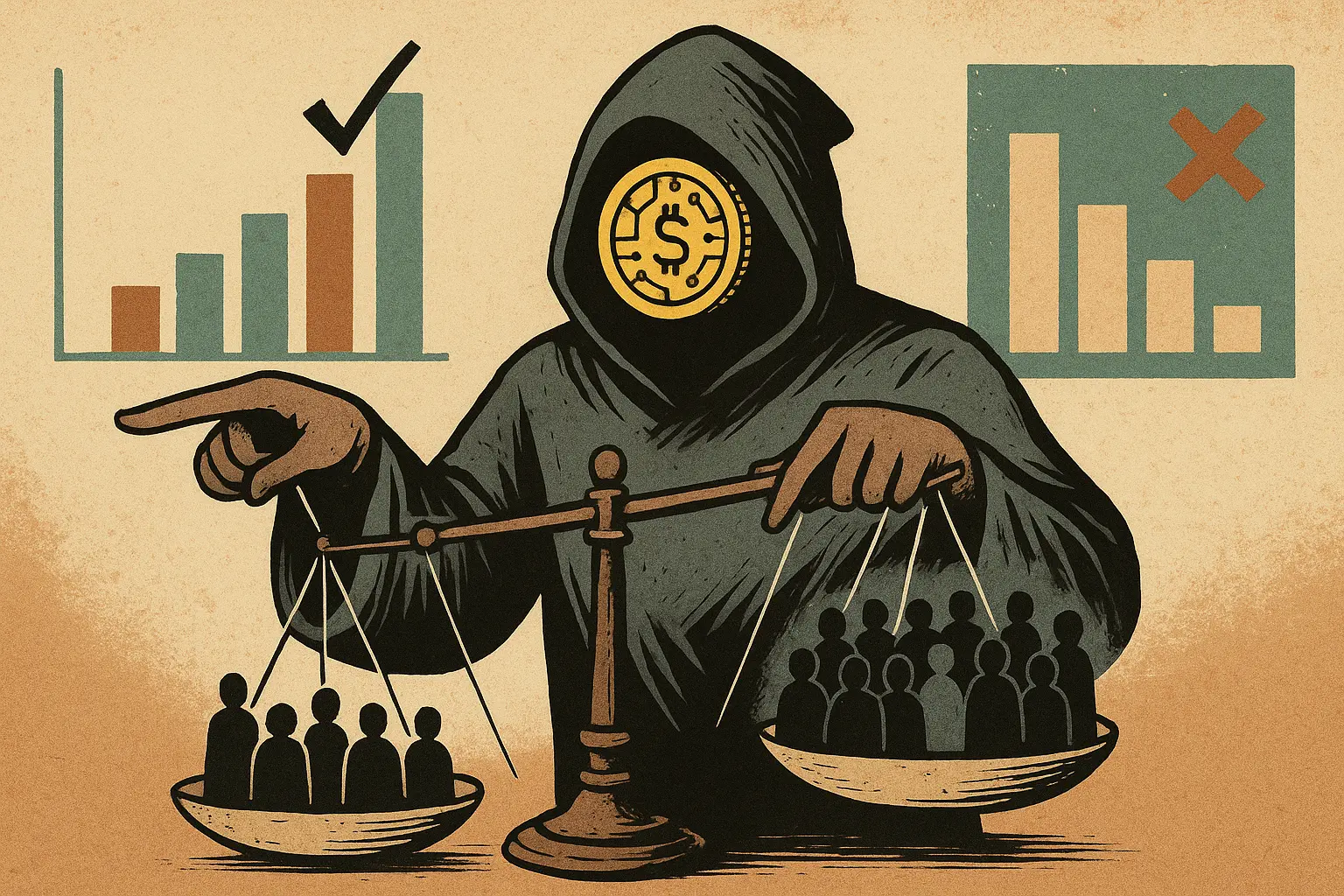
The Wall Street Journal (WSJ) reported on May 18 that Polymarket outsourced dispute arbitration for prediction markets to third-party service UMA. Analysis of Polymarket and blockchain data shows that at least 60% of active UMA voters can be directly linked to Polymarket accounts, with anonymous token voters suspected of manipulating the outcome.
Key data confirmed by the WSJ analysis
60%+: Active UMA voters can be directly linked to Polymarket accounts
~300 cases (about 1/5 of the disputes): At least one UMA voter has a direct financial interest in the adjudicated betting markets
50%+ of votes: Concentrated among the 10 largest whale wallets in most disputes
1,150+ cases: The number of bets that have triggered disputes since 2026 to date (more than all of 2025)
Polymarket official position: Only 0.2% of betting contracts will trigger UMA votes; the platform’s terms of service state it “assumes no responsibility for any dispute related to the resolution of any contract.”
UMA voting mechanism: confirmed operating rules and design flaws
UMA was founded by two former Goldman Sachs traders and is regulated by the Cayman Islands-based Risk Labs Foundation. Confirmed elements of the current mechanism: token holders discuss and vote on Discord, with more tokens equating to greater voting weight; UMA imposes economic penalties on voters who vote in opposition; there is currently no mechanism to prevent token holders from voting on disputes in which they have a personal financial interest; most voters are anonymous.
The UMA.rocks incident (confirmed): This startup, which allows UMA holders to pool tokens and commission a committee to vote, accounted for 8% of its share in a recent controversy. In late April 2026, UMA.rocks fired a committee member known as “Scout,” after allegations that he was involved in market manipulation. Scout denied manipulation but admitted to participating in UMA voting while also placing bets on disputed Polymarket contracts, arguing that this was beneficial to the market.
Official statements confirmed by all parties
Castle Island Ventures co-founder Nic Carter: “This should be Polymarket’s responsibility, not the responsibility of some outsourced, third-party, mysterious, anonymous token holders.”
Risk Labs Foundation spokesperson James Flay: “We have never seen any credible evidence of UMA market manipulation. The complaints you hear are from a small number of traders who lost money in gambling.”
Polymarket (official): UMA “decentralizes decision-making into a transparent, market-wide framework, rather than giving it to any single decision-maker.”
FAQ
Why did Polymarket outsource dispute resolution to UMA?
According to the report, after Polymarket reached a settlement with the CFTC over alleged violations in early 2022, it began outsourcing disputes to UMA. Relying on a decentralized token-holder group also strengthened the argument that Polymarket is an offshore platform not subject to U.S. regulation.
Can UMA token votes be publicly audited?
UMA claims to be decentralized, but most voters are anonymous. Blockchain data can show the voting direction of token addresses, but the true identities of voters usually cannot be publicly verified. The WSJ analysis reached the “60% can be linked” conclusion by correlating Polymarket accounts and UMA voting addresses.
What responsibility does Polymarket take for UMA arbitration outcomes?
Under Polymarket’s terms of use, the platform assumes no responsibility for any dispute related to the resolution of contracts. Polymarket very rarely overturns UMA decisions, but it will periodically publish “clarification notices” for betting contracts to prevent potential disputes.


