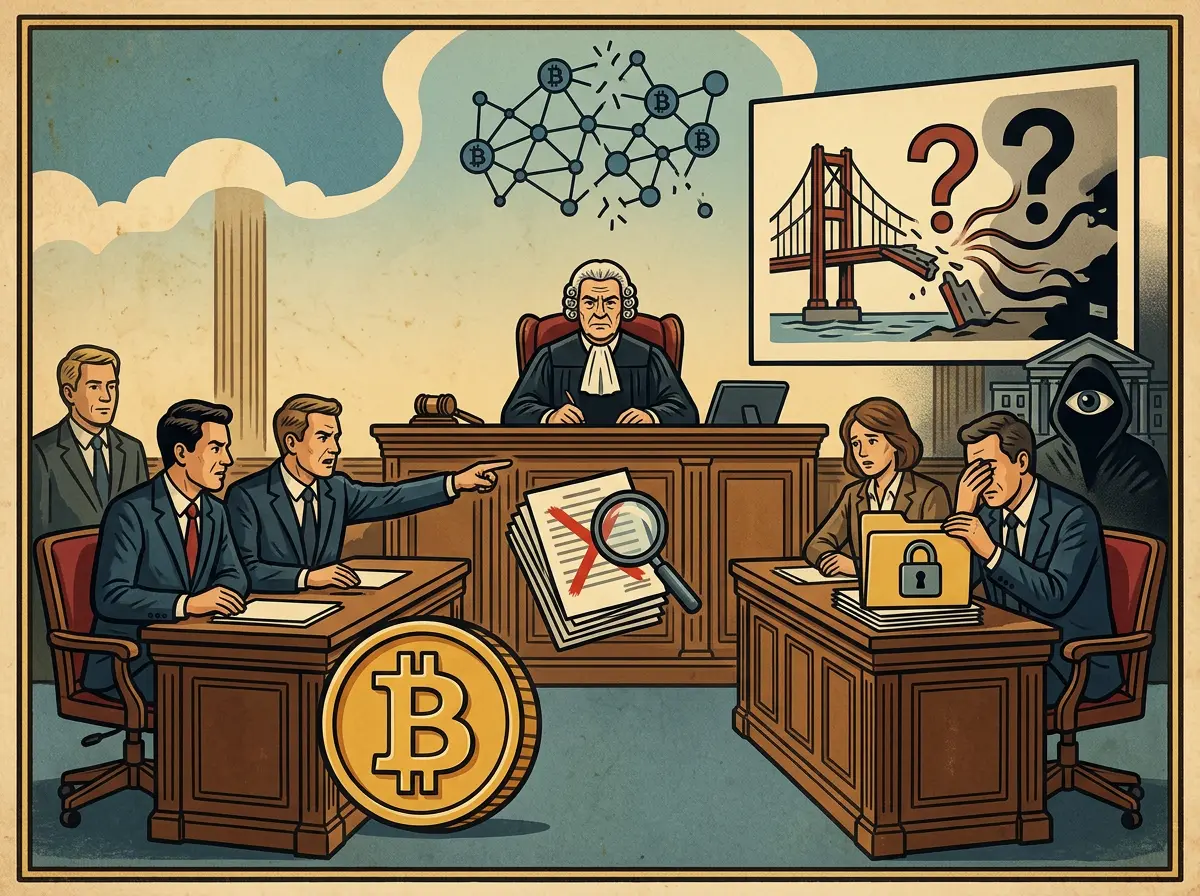
According to Bloomberg on May 22, Galaxy Digital founder and CEO Michael Novogratz and BitGo CEO Mike Belshe both testified in Delaware Chancery Court this week. The two sides are litigating over a $1.2 billion cryptocurrency M&A agreement that collapsed in August 2022, with BitGo seeking at least $100 million in a reverse termination fee.
Source of the lawsuit and legal timeline: a full five-year chronology
The legal dispute between Galaxy Digital and BitGo has spanned five years. The following are the key milestones confirmed by the court:
In May 2021, Galaxy Digital announced it would acquire BitGo for $1.2 billion—at the time, the largest M&A deal in the crypto industry. The two sides planned to merge and list on Nasdaq; BitGo CEO Mike Belshe would serve as Galaxy’s Deputy CEO and join the board of directors. In August 2022, Galaxy Digital announced it would terminate the agreement. The stated reason was that BitGo “failed to submit the 2021 audited financial statements required by the agreement by July 31, 2022,” and that no termination fee was required. That same month, BitGo announced it would seek a $100 million reverse termination fee or higher legal damages. In June 2023, the initial lawsuit was dismissed by the court. In May 2024, the Delaware Supreme Court overturned the dismissal decision, ruling that “there is ambiguity in the contractual provisions related to the financial statements,” and the case returned to the merits stage. In May 2026, both CEOs testified, and the trial is ongoing.
Core legal claims confirmed in testimony by both sides
BitGo’s allegations (confirmed in Mike Belshe’s testimony): Galaxy failed to use reasonable efforts to complete the deal; Galaxy concealed details of investigations by U.S. regulatory authorities from BitGo, and those details may have affected its ability to complete the merger; BitGo has provided all required documents, while Galaxy intentionally omitted disclosures of key regulatory information.
Galaxy’s defense (confirmed in Michael Novogratz’s testimony): Galaxy was not subject to the regulatory investigation; the fundamental reason the deal was terminated was that the SEC revised relevant accounting standards—an external regulatory change outside the control of both parties; BitGo, for failing to submit the 2021 audited financial statements on time, had already lost its right to claim the reverse termination fee at the contract level; before terminating the agreement, Novogratz had proactively proposed pushing the merger forward in Canada to bypass SEC requirements, showing that Galaxy indeed made efforts to find alternative options to get the transaction completed.
Three confirmed external factors behind the deal’s collapse
A major drop in the 2022 crypto market: In 2022 alone, major crypto assets such as Bitcoin fell by more than 60%, shaking the market logic and valuation basis underlying large M&A deals in a fundamental way
SEC revisions to crypto asset accounting standards: The SEC issued new guidance on how companies that hold crypto assets should account for them, imposing more stringent requirements on how banks and financial institutions recognize crypto assets on their balance sheets, directly affecting the financial compliance of the merged entities
Liquidity crisis triggered by the Terra/Luna collapse: The Terra/Luna collapse in May 2022 triggered a liquidity crisis across the entire crypto market. Multiple CeFi institutions subsequently failed, intensifying regulatory scrutiny of crypto M&A
FAQ
Why did the Delaware Supreme Court overturn the 2023 dismissal ruling in 2024?
In May 2024, the Delaware Supreme Court ruled that the trial court had erred in dismissing BitGo’s lawsuit. The reason was that the merger agreement contained ambiguous contractual terms regarding the “2021 audited financial statements”—i.e., whether “financial statements that comply with the agreement’s requirements” are clear in definition, whether BitGo’s submission actually failed to meet the contractual requirements. These issues still leave room for legal interpretation and therefore require further clarification at trial rather than being decided directly at the dismissal stage.
What exactly did Galaxy Digital’s proposal to “push the merger forward in Canada” mean?
Novogratz confirmed in testimony that he had proposed an alternative plan to complete the merger in Canada, with the goal of circumventing the SEC’s review requirements for such transactions. Since Galaxy Digital is a company listed on the Toronto Stock Exchange in Canada (and also trades in the U.S. OTC market), completing the merger in Canada is feasible to a certain extent from a legal-structure standpoint and could be done without going through an SEC approval framework. This statement is one of the key pieces of evidence Galaxy sought to use to refute BitGo’s claim that “Galaxy did not make enough effort to push the deal forward.”
What is the significance of the ruling in this case for reverse termination fee clauses in the crypto industry?
This case is one of the largest reverse termination fee claims in the crypto industry to date. The final ruling of the Delaware Chancery Court (regardless of the outcome) will provide a reference precedent for the judicial interpretation of the “reasonable efforts obligation” and the “audited financial statements submission clause” in crypto merger agreements, with direct value for drafting future large crypto M&A agreements and assessing risk. The trial is still ongoing, and the judge has not yet issued a final ruling.


