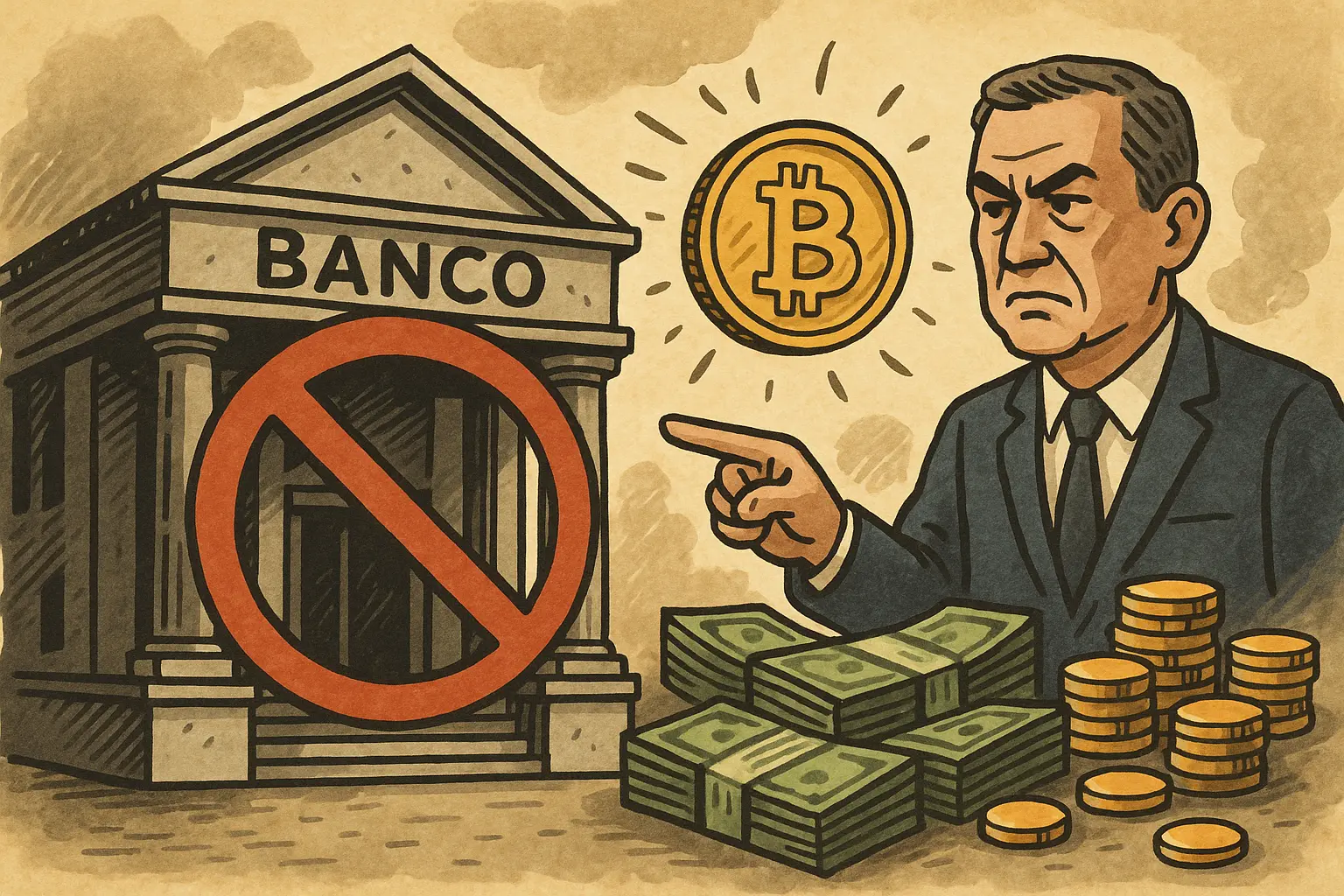
According to a May 15 report by Bitcoin.com News, Brazil’s Central Bank Administrative Penalty Procedure Decision Committee (Copas) imposed a two-year ban on cryptocurrency asset trading and a $3.2 million fine on Banco Topazio for serious violations in cross-border cryptocurrency asset business between October 2020 and September 2021.
Confirmed Violations and Legal Basis for the Penalties
According to Copas’ formal ruling, Banco Topazio was found to have violated rules in the following areas:
Failure to verify beneficiary status: During the execution of cryptocurrency purchase transactions, it did not complete procedures to verify the qualification of the third-party transaction beneficiary
Failure to report suspicious transactions: The $1.7 billion transactions of 15 corporate entities were not reported as required
Violations in customer financial capacity verification: There were violations in determining customers’ financial capacity
Deficiencies in registration procedures: Defects were found in the relevant customer registration procedures
Failure to assess AML/CFT risks: No assessment was conducted of anti-money laundering and counter-terrorist financing risks
Why Copas deemed the Violations “Severe in Nature”
The $1.7 billion in violations not only accounted for 63% of Banco Topazio’s foreign exchange transaction volume in the same period, but also made up 46% of its total market business volume. Based on this scale, the review committee determined that these actions were “severe in nature.” Under the law, such conduct may “seriously affect the purposes and continuity of activities or operations within the national financial system, the union system, or Brazil’s payment system.”
Statement by Regulator Aquino: Other Banks Also Face Ban Risks
In a public notice, Elton Aquino, the Brazil Central Bank’s head of regulation, said that if the central bank determines that other institutions have violated regulations, bans could similarly be applied to them as a preventive measure. He noted that, given the growing prevalence of crypto assets in Brazil’s economy, it is necessary “to issue warnings to all participants in that market and make it clearly understood that the banking regulatory authorities are closely monitoring and alert to abnormal business models that may contribute to money laundering activities.”
Background on Brazil’s Existing Crypto Regulation Framework
Before this penalty against Banco Topazio, the Brazil Central Bank had already put in place the following confirmed regulatory framework: it had banned the use of cryptocurrencies in regulated payment channels; and it had implemented a nationwide ban on the market for non-financial cryptocurrency transactions.
FAQ
What specific actions was Banco Topazio ruled to have violated?
According to Copas’ formal ruling, between October 2020 and September 2021, Banco Topazio violated regulations in cryptocurrency cross-border transactions involving 15 corporate entities totaling $1.7 billion by failing to verify beneficiary status, failing to report suspicious transactions, having violations in customer financial capacity checks, deficiencies in registration procedures, and failing to assess AML/CFT risks.
How large a share of Banco Topazio’s business did the $1.7 billion in violations account for?
The $1.7 billion in violations accounted for 63% of Banco Topazio’s foreign exchange transaction volume in the same period and 46% of its total market business volume in the same period. This ratio is one of the core bases on which Copas deemed the violations “severe in nature.”
Has the Brazil Central Bank clearly stated it will take similar measures against other banks?
According to the statement by regulator Elton Aquino, if the central bank determines that other institutions have violated regulations, similar bans could also be applied to them as preventive measures. He explicitly said that banking regulatory authorities are closely monitoring abnormal business models that may contribute to money laundering activities.


