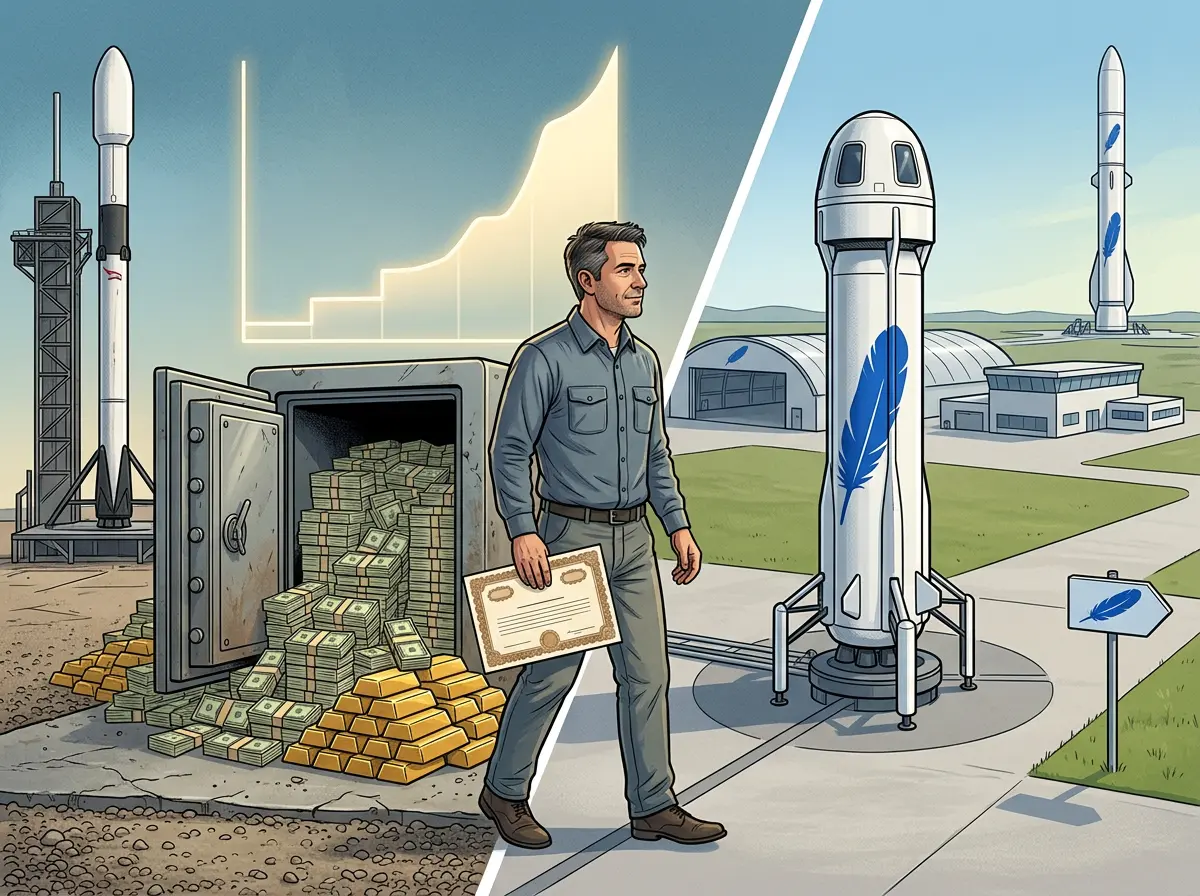
Juan Hernandez, a Mexican welder who joined SpaceX in 2015 at $28 per hour, used an initial $10,000 stock grant and a 10-year payroll withholding ESPP (Employee Stock Purchase Plan) to hold about 6,500 shares at the time of listing, valued at approximately $1,046,175. Hernandez moved to Blue Origin before the IPO to continue working as a welder.
Hernandez’s confirmed shareholding figures and career trajectory
According to reports from CBS News and Yahoo Finance:
Join date: 2015, $28 per hour; initially joined as a contract welder
Initial grant: received a $10,000 stock grant after converting to a full-time employee
Ongoing purchases: continued buying through ESPP at a discounted price over 10 years
Career advancement: promoted from welder to supervisor
Shares held at IPO: about 6,500 shares, valued at approximately $1,046,175
In 2020: sold some shares to buy real estate in Texas (when SpaceX was still private)
Next destination after leaving: before the IPO, transferred to Blue Origin and continued as a welder
The Yahoo Finance report headline says he left after his initial grant grew to about $880,000 (the difference from CBS News’s $1,046,175 may reflect different calculation methods).
Confirmed figures for employee wealth distribution in the SpaceX IPO
According to the figures confirmed in a Fortune report:
Number of millionaires: about 4,400 current and former employees holding more than $1 million
Number of billionaires: about 400 people holding more than $100 million
CFO Bret Johnsen: shareholding estimated at more than $1 billion
COO Gwynne Shotwell: shareholding estimated at more than $1 billion
Director Antonio Gracias: about $65 billion
Director Luke Nosek: about $5 billion
Confirmed gap between paper wealth and cash-out wealth
In a statement cited by Fortune, Jason Schloetzer, a professor of accounting at Georgetown University, said: “Stocks worth millions on paper don’t equal millions of dollars in a bank account.”
Exit value for employees is still affected by factors including: the post-IPO lock-up period (typically 180 days), price fluctuations, and tax obligations layered by federal taxes, state taxes, and the Alternative Minimum Tax (AMT). Hernandez’s selling to buy Texas real estate was carried out as a long-term, staged strategy—not a one-time cash-out after the IPO.
FAQ
Why did Juan Hernandez choose to leave SpaceX while its stock was still increasing?
According to various reports, none specifically explains the reason for his departure. What can be confirmed is that when he left, SpaceX was still a private company and the shares were not yet liquid; his million-dollar wealth fully came from SpaceX’s IPO listing (which occurred after he left).
How did the ESPP (Employee Stock Purchase Plan) amplify the effect of the initial grant?
According to the article, ESPP allows employees to keep buying company stock at a discount through payroll deductions. As SpaceX’s valuation rose from several tens of billions of dollars to $1.75 trillion, the discounted purchases compounded with the valuation growth, significantly amplifying the total value of holdings over the long term.
About how many employees became millionaires in the SpaceX IPO?
According to Fortune, about 4,400 current and former employees had holdings valued at more than $1 million after the SpaceX IPO, and about 400 people had more than $100 million. A professor at Georgetown University also reminded that the actual cash received is still affected by lock-up periods, stock price volatility, and taxes.


