What is Pyth Network? Building a Decentralized Financial Data Marketplace

Last Updated 2026-04-14 08:52:40
Reading Time: 4m
As DeFi and on-chain financial applications continue to evolve rapidly, oracles have become essential infrastructure. Pyth Network, a data oracle specializing in high frequency and low latency, is reshaping the traditional financial data distribution model by directly linking financial institutions to deliver real-time market data. With the recent launch of the Pyth Data Marketplace, institutions can now post and monetize their data on the blockchain, ushering in a new era of competition in the financial data market.

What Is Pyth Network?

What Is Pyth Network?

(Source: Pyth Network)

Pyth Network is a blockchain oracle system specializing in real-time financial data delivery. Its core function is to bring real-world market prices—such as cryptocurrency or equities—on-chain, enabling DeFi applications to leverage this data for trading and calculations.

Unlike traditional oracles, Pyth prioritizes both the quality and speed of its data sources, aiming to deliver quotes that closely reflect actual market conditions.

The Role of Oracles in Blockchain

Blockchains cannot natively access external data, making oracles essential for bridging the on-chain and off-chain worlds.

For example:

  • DeFi lending protocols require accurate asset pricing

  • Derivatives trading depends on real-time price feeds

  • Stablecoin mechanisms need reliable price references

All of these rely on oracles to supply trustworthy data.

Pyth’s Three Core Features

  1. First-Party Data Sources

Pyth’s standout feature is its direct data acquisition from institutions, bypassing intermediaries. Data sources include traditional financial institutions, cryptocurrency exchanges, and market makers. This first-hand model minimizes latency and errors, enhancing accuracy.

  1. High-Frequency Updates and Low Latency

Pyth delivers price updates multiple times per second, making it ideal for high-frequency trading, Perpetual Futures, Derivatives, and real-time settlement systems. Compared to legacy oracles, this immediacy better aligns with the demands of financial markets.

  1. Multi-Asset and Cross-Chain Support

Pyth’s data spans a wide range of asset classes:

  • Crypto

  • Stocks

  • Forex (FX)

  • Commodities (including gold and crude oil)

While Pyth was initially launched on Solana, it has since expanded across multiple blockchains, establishing itself as a cross-chain data infrastructure.

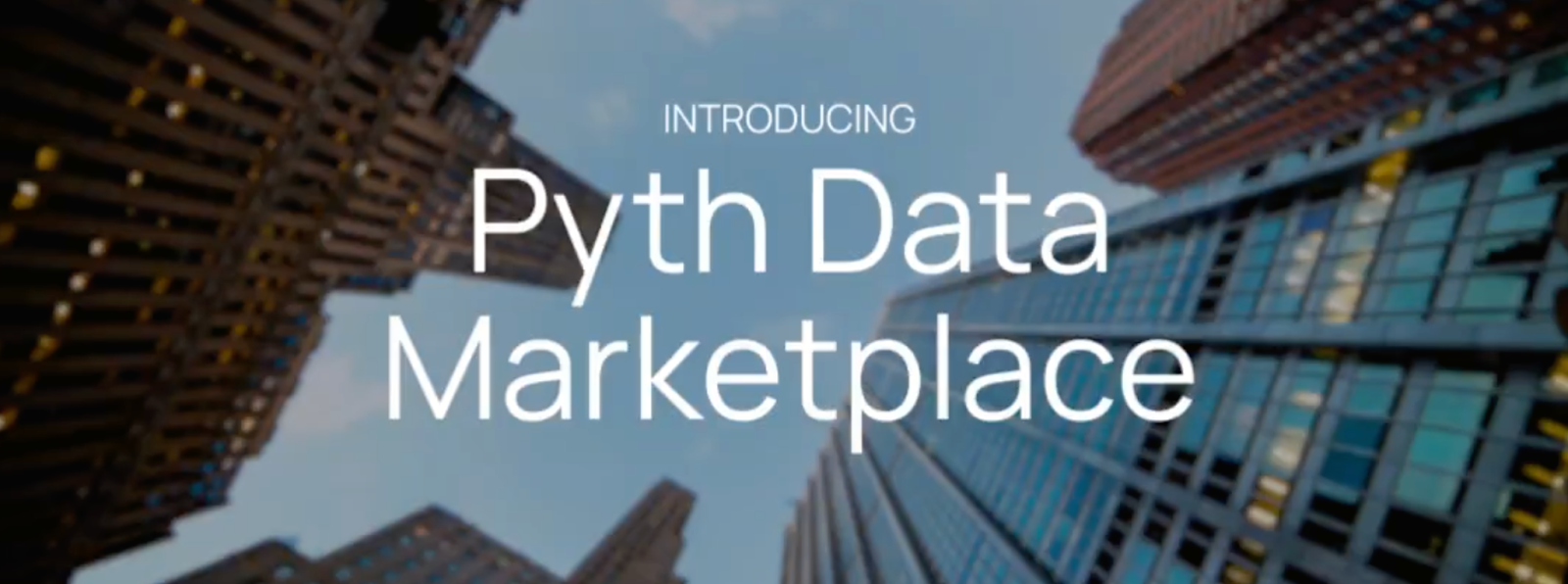
Pyth Data Marketplace: Upgrading the Data Business Model

Pyth Data Marketplace: Upgrading the Data Business Model

(Source: Pyth Network)

The introduction of the Pyth Data Marketplace marks a significant shift in its commercial strategy. Through this platform, financial institutions can publish market data directly on-chain, independently set pricing and approval methods, and retain full control over their data rights and distribution.

Initially, the marketplace supports data types such as Forex, precious metals, and crude oil swaps—core traditional financial assets. Leading institutions including Euronext, Fidelity Investments, OTC Markets Group, and Tradeweb have already joined, steadily building a robust data supplier ecosystem.

Challenging Traditional Financial Data Market Structures

Historically, the financial data market has been dominated by a handful of large vendors, characterized by high prices and bundled sales. This has resulted in opaque pricing, limited access to individual data sets, and elevated overall costs. Pyth’s pay-as-you-go model empowers users to select specific data sources based on actual demand, eliminating the need to purchase entire data packages. This flexible pricing and access mechanism not only drives down costs but also introduces new options for acquiring financial data, directly challenging the industry’s established structure.

Competing with Other Oracles

Within the blockchain oracle sector, Chainlink stands as a key competitor.

Key differences include:

  • Chainlink aggregates data from multiple sources

  • Pyth focuses on first-party data and high-frequency updates

This reflects the ongoing diversification of the oracle market.

Bringing Government Data On-Chain

Pyth’s applications extend beyond market pricing. In 2025, U.S. government agencies selected Pyth and Chainlink to put economic data—such as Gross Domestic Product (GDP) and historical economic statistics—on-chain. Going forward, Pyth plans to support additional official datasets, further expanding its use cases.

Summary

Pyth Network is reshaping how financial data is distributed, transitioning from centralized legacy models to on-chain and decentralized markets. By leveraging first-party data sources, high-frequency updates, and data monetization mechanisms, Pyth not only elevates DeFi infrastructure but also unlocks new commercial models for financial institutions. As more assets and data migrate on-chain, the importance of oracles will continue to grow, making Pyth’s role in this space one to watch closely.

Author:  Allen
Disclaimer
* The information is not intended to be and does not constitute financial advice or any other recommendation of any sort offered or endorsed by Gate.
* This article may not be reproduced, transmitted or copied without referencing Gate. Contravention is an infringement of Copyright Act and may be subject to legal action.

Related Articles

In-depth Explanation of Yala: Building a Modular DeFi Yield Aggregator with $YU Stablecoin as a Medium
Beginner

In-depth Explanation of Yala: Building a Modular DeFi Yield Aggregator with $YU Stablecoin as a Medium

Yala inherits the security and decentralization of Bitcoin while using a modular protocol framework with the $YU stablecoin as a medium of exchange and store of value. It seamlessly connects Bitcoin with major ecosystems, allowing Bitcoin holders to earn yield from various DeFi protocols.
2026-03-24 11:55:44
The Future of Cross-Chain Bridges: Full-Chain Interoperability Becomes Inevitable, Liquidity Bridges Will Decline
Beginner

The Future of Cross-Chain Bridges: Full-Chain Interoperability Becomes Inevitable, Liquidity Bridges Will Decline

This article explores the development trends, applications, and prospects of cross-chain bridges.
2026-04-08 17:11:27
Solana Need L2s And Appchains?
Advanced

Solana Need L2s And Appchains?

Solana faces both opportunities and challenges in its development. Recently, severe network congestion has led to a high transaction failure rate and increased fees. Consequently, some have suggested using Layer 2 and appchain technologies to address this issue. This article explores the feasibility of this strategy.
2026-04-06 23:31:03
Sui: How are users leveraging its speed, security, & scalability?
Intermediate

Sui: How are users leveraging its speed, security, & scalability?

Sui is a PoS L1 blockchain with a novel architecture whose object-centric model enables parallelization of transactions through verifier level scaling. In this research paper the unique features of the Sui blockchain will be introduced, the economic prospects of SUI tokens will be presented, and it will be explained how investors can learn about which dApps are driving the use of the chain through the Sui application campaign.
2026-04-07 01:11:45
Navigating the Zero Knowledge Landscape
Advanced

Navigating the Zero Knowledge Landscape

This article introduces the technical principles, framework, and applications of Zero-Knowledge (ZK) technology, covering aspects from privacy, identity (ID), decentralized exchanges (DEX), to oracles.
2026-04-08 15:08:18
What is Tronscan and How Can You Use it in 2025?
Beginner

What is Tronscan and How Can You Use it in 2025?

Tronscan is a blockchain explorer that goes beyond the basics, offering wallet management, token tracking, smart contract insights, and governance participation. By 2025, it has evolved with enhanced security features, expanded analytics, cross-chain integration, and improved mobile experience. The platform now includes advanced biometric authentication, real-time transaction monitoring, and a comprehensive DeFi dashboard. Developers benefit from AI-powered smart contract analysis and improved testing environments, while users enjoy a unified multi-chain portfolio view and gesture-based navigation on mobile devices.
2026-03-24 11:52:42