Gate Gas Station: Redefining the Multi-Chain Experience for Seamless Web3 Transactions

Beginner
Quick Reads
Last Updated 2026-03-24 21:45:37
Reading Time: 1m
As multi-chain operations become more common in the Web3 ecosystem, effective gas fee management is critical to user experience. This article explores how Gate Gas Station uses unified accounts and automated payment mechanisms to minimize operational friction, optimize cross-chain workflows, and improve overall efficiency and stability.

As Multichain Matures, Focus Shifts to User Experience Details
As Multichain Matures, Focus Shifts to User Experience Details

Web3 has reached a stage where cross-chain activity is routine. Users regularly transfer assets between public chains, engage in DeFi, mint NFTs, and interact with various DApps—these are now standard operations. Technical advancements continue to improve bridge efficiency, on-chain speed, and fee optimization.

In real-world use, the main reason transactions fail is often not the cross-chain technology itself, but a basic requirement—insufficient native tokens to cover gas fees.

When every step is ready but a transaction fails because the wallet lacks just a few dollars’ worth of on-chain tokens, the resulting frustration is far more draining than a technical error, breaking the flow of the user experience.

Elevating Gas Management to a Platform-Level Capability

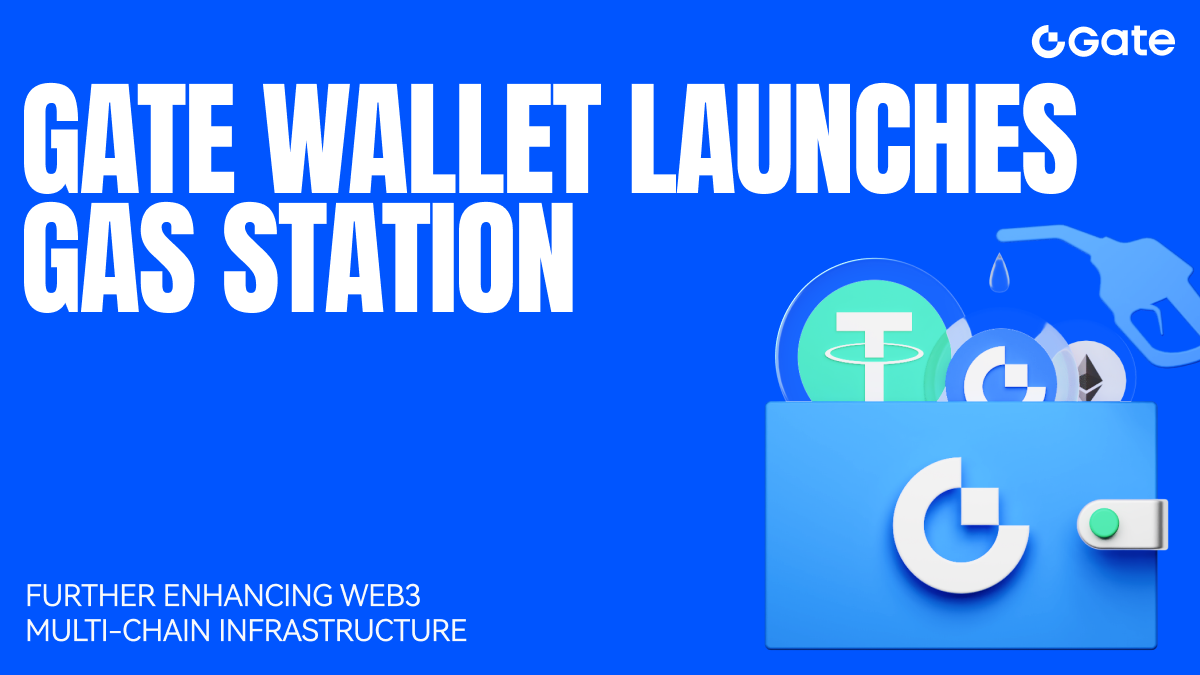
The Gate Gas Station is designed not simply as a gas top-up tool, but as a way to transform gas from a resource users must manage individually into a core platform service.

The system creates a dedicated gas account for each EVM wallet. When users operate on supported networks and their native token balance is insufficient, the platform automatically pays the required fees. There’s no need for extra steps or advance asset switching.

This approach allows users to focus on their actions, not their deficiencies. Technical details are handled in the backend, leaving only a seamless experience on the frontend.

Unified Payment Pool Connecting the Entire EVM Ecosystem

This mechanism now covers multiple leading EVM networks, including Ethereum, BNB Chain, Arbitrum, Optimism, Base, Polygon, Avalanche, Linea, and Gate Chain. Its flexible funding model is especially innovative: users no longer need to prepare native tokens for each chain separately, but can fund their accounts with a variety of crypto assets—GT, USDT, USDC, ETH, BNB—creating a shared payment pool.

Resources are no longer scattered across chains, but are centrally managed and coordinated. For the first time, multichain operations truly approach a single-account, unified experience.

Reducing Friction Is More Important Than Adding Features

From a product design perspective, gas issues reveal a deeper truth: Web3’s real barrier isn’t a lack of features, but the absence of smooth processes.

Most users don’t care which chain is used behind the scenes—they just want their transactions to complete smoothly. If a transaction fails due to insufficient gas, even the most advanced technology can discourage users. Gate Gas Station eliminates this last-mile friction, absorbing complexity at the platform level so users don’t need to understand every technical detail.

Queryable and Traceable, Without Touching Asset Control

For security and transparency, gas payment does not mean surrendering asset sovereignty. All gas expenditure records and balance changes are instantly queryable, with clear fund flows.

The platform only supports transaction fees and does not intervene in asset operation authorization. It helps pay transaction costs, but does not control assets. This clear separation allows convenience and sovereignty to coexist without compromise.

Shifting Mindset from Resource Preparation to Focused Action

Once gas management is integrated into the system, users’ operational logic naturally shifts. Previously, multichain activity required remembering different chains, checking balances, preparing native tokens, and avoiding insufficient fees. Now, the process is simplified to a single question: What do I want to do?

This shift saves time and reduces psychological burden. Lowering entry barriers enables Web3 to expand into broader use cases, rather than remaining accessible only to technical experts.

Conclusion

In an era where multichain operations are standard, platform competition is about who can deliver the smoothest and most stable experience—not just the number of supported networks. Gate Gas Station’s core value lies in upgrading fragmented and error-prone gas management into a platform-level foundational service. Through automated payments and a unified payment pool, technical complexity is hidden and user operations become natural. When users are no longer interrupted by fee issues, Web3 can truly achieve mainstream and scalable growth.

Author: Allen
Disclaimer
* The information is not intended to be and does not constitute financial advice or any other recommendation of any sort offered or endorsed by Gate.
* This article may not be reproduced, transmitted or copied without referencing Gate. Contravention is an infringement of Copyright Act and may be subject to legal action.

Related Articles

What is Fartcoin? All You Need to Know About FARTCOIN
Intermediate

What is Fartcoin? All You Need to Know About FARTCOIN

Fartcoin (FARTCOIN) is a representative meme coin within the Solana ecosystem based on an AI-driven narrative. Its core concept originated from an experiment aimed at exploring the "boundaries between AI Agents and humor." More than just a digital asset with social attributes, the project deeply couples absurd humor culture with on-chain financial logic by integrating autonomous AI interaction models.
2026-04-04 22:01:19
Gold Price Forecast for the Next Five Years: 2026–2030 Trend Outlook and Investment Implications, Could It Reach $6,000?
Beginner

Gold Price Forecast for the Next Five Years: 2026–2030 Trend Outlook and Investment Implications, Could It Reach $6,000?

Analyze current gold price trends alongside authoritative five-year forecasts, integrating an evaluation of market risks and opportunities. This gives investors insight into the potential trajectory of gold prices and the main drivers expected to shape the market over the next five years.
2026-03-25 18:13:30
Aster vs Hyperliquid: Which Perp DEX Will Prevail?
Beginner

Aster vs Hyperliquid: Which Perp DEX Will Prevail?

Aster and Hyperliquid are the two representative protocols of the "purpose-built L1 path" within the current decentralized perpetual exchange (Perp DEX) sector. As a pioneer in the field, Hyperliquid has built a deep liquidity moat through its highly mature order book architecture and strong community consensus. Conversely, Aster, as a rising challenger, seeks to leapfrog the competition in high-performance trading through more aggressive multi-chain aggregation logic, private transaction modules, and an underlying execution environment optimized for 2026 market demands.
2026-03-24 11:58:33
AI-Native Settlement Layers: How United Stables Is Building the Next Financial Rail
Beginner

AI-Native Settlement Layers: How United Stables Is Building the Next Financial Rail

Stablecoins were originally designed as dollar substitutes within exchanges, primarily used for asset pricing and trade settlement. As on-chain financial ecosystems have matured, their role has expanded beyond simple payments to include collateral assets, cross-chain liquidity mediums, and unified settlement units. In particular, as AI systems and automated agents begin to participate directly in economic activity, demand has risen sharply for programmable value units capable of instant settlement. This shift is pushing stablecoins toward the role of foundational financial infrastructure.
2026-03-25 03:16:17
ASTER Tokenomics: Buybacks, Burns, and Staking as the Value Foundation of ASTER in 2026
Beginner

ASTER Tokenomics: Buybacks, Burns, and Staking as the Value Foundation of ASTER in 2026

ASTER is the native equity and governance token of the Aster ecosystem, with its core value built upon a radical "Deflationary Engine." Beyond serving as a governance tool, ASTER integrates multiple utilities including staking rewards, trading fee discounts, and liquidity incentives. Through its deep integration with the upcoming dedicated Layer 1 mainnet, it enables direct value capture from protocol cash flow to token holders.
2026-03-25 07:38:07
2026 Silver Price Forecast: Bull Market Continuation or High-Level Pullback? In-Depth Analysis of Silver Candlestick Chart
Beginner

2026 Silver Price Forecast: Bull Market Continuation or High-Level Pullback? In-Depth Analysis of Silver Candlestick Chart

2026 Silver Price Forecast: Latest Outlook This article integrates current market trends, silver candlestick chart analysis, and momentum factors to assess the potential key support and resistance levels, upside targets, and pullback risks for silver prices. The goal is to help investors make informed, rational decisions.
2026-03-25 16:08:59