


TopStarShopkeeper

vip
Age 2.6 Year
Peak Tier 6
The shopkeeper has arrived. Come up and take some wealth back to your hometown to buy a few acres of land to plant U, and take some money home to buy a 200-square-foot safe to store U.
These past couple of days, CRV has finally shown some movement.
It rose nearly 25% within 24 hours, reaching a high of $0.2575, while still fluctuating around $0.2018 at the low.
Honestly, this kind of surge looks fierce, but I don’t think it’s the whales pushing the market.
To put it simply, this is a typical oversold rebound.
It fell so hard that selling pressure couldn’t keep up, and as soon as some buy orders came in, the price naturally bounced up.
This isn’t active attack; it’s space created by the drop.
Look at the technical indicators, RSI has already surged into the overbo
CRV12.29%
View Original
post-image
post-image
  • Reward
  • Comment
  • Repost
  • Share
#我的Gate交易时刻 U.S. stocks, two major warning signals emerge!
Recently, the U.S. stock market has sent out two signals worth warning about: on one side, tech giants are reducing or even reversing stock buybacks due to heavy investments in AI; on the other side, the "Buffett Indicator," which measures overall market valuation, has hit a record high.
Stock Buyback Trend Reversal
According to the Financial Times of the UK on June 10, over the past few decades, U.S. companies have widely engaged in stock buybacks, and the buyback wave since 2016 has directly driven the overall U.S. stock market gains
View Original
post-image
post-image
ShanDingMediaRyak
#我的Gate交易时刻 U.S. stocks, two major warning signals emerge!
Recently, the U.S. stock market has sent out two signals worth warning about: on one side, tech giants are reducing or even reversing stock buybacks due to heavy AI investments; on the other side, the "Buffett Indicator," which measures overall market valuation, has hit a record high.
Stock Buyback Trend Reversal
According to the Financial Times of the UK on June 10, over the past few decades, U.S. companies have widely engaged in stock buybacks, and the buyback wave since 2016 has directly driven U.S. stocks to increase by more than double. Now, this trend has completely reversed. Goldman Sachs data shows that in 2026, the net supply of U.S. stocks (the number of new stocks entering the market minus the stocks reduced through buybacks or privatizations) will be roughly flat, ending a continuous negative pattern since 2003.
Meanwhile, as the lock-up periods for listed companies this year expire, the supply of new U.S. stocks in 2027 will further expand significantly, with ongoing upward pressure on market stock supply.
The core reason for this market upheaval is the comprehensive shift of U.S. tech giants into AI, with capital focus fully transferred. SpaceX, Anthropic, and OpenAI are all advancing IPO plans, and leading Wall Street tech giants are launching billion-dollar-level equity fundraising plans, pouring funds into AI R&D and industry deployment. "Companies are investing massive amounts of capital into AI, leaving little for stock buybacks. Many U.S. tech giants have shifted from being stock repurchasers to net issuers," said Barclays Global Research Chairman Ajay Rajadiyaksha. The landscape of the U.S. stock market is undergoing a fundamental change.
Currently, the enthusiasm for equity financing in the U.S. stock market has reached a new phase high. Data from Dealogic shows that, excluding blank check companies (SPACs), 60 U.S. companies have gone public this year, raising nearly $40 billion, the highest since 2021.
Goldman Sachs further predicts that with a large number of major companies going public successively, the total IPO fundraising in the U.S. this year could reach $225 billion, setting a record. Among them, SpaceX, owned by Elon Musk, is scheduled to go public this Friday, with a planned fundraising scale of up to $86 billion.
Capital Outflows! The "Seven Sisters" of U.S. stocks lose over $1 trillion in market value
Compared to new listings, large-scale equity issuance by already listed top tech companies has a more profound impact on the market and has directly triggered a valuation correction of core U.S. assets. Analyst George Pikes of Bespoke Investment Group pointed out that Alphabet, Google's parent company, completed a nearly $85 billion equity issuance last week to boost AI business, marking its first net issuance in 11 years.
Coincidentally, tech giant Meta is also planning an equivalent fundraising scheme to aggressively push AI deployment. Massive equity financing continues to drain market liquidity, causing a clear capital migration effect. Since SpaceX filed for an IPO, the combined market value of the seven major U.S. tech giants (commonly known as the "Seven Sisters") has evaporated over $1 trillion.
Market capital flow is clear: investors are selling high-flying tech stocks to raise funds for new stock subscriptions. Jordan Sturart, Managing Director of Federated Hermes Asset Management, said that everyone is chasing the next "Seven Sisters," and funds are mainly flowing out of these giants.
An international investment bank's head of equity capital markets said, "Undoubtedly, these massive IPOs will withdraw huge liquidity from the market. Such large-scale listings are unprecedented, involving enormous amounts of capital."
Reports indicate that some fund managers warn that historical experience shows that intense fundraising often occurs at market tops: insiders tend to sell at high valuations for cash, and the influx of new stocks can overwhelm the market.
Richard Bernstein, Chief Investment Officer of Bernstein Advisors, said, "The record scale of new stock issuance in the U.S. is a classic sign of a market bubble. Even after adjusting for inflation, the total fundraising of these three giant IPOs far exceeds the total during the internet bubble of 1999-2000."
Buffett Indicator at "Obvious Overvaluation" Besides the supply-demand reversal, the overall valuation of U.S. stocks also signals red lights. The Buffett Indicator, regarded by Buffett as "the best single measure of market valuation," has recently hit a new all-time high, fully exposing market overvaluation risks.
According to the latest data from GuruFocus, the Buffett Indicator is currently about 232.5%, up sharply by 13% from the low on March 30. Since GuruFocus started recording this indicator in 1970, it has never reached such a high level. At the current level, the indicator is in the "obvious overvaluation" zone.
Public information shows that the Buffett Indicator is the ratio of the total market capitalization of U.S. stocks (Wilshire 5000 Index) to the U.S. annual GDP, and is a globally recognized core measure of stock market overheating. The indicator gained fame after Warren Buffett and long-time Fortune magazine contributor Carol Loomis published an article in Fortune in 2001.
Generally, if the Buffett Indicator is below 50%, it indicates the stock market is severely undervalued; between 75% and 90% suggests a reasonable valuation; over 115% indicates severe overvaluation. Buffett once said in 2001, "When this ratio is between 70% and 80%, buying stocks is likely to bring good returns. If it approaches 200%, like in 1999 and some periods in 2000, you're playing with fire."

repost-content-media
  • Reward
  • Comment
  • Repost
  • Share
#我的Gate交易时刻 Why did the market still fall despite a good card being played yesterday?
Yesterday exposed the first risk point of June, which is the U.S. CPI data.
U.S. May CPI year-over-year +4.2%, in line with expectations. From a month-over-month perspective, April was +0.6%, and May was +0.5%, showing a slowdown in the month-over-month growth rate.
Core CPI also increased by +2.9% year-over-year, meeting expectations. The 4.2% figure actually aligns with the market consensus forecast.
It can be said that a good card was played, and during the trading session, U.S. stocks once surged
GLDX-0.99%
PAXG-1.00%
View Original
post-image
post-image
ShanDingMediaRyak
#我的Gate交易时刻 Why did the market still fall despite a good card being played yesterday?
Yesterday exposed the first risk point for June, which is the U.S. CPI data.
U.S. May CPI year-over-year +4.2%, in line with expectations.
From a month-over-month perspective, April was +0.6%, and May was +0.5%, indicating a slowdown in the month-over-month growth rate.
Core CPI also increased by +2.9% year-over-year, in line with expectations.
The 4.2% figure actually aligns with the market consensus forecast.
It can be said that a good card was played, and U.S. stocks temporarily surged during the trading session.
Although the 4.2% figure is a recent high for the U.S., because the market had already anticipated it, the news was not considered negative; rather, it was the first batch of negative news to be fully priced in.
The problem, however, came from the escalation of the U.S.-Iran conflict last night, which caused U.S. stocks to close lower.
Iran announced it would continue a full blockade of the Strait of Hormuz, while the U.S. threatened to strike Iran’s civilian facilities.
This also led to a drop in gold prices, and Japanese and South Korean stock markets fell briefly this morning.
This situation could further escalate; if the strait remains blocked, oil prices will stay high, and next month’s U.S. inflation data could rise further.
Even if the Fed doesn’t raise interest rates this month, ongoing inflation pressures might force them to consider rate hikes.
Anyway, the first step of the risk has been realized: CPI data met expectations.
The next step depends on what Fed Chair Powell says on June 17.
Market also expects Powell’s statement to be neutral—neither rate hikes nor cuts.
But now, the market is more focused on whether the Fed might reduce its balance sheet.
Because Powell has consistently indicated that rate cuts and balance sheet reductions are unlikely simultaneously, with rate cuts now off the table, what about balance sheet reduction?
Furthermore, although there are no conditions for rate hikes or cuts this month, what happens next?
As long as rate hikes or cuts don’t materialize, market concerns will persist, so Powell’s stance remains highly important.
Because of this uncertainty, there has been intense volatility recently.
If Powell adopts a more hawkish tone and rate hikes don’t happen, the market could see a rebound.
Conversely, the current position suggests further downside.
Once a clear opportunity arises, investors can consider entering on the right side.
From another perspective, this could also be seen as a reshuffling and rebalancing opportunity.
repost-content-media
  • Reward
  • Comment
  • Repost
  • Share
#预测世界杯墨西哥VS南非
6.11 World Cup Group A Opening Match: Mexico vs South Africa—who can win the opening game?
This World Cup opening match is being held at Mexico’s Azteca Stadium. The weather is not too bad at the moment, but the Mexican meteorological authority has issued an orange alert for Mexico City, and the weather for this opening match may not be ideal. A Brazilian referee renowned as a “big-name whistle” will serve as the main referee for this World Cup’s opening match. His officiating style is strict, but he is relatively rigorous on the World Cup stage. In the previous edition of the W
View Original
post-image
post-image
ShanDingMediaRyak
#预测世界杯墨西哥VS南非
6.11 World Cup Group A opening match: Mexico vs. South Africa—who will take the opening win?
This World Cup opening match is held at Azteca Stadium in Mexico. The weather isn’t too bad for the time being, but the Mexican meteorological department has issued an orange alert for Mexico City, and the conditions for this opening match may not be ideal. The Brazilian referee will serve as the head referee for this World Cup opening match. His officiating style is strict, but at World Cup venues he is relatively meticulous; in the previous edition, he officiated 4 matches, showing an average of 3.5 yellow cards per match, and he has never shown a red card.
Judging from sheer paper strength, Mexico’s squad value is 193 million—far stronger than South Africa’s 44.8 million. Among Mexico’s 26-man World Cup squad, 13 players come from the top five European leagues; the rest are basically from the domestic leagues. The starting goalkeeper for this opening match hasn’t been confirmed yet, but it’s likely they will continue with the starting lineup from the previous friendly. In South Africa’s 26-man World Cup squad, only 1 player comes from the top five leagues. The team’s squad building relies heavily on the domestic leagues; the core group is mainly made up of players from two major domestic clubs. The players know each other well, so their coordination will be more seamless.
Based on their recent friendlies, Mexico has been in excellent form, while South Africa has struggled to a greater extent. Moreover, as one of the host countries, Mexico has a certain home advantage in this match. Mexico’s head coach mainly uses a 4-3-3 or 4-2-3-1 formation: the team tends to use short passes in the midfield and front-to-midfield areas to penetrate and control the tempo, and to break open the opponent’s defense by using wing-side “explosive points” for crosses and for set pieces. South Africa’s head coach knows the team is at a disadvantage in strength, and is likely to adopt a 4-2-3-1 or 5-4-1 formation to “park the bus.” The tactical core is to compress the defensive line, “wring out” the midfield with double defensive midfielders, while the attack relies extremely on forward Foster’s single-point pace and counterattacks, as well as set pieces to “steal goals.”
This match will most likely follow a low-scoring scoreline pattern. Mexico is favored to secure the opening win.
repost-content-media
  • Reward
  • 1
  • Repost
  • Share
ShanDingMediaRyak:
Go Mexico!
#Bitmine增持10万枚ETH ETH This buy order is extremely strong. Tom Lee has made another move. BitMine has purchased 126.9k ETH. Worth $213 million.
This is not an ordinary increase in holdings.
Tom Lee's affiliated company, BitMine, has bought an additional 126,971 Ethereum, totaling approximately $213 million.
Placed in the current market environment, this is very significant. Earlier, ETH was hammered hard, with whale liquidations, DeFi leverage positions, and market panic all weighing on the price, and many people are starting to doubt whether ETH has completely lost its main trend this ro
ETH-0.23%
View Original
post-image
post-image
ShanDingMediaRyak
#Bitmine增持10万枚ETH ETH This buy order is extremely strong. Tom Lee has done it again. BitMine bought 126.9k ETH in a single purchase. Valued at $213 million.
This is not an ordinary accumulation.
Tom Lee's BitMine has bought another 126,971 Ethereum, worth approximately $213 million.
In the current market environment, this news carries a lot of weight. ETH was hammered hard earlier, with whale liquidations, DeFi leverage positions, and market panic all weighing on the chart, and many people are starting to doubt whether this round of ETH has completely lost its main trend.
But this $126.9k purchase by BitMine is equivalent to directly casting a vote of confidence in ETH with real money.
What’s truly worth watching is not how much they bought, but that they chose to buy in this weak environment. When the market is most panicked, retail investors are asking if it will continue to fall, while institutional funds have already started to buy again.
This is the most delicate point about ETH right now:
The candlestick chart still looks weak,
but large funds have already started to enter.
If this kind of buying continues,
ETH’s bottom narrative will become increasingly solid.
repost-content-media
  • Reward
  • 1
  • Repost
  • Share
ShanDingMediaRyak:
Just charge forward 👊
#Anthropic发布Fable5模型 One model, two names: Anthropic releases Fable 5 and Mythos 5, the most powerful model to be publicly available for the first time
June 9th, Anthropic simultaneously released two new models—Claude Fable 5 and Claude Mythos 5. Interestingly, they are actually based on the same underlying model, with the only difference being the "safety guard" tightness. This is Anthropic's most capable model ever to be open to the public, and also a rare "tiered release" experiment.
This article helps you understand: what makes it powerful, why it has two names, and how to use it now.
1.
View Original
post-image
post-image
ShanDingMediaRyak
#Anthropic发布Fable5模型 A model, two names: Anthropic releases Fable 5 and Mythos 5, the most powerful models open to the public for the first time
June 9th, Anthropic simultaneously released two new models—Claude Fable 5 and Claude Mythos 5. Interestingly, they are actually based on the same underlying model, with the only difference being the "safety guard" tightness. This is the first time Anthropic's most capable model has been publicly available, and it’s also a rare "tiered release" experiment.
This article will help you understand: what makes it powerful, why it has two names, and how to use it now.
1. First, clarify: what is a "Mythos level" model?
Familiar with Claude? Readers know that Anthropic’s models are always divided into three tiers: Haiku (fast), Sonnet (balanced), Opus (most powerful). In April this year, Anthropic quietly introduced a new tier above Opus—Mythos level. The first Mythos-level model (Claude Mythos Preview) was not publicly sold but was released through a project called Project Glasswing, in cooperation with the U.S. government, and was only available to a select few cybersecurity agencies and critical infrastructure providers.
The reason is straightforward: this level of model is too powerful, capable of being misused in fields like cyberattacks and biological research, so Anthropic believes it should not be released directly.
The two models released this time are the official Mythos level versions:
◆ Claude Fable 5: an open-to-all version with a new set of safety guards;
◆ Claude Mythos 5: a version with some guards lifted, only available to trusted partners like Glasswing. Both are based on the same core model. The names are also carefully chosen: Fable comes from Latin fabula ("story told"), and shares roots with Greek mythos—same origin—differing only in "ability to speak freely."

2. How powerful is it?
According to Anthropic, Fable 5 surpasses any model the company has ever publicly released, and is state-of-the-art (SOTA) on nearly all AI benchmarks, especially excelling in software engineering, knowledge work, visual understanding, and scientific research. The longer and more complex the task, the greater its lead over older models.
Coding: compressing two months into one day. Payment company Stripe reported in early testing that Fable 5 completed a full migration of a 50 million line Ruby codebase in one day—something that would normally take a team over two months of manual work. In Cognition (Devin’s developer) FrontierCode evaluation, Fable 5 scored the highest among cutting-edge models and used fewer tokens.
Visual: beating Pokémon FireRed without assistance. Previous Claude models needed complex auxiliary tools (maps, navigation, game state info) to barely progress in Pokémon, but Fable 5 cleared the game just by looking at the raw game screen. It can also reconstruct source code for a web app directly from screenshots.
Memory: taking notes while playing Slay the Spire. In tasks with millions of tokens, Fable 5 can maintain focus and improve performance by using its own notes. In tests with the card game Slay the Spire, after being given persistent memory, its performance improved threefold over Opus 4.8.
Scientific research: speeding drug design by about 10 times. Internal protein design experts at Anthropic used Mythos 5 to accelerate parts of drug development processes by roughly tenfold—models independently completed tasks like selecting binding sites, running protein design tools, and recovering from failures, all without human assistance. Out of 14 protein targets, 9 yielded promising candidate drugs for further development. It also proposed a new mechanistic hypothesis about E. coli proteins, later confirmed by an independent research lab.
3. How does the safety guard work: triggers "downgrade" to Opus 4.8

This is the most intriguing aspect of the release. Fable 5 is equipped with a new set of classifiers—an AI system separate from the main model—designed to detect potential misuse. When the classifier detects that your request involves any of the following three sensitive areas, the response will no longer come from Fable 5 but will automatically switch to a less powerful model, Claude Opus 4.8 (with a prompt informing the user):
1. Cybersecurity: Mythos level models are highly capable of discovering and exploiting software vulnerabilities, and can "autonomous hacking"—reconnaissance and lateral movement in one package. These abilities significantly lower the cost of cyberattacks, hence the focus on defense.
2. Biology and chemistry: the model can now perform real-world scientific tasks (like predicting virus capsid assembly). Such dual-use capabilities are dangerous in malicious hands, so most requests in biotech are downgraded to Opus.
3. Distillation attacks: prevent large-scale "extraction" of Fable 5’s capabilities to train competing models.
Key figures: the guard triggers in less than 5% of sessions, meaning over 95% of users experience nearly the full capabilities of Mythos 5. Anthropic admits the guard is conservatively tuned and may produce false positives, and plans to reduce false alarms soon. Regarding jailbreaks, over 1,000 hours of external vulnerability bounty testing have found no "universal jailbreak."
Another notable change: all traffic from Mythos level models will be retained for 30 days (including enterprise clients) for defense against new attack methods and jailbreaks—Anthropic promises this data will not be used for training and has privacy protections like access audits.
4. Mythos 5: a "trusted circle" version without guards
Mythos 5 is essentially Fable 5 with some guards removed, claiming to have the strongest cybersecurity capabilities globally. Currently, it is only available through Project Glasswing for cybersecurity agencies, as an upgrade from Mythos Preview. Anthropic plans to gradually expand: negotiating with the U.S. government to increase partners; launching a more systematic trusted access program for cybersecurity organizations; and opening a biological research trusted plan (removing biotech guards but retaining cybersecurity ones) to accelerate new therapies. This "same model, tiered unlocking by identity" approach is a first in frontier AI releases.
5. Pricing and access: free API window until June 22
The API pricing during the free window: $10 per million tokens for input, $50 per million tokens for output—less than half of Mythos Preview. The model identifier is claude-fable-5, and the API and pay-as-you-go enterprise plans are available starting today. Subscribers should note:
◆ From now until June 22: Pro, Max, Team, and enterprise packages include Fable 5 for free;
◆ Starting June 23: it will be removed from packages, and continued use will require purchase of usage credits; if capacity allows, the free window may be extended;
◆ Afterward: as compute power catches up, Anthropic plans to re-integrate Fable 5 into standard subscription packages. In other words, the next two weeks are the best window to experience the most powerful model for free, so interested readers should seize the opportunity.
6. Final thoughts: a "new approach" to capability and safety
In recent years, frontier labs faced only two options for "what if the model is too strong": delay release or cut capabilities. Anthropic offers a third solution—full release with dynamic guards for the public version, while reserving the full version for trusted institutions.
This approach isn’t perfect: 5% false positives may frustrate some professional users (especially security researchers and biologists), and the 30-day data retention could raise privacy concerns. But it does allow the "most powerful capability" to not be locked behind government projects, instead entering everyone’s dialogue in a controlled way. When AI can complete two months of team effort in a day, or independently design protein drug candidates, "how to release" becomes as important as "what to build." The shared roots of Fable and Mythos may set a precedent for future frontier models’ release strategies.
repost-content-media
  • Reward
  • 1
  • Repost
  • Share
ShanDingMediaRyak:
Just charge forward 👊
🔥 Live Lucky Draw Carnival Round 23 is now open — World Cup rewards have arrived!
⚽ As the World Cup fever heats up, the prize pool is also continuously expanding!
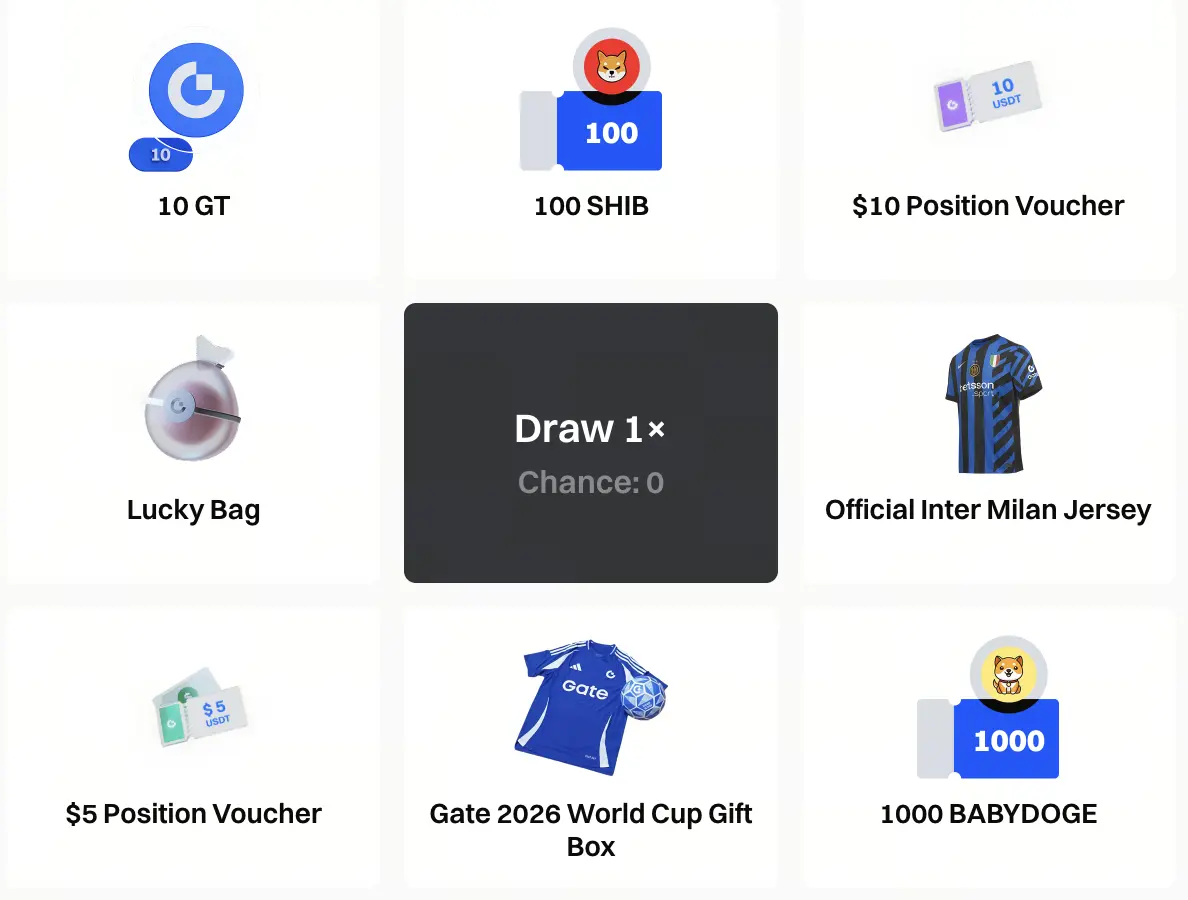
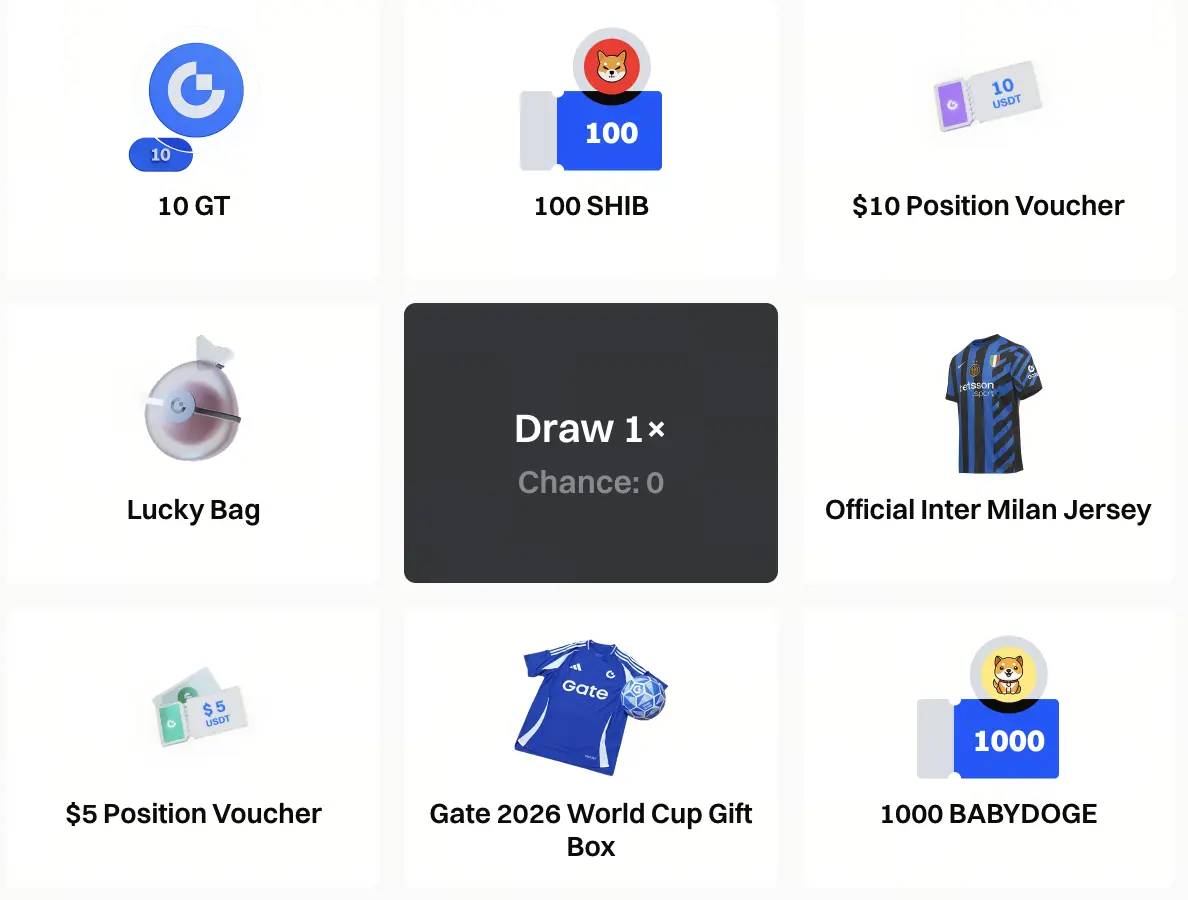
Participate in live interactions for a chance to win official Inter Milan jerseys and Gate 2026 World Cup gift boxes.
Additionally, you can win 10 GT, 100 SHIB, $10 Position Vouchers, lucky bags, and more — prizes are awarded with every draw!
🎰 Watch the live stream to earn heat points
80 heat points = 1 lucky draw chance
📌 Simple daily tasks:
✔ Watch the live stream
✔ Comment and participate in interactions
✔ S
GT1.10%
SHIB0.97%
View Original
post-image
post-image
ShanDingMediaRyak
🔥 Live Lucky Draw Carnival Round 23 is now open — World Cup rewards have arrived!
⚽ As the World Cup fever heats up, the prize pool is also continuously expanding!
Participate in live interactions for a chance to win official Inter Milan jerseys and Gate 2026 World Cup gift boxes.
Additionally, you can win 10 GT, 100 SHIB, $10 Position Vouchers, lucky bags, and more — prizes are awarded with every draw!
🎰 Watch the live stream to earn heat points
80 heat points = 1 lucky draw chance
📌 Simple daily tasks:
✔ Watch the live stream
✔ Comment and participate in interactions
✔ Share the live stream
✔ Complete copy trading tasks
🎁 World Cup Special Bonus
Sign in for 7 consecutive days, and the top 10 lucky users will each receive an additional peripheral reward!
⚽ Watch, interact, and win exclusive World Cup themed prizes
Join now to get closer to your next reward👀
👉 https://www.gate.com/activities/watch-to-earn?now_period=23
👀 https://www.gate.com/live
repost-content-media
  • Reward
  • Comment
  • Repost
  • Share
Wall Street has already given the answer: the 16 institutional-backed coins to watch in 2026.
Many people are still searching for the next hundredfold meme coin, but the market has quietly changed.
The biggest difference in this cycle is not the narrative, but institutions starting to decide the flow of funds.
Past bull markets relied on stories to drive prices:
* MEME
* Metaverse
* GameFi
* NFT
And future bull markets will resemble traditional financial markets.
Who can gain regulatory approval?
Who can get an ETF?
Who can enter national reserves?
Who can become on-cha
BTC0.63%
ETH-0.23%
XRP-0.83%
SOL0.96%
View Original
post-image
post-image
  • Reward
  • Comment
  • Repost
  • Share
#Strategy低位加仓1550枚BTC Bitcoin won't "die" for too long!
Recently, Bitcoin's price fell below $60k, down more than 50% from its all-time high of $126k on October 12, 2025.
Market panic sentiment is rising, and the voices of "Bitcoin is dead" are ringing again.
At this moment, CZ posted on X: "Bitcoin won't be 'dead' for too long. Don't panic," in large friendly letters.
Almost simultaneously, Strategy (formerly MicroStrategy) announced it bought 1,550 bitcoins at the lows, costing about $100 million, increasing its holdings to approximately 845k coins.
Why is the market so sluggish,
BTC0.63%
XAUUSD0.20%
View Original
post-image
post-image
ShanDingMediaRyak
#Strategy低位加仓1550枚BTC Bitcoin won't "die" for too long!
Bitcoin's price recently fell below $60k, down more than 50% from its all-time high of $126k on October 12, 2025. Market panic sentiment is rising, and the voices of "Bitcoin is dead" are ringing again. At this moment, CZ posted on X: "Bitcoin won't be 'dead' for too long. Don't panic," in large friendly letters. Almost simultaneously, Strategy (formerly MicroStrategy) announced it bought 1,550 bitcoins at the lows, costing about $100 million, increasing its holdings to approximately 845k coins. Why is the market so sluggish, yet these veteran players choose to go against the trend? Is the current position close to the bottom? Historical cycles, institutional logic, and analyst opinions provide clear answers.
The immediate cause of the current downturn is that after Bitcoin surged in 2025, it entered a significant correction, which is a typical high point retracement after the halving. In past cycles, the decline exceeded 80% in 2017-2018, about 75% in 2021-2022, and this 50%+ retracement is consistent with the pattern.
Main driving factors include: profit-taking and ETF fund outflows. Recently, US spot Bitcoin ETFs experienced net outflows of billions of dollars, amplifying selling pressure. Macro environment pressures include fluctuations in interest rate policies, changes in risk asset preferences, and capital shifting to sectors like AI, all putting overall pressure on the crypto market. Sentiment amplification occurs as panic spreads rapidly on social media, causing retail investors to cut losses at lows, further increasing volatility.
Some analyses point out that MicroStrategy's small sales previously briefly triggered market nerves. These are short-term phenomena. The core logic of Bitcoin—its total supply cap of 21 million, the halving mechanism reducing new supply, and the trend of institutional and sovereign adoption—has not reversed.
Why is CZ so optimistic?
CZ has witnessed Bitcoin's multiple recoveries after being declared "dead." His statements are based on long-term observation, not emotion. Bitcoin has never truly died; each low has been followed by new growth. CZ repeatedly conveys that short-term volatility does not change its attributes as a store of value and a decentralized asset. History shows that holders who persist through cycles earn returns far exceeding frequent traders. In the current environment, this stance is especially convincing: when most people exit, those with conviction see it as an accumulation window. CZ has also predicted that Bitcoin will eventually surpass gold in market value, though it will take time, the trend remains firm.
Clear signals from institutional actions
Strategy's buying is not an isolated case. Led by Michael Saylor, the company has long adopted Bitcoin as its primary reserve asset strategy. After previous small sales, it quickly replenished and increased holdings at the lows, viewing the correction as an opportunity to lower the average cost. Currently, its holdings represent a significant portion of Bitcoin's total supply, along with cash reserves management.
Institutional logic is clear: they buy in batches over years or even decades when prices are discounted. The $50,000-$60k range is attractive compared to historical highs, while ETF channels, corporate treasury allocations, and potential sovereign adoption are still progressing. Institutional entry usually signals easing selling pressure and the start of bottom formation.
Support from well-known analyst perspectives for long-term logic
Cathie Wood-led ARK Invest remains bullish on Bitcoin long-term. Although their forecast has been slightly adjusted due to the rapid development of stablecoins, they still maintain strong targets: $1.25 million in a bull market scenario by 2030, and $600k in a baseline scenario. Wood believes the current correction is a "necessary test," and Bitcoin will become stronger under pressure, with institutional and sovereign adoption driving the next growth phase. Other institutional views also point to recovery. JPMorgan and others suggest Bitcoin's volatility has decreased relative to gold, with long-term targets reaching $170,000-$260k. Historical cycles show that such retracements often lead to significant rebounds, especially when panic sentiment reaches extremes.
Historical perspective: $50,000-$60k still attractive, possibly testing lower support
Looking at Bitcoin's history, current prices are near the previous cycle's high, even below some early bull market peaks. A 50% retracement is normal for cycles, not a sign of collapse. From the interval trajectory, Bitcoin often tests lower levels at the peak of public panic—analysis points to a possible dip near $40k. At that point, selling pressure is exhausted, and chips are concentrated, creating an ideal entry window for institutions and large players.
The $50,000-$60k range already shows clear value: risk-reward ratio improves, and long-term holders' cost basis is supported. History repeatedly proves that those who persist in similar ranges ultimately achieve substantial returns.
Is this the bottom? The bottom is not an exact price point but a process.
Currently, we are in a bottoming phase: prices have sharply retraced, institutions continue to buy, panic is high but fundamentals remain solid. It’s impossible to predict the absolute lowest point, but if testing $40k occurs, it will likely become a strong reversal point.
The key is the holding logic: Bitcoin's value comes from scarcity, network effects, and global adoption trends, not short-term quotes. Navigating cycles requires understanding rather than emotional following.
Summary: Bitcoin won't "die" for too long. The current sluggishness is a result of cyclical inevitability combined with external factors, but supply-demand trends, institutional actions, and long-term analyst forecasts all point upward. CZ's calm statement, Strategy's accumulation, and the firm views of Cathie Wood and others form a clear signal—staying rational amid panic allows capturing opportunities within ranges. History repeatedly shows that when everyone is most panicked, it is often the best window for accumulation. Bitcoin at $50,000-$60k remains in a long-term attractive position.
repost-content-media
  • Reward
  • 2
  • Repost
  • Share
ShanDingMediaRyak:
Hop on now!🚗
View More
#认证创作者专属推广任务 How to Predict the World Cup on Gate Polymarket
1. Entry Location App Path: Home → Market Categories → Alpha Predictions → Scroll down to find Polymarket → Click "More >" to access the full market
2. World Cup Special Features
Gate Prediction Market has launched the World Cup section, including three core segments:
1. Match Center - View group stage match information, real-time team rankings, and qualification prospects
2. Match Calendar - Display all daily matches in a timeline format, supporting quick browsing of key games
3. Prediction Market - Participate in World Cup-related
View Original
post-image
post-image
ShanDingMediaRyak
#认证创作者专属推广任务 How to Predict the World Cup on Gate Polymarket
1. Entry Location App Path: Home → Market Categories → Alpha Predictions → Scroll down to find Polymarket → Click "More >" to access the full market
2. World Cup Special Features
Gate Prediction Market has launched the World Cup section, including three core areas:
1. Match Center - View group stage match information, real-time team rankings, and qualification prospects
2. Match Calendar - Display all daily matches in a timeline format, supporting quick browsing of key games
3. Prediction Market - Participate in World Cup-related prediction events
3. Predictable World Cup Topics
Champion Prediction - Brazil (22.3%), France (18.7%), Germany (12.4%), England (11.2%), and other popular teams
Single Match Results - All 104 World Cup matches
Golden Boot / Best Player - Top scorer, best player, and other individual awards
Qualification Outlook - Group stage advancement, knockout stage progression, etc.
4. Participation Methods
1. Registration Activity: Visit the Gate Football Prophet Activity Page and click "Participate Now" to complete registration
2. Receive Experience Coupons: After registration, you can receive prediction market experience coupons
3. Place Predictions: Use USDT to buy prediction contracts (Yes/No contracts)
Minimum requirement: at least 1.5 USDT per order, and at least 6 units
5. View Positions and History
After entering the Polymarket page, click the wallet icon at the bottom right to view:
Current positions
Ongoing orders
Trading history
6. Activity Rewards
Total Prize Pool: 500,000 USDT Champion Pool
Leaderboard Rewards: Top 100 users by points share 30,000 USDT
Invitation Rewards: Invite friends to register and place orders to receive a 5 USDT prediction market experience coupon
Come and try it out! [勾引][勾引][勾引]
repost-content-media
  • Reward
  • 2
  • Repost
  • Share
ShanDingMediaRyak:
Buy the dip 😎
View More
【Price Trend Analysis】
1. Candlestick Patterns:
- The 4-hour chart shows the latest candlestick as a large bearish candle, closing near the lowest point and breaking below recent lows, accompanied by increased volume and heavy selling pressure. Several previous candles formed a downward trend with decreasing highs.
- The daily chart shows a series of recent bearish candles; although there was a rebound on June 7, the long upper shadow indicates strong resistance above, preventing effective breakout. June 9 shows a solid bearish candle, breaking below the previous day's low.
- The 1-mon
ETH-0.23%
BTC0.63%
View Original
post-image
post-image
  • Reward
  • Comment
  • Repost
  • Share
#SpaceX获大幅超额IPO认购 SpaceX goes public with nearly 250 billion "blood draw," Bitcoin falls out of favor to $60k—"money" is voting again?
In June 2026, a "blood draw" drama is unfolding: SpaceX's record-breaking $75 billion fundraising kicks off the "Century IPO," Google's largest-ever equity financing of $80 billion, and Anthropic's $65 billion funding.
The three giants together have siphoned nearly $250 billion from the market. Bitcoin has already plummeted about 17% this month, briefly losing the key psychological level of $60k, hitting a new low since October 2024. Over a week, $18k has e
SPCX0.75%
BTC0.63%
View Original
post-image
post-image
ShanDingMediaRyak
#SpaceX获大幅超额IPO认购 SpaceX goes public with a "blood draw" close to 250 billion, Bitcoin falls out of favor to $60k—"money" is voting again?
In June 2026, a "blood draw" drama is unfolding: SpaceX's record-breaking $75 billion fundraising kicks off the "Century IPO," Google's largest-ever equity financing of $80 billion, and Anthropic's $65 billion raise.
The three giants together have siphoned nearly $250 billion from the market. Bitcoin has already plummeted about 17% this month, briefly losing the key psychological level of $60k, hitting a new low since October 2024. Over a week, $18k has evaporated. This is no coincidence. Funds are voting with their feet—money is choosing new directions. As for where the money has gone? Most crypto enthusiasts probably have an idea: the biggest suspect is: SpaceX going public! Today, let's talk about this.
1. "Blood draw" of 250 billion: simultaneous super IPO and the largest equity financing in history
On June 12, SpaceX will officially list on NASDAQ under the ticker SPCX. According to its latest IPO filing with the SEC, the offering price is set at $135 per share, with about 555.6 million shares to be issued, raising up to $75 billion, with an overall valuation of approximately $1.77 trillion. This fundraising exceeds the roughly $29.4 billion raised during Saudi Aramco's 2019 IPO, making it the new "IPO king" globally. Of course, SpaceX's listing isn't the only one! It is understood that Alphabet, Google's parent company, announced the largest-scale equity financing plan in history on June 1, totaling $80 billion for AI infrastructure expansion. Warren Buffett's Berkshire Hathaway subscribed to $10 billion of it, with Goldman Sachs, JPMorgan Chase, and others acting as underwriters. The AI sector is equally crazy; Anthropic completed Series H funding, totaling $65 billion, with a post-money valuation of $965 billion. Tech giants like Amazon, Google, Microsoft, and NVIDIA are all involved, with Amazon and Google alone pledging over $70 billion combined. SpaceX, Google, and Anthropic together amount to about $220 billion; after SpaceX's official trading, its market cap surged into the top seven in the US, not counting the siphoning effect from secondary market buying. Analysts estimate the actual liquidity drained from the market could be closer to $250 billion or even more. In response, Strategy founder Michael Saylor characterized this capital rotation as "the biggest IPO and equity financing year of our lives," predicting a total capital inflow of $1 trillion into AI and large cloud service providers in 2026. The US AI giants are going public en masse to "grab money," and Wall Street is facing an unprecedented liquidity siphon.
2. Bitcoin falls below $60k: a new low since October 2024
On June 6, Bitcoin continued its decline, breaking below the key psychological level of $60k for the first time since October 2024, with the lowest point touching $59,750 on Coinb and $59,799 on bn, hitting a 20-month low, with a weekly drop of 16%. Over the past month, Bitcoin has fallen from over $80k to nearly $60k. Just in the first few days of June, Bitcoin lost the critical support level maintained for months. The entire crypto market was hit hard. US stocks and crypto concept stocks also plunged; Strategy fell nearly 6%, Robinhood dropped over 3%, Circle and Coinb declined close to 3%. Market panic has spread across all risk assets.
Behind this crash is a structural change in global capital flows. The US spot Bitcoin ETF has recorded net outflows for 13 consecutive trading days, with a total outflow of about $4.33 billion since May 14. ETF capital flows turned negative starting in 2026, indicating that institutional demand supporting the market at the beginning of the year is cooling down. BlackRock briefly bought Bitcoin before selling again, continuing the record-breaking ETF outflows. In stark contrast, massive financing for SpaceX, Google, and Anthropic has attracted large amounts of retail and institutional funds. Syz Group's chief investment officer described this decline as a "structural capital migration": "This drop is driven both by Strategy's reduction and by capital flowing into other hot assets." CoinDesk pointed out that institutions are withdrawing Bitcoin funds to invest in AI, "causing this top-tier cryptocurrency to weaken. This is important because capital rotation means temporary weakness, behind which is the pursuit of hot topics, and ultimately, funds will flow back." The recent divergence between tech stocks and cryptocurrencies, both risk assets, is evident: US stocks continue to hit record highs, while Bitcoin hits multi-month lows. The trend of shifting funds from crypto to the strong-performing traditional stock market is irreversible.
3. The "Never Sell" narrative breaks: Strategy's first reduction in eight years
On June 1, Strategy filed an 8-K with the SEC: between May 26 and 31, the company sold 32 Bitcoin at an average price of about $77,135, totaling about $2.5 million, to pay preferred stock dividends. This was Strategy's first Bitcoin sale since December 2022, ending a 3.5-year period of "buy only" accumulation. Although the sale of 32 coins accounts for only about 0.004% of its total holdings of approximately 843k coins, it broke its public stance of "never selling" since 2020. The news dampened market sentiment and triggered forced liquidations worth hundreds of millions of dollars, further amplifying downward pressure. The message is clear: when the world's largest corporate Bitcoin holder starts cashing out, market confidence also loosens.
$250 billion of capital is being withdrawn from the market, flowing into visible sectors like AI, space exploration, and cloud computing. Funds are voting again, and Bitcoin has naturally become the most conspicuous "outcast."
But this doesn't mean Bitcoin's narrative is over. Behind the capital rotation is a pursuit of short-term hot spots. Bitcoin falling from $80,000 to $60,000 is just a normal emotional cycle dip. The true force that can transcend cycles has never been chasing hot trends through "trading," but maintaining the discipline to hold chips.
repost-content-media
  • Reward
  • Comment
  • Repost
  • Share
#BTC BTC falls below the short-term cost zone! Market divergence intensifies, can we really make phased investments now?
Recently, Bitcoin has been continuously oscillating and weakening, with the price falling back to around $62,847, a slight decline of 0.29% in a single day.
Now, the entire market presents a very subtle state: macro factors and ETF capital flows are under pressure everywhere, most people are bearish on the surface, but internally they are starting to get eager, many traders have set $50,000 as an ideal entry point, and some veteran players openly say that BTC often traps
BTC0.63%
View Original
post-image
post-image
ShanDingMediaRyak
#BTC BTC falls below the short-term cost zone! Market divergence intensifies, can we really make phased investments now?
Recently, Bitcoin has been continuously oscillating and weakening, with the price falling back to around $62,847, a slight decline of 0.29% in a single day. Now, the entire market presents a very subtle state: macro factors and ETF capital flows are under pressure everywhere, most people are bearish on the surface, but internally they are starting to get eager, many traders have set $50,000 as an ideal entry point, and some veteran players openly say that BTC often traps short-sellers before a big rally, breaking short-term holders' costs by 20%, and only restarting the trend after thoroughly clearing out floating positions.
Combining the latest on-chain data, mining indicators, market sentiment, and chip distribution, we objectively analyze the current market situation, discussing the feasibility, risk boundaries, and practical strategies for phased investment in BTC.
First, let's review the basic current situation: since Bitcoin surged above $82,000 in early May, it has entered a continuous decline. In just over a month, the price dropped from around $77,000 to the $62,000 range, a significant decline. From the surface market and external environment, short-term negative factors still dominate, which is the core reason for the market's overall bearish outlook. Currently, global inflation remains high, U.S. Treasury yields continue to rise, and the dollar remains strong. As a high-risk asset, Bitcoin struggles to escape the pressure from tightening liquidity. When risk aversion rises, volatile crypto assets tend to be sold off first. Meanwhile, the performance of the U.S. Bitcoin spot ETF has been weak, recording the largest net outflow in a month in May, with continuous capital fleeing for several days, indicating that short-term institutional funds have not returned but are instead taking profits and repositioning to hedge risks. This also casts a shadow over the rebound of the coin price. Based on these signals, many believe the price will continue to decline, even further below $60,000, which has reasonable basis in reality.
However, if we shift our focus to on-chain data, mining indicators, and chip distribution at a deeper level, we will find that the market is not entirely weakening in one direction; the bulls and bears have already fully diverged.
First, look at the core on-chain indicators: the current BTC equilibrium price is $39,719, with a ratio of 1.58 times the current price, indicating a normal valuation range;
The MVRV Ratio is 1.17, and the MVRV Z-Score is only 0.34. Both indicators point to the market being in a normal, slightly undervalued zone, suitable for holding and phased investment.
The SOPR value, representing the selling wave, is 1.008, just near the critical value of 1.0, meaning the market’s concentrated selling wave is nearing its end, and we are now in a key observation window for the bulls and bears.
At the miner level, the Puell Multiple is as low as 0.55, indicating that miners' overall income is below the annual average, showing clear pressure and indirectly confirming that the market is approaching a bottom phase.
Looking at the overall mining fundamentals, the current total network hash rate remains at 857.5 EH/s, with shutdown price ranges between $30,238 and $93,898. The current price has not touched the shutdown red line for mainstream miners; top-tier mining machines are still profitable, but small and medium miners are beginning to face profit pressure.
Combining the ahr999 phased investment index reading of 13/22 and the Fear & Greed Index remaining in the extreme fear zone, historical patterns tell us that when the market falls into extreme panic, it is often the time when opportunities gradually emerge.
Another key signal to watch is the dense chip zone between $66,000 and $67,000, where, during the ongoing price decline, both new positions and the average transaction size in this range are increasing simultaneously.
From a trading characteristic perspective, this is not typical small retail investors bottom-fishing with small amounts, but rather large funds gradually accumulating chips during the decline. The market trend appears weak, but on-chain accumulation has quietly appeared, and the bulls and bears are in a stalemate.
Currently, there are two extreme mindsets in the market, which are also the easiest pitfalls for retail investors.
The first is complete panic: influenced by the short-term decline, believing Bitcoin will continue to weaken or even go to zero, holding large amounts of cash but not daring to enter, ultimately missing the bottom of the cycle;
The second is blind bottom-fishing: seeing the price drop and indicators bottom out, rushing to go all-in, betting on an immediate market reversal. If the price continues to fall, the mentality will collapse, leading to panic selling in deep correction. Both approaches are undesirable, and phased investment is precisely the most suitable strategy in this volatile bottoming phase.
Many are now waiting to accumulate at the $50,000 target, but when most market participants aim at the same price, that level may not appear as expected. The market might drop below $50,000 and then rebound quickly, causing latecomers to regret missing out; it could also briefly dip below $50,000 and then recover rapidly, creating a quick spike that leaves outside capital no chance to enter smoothly; or the price might hover in a long sideways range between $60,000 and $70,000, gradually eroding investors’ patience over time.
Waiting for a single price to bottom out is a gambler’s mindset, while the core logic of phased investment is not to insist on buying at the absolute lowest point but to give up the obsession with precise entry points, continuously deploying within the bottom zone, averaging down costs, so that whether the market consolidates, dips slightly, or rebounds later, you can respond calmly.
For long-term bullish investors planning to deploy in medium to long cycles, it is now appropriate to start light, phased investments, strictly controlling total position size, and avoiding large one-time capital injections. Keep a regular investment rhythm, ignore short-term fluctuations of a couple thousand dollars, and focus on the cyclical logic, especially since Bitcoin’s halving countdown still has 674 days remaining, and the medium-to-long-term narrative remains fundamentally unchanged.
For short-term traders, it is not advisable to frequently open positions to chase rebounds in this volatile environment. The current market is highly turbulent, with frequent spikes, combined with ETF outflows and macro negatives still present, making short-term rebounds highly unreliable. It’s better to stay on the sidelines, wait until prices stabilize at key resistance levels, and spot volume significantly increases before participating. Also, reiterate a few bottom-line principles:
First, stay far away from leveraged contracts. The market sentiment is fragile, large liquidations happen often, and high leverage easily triggers margin calls in volatile conditions. All short-term signals from signal providers and bottom-fishing strategies are often traps designed to harvest retail traders’ positions—don’t hold onto false hopes.
Second, reserve sufficient backup funds. Phased investment is not a one-time injection; be prepared for further price declines. Keeping cash on hand allows you to add positions during further dips, lowering your average cost and avoiding full liquidation.
Third, rationally view the bear trap: the veteran’s saying that “a 20% drop below cost triggers a big move” is just a historical pattern reference, not an absolute rule. Market conditions can change the pattern, so don’t blindly bet on deep corrections.
In conclusion, Bitcoin is currently in a stage of the battle between exhausted negatives and incremental capital inflows. The weak market and macro pressure are short-term realities, but on-chain indicators bottoming out and large funds quietly accumulating present potential opportunities. Extreme panic combined with multiple bottom indicators suggests that the deployment window is gradually opening, but the bear market bottoming process will be long and repetitive. The essence of phased investment is to use discipline to fight against human greed and fear. Don’t obsess over the elusive lowest point, nor let short-term declines crush your confidence. When market opportunities arise, maintain cash reserves, stick to your plan, and stay calm to harvest results across a complete bull-bear cycle.
repost-content-media
  • Reward
  • Comment
  • Repost
  • Share
Life isn’t meant to be lived in vain—so you deserve to get rich, boss. Mountain Top Capital. Top Sir, Top Brother. #gate
View Original
post-image
post-image
  • Reward
  • 1
  • Repost
  • Share
ShanDingMediaMortalCultivation:
Just charge forward 👊
#认证创作者专属推广任务Gate Platform World Cup Prediction Market
Gate, as the first centralized exchange platform to connect with Polymarket, has officially launched the World Cup zone, integrating three core sections: schedule, point rankings, and event predictions.
How to use
1. Upgrade the Gate App to version v8.22 or above
2. Enter the World Cup zone through the "Prediction Market" section within the App
3. One-stop view: group stage matchups, real-time point rankings, and qualification prospects
4. Directly participate in the World Cup prediction contract trading zone on Polymarket
Fe
View Original
post-image
post-image
ShanDingMediaRyak
#认证创作者专属推广任务Gate Platform's World Cup Prediction Market
Gate, as the first centralized exchange platform to connect with Polymarket, has officially launched the World Cup section, integrating three core modules: schedule, points ranking, and event predictions.
How to use
1. Upgrade the Gate App to version v8.22 or above
2. Enter the World Cup section through the "Prediction Market" portal within the app
3. One-stop view: group stage matchups, real-time points ranking, and qualification outlook
4. Directly participate in the World Cup prediction contract trading section on Polymarket
Feature Highlights
Schedule Calendar: displays daily match arrangements in a timeline format for quick overview of key events
Real-time Points Ranking: track qualification prospects for each group at any time
One-click Subscription Alerts (coming soon): subscribe to alerts for all matches
Seamless Transition to Prediction Contracts: watch matches while directly accessing the corresponding prediction market pages
During the NBA Finals on June 6, Gate set a record for the highest single-day trading volume on Polymarket, with a smooth prediction market trading experience.
If you want to participate in the World Cup predictions on Gate, just upgrade your app to the latest version to access the section and experience it.
repost-content-media
  • Reward
  • 1
  • Repost
  • Share
ShanDingMediaRyak:
Just charge forward 👊
#美股AI概念股普涨 U.S. Stocks Review on June 8: The Dow Jones Dives Alone, Chips Surge, AI Applications Take Over a New Cycle
1. Index Performance: Nasdaq Strong Rebound, Dow Dives Alone
On June 8, the U.S. stock market's three major indices showed mixed gains and losses, with significant structural divergence. The Dow Jones Industrial Average fell 80.77 points to 50,786.01, down 0.16%, becoming the only index to decline that day; the S&P 500 rose 21.99 points to 7,405.73, up 0.30%; the Nasdaq Composite increased 220.23 points to 25,929.66, up 0.86%. Over 3,000 stocks on both exchanges rose.
The mar
SPYX-0.12%
View Original
post-image
post-image
ShanDingMediaRyak
#美股AI概念股普涨 U.S. Stocks Review on June 8: The Dow Dives Alone, Chips Surge, AI Applications Take Over a New Cycle
1. Index Performance: Nasdaq Strong Rebound, Dow Declines Alone
On June 8, U.S. stock market’s three major indices showed mixed gains and losses, with significant sector divergence. The Dow Jones Industrial Average fell 80.77 points to 50,786.01, down 0.16%, making it the only index to decline that day; the S&P 500 rose 21.99 points to 7,405.73, up 0.30%; the Nasdaq Composite gained 220.23 points to 25,929.66, up 0.86%. Over 3,000 stocks on both exchanges rose.
Market conditions are extremely unusual. The previous trading day (Friday, June 5), was heavily impacted by strong non-farm payroll data (17,200 new jobs in May, nearly double the market expectation of 8,500, with the unemployment rate steady at 4.3%), causing a sharp rise in expectations for Fed rate hikes this year. The three major indices suffered heavy losses, with the Nasdaq dropping over 4%, and the S&P 500 tech sector leading declines at 5.78%. The rebound on Monday (June 8) is essentially a "technical correction after overselling," led by the Nasdaq, indicating that funds are balancing between undervalued levels and short-term volatility, while the Dow remains weighed down by industrials and some consumer stocks.
On a macro level, markets are highly sensitive to the upcoming May CPI data release on Thursday. If inflation indicators come in stronger than expected, it will reinforce expectations of rate hikes before December; conversely, if inflation cools faster than anticipated, it could ease concerns about rate hikes this year.
2. Leading Sectors and Stocks: Semiconductor "Single-Day Surge," AI Software Adds Catalysts
1. Semiconductor Sector: From a 4.18% plunge to over 7% surge in a dramatic reversal
The semiconductor sector experienced a textbook oversold rebound on June 8. The Philadelphia Semiconductor Index plunged 10% intraday on Friday, but by Monday, the gains expanded to 7%, hitting a new high for the session.
Chip stocks saw remarkable gains: Intel surged 12.66%, Micron Technology up 10.37%, ASML up 7.29%, AMD up 5.7%, ARM up 4.48%, TSMC up 4.18%, Broadcom up 3.04%, Nvidia up 1.77%. For Nvidia, Broadcom, and AMD—three core chip stocks—this rebound reflects: first, after the semiconductor sector’s market cap evaporated by over $1 trillion on Friday, some funds began seeking oversold "mispriced" targets; second, Marvell and Micron pre-market rose over 4% and 7%, respectively, indicating institutional pre-positioning before the open. However, it’s important to note that this rebound is not fundamentally related to AI, but rather driven by "short-term trading momentum." As market observers point out, "experienced investors see this volatility as a natural part of the structural bull market."
2. AI application software stocks rally across the board: Policy catalysts are key variables
Another major sector highlight is AI application software. Although the idea of the U.S. government holding stakes in AI companies, proposed by Trump, has not yet become formal policy, it has already spurred many AI software stocks to rally sharply pre-market on Monday.
At close, AI-related stocks showed broad strength: Palantir up over 5%, Google up over 6%, Microsoft about 0.4%, C3.ai up over 4%, Workday and Atlassian up over 5% and around 5%, respectively. Notably, the AI rally’s spillover effect has extended from hardware chips to software and data applications. Palantir is currently boosted by dual catalysts—robust growth in government contracts and commercialization of AI data analysis products, plus the U.S. military’s GenAI MIL platform fully integrating AI services, creating structural momentum.
3. Financial Sector: Insurance Stocks Regain Market Attention
Insurance stocks showed resilience on June 8, mainly because: as the yields on 5-year and 10-year U.S. Treasuries stabilize above 4.5%, yields on life insurance and pension assets improve, combined with declining credit risks, leading to valuation recovery in the financial sector.
3. Key Stocks in the AI Sector: Divergence in Three Main Themes
Microsoft—Industry Benchmark for AI Commercialization: Microsoft’s performance on June 8 was relatively flat (slight fluctuations), but it remains one of the most balanced "Big Seven" AI application stocks. Its AI-driven growth in Azure cloud is fundamental, with plans to invest up to $80 billion in AI infrastructure in FY2025. Additionally, Microsoft’s market sentiment extends to software stocks, boosting Now, Atlassian, Palantir, and others.
Google—Leading the AI Application Rotation: Google was the top performer among the "Big Seven" on June 8, with Class C shares rising over 6%, far surpassing other large tech stocks. Drivers include continuous iteration of Gemini AI, accelerated growth in Google Cloud revenue, and the structural expectation that Trump’s proposal to open AI companies’ equity to the public acts as a catalyst. Google is becoming one of the clearest beneficiaries of the AI application rotation.
Palantir—Signal of Transition from Chips to Applications: Palantir gained over 5% on June 8, exemplifying this trend. Its strong performance on Monday resonated with the broader rebound in SaaS and software stocks, which are expected to be key directions in the AI rotation in late 2026. The core logic is that, after gaining access to the U.S. military’s GenAI MIL platform, Palantir further drives the fermentation of hundreds-of-billion-dollar government AI procurement, becoming a substantive beneficiary in military AI.
4. Major Declines: Dow Under Pressure and Consumer Warnings
Weakness in the Dow and industrials: On June 8, the Dow was the only index to decline, mainly due to two factors—rising energy prices increasing industrial costs (crude oil futures broke above $95 per barrel intraday) and Lululemon’s previous earnings guidance indicating cooling consumer demand.
Apple’s AI Dilemma: Apple fell over 1.9% on June 8, the worst among tech giants. The main reason is that its next-generation AI platform failed to impress investors, with ongoing concerns that Apple lags behind competitors in AI. The AI upgrades announced at WWDC did not meet market expectations, further pressuring its valuation reappraisal.
5. New Directions and Opportunities: Key Highlights
New Direction: Stablecoins and Crypto Finance—Circle’s IPO Sparks Sector, but Valuation Divergence Widens
Event Recap: Leading stablecoin issuer Circle listed on NYSE in early June, with an IPO price of $31, closing the first day up 168% at $83.23, marking the strongest IPO start of the year and the first time the stablecoin business model received scaled recognition from capital markets.
Latest Developments as of June 8: After the IPO surge, Circle’s stock entered a correction phase. As of June 8, the stock had fallen back to around $80, over 40% below its record high of $140, with an intraday drop of about 11.33%, significantly increasing selling pressure. Nonetheless, its stock price remains over 2.6 times higher than the IPO price.
Deep Logic: Bulls believe that the regulatory clarity brought by the U.S. GENIUS Act will benefit stablecoin infrastructure, with target prices even reaching $230–$250 according to some institutions. Bears question Circle’s high valuation—built on linear extrapolation of USDC issuance growth—without fully considering the overall crypto market downturn, increased competition, and legislative deadlock on the CLARITY Act, which introduces policy uncertainties.
repost-content-media
  • Reward
  • 1
  • Repost
  • Share
ShanDingMediaRyak:
Just charge forward 👊
#Strategy低位加仓1550枚BTC Iran's "Ceasefire" announcement caused global risk assets to rebound sharply. Bitcoin made a desperate comeback after touching the $59k level, reclaiming $63k in one move; Ethereum regained above $1,700, with a 24-hour increase of over 4%. Shorts were caught off guard, with over $570 million liquidated in the past 24 hours, of which more than 80% were short positions. However, the rebound is not smooth sailing—this Wednesday, the US May CPI data will be released, the last rate cut window of the year is closing, and Middle East tensions could shift again at any time. How
BTC0.66%
ETH-0.24%
IBIT0.94%
View Original
post-image
post-image
ShanDingMediaRyak
#Strategy低位加仓1550枚BTC Iran's "Ceasefire" announcement causes a sharp rebound in global risk assets. Bitcoin made a desperate comeback after touching the $59k level, regaining the $63k mark; Ethereum re-entered above $1,700, with a 24-hour increase of over 4%. Shorts were caught off guard, with over $570 million liquidated in the past 24 hours, of which more than 80% were short positions. However, the rebound is not smooth sailing—this Wednesday, the US May CPI data will be released, the last rate cut window of the year is closing, and Middle East tensions could shift again at any time. How far can this short squeeze driven by geopolitical factors go?
一、Middle East ceasefire: from 59K desperate counterattack to 63K in 24 hours
Over the past weekend, the crypto market staged a thrilling "V-shaped reversal." Earlier in the week, unexpectedly weak non-farm payroll data caused rate cut expectations to collapse instantly, leading to heavy sell-offs in both US stocks and crypto markets. Bitcoin briefly fell below the psychological $60k level, hitting a low of $59,101, the lowest in nearly three months; Ethereum also plunged, approaching $1,580.
Just as panic spread, a dramatic shift occurred in geopolitical tensions. Iran and Israel agreed to temporarily halt hostilities—according to multiple reports, military confrontations in the Strait of Hormuz and Lebanon have eased temporarily. International oil prices surged then retreated, with WTI crude dropping about 1% to $91.29 per barrel, and Brent crude briefly spiking before falling back near $94. The decline in oil prices directly contributed to risk appetite recovery. Cryptocurrency markets responded with a rebound, Bitcoin retook the $63,000 level, and popular coins followed suit. Data shows BTC once surged past $64,000 intraday, up nearly 4% from the daily low. ETH rebounded from $1,580 to above $1,700, with a 24-hour high of nearly 4.5%.
On the technical side, Bitcoin's weekly chart shows a rare "bullish divergence" signal. According to Coinglass data, the last time this signal appeared was at the end of 2022, after which Bitcoin surged from $16,000 to over $73,000. However, whether this rebound can evolve into a trend reversal remains to be seen—current prices are still below a downward trendline since the cycle high, maintaining a generally bearish market structure.
Beware of logical traps: the rebound driven by geopolitical tensions is essentially a "war premium unwinding" squeeze, not a sign of fundamental improvement. If the situation escalates again, the basis for the rebound will collapse instantly.
二、Rebound slaughter of shorts: $760 million wiped out
The most painful cost of this rebound fell on those betting on declines. Over the past 24 hours, total liquidations across the network reached about $573 million. Among them, short positions were liquidated for $463 million, accounting for over 80%, while longs only saw about $59k liquidated. Approximately 95,758 traders were forcibly liquidated.
By coin, Bitcoin short liquidations amounted to about $239 million, longs about $24.42 million; Ethereum short liquidations about $134 million, longs about $26.49 million. However, in this bloodbath of short squeeze, longs also did not escape unscathed. During the earlier sharp decline, long positions were also heavily liquidated. Currently, Bitcoin contracts total about $44.4 billion, Ethereum about $23.7 billion, with market leverage still adjusting.
Core logic: The current rebound is essentially a situation where excessive short positioning triggers a chain reaction of short covering at any marginal positive news.
三、CPI looming: Wednesday data the biggest short-term variable
Compared to the "phase-wise cooling" of Middle East tensions, the US May CPI data to be released on June 10 is the real key variable determining the short-term direction.
According to Trading Economics forecasts, the market expects the May overall CPI year-over-year to accelerate from 3.8% to 4.2%, while core CPI (excluding food and energy) is expected to rise by 2.9%. April's CPI YoY of 3.8% was the highest in nearly three years. If May's data climbs further to 4.2%, it indicates inflation is not cooling but accelerating. For the crypto market, CPI data is crucial because of its influence on interest rate paths. If a second hot CPI reading occurs, market consensus on a rate cut in 2026 will be completely eliminated, and global liquidity will tighten further, possibly pushing Bitcoin to test the mid-$60,000 range.
Moreover, the latest forecast from BNP Paribas has shifted the baseline scenario from "rate cuts" to "three rate hikes starting at the end of 2026," citing persistent inflation risks and economic pressures from US-Iran conflicts. Cleveland Fed Chair Loretta Mester also warned that if inflation continues to accelerate, "the Fed may need to resume rate hikes soon."
On June 16-17, Waller will chair the FOMC meeting for the first time as Fed Chair. Currently, the market prices a 98% probability of holding rates steady in June. The Fed's dot plot and Waller's remarks at the press conference will set the policy tone for the second half of the year. Before this meeting, CPI data will be the key variable determining the final shape of the dot plot.
Worst-case scenario: CPI accelerates to 4.2%+ → rate hikes become completely unlikely within the year → BTC falls below $60,000, testing the $59,000-$55,000 range; CPI slightly above expectations but manageable → focus shifts to the dot plot, with BTC maintaining $60,000-$65,000 range.
四、ETF and capital flow: two polarizations of "Ice and Fire"
Behind this rebound, the structural divergence in capital flows continues to intensify. On one hand, Bitcoin ETF outflows remain significant. As of the week ending June 5, net outflows from Bitcoin spot ETFs totaled about $1.72 billion, continuing a four-week streak of billion-dollar redemptions since mid-May. Last week (June 2-6), net outflows reached $129 million, with Fidelity's FBTC leading at $168 million outflow. As of June 8, 2026, Bitcoin ETF net outflows this year have totaled $2.6 billion.
On the other hand, the opposite side also warrants attention: BlackRock's IBIT saw a contrarian net inflow of $81 million last week, reaching a total net inflow of $48.65 billion since inception. BlackRock is still accumulating at the bottom, indicating that the market is not fully retreating—"BlackRock is buying, other institutions are watching." Meanwhile, Ethereum faces even more severe capital difficulties.
The US Ethereum spot ETF has been in continuous net outflows for a long time. Since 2026, the crypto ETF market has shown a clear "BTC strong, ETH weak" pattern, with Ethereum ETF capital and attention far below Bitcoin ETF. The ETH/BTC exchange rate once dropped to 0.0248, a near two-year low, and has slightly recovered to 0.0262, revealing the market's true capital preference—under risk aversion, funds are quickly flowing from Ethereum to Bitcoin.
五、On-chain divergence: miner pressure vs whale accumulation
Behind the sharp price fluctuations, on-chain data shows more complex bullish and bearish signals.
Bearish signals: Miner selling pressure persists. Data shows daily exchange inflows of 10,000 to 12,000 BTC, still high, with no clear signs of selling pressure easing. Miner profit margins have also shrunk significantly; over the past month, Bitcoin production costs are around $43,000, while spot prices have fallen from over $80,000 to near $60,000, with profit margins dropping from 98% to 47%.
Bullish signals: Hash rate decline + whale accumulation.
Bitcoin's hash rate has decreased by about 145 EH/s since May, the first such contraction in six years, as some miners shift power to AI data centers. The decline in hash rate means mining difficulty will see a significant adjustment on June 13, further lowering the unit costs for surviving miners. Meanwhile, miner holdings increased by 637 BTC in the past 7 days, indicating some miners are accumulating rather than selling.
Notably, large institutional players are taking contrarian actions. Coinb's strategy head revealed that family offices, sovereign wealth funds, and other large investors are not panicking but see Bitcoin dropping below $60,000 as a buying opportunity at a discount. Addresses related to BitMine bought 25,000 ETH early on June 9 from Krak, worth about $42.03 million, showing some long-term capital is systematically accumulating ETH at current levels.
六、Key support and resistance levels for Bitcoin
Current price: approximately $63,500-$64,000
Key support: $60,000 (psychological round number, previous strong support), $59,000 (recent low, a break below opens space to $55,000-$57,000), $55,000 (deep accumulation zone)
Key resistance: $65,000 (short-term first barrier), $66,500-$67,000 (requires volume breakout to confirm rebound trend), $70,000 (bearish psychological line, needs macro catalysts to re-enter)
Technical analysis: Price remains below a downward trendline since the cycle high, maintaining a generally bearish market structure. Weekly MACD histogram has begun to rise from recent lows, indicating weakening bearish momentum but still below neutral. Aroon indicators show Aroon Up near 93%, Aroon Down around 64%, highlighting renewed buying activity near support levels, while sellers still exert influence.
Ethereum's current price: approximately $1,680-$1,710
Key support: $1,592 (long liquidation warning line, a break triggers about $995 million long liquidations), $1,500 (psychological round number), $1,380-$1,420 (next target if $1,500 fails)
Key resistance: $1,730-$1,750 (short-term bull-bear dividing line), $1,758 (break above triggers about $871 million short liquidations), $1,800 (medium-term moving average resistance zone)
Technical analysis: Ethereum has tested lows four times in four days without making new lows, indicating weakening bearish momentum. However, volume during rebounds remains weak, with insufficient buying persistence. The current market is more about "short covering" than "long buying." ETH/BTC remains near two-year lows, reflecting ongoing capital flow from Ethereum to Bitcoin. Liquidation warnings: overall market leverage remains high, with about 6-10% volatility space filled with liquidation orders below BTC and ETH. If ETH drops below $1,592, major CEXs could see $995 million in long liquidations; if it breaks above $1,758, short liquidations could reach $871 million.
七、Trading suggestions
Short-term traders: The current rebound is driven by geopolitical news, macro risks are not yet resolved. Exercise extreme caution. Before CPI data release (June 10, Beijing time evening), prefer to observe more and act less.
BTC strategy: If the rebound stalls at $65,000-$66,000, consider small short positions with strict stop-loss; do not chase longs at this level. If CPI data is hot and price volume breaks above $67,000, consider small long entries targeting $70,000.
ETH strategy: Ethereum's weak structure has not fundamentally changed. Rebound to $1,730-$1,750 is a good shorting opportunity; longs should wait for clear reversal signals in ETF capital flows for medium- and long-term accumulation. For long-term investors: macro headwinds persist, CPI data risk remains, and ETF capital has not yet reversed trend. But on-chain signals like declining miner hash rate, whale accumulation, and BlackRock IBIT inflows suggest long-term chips are intact. For long-term allocation, below $60,000 has value for phased dollar-cost averaging, but with very slow pace and small positions, avoiding heavy bets before CPI data.
Key risk warnings:
1. CPI爆雷风险 (short-term maximum variable): If May CPI YoY rises to 4.2% as expected, rate cut expectations will vanish, BTC may quickly fall below $60,000, ETH faces $1,592 liquidation risk.
2. Middle East volatility: current ceasefire is temporary; escalation will push oil prices higher, increasing inflation expectations and macro pressure.
3. ETF outflows: Bitcoin ETFs have seen four consecutive weeks of billion-dollar redemptions; if BlackRock IBIT also turns to outflows, the market could face greater blood loss.
4. Dot plot risk: If the June 16-17 FOMC meeting shifts the median dot from "two rate cuts" to "one" or "none," it will impact market sentiment. Miner selling pressure remains high, with daily inflows over 10,000 BTC, indicating structural supply pressure.
repost-content-media
  • Reward
  • 2
  • Repost
  • Share
ShanDingMediaRyak:
Buy the dip 😎
View More
#比特币回升5% Technical Position: Repair of key support levels rather than reversal
From a technical perspective, this rebound occurred after Bitcoin touched the 200-day moving average.
This level has historically served as support or resistance for long-term trends multiple times,
so the weekend's rally appears more like a technical correction near a key level rather than a clear trend reversal.
Analyst Viewpoint: The current rebound is mainly driven by short covering, not new incremental capital entering.
In the context of continued ETF outflows and macro risk appetite not yet improvin
BTC0.66%
View Original
post-image
post-image
ShanDingMediaRyak
#比特币回升5% Technical Position: Repair of key support levels rather than reversal
From a technical perspective, this rebound occurred after Bitcoin touched the 200-day moving average.
This level has historically served as support or resistance for long-term trends multiple times,
so the weekend's recovery appears more like a technical correction near a key level rather than a clear trend reversal.
Analyst Viewpoint: The current rebound is mainly driven by short covering, not new incremental funds entering.
In the context of continued ETF outflows and macro risk appetite not yet improving,
the sustainability of the rebound remains to be seen.
Market Outlook: Focus on two key variables
In the coming days, the market will focus on:
ETF capital flows: Whether it can shift from net outflow to net inflow, which is a key indicator of the recovery of institutional demand in the U.S.;
200-day moving average battle: Whether it can regain stability above the 200-day moving average, which will determine the medium-term trend direction;
Macro risk appetite: Whether global stock markets can stabilize, which will influence the correlation pressure on crypto assets.
Bitcoin's rapid recovery to $63k is essentially a short squeeze triggered by overly crowded short positions,
rather than a sudden improvement in fundamentals.
The $539 million short squeeze and the rapid decline in contract holdings together amplified the rebound.
However, ETF outflows are still ongoing, and global risk assets remain under pressure,
with Bitcoin still under the influence of the 200-day moving average.
For investors, the key question now is not "whether a bottom has been reached," but "whether the rebound can turn into a reversal"—
which depends on whether ETF capital flows can reverse and whether macro risk appetite can recover.
repost-content-media
  • Reward
  • 2
  • Repost
  • Share
ShanDingMediaRyak:
Buy the dip 😎
View More
#分享美股交易赢英伟达股票 June 8 Microsoft (MSFT) Market Analysis and Outlook Before June 9
June 8 Market Analysis
Overall Trend: Influenced by US non-farm payroll data exceeding expectations, the Federal Reserve's rate cut expectations have been delayed, and high-valuation technology stocks worldwide face valuation adjustment pressures. MSFT, as a tech giant, has also been affected to some extent, with the stock showing slight fluctuations and a mildly weak trend.
Technical Analysis: The stock price is fluctuating near previous support levels, with no clear breakout or breakdown. Short-term support
View Original
post-image
post-image
ShanDingMediaRyak
#分享美股交易赢英伟达股票 June 8 Microsoft (MSFT) Market Analysis and Outlook Before June 9
June 8 Market Analysis
Overall Trend: Influenced by the US non-farm payroll data exceeding expectations, the Federal Reserve's rate cut expectations have been delayed, and high-valuation technology stocks worldwide face valuation adjustment pressures. MSFT, as a tech giant, has also been affected to some extent, with the stock showing slight fluctuations and a mildly weak trend.
Technical Analysis: The stock price is fluctuating near previous support levels, with no clear breakout or breakdown. Short-term support is around $401, and resistance is approximately $489.5.
The RSI indicator is around 70, indicating potential short-term pullback pressure, but it has not entered overbought or oversold extreme zones, and market sentiment has not fully turned pessimistic.
Market Sentiment and Capital Flows: There were no significant signals of large-scale capital inflows or outflows in MSFT on that day. The overall market remains cautious, awaiting upcoming earnings reports and macro policy changes.
Outlook Before June 9
Key Event Impact: The Apple WWDC 2026 conference opens. If Apple makes major breakthroughs or releases new features in AI, it could boost the entire tech sector sentiment and indirectly impact MSFT's stock price. Additionally, if the NFIB Small Business Optimism Index exceeds expectations, it may strengthen market confidence in economic recovery and support tech stocks.
Technical Focus: If the stock can hold above the $401 support level and trading volume gradually increases, the upward consolidation trend may continue. If it falls below $401, short-term correction risks should be watched, with support around $385.
Risk Reminder: The overall valuation adjustment pressure on the tech sector remains. If macroeconomic data or corporate earnings fall short of expectations, it could trigger stock price volatility. Pay attention to changes in trading volume and key price breakouts, and operate cautiously. $MSFT
repost-content-media
  • Reward
  • 2
  • Repost
  • Share
ShanDingMediaRyak:
Hop on now!🚗
View More
#分享美股交易赢英伟达股票 SpaceX Trillion-Dollar IPO Countdown: Which Crypto Sectors Will Lead the Charge?
Only a few days left until SpaceX's official IPO on June 12th — potentially the largest public offering in market history: aiming to issue about 556 million shares at $135 each, raising approximately $75-80 billion, with a valuation between $1.77 trillion and nearly $2 trillion.
Imagine: countless retail investors staring at screens, watching "future assets" being priced astronomically in traditional markets, while their crypto holdings cycle through meme waves.
Are you starting to feel anxious
SPCX0.75%
MEME3.91%
View Original
post-image
post-image
ShanDingMediaRyak
#分享美股交易赢英伟达股票 SpaceX Trillion-Dollar IPO Countdown: Which Crypto Sectors Will Lead the Charge?
Only a few days remain before SpaceX's official IPO on June 12th, potentially the largest public offering in market history: aiming to issue approximately 556 million shares at $135 each, raising about $75-80 billion, with a valuation ranging from $1.77 trillion to nearly $2 trillion. Imagine: countless retail investors glued to their screens, watching as "future assets" are priced astronomically in traditional markets, while their crypto holdings cycle through meme waves. Are you starting to feel anxious—where will the next trillion-dollar liquidity flow go? If you miss this "infrastructure revaluation" window, will you be like 2021 missing out on DeFi, or 2023 missing RWA bonds—standing on the sidelines again? SpaceX's story is far more than rocket launches. It packages Starlink, orbital AI data centers, and space economy into a super narrative, with Goldman Sachs even predicting its AI-related revenue to grow 100 times by 2030. This is not just a space concept; it signifies a fundamental shift in capital valuation logic: from chasing end-user stories to betting on underlying production assets and verifiable cash flow networks. The crypto market stands at this crossroads. As application layer benefits rapidly fade, capital is beginning to seek out "shovel sellers" and infrastructure capable of efficiently circulating trillions of real-world assets. Below is an analysis based on current cycle logic, latest market data, and infrastructure evolution.
1. The Second Half of the AI Narrative: Computing Power and Decentralized Networks as the New "Oil"
Over the past year, the AI narrative in crypto has shifted from "Agent Frenzy" to "Infrastructure Awakening." The threshold for ChatGPT-style applications has plummeted, with minimal replication costs, leading the market to quickly realize: true scarcity lies in GPU computing power, data, and distributed verification networks—not just another AI chatbot.
SpaceX's IPO roadshow repeatedly emphasizes AI and computing synergy, with Starlink providing unique advantages for orbital data centers. This maps to crypto: capital is shifting from surface-level applications to "shovel seller" projects.
Core evidence and projects: Protocols like Bittensor (TAO) are no longer seen as simple "AI meme coins," but as attempts to build open AI networks—using token incentives to aggregate models, computing power, and data contributors, forming decentralized alternatives. GPU/compute networks like Render (RENDER), Akash (AKT), and ionet (IO) are transitioning from mere leasing platforms to "compute liquidity providers." Similar to AWS's role in the internet era, these networks address AI training and inference resource bottlenecks, providing global distributed supply.
Latest trends show that AI + DePIN integration will become a high-frequency narrative in the second half of 2026. Institutions are betting on decentralized computing power as the infrastructure of the AI economy, rather than single centralized giants. Projects that can deliver real utilization, decentralized verification, and token incentive loops will command premiums in capital reallocation. Valuation logic will shift from "user count" to "network value" and "long-term capacity."
2. RWA: The "Democratization" Opportunity for Trillions of Unlisted Assets on Chain
The core reason for SpaceX's near $2 trillion valuation is the market's high pricing power for "future assets." But in reality, ordinary investors are kept out of the primary market. Unicorns like OpenAI and xAI face the same issue.
This creates huge demand: how to enable global capital to participate earlier and more fairly in high-quality future assets? RWA (Real World Assets) is the answer crypto offers. It extends beyond tokenized government bonds to include equities, unlisted assets, private equity funds, and more. By early 2025, on-chain tokenized RWA will reach about $5.5 billion, growing to approximately $29.2 billion by April 2026, driven by institutional demand.
Infrastructure leads the way: ONDO Finance, a leading RWA platform, continues expanding tokenized stocks, ETFs, government bonds, etc., collaborating with J.P. Morgan, Mastercard, and others to promote institutional on-chain finance.
Chainlink (LINK) provides critical oracle data services supporting asset pricing and settlement. RWA-specific networks like Plume Network focus on retail and institutional liquidity, building a closed-loop ecosystem for asset issuance, trading, and settlement.
Once more SpaceX-like assets are partially on-chain, the disconnect between primary and secondary markets will be broken. 24/7 global liquidity, transparent ownership, and fractional participation will become reality. This is not just an upgrade of DeFi tools but a reconstruction of assets' very existence. Projects controlling circulation networks will become new gateways.
3. Stablecoins, Payments, and DePIN: Building the Underlying Settlement and Network Barriers for the Real World
The growth of AI and RWA ultimately depends on reliable underlying infrastructure. Stablecoins have evolved from a trading medium into a global financial infrastructure. By April 2026, their total market cap will reach about $311 billion, up over 50% from early 2025. They support cross-border payments, on-chain securities, AI agent economy settlements, and are gradually penetrating real-world treasury and payment scenarios. Regulatory clarity further accelerates institutional adoption.
Payment protocols are poised to become super gateways: as on-chain economies expand, whoever controls the settlement layer captures the value.
DePIN's long-term barrier value: SpaceX's Starlink is fundamentally a network business, not just hardware. Its scale creates an insurmountable barrier. DePIN incentivizes deploying physical networks (wireless, storage, compute, sensors, etc.) via tokens, with highly aligned logic. By 2026, AI x DePIN is seen as a key fusion direction, with projects shifting from proof-of-concept to actual network building and revenue generation. These underlying logics are not as short-term explosive as applications but are closer to cash flow and durable moats.
Conclusion: The next crypto cycle's core is "building systems," not just "telling stories." SpaceX's IPO is not an isolated event but a signal of the market shifting from "story-driven" to "infrastructure + cash flow-driven." The crypto market is undergoing this evolution in tandem. Short-term hot spots may still rotate, but long-term capital will focus on: AI infrastructure (computing networks), RWA asset circulation platforms, stablecoins/payment layers, and DePIN real-world networks. These directions may not always rise fastest but are most likely to accumulate strength at cycle bottoms and become the biggest winners in the next wave of tech-real world integration—just as in every revolution, those building the foundational systems ultimately prevail.
Now is a time of anxiety, but also a time to reallocate. After SpaceX goes public, capital will vote with real money: who truly owns scarce production resources, who can efficiently connect trillions of real assets, and who is building irreplaceable networks. The trillion-dollar narrative in crypto has never been closer to reality. Are you ready to take the baton?$SPCX
repost-content-media
  • Reward
  • 2
  • Repost
  • Share
ShanDingMediaRyak:
Buy the dip 😎
View More
  • Pinned