# OilBreaks110

372.83K

Brent crude briefly surged past 141 a m i d t h e S t r a i t o f H o r m u z b l o c k a d e , n o w t r a d i n g n e a r 141amidtheStraitofHormuzblockade,nowtradingnear111.86. The spike fuels inflation expectations, sharply reducing market bets on Fed rate cuts. Risk assets face pressure from tightening macro liquidity.

#OilBreaks110 #DailyPolymarketHotspot 1. The Fed Landscape: A Policy Deadlock
The Fed currently holds the federal funds rate at 3.50% – 3.75%. While a series of cuts occurred in late 2025, the committee is now deeply divided.
The "Hold" Reality: At the last FOMC meeting, rates were left unchanged. The next decision is looming, but with inflation remaining "sticky" above the 2% target, the path forward is murky.
Divided Expectations: * Hawks point to resilient energy prices and employment strength as reasons to pause or even reconsider tightening.
Dovish members worry about credit tightening an
BTC2.23%
post-image
post-image
post-image
post-image
  • Reward
  • 8
  • Repost
  • Share
Yusfirah:
To The Moon 🌕
View More
#OilBreaks110
Iran's Hormuz Standoff — What Crypto Traders Need to Know This Week 🌍
US-Iran Negotiations | Strait of Hormuz | Geopolitical Risk
The Strait of Hormuz situation is the single biggest macro wildcard for crypto this week. Here's the compressed briefing:
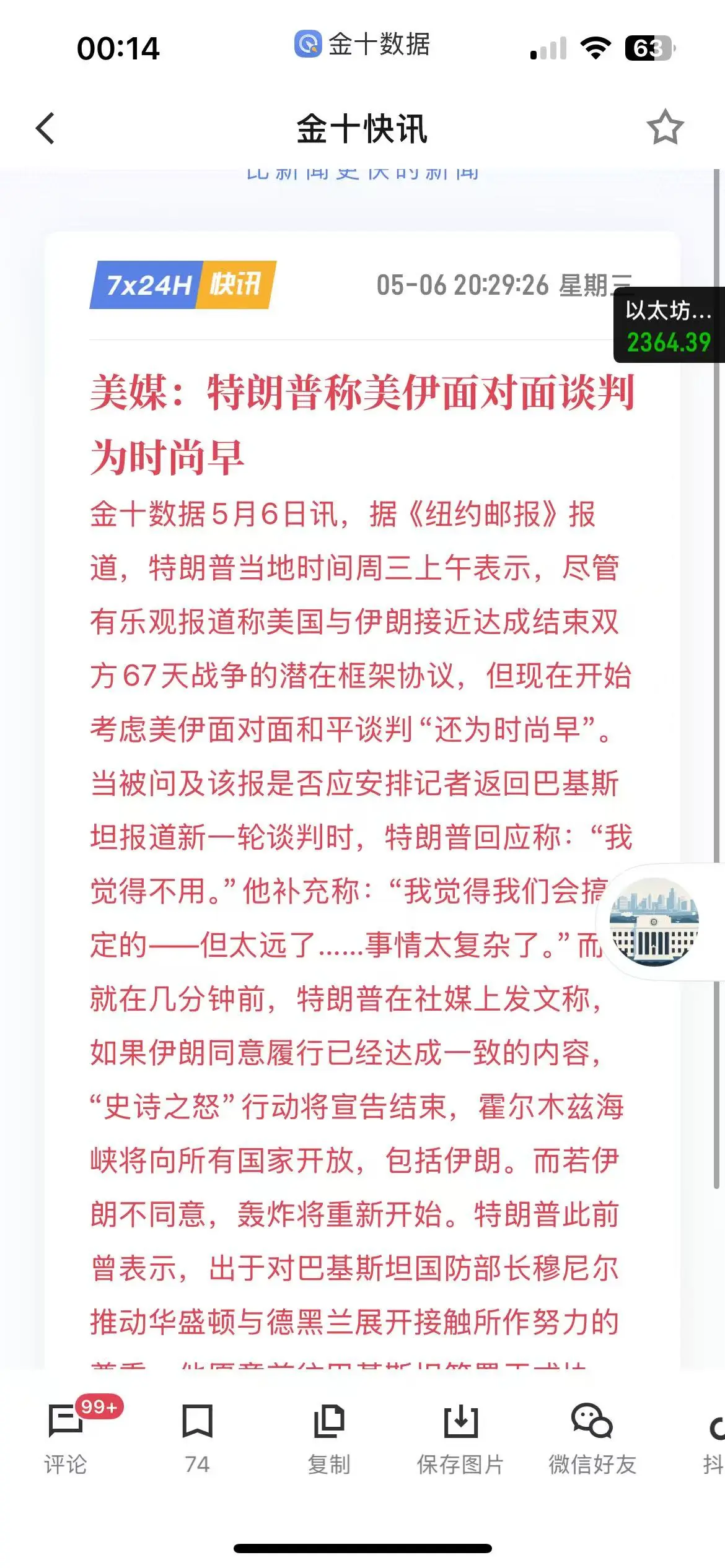
What happened: Iran submitted a 14-point peace plan via Pakistan (May 2), demanding US military withdrawal, full sanction lifting, frozen asset returns, and war compensation. Iran also passed the "Strait of Hormuz Management Law" banning Israeli ships and requiring hostile vessels to pay war compensation. Trump responded by announ
BTC2.23%
Crypto_Buzz_with_Alex
#OilBreaks110
Iran's Hormuz Standoff — What Crypto Traders Need to Know This Week 🌍
US-Iran Negotiations | Strait of Hormuz | Geopolitical Risk
The Strait of Hormuz situation is the single biggest macro wildcard for crypto this week. Here's the compressed briefing:
What happened: Iran submitted a 14-point peace plan via Pakistan (May 2), demanding US military withdrawal, full sanction lifting, frozen asset returns, and war compensation. Iran also passed the "Strait of Hormuz Management Law" banning Israeli ships and requiring hostile vessels to pay war compensation. Trump responded by announcing "Project Freedom" — a US operation to escort stranded neutral ships out of the strait, starting Monday.
Why oil didn't crash: Brent barely moved. Analysts say Project Freedom is more about rescuing stranded seafarers than restoring navigation. Mines need clearing. Backlog is massive. Oil is up ~50% since the war started and likely stays elevated.
Why crypto rallied: Risk assets interpreted any de-escalation signal as bullish. BTC hit $80K. But the rally is leverage-driven, not conviction-driven — and Iran warned that US interference in Hormuz violates the ceasefire. A tanker was already hit by projectiles near Fujairah on Monday.
What to watch this week:
Does Project Freedom actually execute without incident?
Iran's response to the US counter-proposal on peace talks
Oil price direction — if Brent spikes again, BTC leverage unwinds fast
Fed's Warsh confirmation vote — dovish chair + de-escalation = maximum bullish setup
The bottom line: geopolitics is driving crypto more than any technical indicator right now. Stay nimble, size conservatively, and keep 10% of your attention on Hormuz at all times.
@Gate_Square@Gate广场_Official#GateSquare
repost-content-media
  • Reward
  • 12
  • Repost
  • Share
Falcon_Official:
To The Moon 🌕
View More
#OilBreaks110
Oil at $125 — Why This Is a Direct Threat to Crypto Liquidity
The global macro landscape is shifting fast — and it’s not in crypto’s favor.
Brent crude has surged to $125/barrel, driven by the ongoing Strait of Hormuz crisis, where nearly 20% of global oil supply flows daily. What started as a geopolitical disruption has now evolved into a full-scale liquidity shock affecting every major asset class — especially crypto.
The Real Shock: $72 → $125 in Just 60 Days
Oil has skyrocketed from ~$72 to $125
Supply disruption: ~21M barrels/day at risk
Estimated deficit: ~6.6M barrels/da
BTC2.23%
DragonFlyOfficial
#OilBreaks110
🛢️ When Oil Hits $125, Crypto Feels the Squeeze — The Strait of Hormuz Crisis and the Liquidity Trap
Brent crude just touched $125/barrel. The Strait of Hormuz — gateway to 20% of the world's oil — has been effectively sealed for over 60 days. And the fallout is no longer just about gasoline prices. It's about whether the macro liquidity that fuels risk assets — including Bitcoin — is being quietly drained.
The Shock: From $72 to $125 in 60 Days
When the Israel-Iran conflict erupted and the U.S. imposed a naval blockade on Iranian ports, the Strait of Hormuz — the narrow artery carrying roughly 21 million barrels of oil per day — was choked to a trickle. Brent crude surged from ~$72 to an intraday peak above $125, marking its highest level since 2022. Even after a brief partial reopening pushed prices down to ~$95, renewed closures sent them rocketing back above $111, then $115, then $125.
Barclays has already lifted its 2026 Brent forecast from $85 to $100, and warned that if disruptions persist through May, prices could reprice toward $110. The oil market is running a deficit of approximately 6.6 million barrels per day — a gap that accelerating global inventory draws cannot fill. This is no longer a transient spike. It's a structural repricing event.
The Inflation Transmission: Oil → CPI → Fed → Rates
Here's the chain that matters for crypto:
Oil up → Inflation expectations up → Fed rate cut probability down → Bond yields up → Liquidity tightens → Risk assets pressured.
Powell himself warned that persistent high oil prices could impact the U.S. economy. The numbers confirm it: market pricing for Fed rate cuts in June has collapsed to just 4%, and expectations for cuts in July are similarly fading. The 10-year Treasury yield has climbed to a one-month high of 4.4%. The 30-year — the ultimate "risk-free competitor" to volatile assets — sits at 5%.
When the 30-year yields 5%, capital doesn't need to take risks. It earns 5% for free, with the full backing of the U.S. government. Every basis point of yield increase is a gravitational pull away from crypto, away from growth stocks, away from anything that requires conviction about the future.
What This Means for Bitcoin
Bitcoin is holding near $78,500 — down from its post-election highs but showing remarkable resilience. Its 30-day return of ~16.6% suggests it's not collapsing. But resilience is not the same as strength.
The real question isn't whether BTC can survive $125 oil. It can — for now. The question is whether it can thrive in an environment where:
The cost of holding risk is rising: Higher yields mean higher opportunity cost for every dollar not in Treasuries.
The liquidity pool is shrinking: Tighter monetary policy means less excess capital flowing into speculative assets.
The inflation narrative is shifting: Oil-driven CPI increases don't look like "transitory" disinflationary trends. They look like the 1970s.
The "safe-haven narrative" for Bitcoin — that it's digital gold, a hedge against fiat debasement — faces its most serious stress test. Gold has rallied on geopolitical risk. Bitcoin has not, at least not proportionally. That's telling. When real geopolitical shocks hit, capital flows into assets with thousands of years of crisis credibility, not 15 years.
The Strait of Hormuz: A Geopolitical Chokepoint Becomes a Financial One
The Strait of Hormuz is 21 nautical miles wide at its narrowest point. For decades, it was a theoretical risk — something analysts warned about but markets discounted. Now it's real. Ships have been attacked, damaged, abandoned. Crew members have been killed. Insurance costs for vessels transiting the region have skyrocketed. The UAE — an OPEC member — has no practical way to export its energy output.
And the diplomatic stalemate is deepening. Iran's proposal to reopen the strait while postponing nuclear disarmament negotiations was rejected by the U.S. Trump has signaled he wants the naval blockade extended. War powers resolutions in Congress are being debated. There is no clear timeline for resolution.
This means the oil supply shock could persist for months — well beyond what markets initially priced as a "temporary disruption."
The Macro Picture: A Triple Squeeze
Three forces are converging to compress risk assets:
Energy inflation: Oil above $100 for an extended period feeds directly into CPI, reversing the disinflationary trend the Fed relied on to justify its easing outlook.
Monetary tightening inertia: With rate cut probabilities collapsing, the Fed is effectively on pause — and may even need to signal a hawkish tilt if inflation reaccelerates.
Geopolitical uncertainty: The Strait of Hormuz crisis is not a one-off event. It's an ongoing, evolving conflict with no clear resolution path, creating persistent uncertainty that penalizes long-duration and speculative assets.
For crypto, this triple squeeze means the liquidity-rich environment that powered the 2024 rally is fading. The question is not whether BTC will survive — it will. The question is whether the next leg up requires a macro catalyst (rate cuts, liquidity injection) that is now being delayed by an oil shock nobody fully anticipated.
The Bottom Line
Brent at $125 is not just an energy story — it's a macro story. It's a liquidity story. It's a crypto story.
The Strait of Hormuz closure has transformed from a geopolitical headline into a financial constraint, tightening the very monetary conditions that crypto depends on.
The Fed is boxed in: Rate cuts that could reignite risk appetite are being delayed by inflation that oil is fueling.
Bitcoin's resilience at $78.5K is admirable, but resilience under pressure is not the same as breakout momentum. The next directional move depends on whether the Hormuz stalemate breaks — or breaks markets first.
The oil shock isn't just about what you pay at the pump. It's about what you earn in your portfolio. And right now, the Strait of Hormuz is squeezing both.
repost-content-media
  • Reward
  • 2
  • Repost
  • Share
BeautifulDay:
To The Moon 🌕
View More
#OilBreaks110
Iran's Hormuz Standoff — What Crypto Traders Need to Know This Week 🌍
US-Iran Negotiations | Strait of Hormuz | Geopolitical Risk
The Strait of Hormuz situation is the single biggest macro wildcard for crypto this week. Here's the compressed briefing:
What happened: Iran submitted a 14-point peace plan via Pakistan (May 2), demanding US military withdrawal, full sanction lifting, frozen asset returns, and war compensation. Iran also passed the "Strait of Hormuz Management Law" banning Israeli ships and requiring hostile vessels to pay war compensation. Trump responded by announ
BTC2.23%
post-image
  • Reward
  • 14
  • Repost
  • Share
ShainingMoon:
To The Moon 🌕
View More
#OilBreaks110
Oil breaking above 110 is not just a number on the chart, it reflects a deeper shift in global macro conditions where energy supply constraints and geopolitical uncertainty are tightening liquidity across markets. When crude pushes into higher territory, the first reaction is always inflation expectations moving upward, and that directly feeds into bond yields, risk sentiment, and overall market stability.
For equities and crypto, rising oil prices usually act as a hidden tax on growth. Higher transportation and production costs reduce corporate margins, while central banks are
post-image
post-image
  • Reward
  • 5
  • Repost
  • Share
Yusfirah:
To The Moon 🌕
View More
#OilBreaks110
Market Impact Analysis
Crude oil breaking above the $110 threshold is not just an energy market move—it is a global inflation transmission shock. At this level, energy inputs begin to materially distort CPI expectations, supply chain costs, and central bank reaction functions.
For risk assets, including crypto, the key channel is indirect but powerful: higher oil prices tighten inflation expectations, which delays liquidity easing cycles and compresses risk appetite across speculative markets.
On Gate.io, this environment typically shows:
BTC acting as a relative macro hedge but
BTC2.23%
ETH1.61%
post-image
post-image
  • Reward
  • 13
  • Repost
  • Share
Yunna:
LFG 🔥
View More
#OilBreaks110
Oil Enters a Global Macro Risk Expansion Phase
Market Overview
The global oil market is moving into one of its most critical macroeconomic phases of 2026, with crude holding inside a highly sensitive price zone where every move is now connected to geopolitical risk, inflation expectations, and supply-chain security. Oil approaching the $110 psychological level is far bigger than a simple commodity breakout because this zone historically acts as a trigger point for wider financial market reactions. At this stage, oil is no longer trading purely on supply and demand. It is trading
post-image
  • Reward
  • 15
  • Repost
  • Share
Crypto_Buzz_with_Alex:
To The Moon 🌕
View More
#OilBreaks110
When Energy Becomes Policy: The Hidden Pressure Building Across Markets
The move above $110 in crude oil is not just another commodity breakout—it is a structural macro signal that reshapes how markets interpret inflation, liquidity, and risk.
At this level, oil stops being a passive input and becomes an active driver of financial conditions. Energy costs begin feeding directly into transportation, manufacturing, and consumer pricing layers, creating a second-wave inflation effect that is harder for central banks to ignore.
This is where the real shift happens.
Markets are no lo
BTC2.23%
post-image
  • Reward
  • 1
  • Repost
  • Share
ybaser:
To The Moon 🌕
#OilBreaks110
Oil Breaks Key Psychological Zone Near $110 Narrative — (Current Context: ~$102.5)
Market Snapshot: Where Oil Stands Right Now
Crude oil (WTI/Brent narrative depending on contract) is currently trading around $102.5 per barrel, sitting in a highly sensitive geopolitical and macro-driven zone. Even before touching $110, the market is already reacting like it is in a “pre-shock” environment.
At this stage, oil is not just reacting to supply and demand — it is reacting to fear premiums, geopolitical risk, and liquidity expectations.
Why Oil Prices Are Rising (Key Drivers Explai
post-image
post-image
post-image
  • Reward
  • 29
  • Repost
  • Share
juttmunda:
To The Moon 🌕
View More
#OilBreaks110 TreasuryYieldBreaks5PercentCryptoUnderPressure
As of May 3, 2026, the "Gravity of 5%" is no longer a theoretical threat—it is the defining characteristic of the current market structure. With the 30-Year Treasury yield touching 4.97% and shorter durations testing the 5% psychological ceiling, a "Risk-Free" alternative is effectively draining the speculative fever from the crypto ecosystem.
1. Macro Analysis: The 5% Gravity Well
The shift in U.S. Treasury yields creates a new benchmark for capital efficiency. When institutional investors can lock in near 5% guaranteed returns, the
BTC2.23%
ETH1.61%
post-image
post-image
post-image
  • Reward
  • 14
  • Repost
  • Share
Yusfirah:
LFG 🔥
View More
Load More