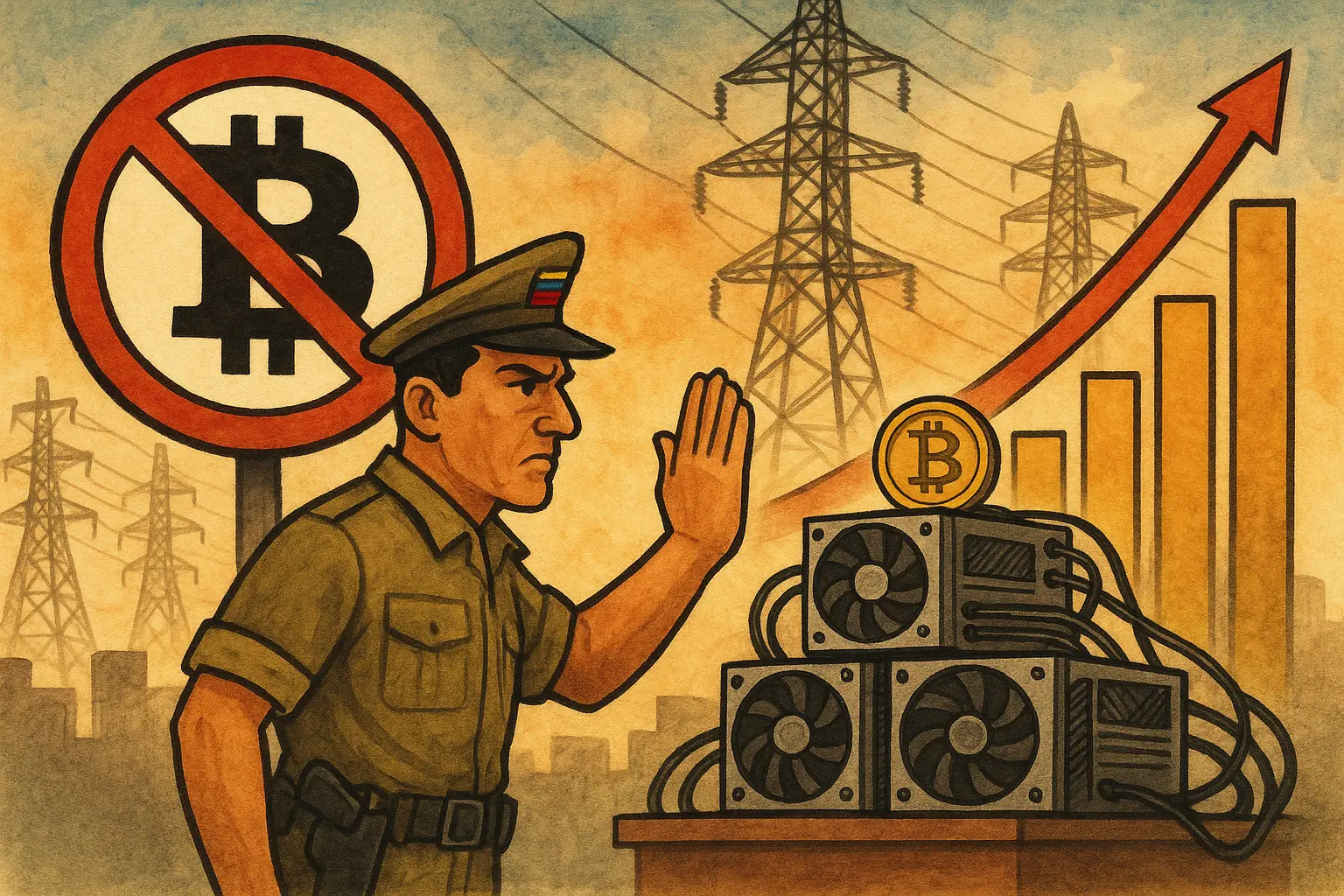
The Venezuelan government issued an official statement on May 7, reaffirming a complete ban on all digital mining activities within the country, and stating that it will impose penalties in accordance with the law on those illegally engaging in such activities. According to the statement, the national power grid’s peak demand on May 7 reached 15,579 megawatts (MW), the highest record since 2017. The government attributed this demand growth to ongoing heatwaves and continued economic growth in the country.
Key provisions of the government statement
In a May 7, 2026 official statement, the Venezuelan government explicitly said regarding cryptocurrency mining: "Digital mining is absolutely prohibited nationwide. Anyone engaging illegally in such activities will be sanctioned according to law." The authorities also announced that they would set up a supervision plan to enforce the above ban.
The statement also noted that international sanctions are among the factors making it difficult for the national power system to restore and maintain operations, and urged private enterprises to fully leverage their own power-generation capacity to help keep the grid stable. The government also announced it would put forward a national power grid restoration and refurbishment plan, but the statement did not specify a timeline.
Power demand backdrop and enforcement of the ban
According to the Venezuelan government statement, the national power grid’s peak demand on May 7, 2026 reached 15,579 MW, and the government statement confirmed this as the highest record since 2017. The statement said that the above level of demand has triggered power rationing measures, affecting citizens’ everyday lives, and that the government attributed the demand increase to two factors: ongoing heatwaves and national economic growth.
Russia’s similar energy management policies
According to a February 2025 statement from Russia’s Ministry of Energy, Russia has implemented similar cryptocurrency mining restriction measures since 2024 in energy-scarce regions such as Siberia. The Ministry of Energy said the measures helped the Siberian power grid reduce a load of more than 300 MW, thereby avoiding power outages.
FAQ
What are the date and triggering reasons for Venezuela’s reaffirmation of the mining ban?
According to the Venezuelan government’s May 7, 2026 official statement, the direct background for reaffirming the ban was that the electricity peak demand on that day reached 15,579 MW, the highest record since 2017; the government attributed this increase to ongoing heatwaves and national economic growth.
What legal consequences does Venezuela impose for violating the mining ban?
According to the government statement, anyone illegally engaging in digital mining activities will be sanctioned in accordance with the law. The authorities have announced the establishment of a dedicated supervision plan to enforce the ban, but the statement does not specify detailed terms of the sanctions.
What has been the effectiveness of Russia’s policy in restricting cryptocurrency mining?
According to Russia’s Ministry of Energy February 2025 statement, the mining restriction measures implemented in regions such as Siberia since 2024 helped the local power grid reduce a load of more than 300 MW, thereby avoiding power outages.


