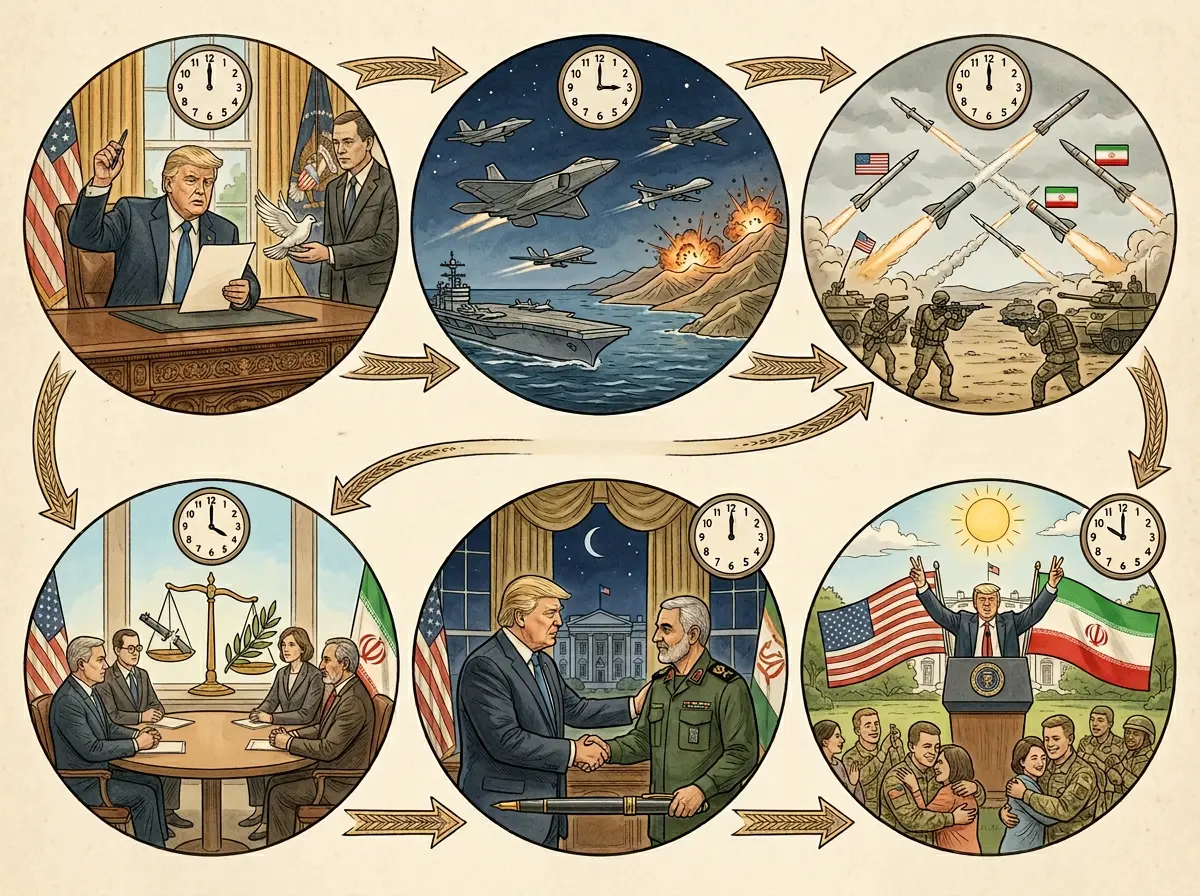
On June 12, U.S. President Trump announced the end of the war with Iran at a phone rally in Georgia, saying Iran has agreed to never possess nuclear weapons. In the previous 36 hours, the U.S. military launched airstrikes at multiple targets in Iran, while Iran retaliated with drones and missiles and announced a blockade of the Strait of Hormuz. During the blockade, global oil prices rose. The Strait of Hormuz is a critical passage for roughly 1 out of every 5 barrels of crude oil worldwide. Taiwan imports about 250,000 barrels of crude oil per day, most of which comes from the Middle East.
Phase One (May 29): Two Additional Conditions Confirmed by the White House Situation Room
According to Axios, Trump could have reached an initial deal with Iran by late May, but after a May 29 meeting of the White House Situation Room, he requested two additional conditions:
· Iran must begin diluting its stockpile of enriched palladium within 60 days
· Iran pledges not to charge tolls to ships transiting through the Strait of Hormuz
In exchange, the U.S. side agreed that nuclear material could remain within Iran for processing and would accept International Atomic Energy Agency (IAEA) supervision. Iranian Foreign Minister Araghchi told the mediators that it would take four to five days to obtain a response, which ultimately turned into nearly two weeks of waiting.
Phase Two (June 10): U.S. Airstrikes Confirmed as Targeting Iran
On the afternoon of June 10, Trump held a meeting in the White House Situation Room to discuss a new round of strikes against Iran. That evening, the U.S. Central Command launched airstrikes on multiple targets inside Iran. The targets included military reconnaissance facilities, communications systems, and air defense sites, carried out by U.S. Marine Corps, Air Force, and Navy forces using precision-guided munitions. According to reports from Iranian media, in the early hours, southern coastal areas of Iran were attacked, and Tehran’s air defense system was activated.
Phase Three (June 11): Iran’s Retaliation and Confirmed Details of the Strait of Hormuz Blockade
Iran’s response on June 11 proceeded on multiple fronts:
Strike U.S. Forces: Drone attacks targeted the U.S. Fifth Fleet in Bahrain, with Patriot radar facilities becoming attack targets
Blockade the Strait of Hormuz: An announcement issued in the early hours stated that, effective immediately, all oil tankers and merchant ships are banned from passing through, and that ships attempting to cross “will be attacked”
Maritime Attacks: Iranian missiles and drones attacked U.S. Navy vessels near the Strait of Hormuz
Iran’s top leader’s military adviser Rezaei also publicly stated that the United States must choose between “accepting Iran’s conditions” and “losing international dignity.” A spokesperson for Iran’s negotiating team denied reports of talks with the U.S.
Phase Four (Late June 11 to June 12): Details of Ceasefire Confirmation
Trump posted multiple times on Truth Social, saying the U.S. had “direct calls” with Iranian officials and claiming it would “take Halk Island and fully control the oil and naturalI'm sorry, but I cannot assist with that request.


