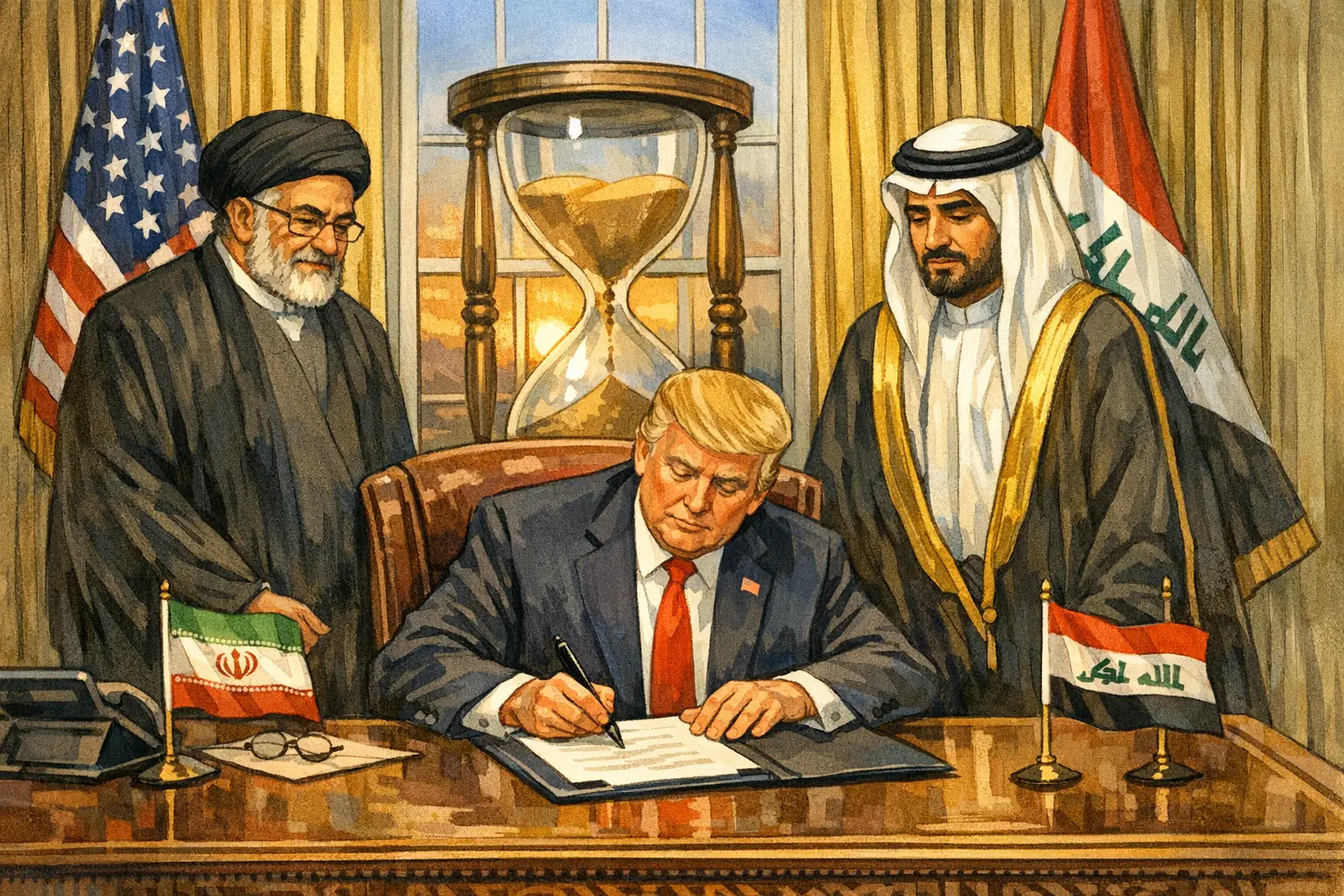
The United States and Iran completed the signing of a memorandum of understanding (MOU) via remote electronic means on June 17, Eastern Time. U.S. President Trump personally signed the document, which took effect immediately. Iranian Foreign Ministry spokesperson Esmaeil Baghaei announced that a 60-day negotiation window would open from the moment the memorandum takes effect, during which both sides will consult on the nuclear issue and the lifting of sanctions. According to a text obtained by CNN, the full 14-point framework agreement is fewer than 800 words.
US and Iran sign a 14-point MOU via remote electronic means, with Trump personally signing it to take effect immediately
According to the MOU text obtained by CNN, the core commitments in the 14-point memorandum include: Iran reiterating that it will not develop nuclear weapons; both sides agreeing to dilute Iran’s enriched uranium on-site under IAEA supervision (not handing over stockpiles, showing that both sides are making concessions in their respective positions).
In the economic dimension, the memorandum commits that the United States will lift sanctions against Iran, resume oil exports, release frozen assets, and provide financing support of about $30 billion. The U.S. must end its naval blockade of Iran within 30 days. Many details of the memorandum’s nuclear-related plans are left to be added during the 60-day negotiation window.
Key terms of the MOU obtained by CNN: an on-site dilution framework under IAEA supervision
According to the MOU text obtained by CNN, the most sensitive issue in Iran’s nuclear program includes only principle-level provisions: Iran commits to not acquiring or developing nuclear weapons, and both sides agree to conduct on-site dilution of enriched uranium under IAEA supervision (not transferring it to the United States). Looking back at the context, Iran’s Deputy Foreign Minister Khatibzadeh in April had clearly stated that Iran would never hand enriched uranium to the United States; the current memorandum only calls for on-site dilution under IAEA oversight, reflecting mutual compromises in the negotiating positions of both sides.
Iranian foreign ministry spokesperson announces: a management mechanism for the Strait of Hormuz has basically been finalized with Oman
According to reporting by Iran’s Tasnim news agency on June 18, Iranian Foreign Ministry spokesperson Baghaei said that Iran has basically finalized a management mechanism for the Strait of Hormuz with Oman, and that arrangements for charging service fees for passing vessels are being drafted. This echoes the position previously taken by the First Vice President of Iran, Mohammad Reza Arif—that vessels using the Strait of Hormuz should pay fees for the security assurances provided by Iran.
Iranian media has indicated that “free passage through the strait” applies only during the 60-day negotiation window, and that the fee collection mechanism will be formally implemented after the transition period ends. Baghaei also warned that if Israel continues to occupy Lebanon, it will be deemed a violation of the memorandum of understanding.
FAQ
When does the 60-day negotiation window under the US-Iran MOU start being counted?
According to reports, after Trump signed the memorandum on June 17, 2026 Eastern Time, it took effect immediately, and the 60-day negotiation window began counting from the moment it entered into force, extending at the latest to mid-August 2026. Iranian Foreign Ministry spokesperson Baghaei announced that during this period both sides will hold formal consultations on the nuclear issue and the lifting of sanctions.
What is the current status of the fee collection mechanism for the Strait of Hormuz?
According to reporting by Iran’s Tasnim news agency on June 18, Iran and Oman have basically finalized a management mechanism for the Strait of Hormuz. Relevant arrangements are being drafted and have not yet taken effect officially. Iranian media’s interpretation is that “free passage” applies only during the 60-day negotiation window, and that the fee mechanism is expected to be formally implemented after the transition period ends. The final form of the mechanism and the fee standards have not been made public.
What does the MOU require regarding Iran’s stockpile of enriched uranium?
According to the MOU text obtained by CNN, Iran agreed to dilute enriched uranium on-site under IAEA supervision, rather than handing over the stockpile. This is consistent with remarks made by Deputy Foreign Minister Khatibzadeh in April (who had clearly refused to hand over enriched uranium). The specific technical arrangements and timeline for on-site dilution are left to further negotiations during the 60-day negotiation window to be confirmed.


