


TanStack npm 供应链遭 Mini Shai-Hulud 攻击,84 版被植入凭证窃取代码

據 Step Security 於 5 月 11 日报告,威脅組织 TeamPCP 发动了名为「Mini Shai-Hulud」的新一輪供应链蠕蟲攻擊,84 个 TanStack npm 套件版本遭到入侵並植入惡意代碼,目標为竊取 CI/CD 環境憑证。Socket Security 在发布六分鐘內已標記所有惡意版本。
攻擊手法与傳播机制
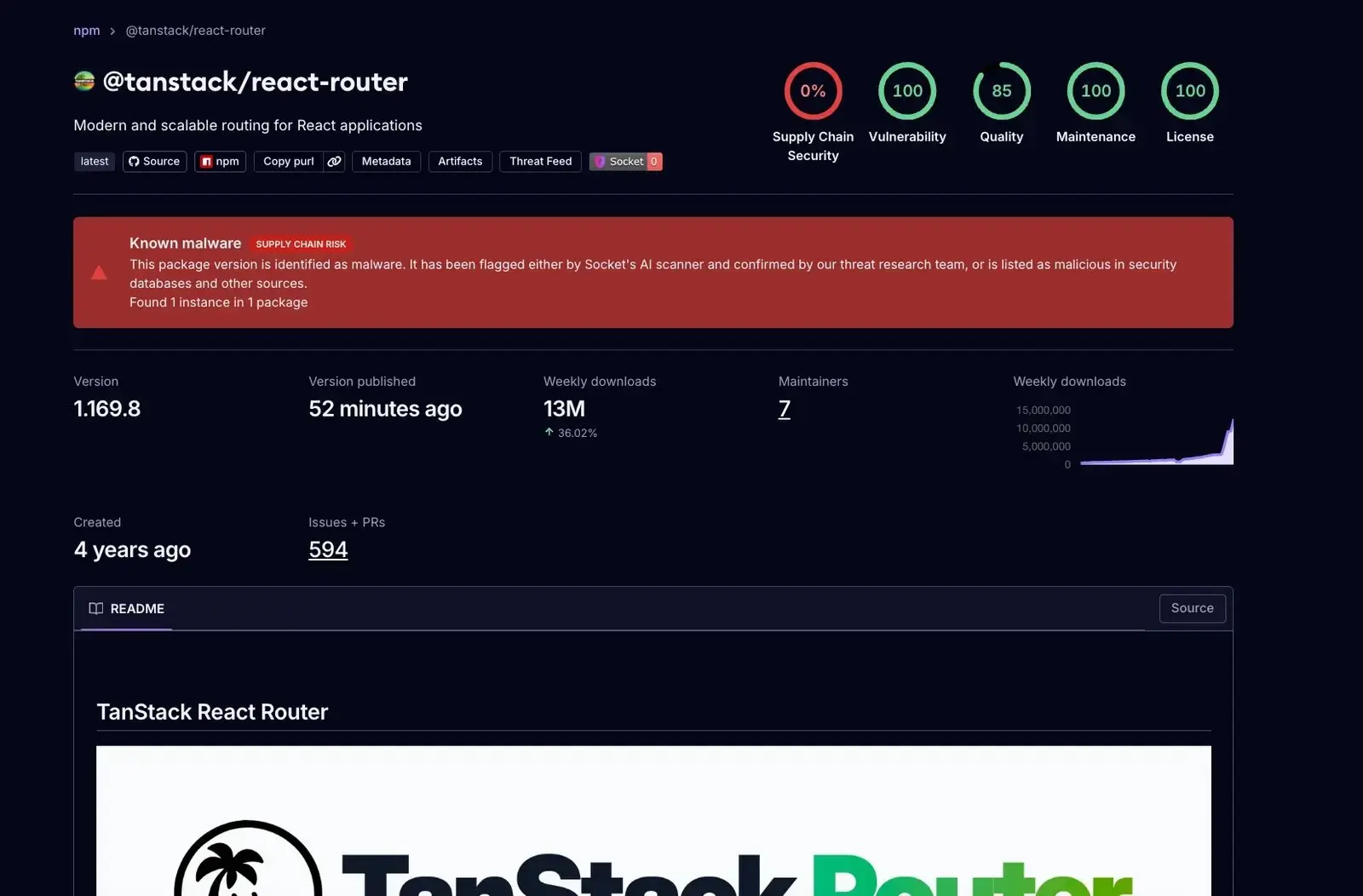 (来源:Socket Security)
根據 Step Security 的分析,此次攻擊採用三階段流程:攻擊者於 2026 年 5 月 10 日以 GitHub 帳號 voicproducoes(ID:269549300,創建於 2026 年 3 月 19 日)建立 TanStack/router 的分支,植入惡意有效載荷;随后將有效載荷注入已发布的 npm 壓縮包;最后利用劫持的 OIDC 令牌,透过 TanStack 專案本身的 GitHub Actions 发布管道,发布帶有有效 SLSA Build Level 3 认证的惡意版本。
根據 Step Security 报告,Mini Shai-Hulud 屬於真正的自傳播蠕蟲:在某一 CI/CD 管線竊取憑证后,自动列舉同一維護者控制的所有套件,並依次发布感染版本。Step Security 报告指出,这是首个有記錄的、能夠产生有效 SLSA 认证的惡意 npm 蠕蟲。
惡意代碼核心功能
根據 Step Security 及 Socket Security 的分析,感染套件中嵌入的 2.3 MB 混淆有效載荷(SHA-256:ab4fcadaec49c03278063dd269ea5eef82d24f2124a8e15d7b90f2fa8601266c)具備以下核心能力:
記憶體抓取:透过 /proc/{pid}/mem 直接读取 GitHub Actions Runner.Worker 进程記憶體,提取所有金鑰,包括已遮罩的金鑰
憑证文件採集:从逾 100 个硬編碼路徑收集憑证,涵蓋 AWS / Azure / GCP 雲端憑证、SSH 金鑰、npm 令牌、加密货币钱包(Bitcoin、Ethereum、Monero、Zcash、Exodus、Electrum 等)、AI 工具配置(Claude、Kiro)及即时通訊应用數據
持久化:在 Claude Code、VS Code 及作业系统層級(macOS LaunchAgent / Linux systemd 服務)安裝持久化鉤子,重啟后依然有效
數據外洩:加密數據透过 Session Protocol CDN(filev2.getsession.org)及 GitHub GraphQL API 死信箱(提交偽裝为 claude@users.noreply.github.com)雙通道外洩
勒索威脅:在新建 npm 令牌的描述中植入字符串「IfYouRevokeThisTokenItWillWipeTheComputerOfTheOwner」,撤销令牌將觸发破壞性擦除例程
主要入侵指標(IOCs)
根據 Step Security 报告,此次攻擊的主要入侵指標如下:
惡意有效載荷哈希值(SHA-256):router_init.js = ab4fcadaec49c03278063dd269ea5eef82d24f2124a8e15d7b90f2fa8601266c
C2 網絡域名:api.masscan.cloud、filev2.getsession.org、git-tanstack.com、seed1.getsession.org
攻擊者 GitHub 帳號:voicproducoes(ID:269549300,电郵 voicproducoes@gmail.com)
惡意提交:79ac49eedf774dd4b0cfa308722bc463cfe5885c(TanStack/router 分支)
受影響的主要套件版本包括 @tanstack/react-router(1.169.5、1.169.8)、@tanstack/router-core(1.169.5、1.169.8)及逾 40 个 TanStack 套件版本,以及 UiPath、DraftLab 等机構的相关套件,完整列表由 Step Security 持续更新。
緊急處置建议
根據 Step Security 报告,若已安裝受影響版本,Step Security 建议:
立即清理 lock 文件中的受影響版本並重新安裝乾淨版本;輪換所有 CI/CD 環境中可存取的憑证(GitHub 令牌、npm 令牌、雲端 API 金鑰);移除持久化文件(.claude/router_runtime.js、.vscode/setup.mjs 等);若设備上有加密货币钱包文件,立即將资金转移至新钱包。Step Security 特別警告:在隔离並镜像受影響设備进行取证分析前,不得撤销含勒索威脅字串的 npm 令牌。
常见问題
Mini Shai-Hulud 蠕蟲的发现时间及发现机構为何?
根據 Step Security 2026 年 5 月 11 日的报告,此次攻擊由 StepSecurity AI 套件分析師偵測,並由威脅組织 TeamPCP 发动。Socket Security 於 2026 年 5 月 12 日在 X 平台发出警告,稱在发布后六分鐘內已標記所有惡意版本。
此次供应链攻擊有何技術創新之處?
根據 Step Security 报告,Mini Shai-Hulud 是首个有記錄的、能夠透过劫持 OIDC 令牌並利用合法 Sigstore 協议棧,为惡意套件生成有效 SLSA Build Level 3 认证的 npm 蠕蟲,使受感染版本在標準供应链安全檢查中看似合法。
加密货币钱包用戶如何確认是否受影響?
根據 Step Security 报告,惡意代碼針对 Bitcoin(/.bitcoin/wallet.dat)、Ethereum(/.ethereum/keystore/*)、Monero、Zcash 及 Exodus、Electrum 等桌面钱包。如设備曾安裝受影響版本,Step Security 建议立即將相关加密钱包资金转移至新钱包地址。
相关快讯
投资人不甩停火协议已“岌岌可危”,美股持续创高,Circle 大涨近 16%
SlowMist 警告虚假 TronLink Chrome 扩展钓鱼攻击
Pi 核心团队:Protocol 23 节点升级本周截止,未升级将丧失验证奖励
加密公司采用“算法升级”量子安全钱包,多家公司部署以先于比特币协议升级
微软:假冒 macOS 故障排除页面部署 ClickFix,窃取加密钱包密钥