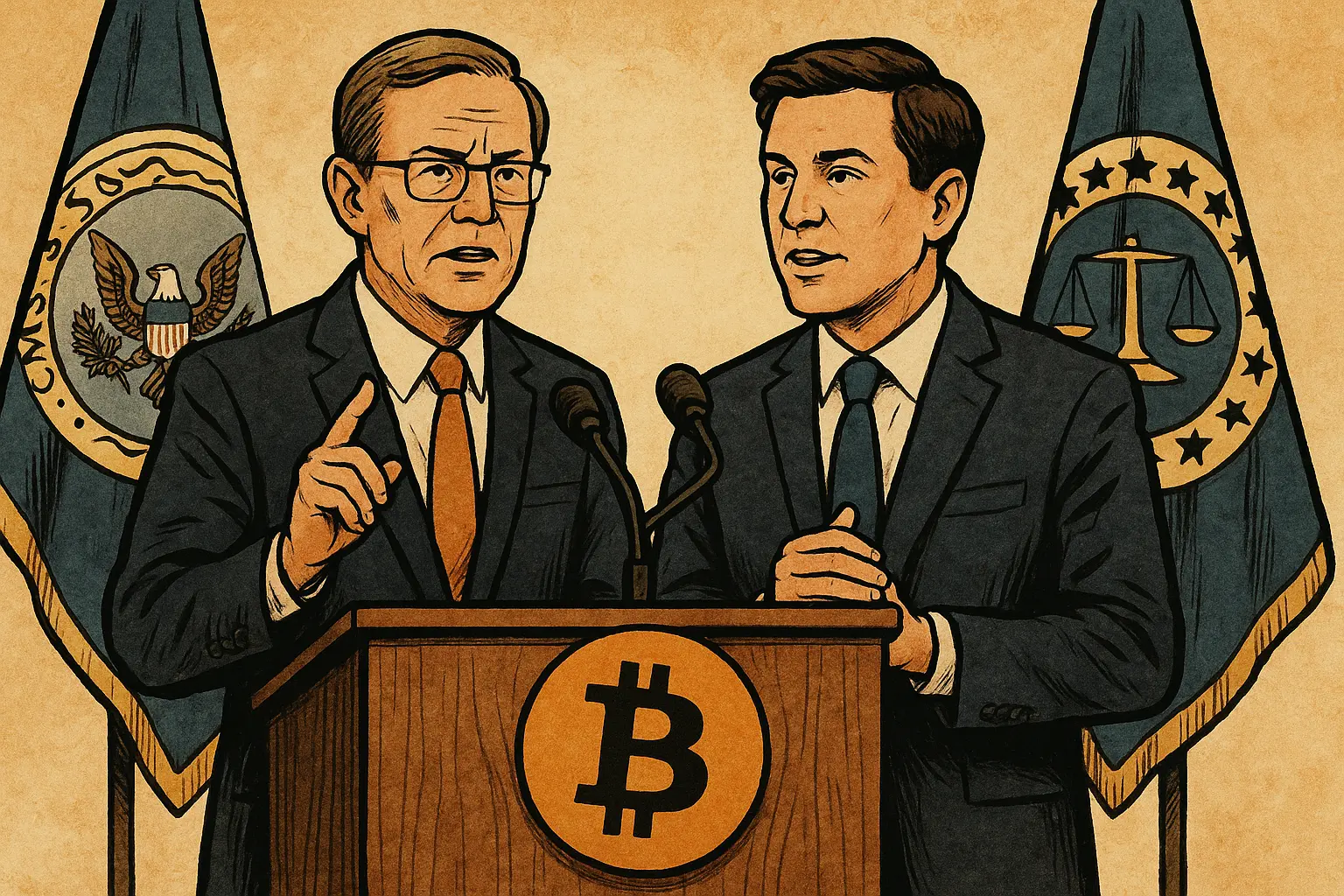
U.S. Securities and Exchange Commission (SEC) Chair Paul Atkins and U.S. Commodity Futures Trading Commission (CFTC) Chair Mike Selig spoke at the 2026 Bitcoin Conference on April 27. Atkins called it a “new day for the SEC,” while Selig said the CFTC is “turning the page,” and both said that coordinated regulatory frameworks are needed to avoid rule conflicts.
Key Statements by Atkins on the SEC’s New Regulatory Direction
Based on Atkins’ public remarks at the 2026 Bitcoin Conference, the SEC is adopting a new digital-asset regulatory strategy aimed at keeping relevant business activities within the United States rather than shifting them to overseas jurisdictions. Atkins said the SEC and the CFTC are currently working together on digital-asset issues, setting a new benchmark for cross-agency coordination.
In his remarks, Atkins announced that an “innovation exemption” policy is about to be introduced, and that he plans to allow companies, in the coming weeks, to test on-chain tokenization and securitization tools in a regulated environment, with clear parameters rather than handling things through an informal “no-action exemption” approach. He said the SEC will take a principles-based approach to regulating tokenized securities, using Trump’s “GENIUS Act” (the stablecoin bill) as an example of this kind of regulatory model.
Atkins also discussed the “CLARITY Act” in his remarks, saying that the related legislative package may make progress in May and could be passed in June, while also clearly stating that “nothing is final yet.” He also said that settlement in real time or near real time can reduce counterparty risk and settlement risk, and free up funds currently tied up in back-office processes. The SEC is working to make this happen rather than to block it.
SEC and CFTC Joint Token Classification Guidance
According to Atkins’ remarks at the conference, the SEC and the CFTC have jointly released token classification guidance that divides digital assets into three categories: digital commodities, collectibles, and tokenized securities, providing an asset-classification framework for market participants. In his remarks, Atkins said that regulators want to provide principles and definitions rather than publish specific token lists or imply which tokens investors should buy. He also emphasized that only legislation enacted by Congress can provide a durable, cross-term foundation for digital-asset regulation by a continuing government framework, and that the token classification guidance is a step in that direction.
Selig’s Statements on the CFTC’s New Regulatory Position
Based on Selig’s public remarks at the 2026 Bitcoin Conference, he said the CFTC has “opened a new chapter” in digital-asset regulation, emphasizing that the two agencies need to coordinate around a consistent framework—especially for markets of products that combine both commodity and security characteristics. In his remarks, Selig said: “Our country is built on the concept of private property,” stressing that token holders and innovators should have clear, enforceable legal rights, and that a coherent digital-asset market structure should give market participants predictable rules rather than redirecting business to jurisdictions with less regulation.
Frequently Asked Questions
What major policy directions did SEC Chair Atkins announce at the Bitcoin Conference on April 27?
According to Atkins’ public remarks at the 2026 Bitcoin Conference, the main items include: an “innovation exemption” policy that is about to be rolled out; a plan to allow companies in the coming weeks to test on-chain tokenization tools in a regulated environment; the SEC and CFTC having jointly issued token classification guidance; and the SEC regulating tokenized securities using a principles-based approach.
How does the SEC and CFTC joint token classification guidance distinguish digital assets?
According to Atkins’ remarks at the conference, the guidance divides digital assets into three categories—digital commodities, collectibles, and tokenized securities—providing an asset-classification framework for market participants. Atkins said the guidance is intended to provide principles and definitions rather than publish specific token lists.
What statements did Atkins make about the legislative outlook for the “CLARITY Act”?
According to Atkins’ public remarks at the conference, he said that the related legislative package may see progress in May 2026 and could be passed in June, but he clearly stated that “everything is not yet settled.” He also emphasized that only legislation enacted by Congress can provide a durable, cross-term foundation for digital-asset regulation.


