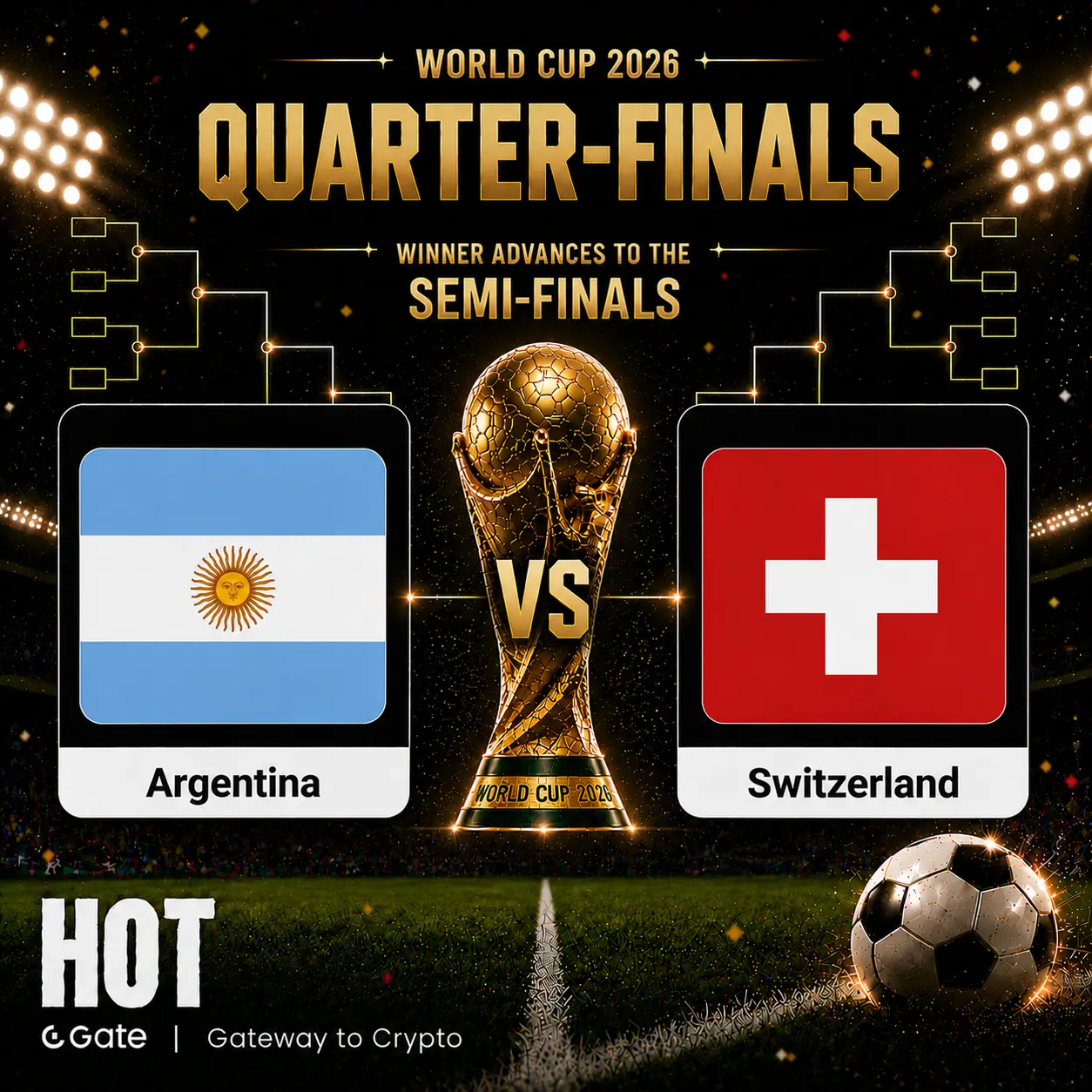
Why the prediction market sees Argentina as the favorite to advance
The 58% win probability offered by the prediction market essentially quantifies Argentina’s overall strength and performance in the tournament. Argentina is currently ranked No. 2 in the FIFA world rankings and is one of the top favorites to win this World Cup. In the group stage, the team defeated Algeria, Austria, and Jordan consecutively, scoring at least 2 goals in each match. In the knockout rounds, although Argentina experienced two tense comebacks—defeating Cape Verde 3-2 after extra time in the Round of 32, and overturning Egypt 3-2 in the Round of 16—they demonstrated resilience and clutch scoring ability, which is precisely the core component of the “champion mentality” priced into the market.
Regarding squad depth, Argentina boasts excellent rotation options at every position. In midfield, they maintain consistent control of possession and match tempo, while their defensive organization remains relatively reliable throughout the tournament. These factors together underpin the market’s 58% win probability for Argentina.
Why Switzerland’s “iron fortress” defense still warrants a 27% draw probability
The 27% draw probability in the prediction market is significantly higher than the average in typical football matches. This, in itself, accurately reflects Switzerland’s playing style as perceived by the market.
Switzerland is the only team in this World Cup that has yet to fall behind in any match. After their first group match against Qatar ended 1-1, they then beat Bosnia and Herzegovina 4-1, and defeated co-host Canada 2-1, advancing as the top team in Group B. In the Round of 32, they eliminated Algeria 2-0. In the Round of 16, they edged out Colombia through 120 minutes of intense defending and a penalty shootout. Across five matches, they conceded only 3 goals, kept 2 clean sheets, and ranked among the top three teams in defensive efficiency in this World Cup.
However, Switzerland also suffered a key personnel setback—20-year-old rising star Menzambi is ruled out with a knee injury. He contributed 3 goals and 2 assists, and his presence significantly enhances Switzerland’s counterattacking threat. His absence weakens their offensive options. Additionally, midfielder Ebisher and right/left back Jacqun are doubtful due to muscle strains. With Switzerland’s attacking creativity already limited, losing Menzambi further diminishes their ability to break through. This is the primary reason the market assigns only a 16% win probability to Switzerland—rather than a higher one.
How the “psychological line” from historical head-to-head matches influences pricing
Argentina and Switzerland have faced each other 7 times, with Argentina winning 5 and drawing 2, remaining unbeaten. In two World Cup encounters, Argentina won both: in 1966 group stage (2-0), and in 2014 Round of 16 (1-0 after extra time, with Messi assisting Di María). Argentina holds a significant psychological advantage.
However, historical data also reveals a pattern: in 5 of the 7 head-to-head matches, total goals did not exceed 2. This indicates a tendency toward low-scoring games. Even if Argentina has a theoretical edge, the match flow may not be as lopsided as the scoreline suggests. The 2014 match exemplifies this—the Swiss defense nearly succeeded in a tight 1-0 victory, only to be broken at the very end. Will the same scenario unfold in Kansas City? This pattern underpins the market’s high draw probability.
How tactical matchups influence the flow of the game
Argentina typically employs a high-possession build-up in a 4-3-3 or 4-2-3-1 formation, focusing on “progressive ball control + stretching play on the flanks + set-piece opportunities.” Messi roams freely in the forward areas, often dropping into half-spaces to carry the ball and draw defenders. Argentina’s possession rate is approximately 60.4%, creating an average of 25.2 passes per game involving 10+ play combinations.
Switzerland adopts a deep 4-2-3-1 “bus” formation, with all players dropping back to form a dense defensive line. Their midfield aggressively squeezes and intercepts, while their counters are straightforward yet effective. Switzerland’s shape retention in the first half is around 88%, but after 65 minutes, the stamina of Zaka and Froiler declines noticeably; their clearance and interception efficiency drops by about 40%, and 83% of goals conceded occur in the second half.
This tactical matchup determines the game’s rhythm: Argentina controls possession and applies sustained pressure, while Switzerland compresses space and looks for counterattack opportunities. Argentina’s best window to score is between 62 and 86 minutes—if the score remains unchanged by then, Switzerland will gain confidence, and the draw probability will increase sharply. This is the core logic behind the market’s 27% draw probability.
How Messi’s goal-scoring ability is priced
Messi has scored 8 goals in this World Cup, tying with Mbappé for the top scorer. He has scored in eight consecutive World Cup matches, continuing to set records. In those matches, he netted 12 goals in total. His total World Cup goals now stand at 20, making him the all-time top scorer in World Cup history.
However, Messi’s scoring outlook carries some uncertainty. He missed two penalties in this tournament: one against Egypt in the first half, which he later redeemed with an assist and a goal. At age 39, natural declines in stamina and explosiveness are expected, but since turning 35, Messi has scored 14 World Cup goals, demonstrating remarkable longevity.
From a market perspective, the event of Messi scoring or not is influenced by Argentina’s possession rate, Switzerland’s defensive focus, and stamina distribution in the second half. If Argentina presses more after the 65th minute, the likelihood of Messi getting shooting opportunities increases—this is the underlying logic behind the market’s pricing of “Messi goals.”
How prediction markets convert sports events into tradable probabilities
Prediction markets operate by creating tradable contracts for future events. Participants buy “Yes” or “No” shares, with prices fluctuating between $0 and $1 USD. The price reflects the market’s collective assessment of the probability that a specific outcome will occur. The data—Argentina 58%, draw 27%, Switzerland 16%—represent how market participants express their collective judgment through real-money positions.
The core value of this mechanism is “money voting”: unlike opinion polls or expert forecasts, the prices in a prediction market derive from participants’ incentives, potentially providing a more accurate aggregation of information. During this World Cup, Gate’s prediction market has remained active; the deviations between market prices and actual outcomes in key matches serve as important indicators of market efficiency.
Variables that could alter the market’s probability expectations
The prediction market’s probabilities are dynamic. The following factors could cause significant shifts before or during the match:
Injury updates: Switzerland’s key attacker, Menzambi, has been confirmed out. Additional injuries before kickoff could lead to rapid re-pricing.
Early momentum: If Switzerland scores early—say, within the first 30 minutes—the probabilities for a draw and for Switzerland’s win could spike immediately, given their record of “never being behind,” which provides a psychological edge.
Referee strictness: Argentina’s possession-based style relies heavily on set-pieces near the penalty area, especially Messi’s free kicks. The referee’s tolerance for physical duels will influence the frequency and success rate of Argentina’s set-piece opportunities.
Penalty shootout likelihood: If the match is tied after 90 minutes, it will proceed to extra time and possibly penalties. Goalkeeper Martínez’s save rate in this tournament is only 44.4%, lower than average, while Switzerland’s goalkeeper Kobel has made notable saves in the Round of 16 shootout. If the game goes to penalties, Switzerland’s psychological advantage could be reflected in market prices.
Frequently Asked Questions (FAQ)
Q1: How is Gate’s 58% Argentina win probability calculated?
This probability is derived from the market price of the “Argentina to win” contract. The contract price fluctuates between $0 and $1 USD, with 58% representing the collective judgment that Argentina has a 58% chance of winning in regular time.
Q2: How many goals has Messi scored in this World Cup?
As of July 11, 2026, Messi has scored 8 goals, tying with Mbappé for the top scorer. He has scored in eight consecutive World Cup matches, bringing his total to 20 goals in World Cup history.
Q3: How does Switzerland’s key injury impact the match?
20-year-old Menzambi is out due to a knee injury. He contributed 3 goals and 2 assists, playing a vital role in wing breakthroughs and late runs to score. His absence weakens Switzerland’s counterattack, which is a key reason the market assigns only a 16% win probability to Switzerland.
Q4: What is the head-to-head record between Argentina and Switzerland?
The two teams have met 7 times, with Argentina winning 5 and drawing 2, remaining unbeaten. In two World Cup matches, Argentina won both—1966 (2-0) and 2014 (1-0 after extra time). In 5 of these 7 matches, total goals did not exceed 2, indicating a low-scoring tendency.
Q5: What is the most probable total goals for this match?
In Argentina’s 5 matches in this tournament, they scored at least 2 goals in each. Switzerland has conceded only 3 goals across their 5 matches. The market’s “over 2.5 goals” pricing reflects its assessment of the attack-defense balance—expecting either a low or moderate scoreline.
Q6: Besides the prediction market, what other trading services does Gate offer?
Gate has launched real U.S. stock spot trading, supporting over 12,500 stocks and ETFs. Users can directly buy and sell USDT to trade stocks listed on major U.S. exchanges such as the NYSE and Nasdaq.