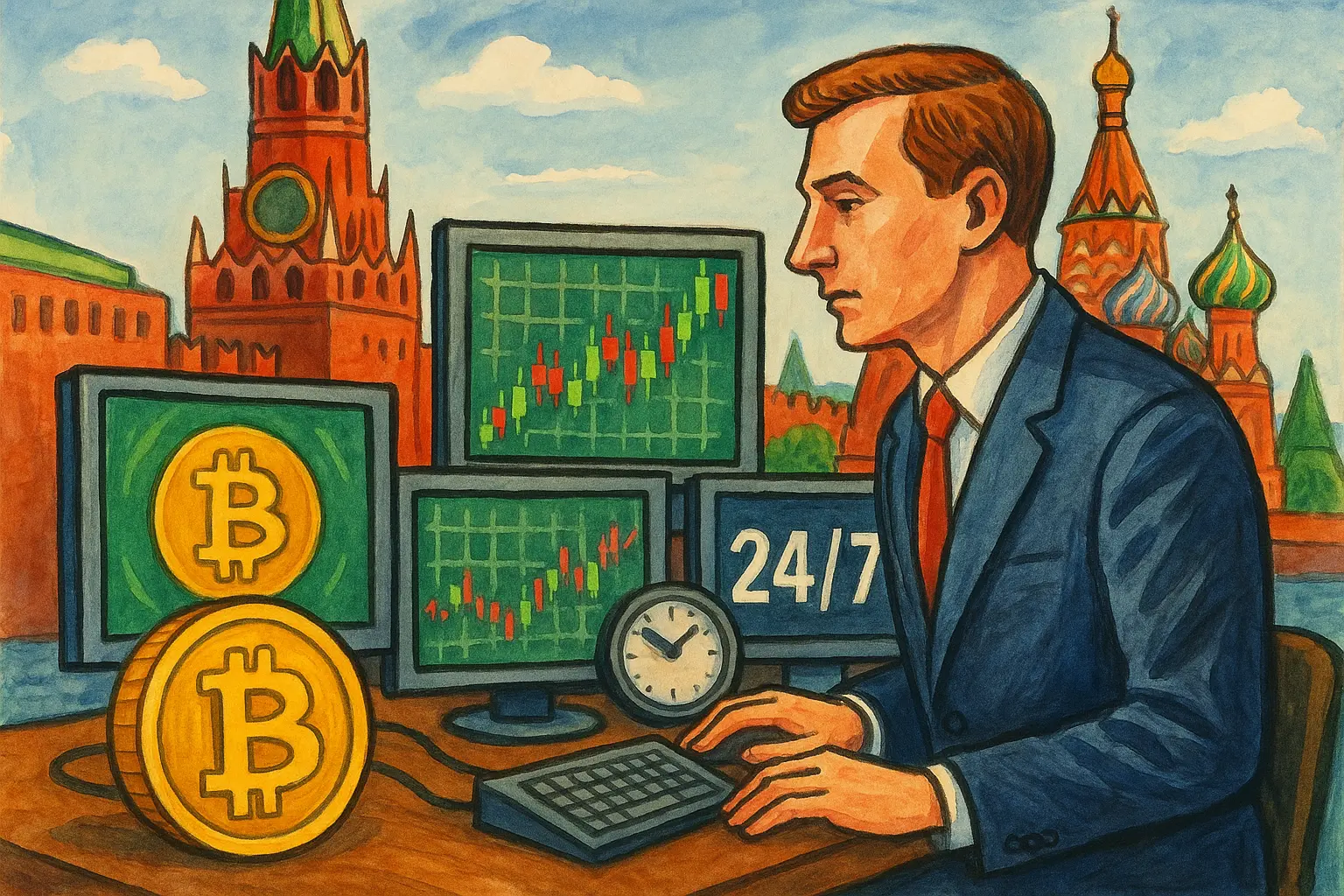
According to Bits.media on May 14, the Moscow Exchange (MOEX) has been in talks with brokers about the form of cryptocurrency trading. MOEX is testing cryptocurrency deposit and withdrawal functions and has invited some brokers to participate in the test. Dmitry Lesnov, First Vice President of Brokerage Business at Finam, confirmed that MOEX wants to offer 24/7 trading, but the final decision depends on the operating schedule of the clearing system.
According to disclosures from RBC and RBC Investments insiders, the confirmed core design of MOEX’s crypto trading framework is as follows:
Account and wallet structure: Users will not be able to register a cryptocurrency wallet directly on MOEX; instead, they must operate through the broker’s digital depository account. MOEX’s own digital wallet repository will only provide services to wallet repositories created by brokers, using a model similar to the existing structure of the National Settlement Depository (NSD).
Trading hours under study: Lesnov confirmed that MOEX views “avoiding a situation where it cannot trade itself when foreign crypto exchanges open trading” as a priority concern, but he believes a 24/7 model “is unlikely to be implemented soon.” The final decision depends on the operating schedule of the clearing system.
On May 14, the Moscow Exchange launched three cash-settled digital currency index futures:
Solana index futures: Ticker MOEXSOL
Ripple index futures: Ticker MOEXXRP
Tron index futures: Ticker MOEXTRX
All three futures are cash-settled (no physical delivery), serving as MOEX’s foundational infrastructure setup ahead of launching crypto Spot Trading.
The Russian State Duma has completed the first reading review of the “Digital Currency and Digital Rights Bill.” Based on the confirmed terms:
Permitted intermediary requirements: Russian citizens can only legally buy cryptocurrencies through licensed intermediary institutions (such as exchanges and brokers).
Exchange listing standards: For a cryptocurrency to be listed on an exchange, it must meet: average marketcap over the past two years exceeding 5 trillion rubles; average daily trading volume over the past two years exceeding 1 trillion rubles; and a trading history of at least five years. Currently, based on these standards, the crypto assets known to meet the conditions are Bitcoin (BTC), Ether (ETH), and Solana (SOL).
There is no confirmed timeline currently. MOEX’s news office confirmed it is actively developing cryptocurrency market solutions; Finam First Vice President Lesnov said the final decision depends on the operating schedule of the clearing system and that a 24/7 model “is unlikely to be implemented soon.” MOEX has not yet announced a specific target launch date.
Based on the disclosed framework, users cannot open a cryptocurrency wallet directly on MOEX, and instead must operate through the broker’s digital depository account. MOEX’s digital wallet repository will serve as the back-end settlement layer, providing services to each broker’s wallet repository, similar to the existing national settlement depository model.
Based on the first-reading bill terms, an application for listing must have: average marketcap over two years exceeding 5 trillion rubles, average daily trading volume over two years exceeding 1 trillion rubles, and at least five years of trading history. These thresholds are extremely high across all three criteria, and according to currently available public information, only Bitcoin, Ether, and Solana simultaneously satisfy all conditions.
Related News
JPMorgan files to launch a tokenized money market fund, allowing stablecoin issuers to invest reserves and earn yield
U.S. CFTC Chair: Has joined the SEC for crypto projects and signed a memorandum of understanding to reduce overlapping enforcement risks
CME Eyes June Launch for Bitcoin Volatility Futures
MOEX Derivatives Director: XRP Futures Let Russian Investors No Longer Rely on Foreign Exchanges
Gate Daily Report (May 12): FTX unlocks nearly 200k SOL; Ripple receives a $200 million credit facility