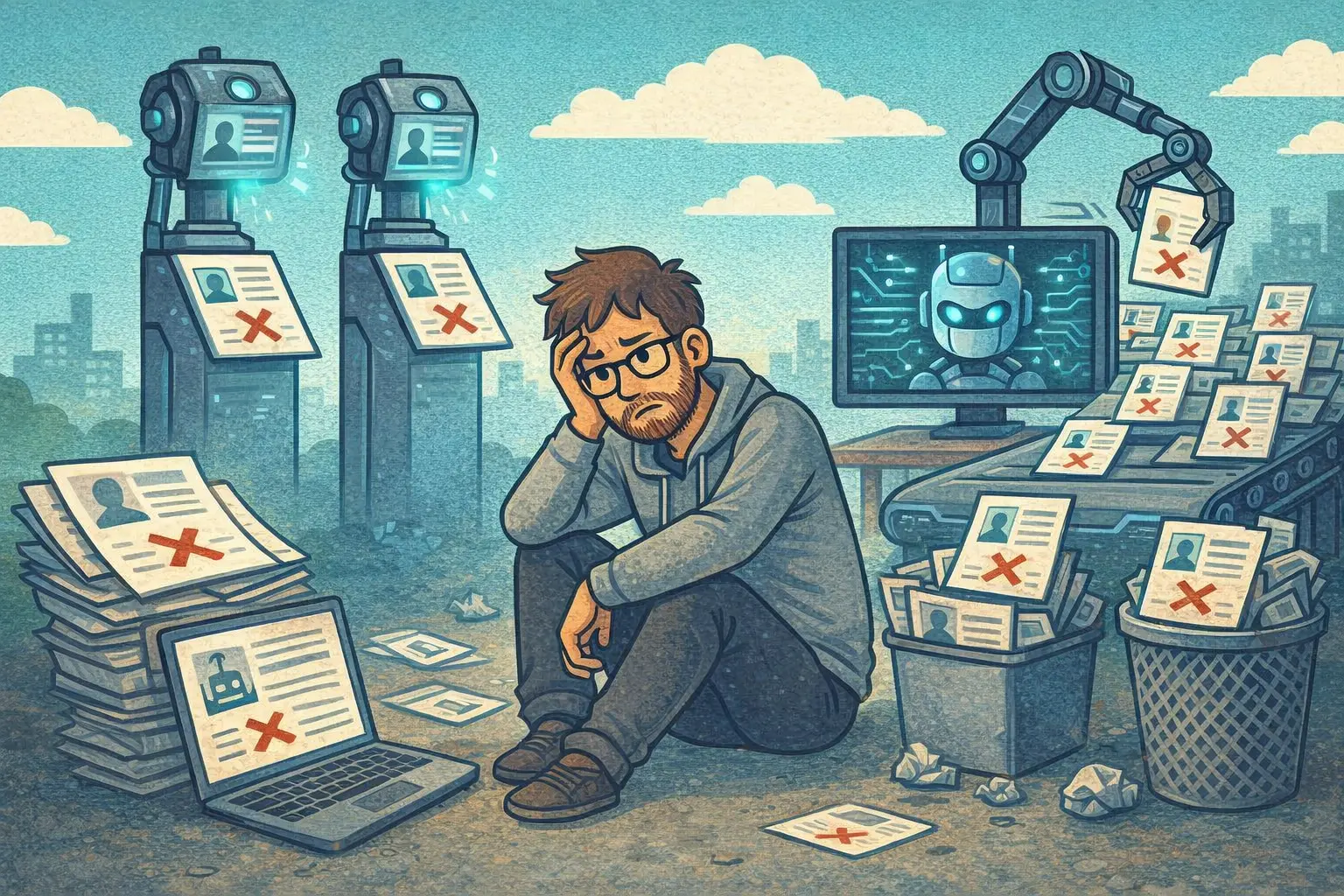
An anonymous software engineer posted on June 19 on their personal blog an article titled “Jobs and the software industry are doomed,” documenting their experience after being laid off along with the entire Blizzard team in June 2025, followed by six months of job searching with no progress; they claim they have 10 years of development experience, including 7 years at Blizzard. The engineer criticizes screening mechanisms represented by Coderpad and AI proctoring software, arguing that their design logic is disconnected from real working environments.
Core claims in the blog: criticism of screening mechanisms and the paradox of AI screening
Based on the engineer’s blog post (anonymous; all of the following are their personal statements, with no third-party verification):
Critique of screening tools: Coderpad, HackerRank, and AI proctoring software use full-screen locking and do not allow access to API documentation, simulating an isolated environment that does not exist in real work; they put it bluntly: “The person who designed this process obviously hasn’t actually written code.”
Observations about cheating in AI-restricted environments: The engineer claims that in test environments that say “no AI allowed,” other applicants used phones together with AI tools to answer easily, while they tried to follow the rules but ended up at a disadvantage. The original text explicitly states that the engineer provided no supporting evidence documents for this; this is an observational statement from their own perspective.
Argument about AI’s dual roles: The article argues that AI plays two roles at once: the “gatekeeper (interview side)” and the “replacement (production side).” The article claims that after developers use AI tools, productivity per sprint increases by about 40% to 55%, but it does not provide specific research sources for these figures.
Employment data cited in the article: software engineers under 25 and layoffs attributed to AI
The engineer’s blog post cites the following data (all of which must rely on the original research reports; the article does not list the original sources one by one):
Employment volume of software engineers under 25: down nearly 20% from the 2022 peak
2026 layoff event: 56% of the events (involving about 156,270 employees) explicitly named AI, automation, or machine learning as the main cause in announcements or earnings reports
Survey of company executives: 90% of company executives said that AI’s impact on their company’s employment situation is “zero”
Contradictions between layoff announcements and executive surveys: the engineer’s interpretation framework
One of the engineer’s arguments in the blog post is to point out a structural contradiction between the two groups of figures above: layoff announcements name AI as the main cause, but an executive questionnaire claims the impact is zero. The engineer’s interpretation is that there is a “systemic gap” between the two—specifically, the discrepancy between companies’ public communications and their internal real decision-making. This is the engineer’s interpretation framework for the data, not a conclusion from independent academic research.
Frequently asked questions
Can this engineer’s identity and layoff background be verified?
The engineer chose to post anonymously; they describe being laid off “along with the entire team” in June 2025, and their company is Blizzard (Blizzard Entertainment). Blizzard’s large-scale layoff event is a matter of public record, but the individual’s identity was not disclosed; their job-search experience and their observation of “others cheating” have no third-party document verification.
What are the sources of the 40–55% productivity improvement numbers cited in the article?
The engineer’s blog post states that after developers use AI tools, productivity per sprint improves by about 40% to 55%, but the article does not provide specific research sources. This is an un-cited claim; it should be treated with caution when referenced.
Where do the data come from about 56% of layoffs citing AI and 90% of executives saying the impact is zero?
The engineer cites these two sets of figures in their personal blog, but does not list the original research organizations or databases in the article. These numbers have not been independently verified in existing reporting; when citing them, it should be noted that they all come from the engineer’s personal blog post.


