shahJi786

vip
Age 1.6 Year
Peak Tier 0
No content yet
#TradeCFDWinGold
#XPT (Platinum) – CFD Market Structure Analysis
XPTUSD (Platinum)
Platinum (XPT) is currently trading in a structurally sensitive macro phase as global industrial demand, EV catalyst adoption, green energy transition narratives, USD strength fluctuations, and precious metals rotation cycles continue to redefine its medium-term valuation dynamics. In CFD markets, XPT is increasingly treated as a hybrid asset between industrial metal demand and safe-haven precious metals flow, making it highly responsive to both macro risk sentiment and manufacturing cycle shifts.
Over recent c
XPT-0.35%
XAU0.07%
XAG-0.15%
XPD-0.49%
Vortex_King
#TradeCFDWinGold
#XPT (Platinum) – CFD Market Structure Analysis
XPTUSD (Platinum)
Platinum (XPT) is currently trading in a structurally sensitive macro phase as global industrial demand, EV catalyst adoption, green energy transition narratives, USD strength fluctuations, and precious metals rotation cycles continue to redefine its medium-term valuation dynamics. In CFD markets, XPT is increasingly treated as a hybrid asset between industrial metal demand and safe-haven precious metals flow, making it highly responsive to both macro risk sentiment and manufacturing cycle shifts.
Over recent cycles, platinum has moved through extended accumulation phases driven by supply constraints in South Africa, fluctuating automotive catalytic converter demand, and changing investor allocation between gold, silver, and industrial metals. This dual nature makes XPT one of the more complex but high-opportunity instruments for CFD traders.
🧭 Current Market Structure
Platinum is currently operating inside a broad accumulation and volatility compression structure after extended multi-cycle range behavior. Price action reflects reduced directional momentum, repeated liquidity sweeps above and below key zones, and ongoing rebalancing between industrial demand expectations and safe-haven positioning. The structure suggests the market is preparing for a potential macro expansion phase once directional catalysts align.
📈 Trend Direction
Short-Term Trend: Neutral with volatility spikes
Mid-Term Trend: Accumulation / base formation
Long-Term Trend: Structural undervaluation recovery phase
Overall, XPT remains range-bound but with underlying bullish reversion potential if industrial demand and USD weakness align.
🧱 Key Support Levels
Primary Support Zone: 880 – 900 USD
This zone represents strong historical demand where long-term accumulation has previously occurred. Buyers typically re-emerge aggressively in this region due to perceived undervaluation.
Secondary Support Zone: 840 – 860 USD
If macro pressure increases or USD strengthens, this becomes a deeper liquidity zone where swing traders often look for reversal confirmation.
Macro Structural Support: 780 – 800 USD
This region represents long-term cycle lows tied to industrial demand stress and broad commodity weakness phases.
🚧 Resistance Levels
Immediate Resistance: 940 – 960 USD
First supply zone where price has historically struggled to sustain momentum.
Major Resistance: 1000 – 1040 USD
Critical psychological and structural breakout zone. A strong break above this level may trigger momentum-driven expansion.
Long-Term Expansion Zone: 1100 – 1150 USD
If global industrial demand strengthens and precious metals enter a broad bullish cycle, this becomes a macro upside extension target.
⚡ Market Momentum
Momentum in platinum remains mixed but reactive. Key drivers include automotive catalytic demand, EV transition impact on platinum vs palladium substitution, USD index direction, global manufacturing PMI data, and mining supply disruptions. Platinum often experiences sharp momentum spikes rather than smooth trends due to liquidity concentration.
📊 Volume Behavior
Volume activity reflects institutional accumulation during deep support retests and speculative spikes during macro catalysts. Platinum typically shows sharp volume expansion during breakout attempts followed by rapid retracements, indicating liquidity hunting behavior across key ranges.
🧠 Technical Formation
XPT is currently forming a long-term base accumulation structure characterized by range compression, repeated false breakouts, higher timeframe equilibrium building, and volatility contraction. Key formations include horizontal accumulation range, liquidity sweep structure, multi-cycle base formation, and breakout compression zone. This setup typically precedes strong directional expansion once macro trigger conditions activate.
💧 Liquidity Structure
Liquidity is concentrated around 900 USD (primary demand zone), 950 USD (mid-range equilibrium), and 1000 USD (major breakout liquidity). These levels act as institutional magnets where stop hunts and volatility expansions frequently occur.
📉 Intraday Trading Bias
Bullish Scenario: If XPT holds above 900 USD and breaks 940 USD with momentum, price can extend toward 960 USD and 1000 USD.
Bearish Scenario: If 900 USD fails, downside pressure may extend toward 860 USD and 840 USD liquidity zones.
📊 Swing Trading Strategy
Conservative Zone: 880 – 910 USD accumulation range
Aggressive Entry: Above 960 USD breakout confirmation
Targets: TP1 940–960 USD, TP2 1000–1040 USD, TP3 1100+ USD extension
Risk: SL below 840 USD (swing structure break)
🏦 Institutional Perspective
Platinum is increasingly viewed as a strategic industrial + precious hybrid metal. Institutional positioning is influenced by green energy transition demand, hydrogen fuel cell narratives, automotive catalytic usage, and supply-side constraints from major mining regions.
🌍 Macro Factors
Key drivers include USD index strength, global industrial production, EV adoption trends, hydrogen economy development, mining supply disruptions, and inflation expectations.
🧠 Psychological Structure
900 USD = stability zone
1000 USD = breakout confirmation level
1100 USD = expansion narrative zone
1200 USD = long-term revaluation target
📌 Overall Market Outlook
Platinum (XPT) is currently in a macro accumulation phase with latent bullish potential. As long as 840–900 USD structural support holds and global industrial demand stabilizes, price remains positioned for potential expansion once macro catalysts align. Traders should focus on range strategies near support and breakout confirmation above 960–1000 USD for optimal CFD positioning.
repost-content-media
  • Reward
  • Comment
  • Repost
  • Share
#StockTradingChallengeUpTo17000U
#GateTradingChallenge | Spot • Futures • CFD Multi-Market Campaign
The Gate Stock Trading Challenge is a large-scale competitive trading event designed to activate liquidity, increase market participation, and reward traders across multiple asset classes. The campaign integrates Spot, Futures, and CFD trading tracks, creating a structured environment where both performance-based traders and new participants can extract value through layered incentives and competitive ranking systems.
This is not a single-path competition. It is a multi-dimensional trading ecos
Vortex_King
#StockTradingChallengeUpTo17000U
#GateTradingChallenge | Spot • Futures • CFD Multi-Market Campaign
The Gate Stock Trading Challenge is a large-scale competitive trading event designed to activate liquidity, increase market participation, and reward traders across multiple asset classes. The campaign integrates Spot, Futures, and CFD trading tracks, creating a structured environment where both performance-based traders and new participants can extract value through layered incentives and competitive ranking systems.
This is not a single-path competition. It is a multi-dimensional trading ecosystem where rewards are distributed based on trading performance, engagement activity, and task completion, allowing users with different strategies to participate effectively.
---
🧭 1. Campaign Core Structure
The challenge operates across three primary trading domains:
• Spot Trading Market
• Futures Contract Trading
• CFD Trading Market
Each segment functions independently, but reward accumulation is stackable, meaning participants can engage across all markets simultaneously and combine reward streams.
The structure is designed to encourage cross-market liquidity participation, increasing trading activity and volatility during the campaign period.
---
💰 2. Reward System Architecture
The campaign introduces a multi-layer reward model:
• Up to 17,000 USDT solo trading rewards for top performers
• 2–10 USDT stock token rewards for new users onboarding
• Referral-based incentive system for user invitations
• Task completion bonuses across platform activities
This system ensures that rewards are not limited to elite traders only, but also extend to new entrants and mid-level participants.
---
⚡ 3. Stackable Incentive Model
One of the most important features of this campaign is reward stacking.
Participants can simultaneously earn from:
• Trading performance (Spot/Futures/CFD)
• Referral system (invite friends)
• Platform tasks (ETF, bonds, exchange missions)
• Activity-based bonuses
This creates a multi-income participation structure, where users are not restricted to a single reward channel.
---
🔥 4. Additional Task Rewards
Beyond trading, users can increase total earnings through:
• Flash exchange missions
• ETF trading tasks
• US bond-related activities
• Engagement-based platform challenges
These tasks are designed to increase platform liquidity while rewarding consistent user interaction.
---
📈 5. Market Impact Dynamics
Such campaigns typically generate measurable short-term effects on market behavior:
• Increased trading volume across CFD and futures markets
• Higher liquidity across listed instruments
• Temporary volatility expansion during campaign cycle
• Stronger retail participation and engagement spikes
This creates a high-energy trading environment, especially beneficial for active intraday and swing traders.
---
⏰ 6. Campaign Timeline
• Start: May 25, 2026 – 17:00 (UTC+8)
• End: June 15, 2026 – 17:00 (UTC+8)
The limited duration creates urgency-driven participation, which typically increases trading intensity and user engagement throughout the campaign window.
---
📊 7. Participation Strategy Insight
From a strategic perspective, traders can optimize participation through:
• Multi-market diversification (Spot + Futures + CFD)
• High-frequency engagement during volatility spikes
• Task-based reward optimization
• Referral system utilization for passive earnings
This transforms the campaign into a hybrid trading + reward optimization system.
---
🧠 8. Behavioral Market Effect
Campaign-driven trading events often lead to:
• Short-term speculative momentum increase
• Liquidity concentration in active instruments
• Breakout-driven price action in CFD assets
• Temporary distortion in normal market structure
These conditions can benefit active traders who understand volatility cycles.
---
🏦 9. Institutional & Platform Perspective
From a platform perspective, this campaign serves multiple objectives:
• Increase user acquisition and retention
• Improve trading volume across multiple markets
• Strengthen liquidity depth in CFD and futures segments
• Expand ecosystem engagement beyond simple trading
For participants, it creates a high-opportunity trading window within a controlled ecosystem.
---
🌍 10. Macro Engagement Context
Such events align with broader trends in:
• Retail trading expansion
• Gamification of financial markets
• Incentive-driven liquidity generation
• Cross-asset trading ecosystem growth
This reflects a shift toward interactive trading environments rather than passive market participation.
---
📌 11. Key Advantage Summary
• Multi-market participation opportunity
• Stackable reward structure
• Low-entry bonus for new users
• High-performance rewards for skilled traders
• Additional task-based income streams
This combination makes the event accessible across all trader levels.
---
⚖️ 12. Risk Perspective
While opportunities increase, traders should consider:
• Volatility spikes during campaign period
• Overtrading risk due to incentive pressure
• Short-term liquidity distortions
• Emotional trading behavior under competition
Proper risk management remains essential.
---
🎯 13. Strategic Outlook
The campaign is structured to generate a short-term high-liquidity trading environment, where both volume and participation increase significantly across Spot, Futures, and CFD markets.
Traders who adapt to volatility cycles and multi-market opportunities can potentially optimize returns during the event window.
---
📊 14. Overall Market Impact
Expected outcomes include:
• Increased trading activity
• Short-term volatility expansion
• Higher retail participation
• Cross-market liquidity growth
• Enhanced platform engagement metrics
---
🚀 15. Final Conclusion
The Gate Stock Trading Challenge represents a structured, multi-layered trading ecosystem combining performance rewards, engagement incentives, and cross-market participation. With up to 17,000 USDT solo rewards, stackable earnings, and diversified trading tracks, it creates a temporary but powerful environment of opportunity-driven trading behavior.
For active traders, this period represents a high-liquidity, high-volatility window where disciplined strategy execution becomes the key to maximizing advantage across Spot, Futures, and CFD markets.
repost-content-media
  • Reward
  • Comment
  • Repost
  • Share
#EthereumPrivacyUpgradeRoadmap
#ETH Evolution | Privacy Layer Expansion Analysis
Ethereum
Ethereum is entering a critical architectural evolution phase where privacy, scalability, and institutional-grade compliance are increasingly converging into a single development narrative. The Ethereum Privacy Upgrade Roadmap represents a long-term shift from a fully transparent blockchain model toward a selectively private, zk-powered ecosystem where users and institutions can choose levels of visibility depending on regulatory and operational requirements. This transition is not a single upgrade but a
ETH-1.29%
ZK-2.3%
Vortex_King
#EthereumPrivacyUpgradeRoadmap
#ETH Evolution | Privacy Layer Expansion Analysis
Ethereum
Ethereum is entering a critical architectural evolution phase where privacy, scalability, and institutional-grade compliance are increasingly converging into a single development narrative. The Ethereum Privacy Upgrade Roadmap represents a long-term shift from a fully transparent blockchain model toward a selectively private, zk-powered ecosystem where users and institutions can choose levels of visibility depending on regulatory and operational requirements. This transition is not a single upgrade but a multi-layered privacy integration strategy built across protocol layers, execution environments, and application-level cryptography.
🧭 Core Vision of Ethereum Privacy Evolution
Ethereum’s privacy roadmap is focused on balancing three core pillars: transaction transparency as a baseline blockchain principle, user privacy through selective disclosure mechanisms, and regulatory compatibility through compliance-ready architecture. The goal is to evolve Ethereum into a programmable privacy network rather than a fully anonymous system. This ensures it remains attractive to both institutional capital requiring compliance and retail users demanding privacy.
🔐 Zero-Knowledge (ZK) Integration Layer
The backbone of Ethereum’s privacy roadmap is Zero-Knowledge Proof technology. Key components include zk-SNARKs and zk-STARKs for transaction validation, ZK rollups for scalable private execution, and proof aggregation to reduce on-chain data exposure. Instead of exposing full transaction details, ZK systems allow verification without revealing underlying data, forming the foundation of Ethereum’s privacy and scalability convergence model.
⚙️ Account Abstraction (AA) and Privacy Control
Account Abstraction enables wallets to become programmable smart accounts. Privacy implications include custom privacy rules per transaction, hidden fee payments or batching mechanisms, conditional disclosure of transaction data, and smart contract-controlled identity layers. This transforms wallets into privacy-aware execution environments rather than static key-based accounts.
🌐 Layer 2 Privacy Expansion
Ethereum’s privacy roadmap heavily depends on Layer 2 ecosystems including zkRollups with encrypted transaction batches, private state transitions off-chain, reduced metadata leakage on mainnet, and faster low-cost privacy-preserving execution. Layer 2 networks act as the primary privacy execution layer while Ethereum mainnet becomes settlement infrastructure.
🧠 Selective Disclosure Systems
A key design shift is selective transparency where users and institutions can reveal transaction details only to regulators, hide wallet balances from public view, prove compliance without exposing full data, and share audit proofs instead of raw transactions. This introduces a model of privacy by default with transparency when required.
🏦 Institutional Privacy Demand Layer
Institutional adoption is a major driver of Ethereum’s privacy roadmap. Requirements include OTC transaction privacy, treasury management confidentiality, regulatory audit compatibility, and shielded settlement channels. Without privacy infrastructure, large-scale institutional capital cannot fully integrate into public blockchains.
🔒 Privacy vs Regulation Balance
Ethereum must maintain global regulatory alignment through AML compliance, KYC integration at application layer, traceability options for legal enforcement, and optional transparency frameworks. This ensures Ethereum remains institutionally acceptable while still privacy-enhanced.
⚡ Technical Bottlenecks and Challenges
Key challenges include high computational cost of ZK proofs, complex developer integration, cross-layer interoperability issues, lack of standardization, and UX complexity for mainstream users. These factors slow full-scale privacy adoption despite strong technological
repost-content-media
  • Reward
  • Comment
  • Repost
  • Share
#DollarIndexBreaksBelow99
#DXY Macro Shift | Global Liquidity & Risk Asset Impact Analysis
U.S. Dollar Index
The U.S. Dollar Index (DXY) breaking below the 99 level represents a major macro liquidity shift across global financial markets, signaling changes in capital flow direction, risk appetite, and cross-asset valuation behavior. DXY is one of the most important macro indicators because it directly influences equities, commodities, emerging markets, and crypto liquidity cycles. A breakdown below 99 reflects weakening dollar dominance and a potential transition toward a broader risk-on liqu
BTC-0.56%
XAU0.07%
XAG-0.15%
Vortex_King
#DollarIndexBreaksBelow99
#DXY Macro Shift | Global Liquidity & Risk Asset Impact Analysis
U.S. Dollar Index
The U.S. Dollar Index (DXY) breaking below the 99 level represents a major macro liquidity shift across global financial markets, signaling changes in capital flow direction, risk appetite, and cross-asset valuation behavior. DXY is one of the most important macro indicators because it directly influences equities, commodities, emerging markets, and crypto liquidity cycles. A breakdown below 99 reflects weakening dollar dominance and a potential transition toward a broader risk-on liquidity environment driven by shifting interest rate expectations and global capital rotation.
🧭 Macro Meaning of DXY Breakdown
When DXY breaks below a key psychological level like 99, it typically signals weakening USD demand, rising expectations of Federal Reserve policy easing, increased global liquidity rotation into risk assets, and reduced safe-haven demand for the dollar. This type of move often marks the early stage of a liquidity expansion cycle where capital begins rotating from cash and defensive assets into equities, commodities, and high-beta instruments.
📉 Technical Structure Breakdown
From a technical perspective, breaking below 99 indicates loss of mid-term support, breakdown of consolidation range structure, and potential continuation toward lower liquidity zones. Key downside levels often include 97.50 as short-term reaction support, 96.00 as structural support, and 94.50 as macro liquidity region. If momentum accelerates further, deeper retracement phases may develop as liquidity searches lower equilibrium zones.
💰 Impact on Crypto Markets
A weakening dollar is historically bullish for crypto markets due to inverse correlation dynamics between DXY and risk assets. Lower DXY typically increases global liquidity flow into Bitcoin and altcoins, improves speculative risk appetite, enhances momentum-driven trading behavior, and supports breakout continuation structures across digital assets. In such environments, crypto markets often experience higher volatility and stronger directional expansion phases.
📊 Impact on Equity Markets
Equities generally benefit from DXY weakness because global dollar funding becomes cheaper, multinational earnings improve due to favorable FX translation effects, and risk-on sentiment strengthens across global portfolios. Growth stocks and high-beta sectors tend to outperform during these phases as capital rotates from defensive positioning into expansion-driven equity exposure.
🪙 Commodity Market Reaction
Commodities are highly sensitive to dollar movement and typically respond strongly to DXY weakness. Gold often strengthens as a hedge against USD depreciation, silver benefits from both industrial demand and monetary demand, oil becomes more volatile depending on demand expectations, and industrial metals gain from reflation narratives. A falling DXY generally supports a broader commodity recovery cycle.
🧠 Institutional Flow Perspective
Institutional investors interpret DXY breakdown as a signal of potential global liquidity expansion, hedge repositioning away from USD exposure, increased allocation toward emerging markets, and broader risk-asset rotation. Large funds often rebalance portfolios during sustained dollar weakness phases, increasing exposure to growth assets and reducing defensive USD hedges.
⚙️ Macro Drivers Behind Dollar Weakness
Key drivers include Federal Reserve policy pivot expectations, declining US bond yields, improving global growth outlook, reduced geopolitical safe-haven demand for USD, and capital rotation toward higher-yield regions. These combined factors reduce structural demand for the dollar and support multi-asset risk expansion cycles.
📈 Market Sentiment Shift
When DXY breaks below major support, market sentiment typically shifts toward risk-on behavior, higher leverage usage in derivatives markets, stronger momentum in speculative assets, and reduced demand for defensive positioning. Cross-asset correlation strength often increases as liquidity flows become more synchronized across markets.
💧 Liquidity Cycle Interpretation
Dollar weakness generally signals global liquidity expansion, increased credit availability, higher asset inflation probability, and stronger capital flow velocity across financial systems. This is why DXY is widely used as a real-time indicator of global liquidity conditions and macro market direction.
📌 Overall Market Outlook
A sustained break below 99 in the U.S. Dollar Index suggests a potential macro transition toward a risk-on expansion phase, where equities, commodities, and crypto assets may benefit from improved liquidity conditions. However, confirmation is required as false breakdowns can reverse if macro data strengthens USD demand again or risk sentiment deteriorates.
🚀 Final Conclusion
The break below 99 in DXY represents a significant macro inflection point indicating weakening dollar dominance and potential global liquidity expansion. If sustained, this environment typically supports higher risk asset valuations, stronger speculative flows, and broader market upside across equities, commodities, and crypto markets while reducing the defensive strength of USD positioning.
repost-content-media
  • Reward
  • Comment
  • Repost
  • Share
#Nikkei225RecordHigh
#JapanEquitySupercycle | Macro Momentum & Structural Breakout Analysis
Nikkei 225
The Nikkei 225 reaching a record high marks a major structural milestone in global equity markets, signaling a long-term shift in Japan’s economic and corporate valuation cycle. This breakout is not just a technical event — it reflects decades of structural reform, corporate governance improvement, inflation return after long deflationary pressure, and global capital reallocation into Japanese equities as part of a broader Asia-Pacific growth rotation.
In global macro terms, new highs in the
JPN2250.64%
Vortex_King
#Nikkei225RecordHigh
#JapanEquitySupercycle | Macro Momentum & Structural Breakout Analysis
Nikkei 225
The Nikkei 225 reaching a record high marks a major structural milestone in global equity markets, signaling a long-term shift in Japan’s economic and corporate valuation cycle. This breakout is not just a technical event — it reflects decades of structural reform, corporate governance improvement, inflation return after long deflationary pressure, and global capital reallocation into Japanese equities as part of a broader Asia-Pacific growth rotation.
In global macro terms, new highs in the Nikkei often indicate rising risk appetite, stronger global liquidity conditions, and renewed institutional confidence in export-driven economies.
🧭 1. Macro Meaning of Record High Breakout
A record high in Nikkei 225 typically signals:
• Structural end of long-term deflationary discounting in Japan
• Strong foreign institutional inflows into Japanese equities
• Weak Yen boosting export competitiveness
• Global risk-on capital rotation into Asia equities
• Corporate earnings re-rating phase
This environment often reflects a multi-year bullish supercycle, not just a short-term rally.
📈 2. Structural Market Breakout Analysis
When an index breaks all-time highs, technical structure shifts from range-bound accumulation into expansion mode. Key implications include:
• No overhead resistance (price discovery phase begins)
• Momentum-driven trend continuation
• Increased volatility expansion in both directions
• Strong trend-following institutional participation
This phase often attracts systematic funds and global macro allocators.
💴 3. Yen Weakness Amplification Effect
One of the strongest drivers behind Nikkei record highs is persistent Yen weakness, which creates:
• Higher overseas revenue value for Japanese exporters
• Strong earnings translation gains for multinational firms
• Increased foreign investor inflows due to FX advantage
• Competitive pricing advantage for Japanese goods globally
A weak currency acts as a hidden earnings multiplier for the index.
🏦 4. Institutional Flow Dynamics
Global funds interpret Nikkei record highs as:
• Confirmation of Japan’s structural economic normalization
• Attractive valuation compared to US mega-cap concentration
• Diversification opportunity away from saturated US equity markets
• Long-term allocation shift into Asia-Pacific equities
This leads to sustained passive and active inflows.
⚙️ 5. Corporate Governance & Reform Impact
Japan’s equity re-rating is strongly driven by structural reforms:
• Improved shareholder return policies
• Increased share buybacks
• Higher dividend payouts
• Reduced capital inefficiency
• Pressure to improve ROE metrics
These reforms have fundamentally changed investor perception of Japanese equities.
📊 6. Earnings Cycle Expansion
Nikkei strength is also supported by:
• Strong corporate earnings from exporters
• Semiconductor and technology supply chain exposure
• Industrial production recovery
• Global demand for Japanese manufacturing precision
Earnings resilience strengthens the breakout sustainability.
🌍 7. Global Macro Environment Support
Record highs in Nikkei often align with:
• Global liquidity expansion phases
• Stable or easing interest rate expectations
• Weak USD or stable FX conditions
• Strong global trade cycle recovery
• Risk-on sentiment across equity markets
Japan becomes a key beneficiary in global rotation cycles.
🧠 8. Market Psychology Shift
All-time highs change investor psychology from:
• “Recovery trade” → “Momentum continuation trade”
• “Cheap valuation” → “Re-rating expansion”
• “Mean reversion” → “Price discovery phase”
This leads to stronger trend-following behavior and reduced short-selling interest.
💧 9. Liquidity & Volatility Structure
At record highs:
• Liquidity increases due to global attention
• Volatility becomes trend-driven rather than range-bound
• Breakout trading strategies dominate
• Pullbacks attract aggressive dip buying
This creates a self-reinforcing bullish structure.
📌 10. Overall Market Outlook
The Nikkei 225 hitting record highs reflects a structural macro transformation in Japanese equities, driven by currency weakness, corporate reform, global liquidity flows, and institutional reallocation. As long as earnings remain stable and global risk sentiment supports equities, the index can remain in a sustained expansion phase with continued price discovery.
🚀 Final Conclusion
A Nikkei 225 record high is not just a technical breakout — it represents a long-term revaluation of Japan’s equity market within global portfolios. Supported by yen weakness, corporate reforms, and global liquidity rotation, this move signals a potential continuation of a multi-year Japanese equity supercycle where momentum, inflows, and earnings expansion collectively drive further upside potential.
repost-content-media
  • Reward
  • Comment
  • Repost
  • Share
#StockTradingChallengeUpTo17000U
Global markets are entering one of the most aggressive competitive trading environments of 2026 as traders from every region rush toward high-volatility opportunities across equities, crypto-linked stocks, AI companies, semiconductor giants, and leveraged derivatives. The latest Stock Trading Challenge with rewards reaching up to 17,000 USDT is arriving at a time when market momentum, macroeconomic uncertainty, and retail participation are all accelerating simultaneously. This combination creates an environment where disciplined traders can massively outperfor
Vortex_King
#StockTradingChallengeUpTo17000U
Global markets are entering one of the most aggressive competitive trading environments of 2026 as traders from every region rush toward high-volatility opportunities across equities, crypto-linked stocks, AI companies, semiconductor giants, and leveraged derivatives. The latest Stock Trading Challenge with rewards reaching up to 17,000 USDT is arriving at a time when market momentum, macroeconomic uncertainty, and retail participation are all accelerating simultaneously. This combination creates an environment where disciplined traders can massively outperform while emotional traders are rapidly eliminated from the leaderboard.
The structure of modern trading competitions has evolved far beyond simple profit chasing. Today’s elite participants focus on risk-adjusted returns, capital preservation, volatility timing, sector rotation, liquidity analysis, and precision execution. Winning is no longer about random high leverage positions. It is about identifying institutional momentum before the crowd reacts.
One of the biggest themes dominating global stock markets right now is artificial intelligence infrastructure expansion. Companies connected to AI chips, cloud computing, cybersecurity, and data center construction continue attracting enormous institutional flows. Traders participating in the challenge are closely watching high-beta technology names because these assets produce explosive percentage moves during earnings season and macroeconomic news cycles.
At the same time, traditional finance is colliding with digital assets faster than ever before. Bitcoin ETFs, tokenized securities, blockchain settlement systems, and crypto payment integrations are changing how traders evaluate market correlations. During risk-on sessions, crypto-related stocks often amplify the movement of Bitcoin itself, creating double-volatility opportunities for experienced participants.
Another major driver behind current market volatility is interest rate uncertainty. Bond yields remain historically elevated compared to the ultra-loose monetary era that fueled previous bull markets. Every inflation report, labor market update, and central bank statement now acts like a volatility trigger across equities. Traders who understand macroeconomics gain a massive advantage because they can anticipate liquidity rotation before the broader market fully reacts.
Risk management remains the single most important factor in competitive trading success. Many traders focus only on entry points while professionals spend far more time designing exits. Stop losses, position sizing, and emotional discipline separate leaderboard winners from liquidated accounts. Even the strongest trading setup can fail under unexpected geopolitical headlines or institutional sell pressure.
Momentum trading continues dominating short-term competition environments because strong trends often attract algorithmic acceleration. Once volume expands and breakout levels are confirmed, momentum can snowball extremely quickly. However, false breakouts are equally dangerous, especially during low liquidity sessions or manipulated pre-market moves. Successful traders therefore combine technical confirmation with macro awareness and sector analysis.
Semiconductor stocks remain one of the hottest sectors globally due to AI demand expansion. Advanced chip manufacturers, hardware suppliers, and cloud infrastructure companies are experiencing enormous investor attention. Traders targeting these sectors during the challenge may encounter large intraday swings capable of generating substantial percentage gains within hours. But volatility cuts both ways, making disciplined leverage control essential.
Financial sector stocks are also becoming increasingly important because rising yields directly impact banking profitability, credit conditions, and capital flows. Large institutions benefit differently depending on rate expectations, and sharp market repricing can create exceptional short-term opportunities for traders following macroeconomic developments closely.
Energy markets are another hidden volatility engine influencing equities worldwide. Oil supply disruptions, geopolitical tensions, and industrial demand fluctuations continue affecting inflation expectations and corporate earnings forecasts. As energy prices move, entire sectors react simultaneously, creating chain-reaction trading opportunities across transport, manufacturing, mining, and consumer sectors.
Many elite participants now combine technical analysis with sentiment monitoring. Social media trends, institutional positioning, options flow, and retail enthusiasm often create measurable momentum waves. Understanding crowd psychology is becoming as important as reading candlestick charts. Markets move not only because of fundamentals but because of expectations, fear, greed, and liquidity concentration.
A strong trading strategy during this competition environment focuses on three core principles:
1. Protect capital aggressively.
2. Trade only high-probability setups.
3. Never emotionally revenge trade after losses.
The psychology component cannot be underestimated. Trading competitions intensify emotional pressure because participants constantly compare performance with others. This creates a dangerous temptation to overtrade or increase leverage recklessly. Experienced professionals understand that consistency compounds faster than gambling behavior.
One of the smartest approaches in current market conditions is sector rotation tracking. Capital rarely moves randomly. When technology weakens, money often rotates into defensive sectors, commodities, financials, or industrials. Traders capable of identifying these transitions early can position themselves ahead of broader momentum shifts.
Volume analysis is also critical. Real breakouts are usually supported by strong participation from institutions and large traders. Weak volume rallies often fail quickly. Monitoring liquidity expansion helps distinguish genuine momentum from temporary speculative spikes.
Swing traders participating in the challenge may focus on multi-day setups driven by earnings momentum or macroeconomic catalysts, while scalpers target intraday volatility bursts during opening sessions and economic announcements. Both styles can succeed, but execution discipline matters more than strategy selection itself.
Global markets in 2026 are deeply interconnected. A major move in the US bond market can instantly impact Asian equities, European futures, crypto assets, commodities, and emerging market currencies. Traders who monitor cross-market relationships gain a broader understanding of where capital is flowing in real time.
The rise of AI-powered trading systems is also transforming competition dynamics. Automated analytics, predictive modeling, and algorithmic execution tools are helping traders process massive amounts of information faster than ever before. However, human psychology still dominates during extreme volatility events where panic and euphoria create irrational price action.
In high-level trading competitions, survival is underrated. Many participants chase impossible returns and destroy their accounts early. Meanwhile, disciplined traders quietly compound gains while protecting downside exposure. Over time, risk-controlled consistency usually defeats emotional aggression.
This Stock Trading Challenge represents more than just a reward event. It reflects the growing gamification and globalization of modern financial markets where traders from around the world compete in real time under extreme volatility conditions. The combination of AI-driven momentum, macroeconomic uncertainty, institutional liquidity shifts, and digital asset integration is creating one of the most dynamic trading environments in modern history.
For participants aiming to reach the top ranks, preparation matters more than hype. Study market structure, identify key support and resistance zones, track macro catalysts, manage leverage carefully, and maintain emotional control under pressure. In volatile markets, discipline itself becomes the greatest edge.
The traders who survive longest are usually not the most aggressive. They are the most adaptable.
repost-content-media
  • Reward
  • Comment
  • Repost
  • Share
#USIranDraftDeal
The emerging U.S.–Iran draft deal is rapidly becoming one of the most important macroeconomic developments of 2026 because its impact stretches far beyond geopolitics. Markets are now beginning to price in the possibility of reduced Middle East tensions, lower energy volatility, reopening of strategic shipping routes, and a broader reset in global liquidity expectations. For crypto markets, this matters enormously because Bitcoin, Ethereum, and risk assets in general have spent the last several months reacting aggressively to oil shocks, inflation fears, bond yield volatility
Vortex_King
#USIranDraftDeal
The emerging U.S.–Iran draft deal is rapidly becoming one of the most important macroeconomic developments of 2026 because its impact stretches far beyond geopolitics. Markets are now beginning to price in the possibility of reduced Middle East tensions, lower energy volatility, reopening of strategic shipping routes, and a broader reset in global liquidity expectations. For crypto markets, this matters enormously because Bitcoin, Ethereum, and risk assets in general have spent the last several months reacting aggressively to oil shocks, inflation fears, bond yield volatility, and uncertainty surrounding the Strait of Hormuz.
Recent reports indicate that negotiators are discussing a framework involving sanctions relief, maritime security guarantees, ceasefire arrangements, and a phased normalization process tied to energy exports and regional stability. While the agreement is still not finalized, global markets immediately reacted to the headlines because investors understand how critical Middle East energy flows are to inflation and monetary policy expectations.
One of the biggest reactions came from the oil market. Brent crude and WTI both dropped sharply after reports suggested progress toward reopening shipping routes and easing sanctions on Iranian exports. Oil traders quickly removed a portion of the geopolitical premium that had been built into prices during the escalation period. This decline matters because elevated energy prices had become one of the primary drivers behind global inflation concerns during the first half of 2026.
The Strait of Hormuz remains the key variable in the entire equation. Roughly one-fifth of global oil trade moves through this corridor, making it one of the most strategically important economic chokepoints on Earth. During the height of the conflict, supply disruptions caused massive instability in commodity markets, shipping insurance costs, transportation pricing, and manufacturing forecasts. Markets feared a prolonged closure could trigger a modern version of the 1970s energy crisis.
Now that negotiations appear to be progressing, institutional capital is repositioning toward risk assets again. Equities rallied, bond volatility cooled slightly, and crypto markets stabilized as investors started pricing in a lower probability of sustained inflationary shocks. Bitcoin especially reacted positively because it had previously suffered from rising Treasury yields and aggressive macro uncertainty.
For cryptocurrency markets, the importance of this development cannot be overstated. Crypto does not move in isolation anymore. The digital asset market is now deeply connected to global liquidity conditions, Federal Reserve expectations, energy pricing, and institutional risk appetite. When oil prices surge uncontrollably, inflation expectations rise. When inflation rises, central banks become more hawkish. When central banks tighten financial conditions, liquidity exits speculative and growth-oriented markets including crypto. The reverse is also true.
That is exactly why the possibility of a U.S.–Iran agreement is being interpreted as a bullish macro signal for Bitcoin and altcoins. Lower oil prices could gradually reduce inflation pressure across major economies. Reduced inflation pressure gives central banks more flexibility regarding future interest rate policy. Easier monetary expectations generally create a more favorable environment for digital assets and high-growth sectors.
Another major factor is volatility compression. During geopolitical crises, institutional investors typically rotate toward defensive positioning including cash, short-term Treasuries, and commodities. Once tensions begin easing, capital often rotates back into growth assets including technology stocks and crypto. This rotational flow is already beginning to appear across derivatives markets and ETF positioning data.
Bitcoin’s resilience throughout the Middle East tensions also strengthened its reputation among institutional traders. Even during periods of intense geopolitical stress, BTC avoided complete structural breakdowns. Instead, it behaved increasingly like a global macro asset responding to liquidity expectations rather than purely retail speculation. This evolution is extremely important for the long-term institutionalization of crypto markets.
The bond market reaction is equally critical. Treasury yields surged during the escalation phase because investors feared persistent inflation caused by supply disruptions and energy shocks. Rising yields created headwinds for both stocks and crypto because higher yields increase the attractiveness of fixed-income assets relative to speculative markets. If the U.S.–Iran draft deal successfully stabilizes energy markets, bond yields may gradually cool, improving conditions for digital asset expansion.
Gold markets also responded aggressively. Traditionally, gold rallies during periods of geopolitical fear and inflation instability. However, once negotiations advanced, the dollar weakened while commodities experienced major repricing. This environment historically benefits Bitcoin because BTC increasingly competes as a macro-sensitive alternative asset during periods of currency debasement and monetary uncertainty.
There is another layer many traders are ignoring: sanctions relief and global liquidity circulation. If sanctions on Iranian oil exports gradually ease, additional supply entering the market could reduce pressure on energy-importing economies across Asia and Europe. Lower energy costs improve industrial margins, consumer purchasing power, and economic confidence. Over time, stronger global growth conditions typically increase speculative participation across crypto ecosystems.
Meanwhile, Iran itself has a long history of crypto usage driven by sanctions and restricted access to international finance. Digital assets became an alternative channel for value transfer and capital preservation inside the region. Any normalization in cross-border financial activity may further increase regulatory discussions surrounding blockchain settlement systems and alternative payment rails in emerging economies.
From a trading perspective, markets are now watching three critical variables.
The first is whether the draft agreement becomes an officially signed framework. Headlines alone can move markets temporarily, but institutional positioning requires confirmation and implementation details.
The second variable is the actual reopening and stabilization of shipping activity through the Strait of Hormuz. Physical oil flow matters more than political announcements. Markets need evidence that supply chains are normalizing sustainably.
The third variable is Federal Reserve interpretation. If falling oil prices meaningfully reduce inflation expectations, rate-cut probabilities may increase again later in 2026. That scenario would likely become a major bullish catalyst for Bitcoin, Ethereum, AI tokens, and broader altcoin sectors.
Crypto traders should also understand that geopolitical de-escalation often benefits Layer-1 ecosystems, AI infrastructure narratives, tokenized real-world assets, and institutional blockchain adoption stories because capital becomes more willing to re-enter higher-risk sectors once macro fear declines.
At the same time, volatility risk remains elevated. Negotiations can fail unexpectedly, implementation timelines can be delayed, and regional actors may still create instability. Oil markets remain extremely sensitive to headlines, and any renewed escalation could instantly reverse current optimism. Smart traders are therefore focusing on risk-managed positioning rather than emotional reactions.
The broader long-term takeaway is powerful: crypto markets are now fully integrated into global macroeconomics. Energy policy, war risk, bond yields, shipping corridors, inflation expectations, and diplomatic negotiations all directly affect digital asset valuation. Bitcoin is no longer trading like a niche internet experiment. It is increasingly behaving like a global macro liquidity instrument reacting to international capital flows.
If the U.S.–Iran draft deal progresses successfully, markets may enter a new phase characterized by lower commodity stress, improved liquidity expectations, cooling inflation pressure, and stronger institutional risk appetite. That combination would create one of the healthiest macro backdrops crypto markets have seen in years.
For now, traders should monitor oil prices, Treasury yields, Federal Reserve commentary, and confirmation headlines surrounding the agreement itself. Those four variables will likely determine the next major direction for both traditional and digital markets throughout the second half of 2026.
repost-content-media
  • Reward
  • Comment
  • Repost
  • Share
#TradeCFDWinGold
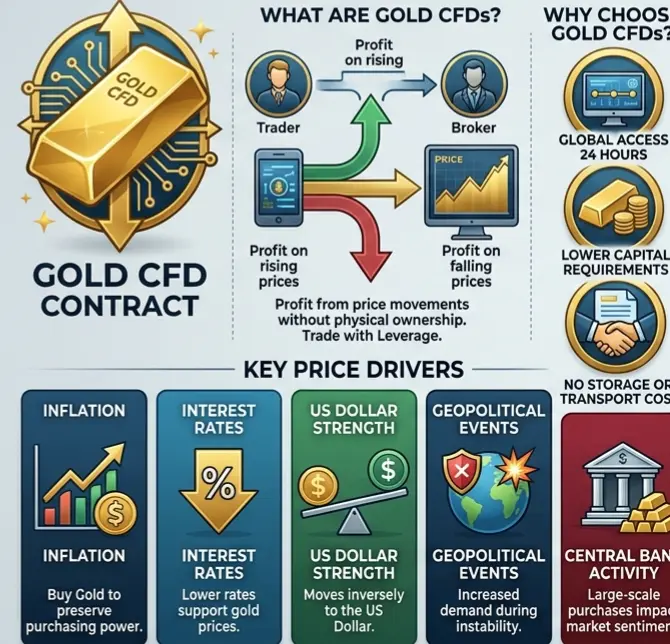
Global financial markets are entering a period where short-term volatility, macroeconomic uncertainty, and rapid sector rotation are creating enormous opportunities for active traders. In this environment, CFD trading has become one of the fastest-growing trading models because it allows market participants to gain exposure to major assets without directly owning the underlying instruments. Whether traders are targeting gold, oil, indices, forex pairs, or cryptocurrencies, CFDs are increasingly being used as flexible tools for navigating modern market conditions.
The latest w
Vortex_King
#TradeCFDWinGold
Global financial markets are entering a period where short-term volatility, macroeconomic uncertainty, and rapid sector rotation are creating enormous opportunities for active traders. In this environment, CFD trading has become one of the fastest-growing trading models because it allows market participants to gain exposure to major assets without directly owning the underlying instruments. Whether traders are targeting gold, oil, indices, forex pairs, or cryptocurrencies, CFDs are increasingly being used as flexible tools for navigating modern market conditions.
The latest wave of interest surrounding campaigns like #TradeCFDWinGold reflects something much bigger than promotional activity. It highlights how traders worldwide are shifting toward high-speed, multi-market strategies designed to capitalize on macro momentum, geopolitical shifts, and liquidity cycles. As traditional markets and digital assets become more interconnected, CFDs are emerging as one of the most dynamic trading instruments available for both retail and professional participants.
One of the primary reasons CFD trading has gained so much attention in 2026 is because global markets are no longer moving independently. Gold reacts to Treasury yields. Bitcoin reacts to dollar liquidity. Oil reacts to geopolitical developments. Equity indices react to central bank policy. Forex markets react to inflation data and growth expectations. CFDs allow traders to participate across all these sectors from a single trading environment, creating a highly efficient structure for diversified speculation and hedging.
Gold remains one of the most important assets inside the current macro cycle. Rising geopolitical tensions, concerns about sovereign debt sustainability, uncertainty surrounding interest rate policy, and persistent inflation volatility have all strengthened gold’s position as a strategic asset. Central banks themselves have continued accumulating gold reserves at historically elevated levels, signaling that institutional confidence in precious metals remains strong.
For CFD traders, gold represents more than just a safe-haven commodity. It has become one of the most technically responsive assets in global markets. Intraday volatility, macro-driven momentum swings, and strong liquidity make gold particularly attractive for leveraged trading strategies. Every Federal Reserve speech, inflation release, Treasury auction, or geopolitical headline can trigger substantial movement in XAU/USD pricing structures.
At the same time, CFD traders are increasingly integrating crypto market analysis into their broader strategies. Bitcoin and gold are now frequently compared as alternative macro assets responding to liquidity conditions and currency debasement fears. During periods of aggressive monetary expansion, both assets often attract capital simultaneously. During risk-off events, traders evaluate whether capital rotates toward defensive commodities or digital assets depending on the broader macro narrative.
This evolving relationship between gold and Bitcoin is reshaping trading psychology. Traders are no longer viewing markets through isolated categories. Instead, they are analyzing cross-market liquidity flows, macroeconomic reactions, and institutional positioning trends. CFDs make this process more accessible because they provide exposure to multiple correlated sectors without requiring separate infrastructure for each asset class.
Another reason CFD trading has expanded rapidly is the acceleration of event-driven markets. Economic releases now create instant reactions across equities, commodities, crypto, and forex simultaneously. A single inflation report can move the dollar index, Treasury yields, Nasdaq futures, gold, Bitcoin, and energy markets within minutes. Traders who understand these correlations can identify high-probability setups across multiple instruments during periods of concentrated volatility.
The modern trading environment rewards adaptability. Traders who can rapidly rotate between commodities, indices, and digital assets often perform better than those focused on a single isolated market. CFDs support this adaptive framework by allowing participants to engage both bullish and bearish opportunities across global markets.
One of the strongest advantages of CFD trading is directional flexibility. Traditional investing often depends primarily on bullish conditions. CFDs allow traders to potentially benefit from both upward and downward price movement depending on market structure. In volatile macro environments where sentiment changes rapidly, this flexibility becomes extremely valuable.
For example, when Treasury yields rise sharply, growth stocks and crypto may experience temporary weakness while the dollar strengthens. During periods of easing inflation expectations, risk assets may rebound aggressively while defensive positioning weakens. CFD traders can adjust exposure dynamically based on evolving macro conditions rather than remaining locked into long-only strategies.
Leverage is another factor attracting traders toward CFDs, although it must be approached responsibly. Controlled leverage allows traders to amplify exposure using smaller capital allocations. However, experienced traders understand that leverage magnifies both gains and losses, making disciplined risk management essential for long-term survival.
Professional CFD strategies typically prioritize capital preservation above emotional speculation. Successful traders focus on structured entries, predefined stop-loss levels, calculated risk-to-reward ratios, and disciplined execution rather than impulsive trading behavior. The difference between sustainable profitability and account destruction often comes down to risk management consistency rather than prediction accuracy alone.
Gold trading specifically has become highly sensitive to real yields and Federal Reserve expectations. When inflation-adjusted yields decline, gold tends to strengthen because the opportunity cost of holding non-yielding assets decreases. When yields rise aggressively, gold can experience temporary pressure. CFD traders closely monitor these relationships because macroeconomic expectations now dominate precious metals pricing behavior.
The same macro principles increasingly apply to crypto markets as well. Bitcoin is now deeply influenced by bond markets, dollar liquidity, and institutional risk appetite. As a result, many advanced traders are using CFDs to navigate both traditional and digital market volatility simultaneously.
Another major trend supporting CFD growth is the increasing participation of younger traders entering financial markets through mobile-first trading platforms. Modern trading interfaces provide instant access to charts, economic calendars, technical indicators, and global market execution tools. This accessibility has dramatically expanded participation across forex, commodities, and crypto-linked trading products.
Social trading culture has also accelerated the popularity of competitive campaigns and reward-driven trading ecosystems. Events associated with hashtags like #TradeCFDWinGold create community engagement while encouraging traders to share strategies, market analysis, and performance insights. This gamified structure increases participation while simultaneously expanding educational exposure across trading communities.
However, experienced participants understand that successful trading is not built around short-term excitement alone. Sustainable performance requires understanding macroeconomics, technical analysis, market psychology, liquidity behavior, and risk allocation. Traders who approach markets professionally tend to focus on process quality rather than emotional outcomes.
Technical analysis remains central to CFD trading strategies. Support and resistance zones, liquidity sweeps, trend continuation structures, moving averages, Fibonacci retracements, volume profiles, and momentum indicators all help traders identify high-probability market conditions. Combined with macroeconomic awareness, these tools create stronger frameworks for navigating volatile environments.
Artificial intelligence and algorithmic systems are also transforming the CFD landscape. AI-assisted analytics now help traders identify sentiment shifts, volatility spikes, and liquidity anomalies faster than traditional manual approaches. Over time, integration between AI tools and trading infrastructure may significantly change how both retail and institutional traders interact with global markets.
Institutional participation is another key factor shaping current conditions. Hedge funds, proprietary trading firms, and liquidity providers increasingly dominate short-term market flows. Their activity influences volatility structures across forex, commodities, and digital assets. Retail traders who understand institutional liquidity behavior often gain a strategic advantage by recognizing where large market participants may be positioning capital.
From a broader economic perspective, 2026 represents a transition phase for global financial systems. Central banks are balancing inflation management, slowing growth risks, debt sustainability concerns, and geopolitical instability simultaneously. This creates an environment where volatility remains elevated across nearly every asset class.
For active traders, elevated volatility often translates into increased opportunity. Gold, oil, Bitcoin, indices, forex pairs, and AI-related equities are all experiencing rapid price expansion cycles driven by macro narratives and liquidity rotation. CFDs provide traders with a mechanism to participate in these movements efficiently and flexibly.
The long-term evolution of CFD markets will likely be shaped by tokenization, blockchain settlement systems, AI-assisted execution tools, and increasingly globalized retail participation. Financial markets are becoming faster, more interconnected, and more accessible than ever before.
Ultimately, campaigns centered around #TradeCFDWinGold symbolize the growing convergence between education, competition, technology, and macro trading culture. They reflect a market environment where traders are no longer limited to one sector or one strategy. Instead, participants are learning to navigate interconnected global systems where commodities, currencies, crypto assets, and macroeconomic narratives all influence each other in real time.
As volatility continues shaping financial markets throughout 2026, disciplined traders who combine macro awareness, technical structure, emotional control, and strategic risk management may find some of the strongest opportunities of the decade emerging across the CFD landscape.
repost-content-media
  • Reward
  • Comment
  • Repost
  • Share
#HYPEMarketCapSurpassesDOGE
The cryptocurrency market has officially entered a new psychological era after HYPE surged past DOGE in market capitalization, marking one of the most symbolic shifts of the 2026 digital asset cycle. For years, Dogecoin represented the power of internet culture, retail momentum, meme-driven speculation, and community-based valuation. But the rise of HYPE signals something fundamentally different happening inside the crypto ecosystem: the market is beginning to reward utility-driven narratives, ecosystem expansion, trading infrastructure, and high-engagement on-chai
Vortex_King
#HYPEMarketCapSurpassesDOGE
The cryptocurrency market has officially entered a new psychological era after HYPE surged past DOGE in market capitalization, marking one of the most symbolic shifts of the 2026 digital asset cycle. For years, Dogecoin represented the power of internet culture, retail momentum, meme-driven speculation, and community-based valuation. But the rise of HYPE signals something fundamentally different happening inside the crypto ecosystem: the market is beginning to reward utility-driven narratives, ecosystem expansion, trading infrastructure, and high-engagement on-chain activity at a much larger scale.
This development is not simply about one token overtaking another in rankings. It represents a broader transformation in investor psychology, capital allocation behavior, and the evolution of blockchain ecosystems competing for institutional and retail attention simultaneously. HYPE surpassing DOGE is becoming one of the defining moments of the current crypto cycle because it reflects how quickly narratives can evolve once liquidity, user growth, and infrastructure momentum align together.
DOGE has historically been one of the strongest symbols of community-driven market power. Originally launched as a meme project, it eventually became one of the most recognized cryptocurrencies globally thanks to social media virality, celebrity endorsements, and large-scale retail participation. During multiple market cycles, DOGE demonstrated that internet attention itself could become a major financial force capable of generating billions in market value.
However, the crypto market of 2026 is significantly different from previous cycles. Institutional participation has expanded dramatically, derivatives infrastructure has matured, decentralized finance ecosystems have evolved, AI integration narratives are accelerating, and blockchain scalability has become increasingly important. Investors are now evaluating projects not only through community excitement but also through ecosystem utility, trading volume generation, liquidity depth, revenue models, and long-term infrastructure potential.
HYPE’s rise reflects this transition perfectly. The token has benefited from a combination of aggressive ecosystem growth, elevated trading participation, strong social engagement, rapidly expanding liquidity networks, and a broader perception that the project sits directly at the center of next-generation on-chain trading culture.
One of the most important factors behind HYPE’s explosive expansion is the current dominance of perpetual futures and decentralized trading ecosystems. The crypto market has increasingly shifted toward high-speed trading environments where liquidity efficiency, execution infrastructure, and derivatives activity play central roles in attracting user participation. HYPE became strongly associated with this evolving landscape, giving the project a unique positioning advantage during the 2026 market cycle.
The rise of perpetual trading ecosystems has fundamentally changed how liquidity flows across crypto markets. In earlier cycles, spot speculation and simple token accumulation dominated market behavior. Today, leverage markets, on-chain derivatives, synthetic exposure systems, and advanced trading infrastructure generate enormous daily capital movement. Projects positioned near these activity centers naturally attract stronger user growth and higher valuation expansion.
Another major factor supporting HYPE is community engagement quality. Unlike older meme cycles that relied primarily on viral humor, modern crypto communities increasingly value participation ecosystems where users actively interact through trading, staking, governance, ecosystem incentives, and social engagement simultaneously. HYPE successfully captured this model by transforming community participation into a high-frequency economic ecosystem rather than simple passive speculation.
Institutional awareness has also contributed heavily to HYPE’s momentum. Large funds and professional trading firms increasingly analyze blockchain ecosystems based on measurable economic activity rather than narrative popularity alone. Metrics such as total value locked, fee generation, derivatives volume, active wallets, liquidity efficiency, and ecosystem retention rates now carry significant weight in valuation discussions.
This shift is critical because institutional capital behaves differently from retail speculation. Retail traders often focus on emotional narratives, social momentum, and rapid volatility. Institutions prioritize infrastructure durability, liquidity scalability, market efficiency, and long-term network sustainability. HYPE’s ecosystem growth allowed it to attract attention from both groups simultaneously, creating a powerful combination of retail enthusiasm and professional participation.
At the same time, DOGE itself remains one of the strongest brands in crypto history. Surpassing DOGE does not erase its influence or community power. In fact, DOGE still maintains one of the most recognizable identities in digital assets globally. However, the market’s willingness to allow HYPE to exceed DOGE in valuation demonstrates how aggressively investors are rotating toward ecosystems connected to active financial infrastructure and next-generation trading narratives.
The psychological impact of market-cap rankings should not be underestimated. Crypto rankings influence perception, visibility, exchange exposure, media coverage, and social attention. Once a project enters the upper tier of digital assets, it often experiences accelerated network effects as more traders, analysts, influencers, and institutions begin monitoring its development closely.
HYPE’s ascent also highlights the increasing importance of liquidity concentration inside crypto markets. Capital tends to flow aggressively toward ecosystems generating the highest user engagement and trading activity. As liquidity deepens, volatility efficiency improves, attracting additional traders and institutions. This creates a self-reinforcing cycle where growth attracts more growth.
Another major driver behind HYPE’s expansion is the broader macro environment supporting risk assets in 2026. Cooling inflation expectations, improving liquidity conditions, expectations surrounding future monetary easing, and recovering institutional risk appetite have all contributed to renewed momentum across digital markets. High-beta crypto ecosystems tend to outperform significantly during periods where liquidity conditions improve globally.
Bitcoin’s resilience above major macro support zones has also strengthened confidence across altcoin markets. Historically, strong BTC stability creates an environment where traders become more willing to allocate capital toward higher-risk ecosystems with greater upside potential. HYPE emerged as one of the strongest beneficiaries of this capital rotation dynamic.
Social media acceleration played a major role as well. Modern crypto cycles are increasingly shaped by viral information flow across global digital communities. Trading screenshots, leaderboard performance, ecosystem metrics, influencer participation, and community-generated content all contribute to exponential visibility growth. HYPE successfully leveraged this structure to maintain persistent attention throughout its expansion phase.
Artificial intelligence integration across trading platforms further amplified speculative participation. AI-driven sentiment systems, automated analytics, and algorithmic market monitoring tools increasingly identified HYPE as one of the strongest momentum narratives in the market. As more systems highlighted its accelerating growth, additional liquidity entered the ecosystem.
From a technical perspective, HYPE’s market structure reflected classic momentum expansion characteristics. Strong volume continuation, aggressive breakout confirmations, elevated derivatives participation, and sustained higher-high formations all signaled that institutional and retail demand remained structurally strong throughout the rally phase.
The comparison between HYPE and DOGE also reflects a deeper generational evolution within crypto culture itself. Earlier cycles were dominated primarily by meme speculation and experimental retail enthusiasm. The current cycle increasingly combines entertainment, infrastructure, financial engineering, social participation, and institutional-scale trading ecosystems together into a unified market structure.
This evolution does not eliminate meme culture. Instead, it transforms how memes integrate with actual economic infrastructure. The strongest modern ecosystems are often those capable of combining community virality with real financial activity, liquidity generation, and platform utility simultaneously.
Another critical factor is revenue perception. Markets increasingly reward ecosystems capable of generating sustainable fee activity and economic throughput. Projects associated with active trading infrastructure naturally benefit because trading activity itself produces measurable ecosystem value. Investors now pay closer attention to whether blockchain ecosystems generate actual economic demand rather than relying entirely on speculative narratives.
Risk management remains extremely important despite HYPE’s explosive success. Crypto markets remain highly volatile, and momentum-driven expansions can experience sharp corrections even during long-term bullish cycles. Traders chasing parabolic movements without structured risk frameworks often expose themselves to unnecessary volatility.
Smart participants therefore focus on trend sustainability, liquidity conditions, macroeconomic stability, derivatives positioning, and ecosystem development metrics rather than emotional excitement alone. Long-term success in crypto markets typically comes from balancing conviction with disciplined execution.
The broader significance of HYPE surpassing DOGE ultimately extends beyond rankings themselves. It demonstrates how rapidly blockchain ecosystems can evolve once liquidity, community participation, infrastructure relevance, and macro conditions align together. The crypto market is no longer dominated solely by speculative storytelling. It is increasingly driven by ecosystems capable of combining attention, technology, financial activity, and user retention into scalable economic networks.
If current growth trends continue, HYPE may become one of the defining symbols of the 2026 cycle in the same way DOGE represented earlier retail-driven eras. The transition illustrates how crypto markets constantly reinvent themselves, rewarding projects that successfully capture the dominant narratives of each new phase.
As institutional adoption expands, AI integration accelerates, and on-chain financial infrastructure continues maturing, ecosystems positioned at the intersection of liquidity, trading activity, and community participation may remain among the strongest performers throughout the next evolution of digital markets.
repost-content-media
  • Reward
  • Comment
  • Repost
  • Share
#PlatinumCardCreatorExclusive
The financial industry is entering a transformative era where premium banking, creator economies, digital assets, and global payment systems are converging into a single ecosystem. The rise of exclusive creator-focused platinum cards represents far more than a luxury branding strategy. It signals a deeper structural shift in how modern financial institutions view digital entrepreneurs, influencers, traders, streamers, educators, and online communities as one of the most powerful economic forces of the decade.
For years, traditional banking systems primarily focus
Vortex_King
#PlatinumCardCreatorExclusive
The financial industry is entering a transformative era where premium banking, creator economies, digital assets, and global payment systems are converging into a single ecosystem. The rise of exclusive creator-focused platinum cards represents far more than a luxury branding strategy. It signals a deeper structural shift in how modern financial institutions view digital entrepreneurs, influencers, traders, streamers, educators, and online communities as one of the most powerful economic forces of the decade.
For years, traditional banking systems primarily focused on salaried professionals, corporations, and high-net-worth investors. However, the rapid expansion of creator-driven economies has fundamentally changed global wealth generation patterns. Millions of individuals now build businesses through content creation, trading education, digital marketing, live streaming, AI tools, gaming ecosystems, Web3 participation, and online communities. Financial institutions are finally recognizing that creators are no longer niche internet personalities — they are becoming full-scale digital enterprises with global revenue streams.
The emergence of campaigns and ecosystems associated with #PlatinumCardCreatorExclusive reflects this evolution perfectly. These premium financial products are increasingly designed not only for spending convenience but also for identity, ecosystem access, reward optimization, digital branding, and financial integration across multiple industries simultaneously.
One of the biggest reasons creator-focused platinum cards are gaining momentum is because the modern digital economy operates globally by default. Traditional banking systems were built around geographic limitations, local currencies, and slow settlement infrastructure. Creators, however, operate across borders instantly. Revenue may come from sponsorships in Europe, advertising platforms in the United States, crypto payments from Asia, affiliate programs from the Middle East, and digital product sales worldwide.
This borderless income structure creates demand for financial tools capable of supporting international spending, multi-currency flexibility, premium liquidity access, and fast transaction settlement. Platinum-level creator cards are increasingly positioning themselves as financial bridges connecting traditional banking systems with digital-first economic activity.
Another major factor driving growth in this sector is the increasing overlap between creators and investors. Modern creators are not simply content publishers anymore. Many actively participate in crypto markets, stock trading, AI infrastructure projects, token ecosystems, and decentralized finance platforms. Their financial behavior increasingly resembles that of active digital entrepreneurs rather than passive consumers.
This transformation is encouraging financial companies to design products that integrate spending rewards, investment incentives, crypto exposure, travel benefits, premium memberships, and ecosystem participation into unified platforms. The goal is no longer just customer retention. The objective is to create full-scale financial ecosystems where users remain engaged across payments, investments, digital assets, and online identity simultaneously.
The psychological aspect of platinum creator cards is equally important. Premium financial products have historically symbolized status, exclusivity, and economic influence. In the digital era, creators themselves are becoming global brands. Exclusive financial products help reinforce that identity by aligning financial access with online reputation and professional visibility.
This dynamic is especially powerful in the crypto and Web3 sectors where social identity often directly influences economic opportunity. Traders, analysts, influencers, developers, and educators increasingly monetize both their knowledge and their online credibility. Premium financial ecosystems that recognize and reward creator influence naturally attract strong engagement from digital-native communities.
Rewards infrastructure is another critical growth driver. Traditional cashback systems are evolving rapidly into multi-layered engagement ecosystems. Instead of offering simple spending rewards, modern premium cards increasingly integrate token rewards, staking benefits, NFT access, exclusive event invitations, trading rebates, AI platform subscriptions, travel partnerships, and ecosystem-based loyalty structures.
This shift mirrors broader economic trends where companies are competing not only for spending volume but also for long-term ecosystem participation. The most successful financial platforms are those capable of keeping users continuously engaged across multiple digital environments.
Crypto integration is playing a massive role in accelerating this transformation. Stablecoins, blockchain settlements, tokenized assets, and decentralized payment rails are reshaping how global transactions operate. Younger digital entrepreneurs often prefer financial systems that combine traditional payment reliability with crypto-native flexibility.
As a result, many premium creator-focused financial products are increasingly exploring integrations involving digital wallets, token rewards, blockchain-based loyalty systems, and instant cross-border settlement solutions. These innovations are especially attractive for creators who already operate inside crypto ecosystems and understand the advantages of programmable finance.
Artificial intelligence is also reshaping creator-focused financial infrastructure. AI-driven analytics now help users optimize spending patterns, identify tax efficiencies, track subscriptions, monitor business expenses, and personalize financial recommendations automatically. Over time, AI may become one of the defining competitive advantages for premium financial ecosystems targeting digital entrepreneurs.
The creator economy itself has become one of the fastest-growing sectors globally. Independent educators, streamers, podcasters, AI creators, trading analysts, gamers, designers, musicians, and community operators collectively generate hundreds of billions in economic activity annually. This scale is forcing traditional financial institutions to modernize rapidly or risk losing relevance among younger digitally native generations.
Social media monetization further amplifies the demand for premium creator financial tools. Revenue cycles for creators are often irregular, platform-dependent, and globally distributed. Exclusive financial ecosystems offering flexible liquidity solutions, spending optimization, and premium support services become increasingly valuable under these conditions.
Another important factor is the growing relationship between online influence and real-world purchasing behavior. Influencers and creators now drive significant consumer spending trends across fashion, technology, gaming, crypto, education, fitness, and entertainment sectors. Financial institutions recognize that creators often control highly engaged communities capable of generating enormous network effects.
This is why many premium card ecosystems are shifting toward community-oriented models rather than purely transactional banking relationships. Access, exclusivity, engagement, and social identity are becoming central components of financial product design.
Travel integration remains another major advantage for premium creator-focused cards. Many digital entrepreneurs work remotely, attend international conferences, participate in blockchain events, collaborate globally, and maintain location-independent businesses. Travel benefits including airport lounge access, premium accommodations, insurance coverage, and global payment flexibility significantly increase product attractiveness.
Security infrastructure is becoming increasingly important as well. As creators grow financially, they also become larger targets for fraud, phishing attacks, and payment vulnerabilities. Advanced financial products increasingly prioritize real-time fraud monitoring, biometric security systems, AI-driven anomaly detection, and enhanced identity protection tools.
The rise of tokenized economies may further transform creator financial ecosystems in the coming years. Blockchain technology enables entirely new forms of loyalty structures where users potentially earn tradable digital assets for ecosystem participation. This creates stronger alignment between users and financial platforms because participation itself generates measurable economic value.
From an investment perspective, the expansion of creator-focused financial products highlights a larger macro trend: the financialization of digital identity. Online audiences, engagement metrics, content ecosystems, and social influence are increasingly being monetized similarly to traditional business assets.
Financial institutions understand that the next generation of high-value customers may not emerge primarily from legacy corporate structures. Instead, many will come from decentralized creator economies, digital entrepreneurship, AI-assisted businesses, and global online communities.
At the same time, competition within the premium financial sector is becoming increasingly aggressive. Traditional banks, fintech startups, crypto-native platforms, and payment companies are all racing to capture creator-driven economic activity. This competition is accelerating innovation across rewards systems, user experience, global settlement infrastructure, and digital integration capabilities.
The broader significance of #PlatinumCardCreatorExclusive extends beyond luxury branding alone. It represents the convergence of finance, technology, identity, content creation, and digital ownership into a unified economic model. Financial products are evolving from static banking tools into interactive ecosystems designed around participation, engagement, and digital lifestyle integration.
As Web3 infrastructure matures, AI expands, and creator economies continue scaling globally, premium financial products may become increasingly personalized, tokenized, and ecosystem-driven. Users will likely expect financial platforms not only to process transactions but also to support business growth, community engagement, investment access, and digital reputation management simultaneously.
The long-term trajectory appears extremely bullish for creator-centered financial ecosystems because the underlying trend powering them — global digital entrepreneurship — continues expanding rapidly. Every year, more individuals build careers independently through online platforms, decentralized communities, and digital assets.
Ultimately, the rise of creator-exclusive platinum ecosystems reflects a future where financial identity becomes deeply integrated with digital presence, online influence, and global connectivity. The modern economy is no longer limited by geography or traditional corporate structures. It is increasingly shaped by individuals capable of building scalable digital ecosystems around their skills, audiences, and communities.
As financial systems evolve to support this transformation, premium creator-focused platforms may become some of the most influential gateways connecting traditional finance with the next generation of internet-native economic activity.
repost-content-media
  • Reward
  • Comment
  • Repost
  • Share
#DailyPolymarketHotspot
#DailyPolymarketHotspot 📊🔥
Prediction markets are rapidly becoming one of the most fascinating sectors in the modern financial ecosystem because they combine information flow, crowd psychology, macroeconomics, political forecasting, and speculative trading into a single high-speed environment. Among these platforms, Polymarket has emerged as one of the most influential names shaping how traders interpret probabilities, sentiment shifts, and real-world events in real time.
The growing popularity of #DailyPolymarketHotspot reflects a larger transformation happening acr
Vortex_King
#DailyPolymarketHotspot
#DailyPolymarketHotspot 📊🔥
Prediction markets are rapidly becoming one of the most fascinating sectors in the modern financial ecosystem because they combine information flow, crowd psychology, macroeconomics, political forecasting, and speculative trading into a single high-speed environment. Among these platforms, Polymarket has emerged as one of the most influential names shaping how traders interpret probabilities, sentiment shifts, and real-world events in real time.
The growing popularity of #DailyPolymarketHotspot reflects a larger transformation happening across global markets where information itself is increasingly treated as a tradable asset. Traders are no longer focused only on stocks, commodities, or cryptocurrencies. They are now actively speculating on elections, central bank policy decisions, geopolitical developments, technology adoption, sports outcomes, ETF approvals, recession probabilities, and even cultural trends.
This evolution represents a major shift in how markets process collective intelligence. Traditional financial systems often rely heavily on analyst forecasts, institutional research, and delayed economic reporting. Prediction markets operate differently. They aggregate live sentiment continuously by allowing participants to place capital behind their expectations. In many cases, these markets react faster than conventional media narratives because price movement itself reflects changing probabilities instantly.
Polymarket’s growth accelerated significantly during the 2024–2026 period because global uncertainty increased across nearly every major sector. Elections, wars, inflation cycles, interest rate volatility, AI expansion, crypto regulation, and technological disruption created an environment where forecasting became increasingly valuable. Traders realized that understanding probabilities could be just as profitable as understanding price charts.
One of the biggest reasons prediction markets are attracting attention is because they function as real-time sentiment engines. Unlike static polling systems or delayed surveys, prediction markets dynamically adjust as new information enters the market. Every headline, speech, data release, and geopolitical event can immediately influence pricing structures.
For crypto traders specifically, Polymarket has become extremely important because digital asset markets are now deeply connected to macroeconomic expectations. Bitcoin reacts to Federal Reserve policy. Ethereum responds to institutional adoption narratives. AI tokens respond to technology investment cycles. Regulatory expectations influence exchange ecosystems and stablecoin liquidity. Prediction markets help traders estimate how these events may evolve before traditional markets fully price them in.
Another important factor behind Polymarket’s expansion is the increasing convergence between finance and social media. Modern trading culture is driven heavily by online communities, influencer analysis, viral narratives, and crowd participation. Prediction markets naturally fit into this structure because they transform discussion topics into measurable probability systems.
The psychological component is particularly powerful. Humans naturally debate future outcomes, especially during periods of uncertainty. Prediction markets monetize this instinct by creating economic incentives around information accuracy. As a result, traders continuously search for better data, faster analysis, and stronger informational advantages.
One of the most actively discussed categories on Polymarket involves central bank policy expectations. Markets surrounding Federal Reserve rate cuts, inflation trends, and recession probabilities often generate enormous trading activity because these outcomes directly influence nearly every major asset class globally.
When traders expect interest rates to decline, risk assets such as Bitcoin, growth stocks, and altcoins often strengthen due to improving liquidity expectations. When markets anticipate aggressive tightening or persistent inflation, defensive positioning tends to increase. Prediction markets provide a live framework for observing how collective expectations evolve around these macroeconomic variables.
Political forecasting is another massive growth sector. Elections now influence energy policy, crypto regulation, AI oversight, taxation structures, international trade, and institutional risk appetite. Prediction markets allow traders to monitor probability shifts continuously rather than relying exclusively on traditional polling data.
This is especially relevant for crypto because regulatory clarity remains one of the most important long-term variables affecting blockchain adoption. Markets tied to ETF approvals, stablecoin legislation, exchange regulation, and crypto taxation often experience intense speculative interest.
Artificial intelligence narratives are also reshaping prediction market behavior. AI systems increasingly assist traders in processing large-scale information flows, identifying sentiment shifts, and monitoring probability discrepancies across markets. Over time, AI-enhanced forecasting may significantly improve the efficiency and speed of prediction-based trading systems.
At the same time, prediction markets remain heavily influenced by human psychology. Emotional reactions, herd behavior, overconfidence, fear, and narrative momentum all impact pricing structures. This creates opportunities for disciplined traders capable of identifying situations where crowd sentiment becomes disconnected from realistic probabilities.
Liquidity expansion is another major factor supporting prediction market growth. As more participants enter these ecosystems, pricing becomes more efficient and volatility structures improve. Higher liquidity also attracts larger traders and institutions because execution quality increases significantly in active markets.
Blockchain infrastructure itself plays a crucial role in enabling this sector. Decentralized settlement systems allow prediction markets to operate with greater transparency, accessibility, and global participation compared to traditional betting or forecasting structures. Smart contracts automate settlement conditions while reducing reliance on centralized intermediaries.
This decentralized framework aligns closely with broader Web3 ideology where open participation, transparency, and programmable financial systems remain central themes. Prediction markets therefore sit at the intersection of finance, information, and decentralized technology simultaneously.
One particularly interesting trend is the relationship between prediction markets and crypto volatility. In many cases, probability shifts on platforms like Polymarket can influence sentiment across Bitcoin and altcoin ecosystems before price reactions fully materialize. Traders increasingly monitor prediction market activity as an early indicator of macro narrative changes.
For example, rising probabilities of future rate cuts may strengthen bullish positioning across crypto markets. Increasing geopolitical risk probabilities may trigger defensive asset rotation. ETF approval expectations can rapidly influence institutional sentiment surrounding specific blockchain ecosystems.
The rise of event-driven trading strategies further amplifies the importance of prediction platforms. Modern markets move extremely quickly around major announcements. Inflation reports, election debates, Treasury auctions, AI product launches, and geopolitical negotiations can all trigger massive cross-market volatility within minutes.
Prediction markets provide traders with a mechanism for positioning around these events based on probability expectations rather than pure directional speculation alone. This creates more nuanced strategies capable of incorporating uncertainty directly into portfolio construction.
Another critical factor is information democratization. Historically, high-quality forecasting tools and institutional research were concentrated among large financial firms. Prediction markets allow retail participants to engage directly with collective intelligence systems using publicly accessible platforms.
This democratization process aligns with the broader evolution of decentralized finance where access barriers continue decreasing across multiple financial sectors. The same internet infrastructure that enabled global crypto participation is now enabling global forecasting participation as well.
Risk management remains essential inside prediction markets because volatility can become extreme during major events. Probabilities often swing aggressively as new information emerges, and emotional crowd reactions may temporarily distort market pricing. Professional participants therefore focus heavily on position sizing, probability assessment, and disciplined execution frameworks.
One of the most bullish long-term aspects of prediction markets is their potential application beyond speculation. Over time, decentralized forecasting systems may influence corporate planning, insurance models, governance structures, policy analysis, and economic forecasting itself.
Markets are often highly effective at aggregating distributed information because participants are financially incentivized to identify accurate outcomes. This creates an environment where collective intelligence can sometimes outperform traditional centralized forecasting models.
The expansion of Polymarket also reflects the broader gamification of modern finance. Younger generations increasingly engage with markets through interactive, real-time, mobile-first environments. Prediction platforms combine elements of trading, social participation, macro analysis, and competitive forecasting into highly engaging ecosystems.
As blockchain adoption continues growing, prediction markets may become deeply integrated into broader digital economies. AI systems, decentralized identities, tokenized incentives, and real-time data feeds could eventually transform forecasting into one of the largest sectors within Web3 infrastructure.
From a macro perspective, the rise of #DailyPolymarketHotspot symbolizes how financial markets are evolving toward information-centric economies where probabilities themselves carry tradable value. Investors no longer simply trade assets — they increasingly trade expectations, narratives, and future outcomes.
This transformation is likely only beginning. As technology improves, liquidity deepens, and decentralized participation expands globally, prediction markets may become one of the most important mechanisms for interpreting collective sentiment across economics, politics, technology, and digital assets.
For crypto traders, analysts, and macro investors alike, monitoring platforms like Polymarket is becoming increasingly valuable because they provide a real-time window into how global participants collectively interpret the future before traditional systems fully react.
repost-content-media
  • Reward
  • Comment
  • Repost
  • Share
#EthereumPrivacyUpgradeRoadmap
Ethereum is entering one of the most important developmental phases in its history as discussions surrounding privacy infrastructure, scalable identity protection, and next-generation transaction confidentiality continue accelerating across the ecosystem. The growing focus on the #EthereumPrivacyUpgradeRoadmap reflects a major evolution in blockchain philosophy where transparency alone is no longer viewed as sufficient for the future of decentralized finance, institutional adoption, and mainstream global usage.
For years, Ethereum’s open architecture became one
Vortex_King
#EthereumPrivacyUpgradeRoadmap
Ethereum is entering one of the most important developmental phases in its history as discussions surrounding privacy infrastructure, scalable identity protection, and next-generation transaction confidentiality continue accelerating across the ecosystem. The growing focus on the #EthereumPrivacyUpgradeRoadmap reflects a major evolution in blockchain philosophy where transparency alone is no longer viewed as sufficient for the future of decentralized finance, institutional adoption, and mainstream global usage.
For years, Ethereum’s open architecture became one of its greatest strengths. Every transaction, smart contract interaction, wallet balance, and on-chain activity could be verified publicly, creating unprecedented transparency and trust minimization. This transparency enabled decentralized finance, NFT ecosystems, DAOs, and countless Web3 applications to emerge at massive scale.
However, as Ethereum matured into a global financial infrastructure layer, developers, institutions, and users began recognizing a major limitation: complete transparency can create serious privacy challenges for individuals, corporations, traders, and institutions operating on-chain.
The modern financial system depends heavily on selective privacy. Businesses do not publicly reveal every payment relationship. Investment firms do not expose every trade execution in real time. Consumers expect transaction confidentiality. Enterprises require operational discretion. Governments themselves operate using layered information access structures. As blockchain adoption expands globally, Ethereum increasingly faces pressure to provide stronger privacy solutions while still maintaining decentralization, security, and regulatory compatibility.
This is exactly why Ethereum’s privacy roadmap has become one of the most strategically important narratives in Web3 infrastructure development. The conversation is no longer centered around whether privacy matters. The debate now focuses on how Ethereum can integrate scalable privacy mechanisms without compromising compliance frameworks, network security, or ecosystem usability.
One of the biggest misconceptions surrounding blockchain privacy is that it only benefits anonymity-focused users. In reality, privacy infrastructure is essential for mainstream economic activity itself. Without privacy protections, businesses may hesitate to use public blockchains for sensitive operations, institutions may avoid large-scale settlement activity, and users may remain uncomfortable exposing their complete financial history publicly.
Ethereum developers increasingly understand that privacy is not merely a niche feature — it is foundational infrastructure for long-term adoption.
The rise of institutional blockchain participation has accelerated this urgency significantly. Banks, asset managers, payment providers, and enterprise technology firms are exploring tokenization, stablecoin settlement, decentralized finance integration, and blockchain-based financial rails. However, large institutions require transaction confidentiality and data protection standards compatible with real-world operational requirements.
This creates a major challenge because Ethereum’s existing transparency model can expose wallet tracking, strategic positioning, treasury movements, and trading behavior. Privacy upgrades aim to solve these limitations while preserving Ethereum’s decentralized architecture.
Zero-knowledge technology has emerged as one of the most important solutions driving this roadmap forward. ZK systems allow information to be verified cryptographically without fully revealing the underlying data itself. This innovation is transformative because it enables blockchain networks to maintain security and verifiability while dramatically improving confidentiality.
The rapid growth of zk-rollups, validity proofs, and zero-knowledge infrastructure demonstrates how seriously the Ethereum ecosystem is investing in this direction. Initially, ZK systems gained popularity primarily as scaling solutions designed to improve transaction throughput and reduce fees. Today, they are increasingly viewed as critical building blocks for privacy-preserving blockchain applications as well.
Ethereum’s evolving roadmap now increasingly integrates scalability and privacy together because both challenges are deeply interconnected. A blockchain capable of supporting billions of users requires not only fast and affordable transactions but also secure mechanisms for protecting sensitive data and transactional behavior.
Account abstraction is another major component influencing Ethereum’s privacy future. Traditional crypto wallets often expose users to operational complexity and security risks. Advanced account systems may eventually allow programmable privacy settings, selective disclosure mechanisms, transaction batching, and identity-layer protections integrated directly into wallet infrastructure.
This could fundamentally change how users interact with Ethereum by making privacy more accessible and customizable without sacrificing usability.
Another critical factor shaping the privacy roadmap is regulatory evolution. Governments worldwide are increasing scrutiny around anti-money laundering standards, financial reporting, and digital asset compliance frameworks. Ethereum developers therefore face the difficult task of balancing privacy rights with regulatory compatibility.
The future likely involves selective transparency models rather than absolute anonymity. In such systems, users maintain privacy protections while authorized disclosures remain possible under specific legal or compliance conditions. This mirrors how traditional financial systems operate today where transactional privacy exists alongside regulated oversight mechanisms.
Stablecoins represent another massive catalyst driving Ethereum privacy innovation. Stablecoins are increasingly used for payments, remittances, trading, treasury management, and cross-border settlement. As stablecoin usage scales globally, transaction confidentiality becomes more important for businesses and users alike.
Large-scale payment activity conducted entirely on transparent public ledgers creates operational risks ranging from competitive intelligence exposure to targeted cyber threats. Privacy-enhanced stablecoin infrastructure may therefore become one of the largest future use cases for Ethereum’s evolving privacy ecosystem.
Decentralized finance itself also benefits enormously from privacy enhancements. Current DeFi systems often expose trading strategies, liquidity positioning, arbitrage opportunities, and whale activity publicly. This transparency can create front-running risks, MEV exploitation, and strategic disadvantages for sophisticated participants.
Privacy-preserving DeFi infrastructure could significantly improve market efficiency by reducing exploitative behaviors linked to fully transparent transaction ordering systems.
Artificial intelligence integration may further amplify the importance of privacy. AI-driven analytics systems are becoming increasingly effective at blockchain surveillance, wallet clustering, transaction analysis, and behavioral prediction. While these tools improve security and compliance capabilities, they also intensify concerns regarding financial privacy and digital autonomy.
As AI systems become more powerful, demand for cryptographic privacy protections may increase dramatically across blockchain ecosystems.
Another important dimension is personal digital sovereignty. Many users increasingly believe financial privacy should remain a fundamental right in the digital era. Public blockchain transparency, while revolutionary for verification purposes, can sometimes conflict with expectations surrounding personal autonomy and economic confidentiality.
Ethereum’s privacy roadmap therefore represents not only a technical evolution but also a philosophical one regarding how decentralized societies balance openness with individual rights.
Competition across blockchain ecosystems is accelerating this development race as well. Multiple Layer-1 networks already emphasize privacy-focused architectures or integrated confidentiality systems. Ethereum must continue innovating aggressively if it wants to maintain leadership within the rapidly evolving Web3 landscape.
Fortunately, Ethereum’s greatest advantage remains its developer ecosystem. The network continues attracting some of the most advanced cryptographers, infrastructure engineers, decentralized application builders, and security researchers globally. This intellectual concentration significantly strengthens Ethereum’s ability to implement sophisticated privacy systems over time.
From a market perspective, privacy infrastructure could become one of the most valuable long-term sectors within crypto. As blockchain adoption expands into enterprise finance, AI economies, tokenized assets, gaming ecosystems, and global payments, the need for secure data protection mechanisms will likely grow exponentially.
Investors are increasingly recognizing this trend. Projects connected to zero-knowledge infrastructure, encrypted computation, privacy-enhanced Layer-2 systems, and cryptographic identity solutions are attracting substantial capital attention across the market.
Ethereum’s roadmap also reflects a broader industry realization: mass adoption cannot rely entirely on radical transparency alone. Real-world economic systems require nuanced privacy frameworks capable of balancing openness, compliance, usability, and security simultaneously.
The long-term vision emerging around Ethereum privacy is therefore not about hiding activity from the world entirely. Instead, it is about creating programmable confidentiality systems where users control how, when, and with whom information is shared.
This distinction is extremely important because it positions privacy not as opposition to regulation or security, but as infrastructure supporting scalable digital economies.
The success of Ethereum’s privacy roadmap could ultimately determine how effectively the network supports global institutional participation, enterprise adoption, tokenized finance, decentralized identity systems, and mainstream payment infrastructure throughout the next decade.
If Ethereum successfully integrates scalable privacy solutions alongside Layer-2 expansion, account abstraction, AI integration, and decentralized financial infrastructure, the network may strengthen its position as the foundational operating layer for the future digital economy.
The broader significance of #EthereumPrivacyUpgradeRoadmap extends far beyond technical upgrades themselves. It symbolizes the maturation of blockchain technology from experimental public ledgers into sophisticated economic systems capable of supporting real-world global financial activity at scale.
As Web3 continues evolving, privacy will likely become one of the defining competitive advantages separating experimental ecosystems from truly scalable global infrastructure. Ethereum’s ability to execute this transition effectively may shape the next era of decentralized finance, digital identity, and programmable economic coordination worldwide.
repost-content-media
  • Reward
  • Comment
  • Repost
  • Share
#DollarIndexBreaksBelow99
The U.S. Dollar Index breaking below the critical 99 level is becoming one of the most important macroeconomic developments shaping global financial markets in 2026. Currency markets are often overlooked by retail investors compared to stocks, crypto, or commodities, but in reality the dollar remains the central liquidity engine of the global financial system. When the Dollar Index, commonly known as DXY, experiences a major structural breakdown, the impact spreads across nearly every major asset class including Bitcoin, gold, equities, emerging markets, commodities,
Vortex_King
#DollarIndexBreaksBelow99
The U.S. Dollar Index breaking below the critical 99 level is becoming one of the most important macroeconomic developments shaping global financial markets in 2026. Currency markets are often overlooked by retail investors compared to stocks, crypto, or commodities, but in reality the dollar remains the central liquidity engine of the global financial system. When the Dollar Index, commonly known as DXY, experiences a major structural breakdown, the impact spreads across nearly every major asset class including Bitcoin, gold, equities, emerging markets, commodities, and global capital flows.
The move below 99 is not simply a technical milestone. It represents a significant psychological and macroeconomic shift in how investors are pricing U.S. growth expectations, inflation dynamics, Federal Reserve policy trajectories, and international liquidity conditions. Markets are increasingly interpreting dollar weakness as a signal that the aggressive monetary tightening era may be transitioning toward a more accommodative phase later in the cycle.
Historically, the dollar performs strongest during periods of economic uncertainty, elevated Treasury yields, global stress, and restrictive Federal Reserve policy. Investors typically rotate toward dollar-denominated assets because of liquidity depth, perceived safety, and higher yield advantages. Over the last several years, rising interest rates and inflation fears pushed the DXY to elevated levels as global capital flowed aggressively into U.S. fixed-income markets.
However, macro conditions are beginning to evolve rapidly. Inflation pressures are cooling gradually in several major economies, energy market volatility has stabilized compared to earlier geopolitical shock phases, and investors increasingly expect central banks to eventually pivot toward more supportive liquidity conditions. As these expectations strengthen, the dollar’s momentum has started weakening significantly.
Breaking below 99 carries enormous symbolic importance because major psychological levels often influence institutional positioning behavior. Hedge funds, macro traders, sovereign wealth funds, and algorithmic systems closely monitor these structural price zones. Once major support breaks, capital allocation models frequently adjust aggressively, accelerating momentum across currency and risk-asset markets.
One of the biggest beneficiaries of dollar weakness is the cryptocurrency market, particularly Bitcoin. Crypto assets historically perform strongest during periods when global liquidity expectations improve and the dollar weakens. This relationship exists because a softer dollar generally loosens global financial conditions, encourages risk-taking behavior, and increases speculative participation across growth-oriented markets.
Bitcoin is increasingly behaving like a macro liquidity asset rather than a purely isolated digital experiment. When the dollar weakens and Treasury yields stabilize or decline, institutional appetite for alternative assets often increases. Capital begins rotating toward sectors offering higher growth potential, including technology equities, AI infrastructure, emerging markets, and cryptocurrencies.
This is one reason why Bitcoin frequently rallies during major DXY downtrends. Investors begin searching for assets capable of outperforming fiat currency debasement and monetary expansion cycles. Crypto markets, especially Bitcoin and Ethereum, tend to attract significant liquidity under these conditions.
Gold is another major beneficiary of dollar weakness. Precious metals historically maintain an inverse relationship with the dollar because gold becomes cheaper for international buyers when the dollar declines. Additionally, weakening confidence in fiat purchasing power often increases demand for hard assets viewed as long-term stores of value.
The simultaneous strength often seen in both gold and Bitcoin during dollar weakness periods is extremely important. It reflects growing investor concern regarding sovereign debt expansion, long-term currency dilution, and structural monetary instability across global financial systems.
Emerging markets also benefit significantly from a declining dollar. Many developing economies carry large amounts of dollar-denominated debt. When the dollar weakens, debt servicing pressure decreases, improving financial stability and capital inflow conditions for emerging markets. This dynamic can support equities, commodities, and local currencies across multiple regions simultaneously.
Another critical factor behind the DXY decline involves changing Federal Reserve expectations. Markets are increasingly debating whether the Fed will eventually move toward rate cuts later in 2026 as inflation moderates and growth slows. Even the anticipation of future easing can weaken the dollar because interest rate differentials begin shifting against it.
Bond markets play a central role in this process. Treasury yields heavily influence global capital allocation because they determine the relative attractiveness of holding dollar-denominated assets. If yields decline alongside weakening inflation expectations, international demand for dollars can soften substantially.
The interaction between the dollar and Treasury markets is particularly important for crypto traders. Rising yields typically pressure risk assets because safer fixed-income returns become more attractive. Falling yields combined with dollar weakness often create the opposite environment where speculative capital flows back into high-growth sectors.
Artificial intelligence and technology equities are also responding positively to softer dollar conditions. Growth-oriented sectors tend to benefit from improving liquidity expectations because future earnings become more valuable in lower-rate environments. This relationship increasingly influences crypto markets as well because AI narratives and blockchain ecosystems are becoming closely interconnected through infrastructure, compute markets, and decentralized data systems.
Another reason the DXY breakdown matters is global trade competitiveness. A weaker dollar can improve U.S. export competitiveness by making American goods cheaper internationally. At the same time, commodity-exporting nations often benefit because many global commodities including oil, metals, and agricultural products are priced in dollars.
Oil markets themselves react strongly to dollar shifts. Since crude oil is globally denominated in USD, a weaker dollar often supports higher commodity prices over time by increasing purchasing power for non-dollar economies. However, this relationship also depends heavily on geopolitical conditions and supply-demand dynamics.
Institutional positioning data suggests that many macro funds were heavily long the dollar during the tightening cycle. As market narratives shift toward potential monetary easing and softer inflation, some of these positions are now unwinding. Position unwinds can accelerate currency momentum significantly once key technical levels fail.
Another fascinating dimension of the current DXY weakness is the growing debate surrounding de-dollarization. Multiple countries continue exploring alternative settlement systems, bilateral trade agreements, and digital payment infrastructures designed to reduce long-term dependence on the U.S. dollar.
While the dollar remains overwhelmingly dominant globally, the expansion of central bank digital currencies, blockchain settlement systems, stablecoins, and cross-border payment innovation is slowly introducing new competitive dynamics into international finance.
Stablecoins themselves represent an interesting paradox in this environment. Most stablecoins remain dollar-backed, meaning crypto adoption simultaneously expands the global reach of dollar liquidity even while decentralized assets compete conceptually against traditional fiat systems.
The rise of tokenized finance could further transform how dollar liquidity circulates globally. Blockchain-based settlement systems allow capital to move faster and more efficiently across borders, potentially increasing both the influence and volatility transmission speed of dollar-related liquidity cycles.
Market psychology also plays a massive role during currency trend reversals. Once traders begin believing that a multi-year dollar uptrend may be ending, positioning behavior can change dramatically. Investors previously focused on defensive positioning may rotate toward emerging growth sectors, commodities, and international markets more aggressively.
For crypto specifically, DXY weakness often acts as a major sentiment catalyst. Retail participation increases, altcoin speculation expands, venture capital activity improves, and institutional inflows strengthen when liquidity conditions appear supportive.
Ethereum, AI-related tokens, Layer-2 ecosystems, gaming infrastructure, and decentralized finance platforms often outperform significantly during periods of improving macro liquidity. This is because speculative capital becomes more willing to move further out on the risk curve once monetary conditions loosen.
At the same time, traders should remain cautious about assuming straight-line continuation. Currency markets are highly sensitive to economic data, geopolitical developments, and central bank communication. Unexpected inflation rebounds, geopolitical shocks, or stronger-than-expected economic growth could quickly reverse dollar weakness.
Risk management therefore remains essential. Professional traders focus on confirmation signals including bond yields, inflation reports, labor market data, commodity prices, and Federal Reserve guidance before aggressively positioning around long-term macro trends.
The broader significance of #DollarIndexBreaksBelow99 ultimately lies in what it signals about the transition phase currently unfolding across global financial systems. Markets appear to be moving from an era dominated by aggressive tightening, inflation panic, and defensive capital positioning toward a potentially more liquidity-supportive environment.
If this transition continues, risk assets including Bitcoin, Ethereum, AI ecosystems, technology equities, commodities, and emerging markets could benefit substantially from renewed global capital expansion.
The dollar remains the heartbeat of global liquidity. When its trajectory changes meaningfully, the effects ripple through every corner of the financial world. The break below 99 may therefore become remembered as one of the key macro turning points shaping the next phase of the 2026 market cycle.
For traders and investors alike, monitoring the relationship between the Dollar Index, Treasury yields, Federal Reserve policy, and crypto liquidity conditions may remain one of the most important strategic frameworks for navigating the evolving global economy in the months ahead.
repost-content-media
  • Reward
  • Comment
  • Repost
  • Share
#StablRStablecoinDepegsAfterExploit
The sudden depegging of StablR following an exploit has once again highlighted one of the most critical vulnerabilities in the modern digital asset ecosystem: stablecoin risk. While stablecoins are designed to maintain a fixed value—typically pegged to the U.S. dollar—events like this demonstrate that “stability” in crypto is conditional, not guaranteed, especially when smart contract risk, liquidity stress, and market panic collide at the same time.
A stablecoin depeg triggered by an exploit is not just a technical failure; it is a full-system stress test
BTC-0.56%
ETH-1.29%
Vortex_King
#StablRStablecoinDepegsAfterExploit
The sudden depegging of StablR following an exploit has once again highlighted one of the most critical vulnerabilities in the modern digital asset ecosystem: stablecoin risk. While stablecoins are designed to maintain a fixed value—typically pegged to the U.S. dollar—events like this demonstrate that “stability” in crypto is conditional, not guaranteed, especially when smart contract risk, liquidity stress, and market panic collide at the same time.
A stablecoin depeg triggered by an exploit is not just a technical failure; it is a full-system stress test of trust, liquidity depth, redemption mechanisms, and market confidence. When confidence breaks, price stability can collapse far faster than most traders expect, even if the underlying asset was previously considered reliable.
In most stablecoin architectures, peg stability depends on three core pillars: reserve backing, arbitrage mechanisms, and continuous market liquidity. If any one of these pillars is compromised—especially through a smart contract exploit—market participants begin to reassess redemption risk almost instantly. This reassessment often leads to rapid sell pressure, liquidity withdrawal, and cascading depeg dynamics.
The most immediate market reaction to a depeg event is usually liquidity fragmentation. Traders rush to exit positions, liquidity providers pull capital from pools, and exchanges widen spreads to manage volatility risk. In decentralized markets, this can amplify price dislocation even further because automated market makers adjust pricing based on available liquidity rather than centralized stabilization controls.
Exploits introduce an additional layer of complexity because they directly undermine the perceived safety of the system. Unlike macro-driven depegs that occur due to reserve concerns or banking stress, exploit-driven depegs create fear of structural insolvency or irreversible asset loss. This psychological shift accelerates capital flight much faster than normal volatility events.
Stablecoins like StablR operate within a broader ecosystem where trust is everything. Even a small exploit can trigger disproportionate market reactions because participants assume worst-case scenarios in real time. This is especially true in crypto markets where information spreads instantly and automated trading systems respond to volatility signals within seconds.
Once a depeg begins, arbitrage mechanisms are expected to restore the peg by incentivizing traders to buy the discounted stablecoin and redeem it for underlying reserves. However, this mechanism only works effectively if redemption pathways remain fully operational and if reserves are accessible. If users doubt redemption integrity or fear delays, arbitrage breaks down and the depeg can deepen rapidly.
Liquidity depth also plays a crucial role. Stablecoins with shallow liquidity pools are far more vulnerable to cascading price dislocations. When large holders exit simultaneously, even relatively small sell pressure can push prices significantly below the intended peg, creating feedback loops that accelerate volatility.
In exploit scenarios, exchanges and DeFi protocols often respond by temporarily halting trading pairs, increasing collateral requirements, or delisting affected assets. While these measures are designed to protect users, they can also worsen panic by reducing exit liquidity at critical moments.
From a macro perspective, stablecoin instability events tend to ripple across the entire crypto market. Bitcoin and Ethereum often experience short-term volatility spikes as traders de-risk portfolios and move capital into fiat or more trusted stable assets. Altcoins typically face sharper drawdowns due to liquidity thinning and risk-off sentiment.
This type of event also tends to increase scrutiny on stablecoin design models, particularly regarding reserve transparency, smart contract security audits, and governance structures. Investors and institutions increasingly differentiate between fully collateralized stablecoins, algorithmic models, and hybrid systems based on perceived resilience under stress conditions.
One of the most important long-term implications of events like the StablR depeg is the renewed focus on risk management infrastructure within DeFi. Protocols are increasingly integrating circuit breakers, overcollateralization buffers, real-time monitoring systems, and insurance layers to reduce systemic vulnerability during extreme events.
Another key dimension is regulatory attention. Stablecoin instability events often accelerate discussions around oversight, auditing standards, and compliance frameworks. Governments and financial regulators typically view stablecoins as critical infrastructure because they increasingly function as digital equivalents of fiat currency in global markets.
For traders, exploit-driven depegs highlight the importance of liquidity awareness and counterparty risk assessment. High yields and deep liquidity incentives can sometimes mask underlying structural vulnerabilities, especially in newer or less battle-tested stablecoin ecosystems.
Professional market participants often respond to such events by rotating capital into more established stablecoins with stronger reserve histories, higher liquidity depth, and broader exchange integration. This rotation itself can further exacerbate pressure on the affected asset, reinforcing the depeg cycle.
Despite the immediate shock, crypto markets have historically shown resilience after major stablecoin disruptions. Over time, the ecosystem tends to adapt by improving security standards, enhancing transparency, and refining redemption mechanisms. Each major event contributes to a gradual strengthening of infrastructure, even if short-term volatility is severe.
The broader takeaway from the StablR exploit and subsequent depeg is that stablecoins remain one of the most important but also most sensitive components of the digital financial system. They act as the liquidity backbone of trading, DeFi, and cross-border settlement, meaning any instability can propagate quickly across the entire market structure.
As the crypto ecosystem continues to mature, stablecoin resilience will likely become one of the most important determinants of long-term market stability. Events like this reinforce the need for robust design, continuous auditing, and transparent reserve management to ensure trust in the next generation of digital financial infrastructure.
repost-content-media
  • Reward
  • Comment
  • Repost
  • Share
#Nikkei225RecordHigh
The Nikkei 225 reaching a new record high marks one of the most significant milestones in global equity markets during the 2026 macro cycle, reflecting a powerful combination of structural reforms, corporate profitability improvements, global liquidity rotation, and shifting investor sentiment toward Japanese equities after decades of relative underperformance. This breakout is not just a domestic Japanese market event—it is a global signal about capital flow rebalancing across developed economies.
Japan’s equity market has historically experienced long cycles of stagnati
JPN2250.64%
Vortex_King
#Nikkei225RecordHigh
The Nikkei 225 reaching a new record high marks one of the most significant milestones in global equity markets during the 2026 macro cycle, reflecting a powerful combination of structural reforms, corporate profitability improvements, global liquidity rotation, and shifting investor sentiment toward Japanese equities after decades of relative underperformance. This breakout is not just a domestic Japanese market event—it is a global signal about capital flow rebalancing across developed economies.
Japan’s equity market has historically experienced long cycles of stagnation due to deflationary pressure, weak domestic demand growth, and conservative corporate governance structures. However, the current breakout in the Nikkei 225 reflects a deep structural transformation that has been building for years and is now accelerating into full market repricing.
One of the most important drivers behind the record high is corporate governance reform. Japanese companies have increasingly been pressured by regulators, shareholders, and global investors to improve capital efficiency, increase shareholder returns, reduce excessive cash hoarding, and focus more on profitability. These reforms have significantly improved return on equity across many large-cap Japanese firms, making the market more attractive to institutional capital.
Another major factor is the sustained weakness of the Japanese yen in previous cycles, which boosted export competitiveness and significantly improved earnings for large multinational Japanese corporations. Companies in sectors such as automobiles, electronics, robotics, and industrial manufacturing benefited from stronger overseas revenue conversion when profits earned abroad were translated back into yen.
At the same time, global investors have been rotating capital into Japanese equities as part of a broader diversification strategy. With U.S. markets experiencing high valuation compression risk and emerging markets facing geopolitical and currency volatility, Japan has emerged as a relatively stable, undervalued, and structurally improving developed market.
Institutional capital flows, particularly from sovereign wealth funds, pension funds, and global asset managers, have played a crucial role in pushing the Nikkei higher. As global liquidity conditions evolve and investors reassess long-term growth opportunities, Japan is increasingly viewed as a market offering both stability and value re-rating potential.
Inflation dynamics in Japan have also shifted after decades of deflationary pressure. For the first time in many years, Japan has experienced more sustained inflationary trends, which has encouraged behavioral changes among both consumers and corporations. Companies are now more willing to raise prices, improve margins, and invest in growth rather than focusing solely on cost control.
This inflation normalization has had a profound impact on equity valuations. In a low-inflation or deflationary environment, corporate earnings growth tends to be muted and valuation multiples remain compressed. However, with moderate inflation returning, earnings expansion becomes more sustainable, supporting higher equity price levels across the index.
Another key structural driver is Japan’s increasing participation in global technology and AI-driven industries. Japanese firms are deeply integrated into semiconductor supply chains, robotics automation, precision engineering, and advanced manufacturing ecosystems that are becoming critical to the global AI infrastructure expansion cycle. As AI investment accelerates globally, demand for Japanese industrial and technological components continues to rise.
The Nikkei’s record high also reflects global macro liquidity conditions. As expectations shift toward potential future monetary easing cycles from major central banks, including the Federal Reserve, global liquidity begins to rotate toward equities and risk assets. Japan, with its historically under-owned equity market, becomes a prime beneficiary of this rotation effect.
Foreign exchange dynamics continue to play a central role as well. Even subtle changes in yen strength or weakness can significantly influence foreign investor returns in Japanese equities. In many cases, global investors evaluate the Nikkei not only on equity performance but also on currency-adjusted returns, making FX trends a critical component of the overall investment thesis.
Another important factor is the long-term structural shift in Japanese corporate culture toward shareholder value creation. Share buybacks, dividend increases, and improved capital allocation strategies are becoming more common, aligning Japan more closely with Western equity market behavior. This shift is gradually reducing the historical discount applied to Japanese equities by global investors.
From a technical market perspective, breaking into all-time highs often triggers momentum-driven capital inflows. Systematic funds, trend-following strategies, and algorithmic trading systems typically increase exposure when long-term resistance levels are broken. This creates a self-reinforcing cycle where price strength attracts additional capital, further accelerating upward movement.
The Nikkei 225’s strength also reflects broader global risk appetite. Equity markets tend to perform strongly during periods of improving liquidity expectations, stabilizing inflation trends, and reduced macro uncertainty. In such environments, capital rotates away from defensive positioning and into growth-oriented and cyclical assets.
There is also a psychological dimension to record highs. Market participants often reassess long-term expectations once previous historical ceilings are broken. This shift in perception can lead to a re-rating of valuation models, as investors begin to price in a new long-term growth baseline rather than historical stagnation patterns.
For global investors, Japan’s breakout is particularly important because it signals that value opportunities still exist even within developed markets. While much attention has been focused on U.S. mega-cap technology stocks and emerging market volatility, Japan has quietly transformed into one of the most structurally interesting equity markets in the world.
Crypto markets also indirectly benefit from this type of macro equity strength. When global equities rise due to improving liquidity conditions and risk sentiment, digital assets often experience parallel inflows, especially into higher-beta segments like altcoins, DeFi ecosystems, and AI-related tokens.
However, despite strong momentum, risks remain. Japanese equities are still sensitive to global growth conditions, currency volatility, and central bank policy shifts. Any sharp tightening in global liquidity or unexpected macro shocks could temporarily disrupt momentum and trigger volatility across export-heavy sectors.
Long-term sustainability of this rally will depend on continued corporate reform, stable global liquidity conditions, and consistent earnings growth across key Japanese sectors. Investors will closely monitor earnings reports, BOJ policy direction, and global trade conditions to assess whether this breakout represents a cyclical peak or a structural revaluation phase.
The broader significance of #Nikkei225RecordHigh is that it represents a global redistribution of capital confidence. After decades of being viewed as a stagnant market, Japan is re-emerging as a major center of equity value creation within the global financial system.
If current trends continue, the Nikkei’s record-breaking performance may not be seen as a peak, but rather as the beginning of a longer-term structural expansion phase driven by reform, innovation, and global capital reallocation.
repost-content-media
  • Reward
  • Comment
  • Repost
  • Share
#StockTradingChallengeUpTo17000U #StockTradingChallengeUpTo17000U
The world of crypto and stock trading is currently filled with new opportunities, and now a bigger challenge has emerged for traders — Stock Trading Challenge Up To 17000U. This is not just an ordinary competition, but a golden opportunity for traders who want to prove their trading skills and achieve strong rewards.
The current market environment is very volatile. Sometimes Bitcoin rallies, sometimes the Nasdaq and S&P 500 break out strongly, and within this volatility, smart traders find opportunities. That’s why the popularit
BTC-0.56%
ShainingMoon
#StockTradingChallengeUpTo17000U #StockTradingChallengeUpTo17000U
The world of crypto and stock trading is currently filled with new opportunities, and now a bigger challenge has emerged for traders — Stock Trading Challenge Up To 17000U. This is not just an ordinary competition, but a golden opportunity for traders who want to prove their trading skills and achieve strong rewards.
The current market environment is very volatile. Sometimes Bitcoin rallies, sometimes the Nasdaq and S&P 500 break out strongly, and within this volatility, smart traders find opportunities. That’s why the popularity of trading challenges is rapidly increasing. Every trader wants to test their strategy and earn real rewards.
The most interesting point of this challenge is that participants need to practically apply their risk management, psychology, and technical analysis skills. Making profit alone is not enough; consistency and discipline are equally important. Many traders try to make quick gains using high leverage, but success belongs to those who trade with patience and strategy.
Nowadays, AI-based indicators, on-chain data analysis, and smart money concepts have also become an important part of trading. Traders who understand market structure, liquidity zones, and momentum significantly increase their chances of winning. This challenge also motivates traders to avoid emotional trading and wait for proper setups.
Experts believe that 2026 could be a very important year for financial markets. Federal Reserve policies, global inflation data, and crypto adoption are heavily influencing market direction. That’s why experienced traders are closely monitoring every move. If a trader has a proper plan, they can build not only short-term profits but also long-term consistency.
Participating in the trading challenge can also be a learning experience for beginners. Every loss is a lesson, and every successful trade builds confidence. Professional traders also say that emotional control is the most important thing to survive in the market. A trader who controls fear and greed is successful in the long run.
repost-content-media
  • Reward
  • 2
  • Repost
  • Share
shahJi786:
LFG 🔥
View More
#USStrikesIran #USStrikesIran
Global markets and geopolitical analysts are on high alert after reports surrounding possible U.S. military strikes involving Iran began dominating headlines. Any escalation between the United States and Iran instantly becomes a major global issue because the impact goes far beyond politics — it directly affects oil prices, stock markets, crypto volatility, global trade routes, and investor confidence across every financial sector.
Historically, tensions between the U.S. and Iran have created massive uncertainty in global markets. Whenever conflict risks rise in t
XAU0.07%
BTC-0.54%
ETH-1.29%
ShainingMoon
#USStrikesIran #USStrikesIran
Global markets and geopolitical analysts are on high alert after reports surrounding possible U.S. military strikes involving Iran began dominating headlines. Any escalation between the United States and Iran instantly becomes a major global issue because the impact goes far beyond politics — it directly affects oil prices, stock markets, crypto volatility, global trade routes, and investor confidence across every financial sector.
Historically, tensions between the U.S. and Iran have created massive uncertainty in global markets. Whenever conflict risks rise in the Middle East, traders immediately shift toward safe-haven assets like gold, the U.S. dollar, and sometimes Bitcoin. Oil markets react especially fast because the Middle East controls a significant portion of global energy supply. Even the fear of disruption in shipping routes or oil production can send crude prices sharply higher within hours.
This latest development has already triggered intense discussions across financial and crypto communities. Analysts believe that if tensions continue to escalate, global markets could face increased volatility over the coming days. Tech stocks, growth assets, and high-risk investments may experience temporary pressure as investors move into defensive positions. At the same time, defense-related sectors could attract increased attention from institutional capital.
In crypto markets, traders are closely monitoring Bitcoin and Ethereum for signs of major movement. During periods of geopolitical uncertainty, crypto often experiences rapid price swings because traders react emotionally to breaking news. Some investors view Bitcoin as “digital gold” during unstable times, while others move to cash to reduce risk exposure. This creates sharp volatility and unexpected liquidations across leveraged positions.
Economic experts are also watching how global governments respond diplomatically. If tensions cool through negotiations, markets could stabilize quickly. However, if further military action or retaliatory responses occur, financial markets may enter a prolonged risk-off environment. Central banks and policymakers are already dealing with inflation concerns, interest rate uncertainty, and slowing global growth, so any additional geopolitical pressure could complicate the economic outlook further.
Social media platforms are now flooded with speculation, breaking updates, and market predictions. Traders are advised to remain cautious, avoid emotional decisions, and focus on proper risk management instead of reacting impulsively to headlines. In highly volatile situations, preserving capital becomes just as important as making profits.
repost-content-media
  • Reward
  • Comment
  • Repost
  • Share
#TradeCFDWinGold
#TradeCFDWinGold
The world of financial markets is becoming increasingly competitive with each passing day. Traders are now focusing not only on profits but also on exclusive rewards and premium opportunities. Within this trend, the Trade CFD Win Gold campaign has captured traders' attention. This campaign has become an exciting opportunity for those looking to convert market volatility into profitable moves through smart trading strategies.
CFD, or Contract For Difference trading, has become a very important part of today's modern financial system. In this model, traders tra
XAU0.07%
ShainingMoon
#TradeCFDWinGold
#TradeCFDWinGold
The world of financial markets is becoming increasingly competitive with each passing day. Traders are now focusing not only on profits but also on exclusive rewards and premium opportunities. Within this trend, the Trade CFD Win Gold campaign has captured traders' attention. This campaign has become an exciting opportunity for those looking to convert market volatility into profitable moves through smart trading strategies.
CFD, or Contract For Difference trading, has become a very important part of today's modern financial system. In this model, traders trade based on price movements without owning the asset. Whether the market is bullish or bearish, traders can find opportunities in both directions. Due to this flexibility, CFDs are rapidly gaining popularity among both retail and professional traders.
Gold has always been considered the world's most trusted safe-haven asset. Whenever global uncertainty, inflation concerns, or geopolitical tensions increase, investors move towards gold. That’s why gold trading volume sharply increases during crisis periods. Now, with CFD trading combined with the concept of gold rewards, this campaign has become even more attractive.
Today’s traders closely monitor not only traditional analysis but also AI indicators, smart money concepts, and macroeconomic trends. Federal Reserve interest rate decisions, U.S. Dollar Index movements, inflation reports, and global economic data heavily influence gold prices. If the dollar weakens, bullish momentum in gold may be seen, while higher interest rates sometimes put pressure on precious metals.
Professional traders believe that successful trading is not just about entry and exit. True success lies in discipline, emotional control, and proper risk management. Many beginners overtrade for quick profits, but experienced traders always prioritize patience and strategy. This approach helps build long-term consistency.
In crypto and forex communities, such trading campaigns are rapidly gaining popularity. Traders participate not only for earning but also for recognition and premium rewards. These campaigns provide learning experiences for new traders and a platform for experienced traders to showcase their skills.
The coming months could be very crucial for financial markets. Volatility is expected in gold, forex, and crypto markets, and smart traders are searching for opportunities within this volatility. If market momentum remains strong, disciplined traders could find this period highly rewarding. 🚀
repost-content-media
  • Reward
  • Comment
  • Repost
  • Share
#InstitutionalCapitalRotatesFromBTCToHYPEAndXRP 🚀
#InstitutionalCapitalRotatesFromBTCToHYPEAndXRP
Crypto market ek naye phase mein enter hoti nazar aa rahi hai jahan institutional capital ka focus sirf Bitcoin tak limited nahi raha. Recent market activity ne traders aur analysts ko surprise kar diya hai kyunki reports aur on-chain discussions ke mutabiq large capital flows ab alternative high-momentum assets ki taraf shift ho rahe hain — especially HYPE aur XRP. Yeh development crypto ecosystem ke liye bohat important mana ja raha hai kyunki institutional rotation aksar market trends ko comp
BTC-0.56%
HYPE0.87%
XRP-1.88%
View Original
ShainingMoon
#InstitutionalCapitalRotatesFromBTCToHYPEAndXRP
Crypto market ek naye phase mein enter hoti nazar aa rahi hai jahan institutional capital ka focus sirf Bitcoin tak limited nahi raha. Recent market activity ne traders aur analysts ko surprise kar diya hai kyunki reports aur on-chain discussions ke mutabiq large capital flows ab alternative high-momentum assets ki taraf shift ho rahe hain — especially HYPE aur XRP. Yeh development crypto ecosystem ke liye bohat important mana ja raha hai kyunki institutional rotation aksar market trends ko completely change kar deta hai.
Kaafi arse tak Bitcoin institutional investors ka primary choice raha hai. ETFs, corporate treasury holdings aur large-scale adoption ne BTC ko “digital gold” ka status diya. Lekin financial markets mein capital hamesha better opportunities aur stronger momentum ki taraf move karta hai. Jab Bitcoin consolidation phase mein enter karta hai, institutions aksar un assets ko target karte hain jinmein higher upside potential nazar aaye. Isi wajah se ab HYPE aur XRP jaise assets discussion ka center ban rahe hain.
XRP ka naam pehle hi cross-border payments aur banking partnerships ki wajah se globally famous hai. Regulatory clarity se related positive developments ne bhi XRP ke confidence level ko improve kiya hai. Kaafi analysts believe karte hain ke agar institutional demand continue rahi to XRP long-term growth cycle mein strong position hasil kar sakta hai. High liquidity aur strong community support bhi iske major strengths hain.
Dusri taraf HYPE rapidly crypto market ka ek aggressive momentum asset banta ja raha hai. Social media buzz, strong trading volume aur speculative interest ne is token ko spotlight mein la diya hai. Bohat se traders ise short-term explosive growth opportunity ke taur par dekh rahe hain. Jab institutional attention kisi emerging asset ki taraf shift hoti hai to retail investors bhi aggressively market mein enter karte hain, jo momentum ko aur zyada powerful bana deta hai.
Crypto analysts ka maanna hai ke yeh rotation sirf temporary trend nahi bhi ho sakta. Market cycles mein capital flow ka pattern continuously evolve hota rehta hai. Bitcoin ab bhi market ka dominant asset hai, lekin institutions diversification strategy ko aggressively adopt kar rahe hain. Yeh trend overall altcoin market ke liye bhi bullish signal mana ja raha hai.
On-chain data aur derivatives markets bhi indicate kar rahe hain ke traders leveraged positions ke through aggressively exposure build kar rahe hain. Lekin experts warning bhi de rahe hain ke high volatility ke andar emotional trading dangerous ho sakti hai. Smart investors risk management aur portfolio balance ko priority de rahe hain.
Aane wale weeks crypto market ke liye bohat critical ho sakte hain. Agar institutional inflows continue rahe, to HYPE aur XRP dono market mein major breakout moves create kar sakte hain. 🚀
repost-content-media
  • Reward
  • Comment
  • Repost
  • Share
#PlatinumCardCreatorExclusive #PlatinumCardCreatorExclusive
🚀
Digital economy ke rapid expansion ke saath creators aur influencers ki value pehle se kahin zyada increase ho chuki hai. Aaj ke time mein social media creators sirf entertainment ka source nahi rahe, balki woh powerful brands, communities aur business ecosystems build kar rahe hain. Isi changing landscape ke andar Platinum Card Creator Exclusive jaisi premium initiatives ne online world mein kaafi attention gain ki hai. Yeh concept creators ko ek luxury status ke saath exclusive opportunities aur recognition provide karne ki tara
View Original
ShainingMoon
#PlatinumCardCreatorExclusive
Digital economy ke rapid expansion ke saath creators aur influencers ki value pehle se kahin zyada increase ho chuki hai. Aaj ke time mein social media creators sirf entertainment ka source nahi rahe, balki woh powerful brands, communities aur business ecosystems build kar rahe hain. Isi changing landscape ke andar Platinum Card Creator Exclusive jaisi premium initiatives ne online world mein kaafi attention gain ki hai. Yeh concept creators ko ek luxury status ke saath exclusive opportunities aur recognition provide karne ki taraf ishara karta hai.
Modern creator economy billions of dollars ki industry ban chuki hai. YouTubers, streamers, crypto influencers, educators aur digital entrepreneurs ab traditional celebrities ke barabar influence rakhte hain. Brands bhi aggressively creators ke saath partnerships kar rahe hain kyunki audiences ab authentic personalities ko zyada trust karti hain compared to traditional advertising. Isi wajah se premium creator programs rapidly grow kar rahe hain.
Platinum level exclusivity ka concept usually trust, influence aur elite access ko represent karta hai. Aise programs creators ko special networking opportunities, financial rewards, exclusive events, early access features aur premium collaborations provide karte hain. Bohat si companies ab creator loyalty programs launch kar rahi hain jahan top-performing influencers ko high-tier memberships di jati hain taake woh ecosystem ke andar aur zyada active role play kar saken.
Crypto aur fintech industries mein bhi creator-focused campaigns bohat fast pace se grow kar rahi hain. Exchanges, blockchain projects aur Web3 platforms samajh chuke hain ke communities build karne mein creators ka role bohat powerful hota hai. Isi liye kai platforms ambassadors aur elite creator programs launch kar rahe hain jahan selected individuals ko exclusive cards, rewards aur partnership benefits milte hain.
Experts ka maanna hai ke creator economy ka next phase aur bhi zyada professional aur financially integrated hoga. Artificial Intelligence, blockchain technology aur digital identity systems creators ko naye monetization tools provide kar rahe hain. Future mein creators sirf content produce nahi karenge, balki apni personal brands ko complete digital businesses mein convert karenge.
Social influence ab ek real economic asset ban chuka hai. Jo creators consistency, trust aur originality maintain karte hain, woh long-term growth achieve karte hain. Audience engagement, transparency aur innovation creator success ke sab se important factors ban chuke hain. Isi liye premium programs sirf popularity nahi, balki credibility aur long-term impact ko bhi reward karte hain.
Aane wale years mein creator-focused ecosystems aur bhi powerful hone wale hain. Exclusive memberships aur platinum-level rewards digital influence ko ek naye level par le ja sakte hain. Yeh sirf status symbol nahi, balki online authority aur professional success ka indicator bhi ban raha hai. 🚀
repost-content-media
  • Reward
  • Comment
  • Repost
  • Share
  • Pinned