#SuiNetworkRecovery
Sui's Mainnet Recovery Highlights the Importance of Reliability in Modern Blockchain Infrastructure
In the rapidly evolving world of blockchain technology, network performance is often tested not during periods of normal operation, but when unexpected disruptions occur. The recent temporary interruption on Sui's mainnet and its subsequent recovery have once again placed infrastructure resilience at the center of industry discussion.
While short-term outages can generate concern among investors and users, experienced market participants understand that the true measure of a network is not whether challenges arise, but how effectively they are resolved. In that regard, Sui's return to normal operation has become an important case study in operational response and ecosystem resilience.
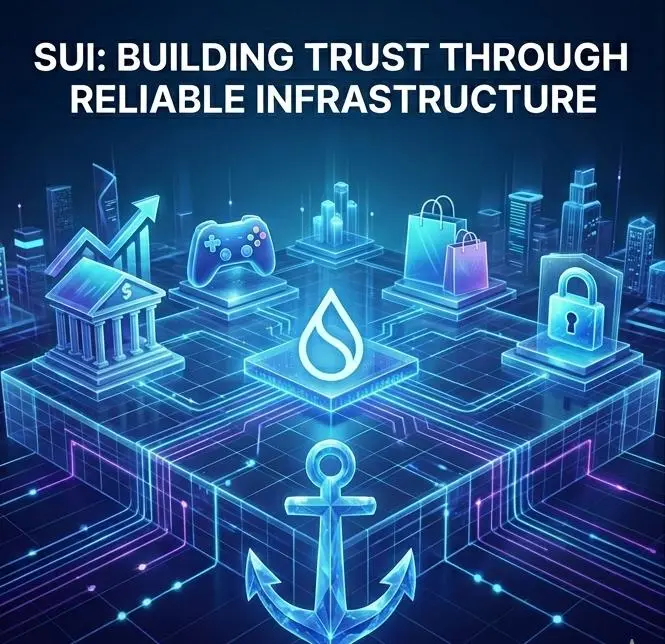
Blockchain networks today support far more than simple value transfers. They increasingly serve as the foundation for decentralized applications, digital asset markets, gaming ecosystems, tokenized financial products, and enterprise-level solutions. As adoption expands, reliability becomes one of the most valuable competitive advantages a network can possess.
The temporary interruption immediately drew attention because uninterrupted operation is essential for maintaining user confidence. Investors expect transactions to be processed efficiently, developers require predictable performance, and businesses depend on stable infrastructure when building services around blockchain technology.
When disruptions occur, market reactions are often driven by uncertainty rather than the technical issue itself. Participants seek answers regarding the cause of the interruption, the effectiveness of recovery measures, and the likelihood of future occurrences. Transparency during these moments plays a crucial role in preserving trust.
One of the key lessons from this event is the growing importance of operational maturity. Early blockchain projects were often evaluated primarily on innovation and technical potential. Today, institutional investors and enterprise users increasingly prioritize reliability, scalability, security, and governance standards alongside technological innovation.
The ability to restore network functionality efficiently demonstrates the value of preparation and engineering discipline. Successful recovery efforts typically involve extensive monitoring systems, coordinated technical teams, and clearly defined response procedures. These capabilities are becoming essential as blockchain networks compete for long-term adoption.
From an investment perspective, temporary technical challenges do not automatically determine a project's future success or failure. Financial history is filled with examples of major technology platforms that experienced operational setbacks before achieving significant growth. What often matters most is whether the underlying issue exposes a structural weakness or represents an isolated event that can be effectively addressed.
Developers are also watching closely. Builder communities tend to evaluate networks based on long-term confidence rather than short-term headlines. A transparent recovery process can reinforce trust if stakeholders believe that lessons have been learned and improvements have been implemented.
Competition within the blockchain sector continues to intensify. Networks are no longer competing solely on transaction speed or cost efficiency. Increasingly, they are competing on reliability, ecosystem development, developer experience, and institutional credibility. Every operational event therefore contributes to the broader perception of a platform's maturity.
Another important consideration is user behavior. Modern digital asset markets operate continuously, creating expectations of constant accessibility. This environment places significant pressure on infrastructure providers to maintain high availability and rapidly address any disruptions that arise.
For professional investors, the incident serves as a reminder that technology risk remains an important component of digital asset analysis. Evaluating a project requires more than understanding token economics or market trends. It also involves assessing operational readiness, engineering quality, and the ability to respond effectively under pressure.
The recovery of Sui's mainnet demonstrates that resilience is not defined by the absence of challenges. Rather, it is defined by the capacity to identify issues, implement solutions, communicate clearly, and restore confidence among users and stakeholders.
As blockchain technology continues expanding into mainstream finance and commerce, these qualities will become increasingly important. Innovation may attract attention, but reliability ultimately sustains adoption.
For Sui and the broader industry, the recent recovery serves as a valuable reminder that trust is built not only during periods of smooth growth, but also through effective responses when unexpected obstacles emerge. In a sector driven by technology and confidence, that distinction can make all the difference.
Sui's Mainnet Recovery Highlights the Importance of Reliability in Modern Blockchain Infrastructure
In the rapidly evolving world of blockchain technology, network performance is often tested not during periods of normal operation, but when unexpected disruptions occur. The recent temporary interruption on Sui's mainnet and its subsequent recovery have once again placed infrastructure resilience at the center of industry discussion.
While short-term outages can generate concern among investors and users, experienced market participants understand that the true measure of a network is not whether challenges arise, but how effectively they are resolved. In that regard, Sui's return to normal operation has become an important case study in operational response and ecosystem resilience.
Blockchain networks today support far more than simple value transfers. They increasingly serve as the foundation for decentralized applications, digital asset markets, gaming ecosystems, tokenized financial products, and enterprise-level solutions. As adoption expands, reliability becomes one of the most valuable competitive advantages a network can possess.
The temporary interruption immediately drew attention because uninterrupted operation is essential for maintaining user confidence. Investors expect transactions to be processed efficiently, developers require predictable performance, and businesses depend on stable infrastructure when building services around blockchain technology.
When disruptions occur, market reactions are often driven by uncertainty rather than the technical issue itself. Participants seek answers regarding the cause of the interruption, the effectiveness of recovery measures, and the likelihood of future occurrences. Transparency during these moments plays a crucial role in preserving trust.
One of the key lessons from this event is the growing importance of operational maturity. Early blockchain projects were often evaluated primarily on innovation and technical potential. Today, institutional investors and enterprise users increasingly prioritize reliability, scalability, security, and governance standards alongside technological innovation.
The ability to restore network functionality efficiently demonstrates the value of preparation and engineering discipline. Successful recovery efforts typically involve extensive monitoring systems, coordinated technical teams, and clearly defined response procedures. These capabilities are becoming essential as blockchain networks compete for long-term adoption.
From an investment perspective, temporary technical challenges do not automatically determine a project's future success or failure. Financial history is filled with examples of major technology platforms that experienced operational setbacks before achieving significant growth. What often matters most is whether the underlying issue exposes a structural weakness or represents an isolated event that can be effectively addressed.
Developers are also watching closely. Builder communities tend to evaluate networks based on long-term confidence rather than short-term headlines. A transparent recovery process can reinforce trust if stakeholders believe that lessons have been learned and improvements have been implemented.
Competition within the blockchain sector continues to intensify. Networks are no longer competing solely on transaction speed or cost efficiency. Increasingly, they are competing on reliability, ecosystem development, developer experience, and institutional credibility. Every operational event therefore contributes to the broader perception of a platform's maturity.
Another important consideration is user behavior. Modern digital asset markets operate continuously, creating expectations of constant accessibility. This environment places significant pressure on infrastructure providers to maintain high availability and rapidly address any disruptions that arise.
For professional investors, the incident serves as a reminder that technology risk remains an important component of digital asset analysis. Evaluating a project requires more than understanding token economics or market trends. It also involves assessing operational readiness, engineering quality, and the ability to respond effectively under pressure.
The recovery of Sui's mainnet demonstrates that resilience is not defined by the absence of challenges. Rather, it is defined by the capacity to identify issues, implement solutions, communicate clearly, and restore confidence among users and stakeholders.
As blockchain technology continues expanding into mainstream finance and commerce, these qualities will become increasingly important. Innovation may attract attention, but reliability ultimately sustains adoption.
For Sui and the broader industry, the recent recovery serves as a valuable reminder that trust is built not only during periods of smooth growth, but also through effective responses when unexpected obstacles emerge. In a sector driven by technology and confidence, that distinction can make all the difference.