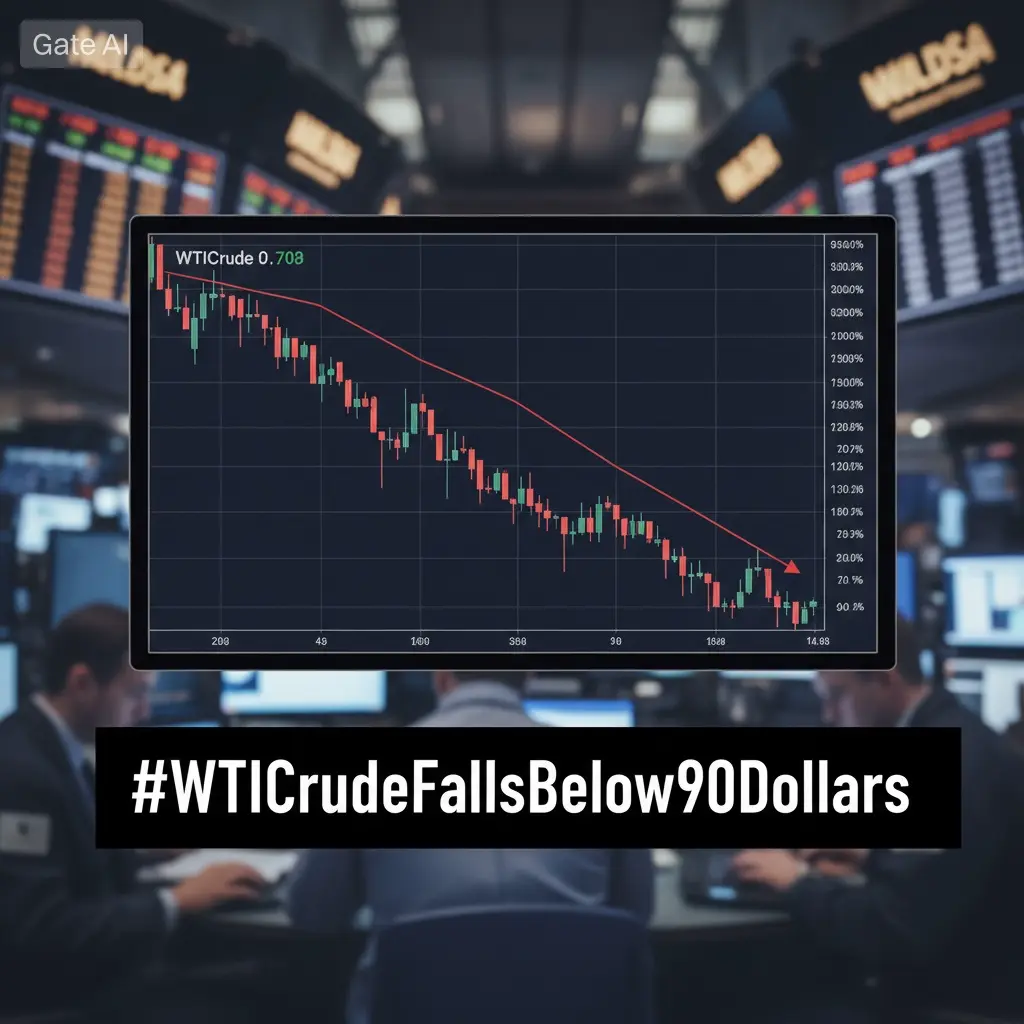
# WTICrudeFallsBelow90Dollars

1.21M

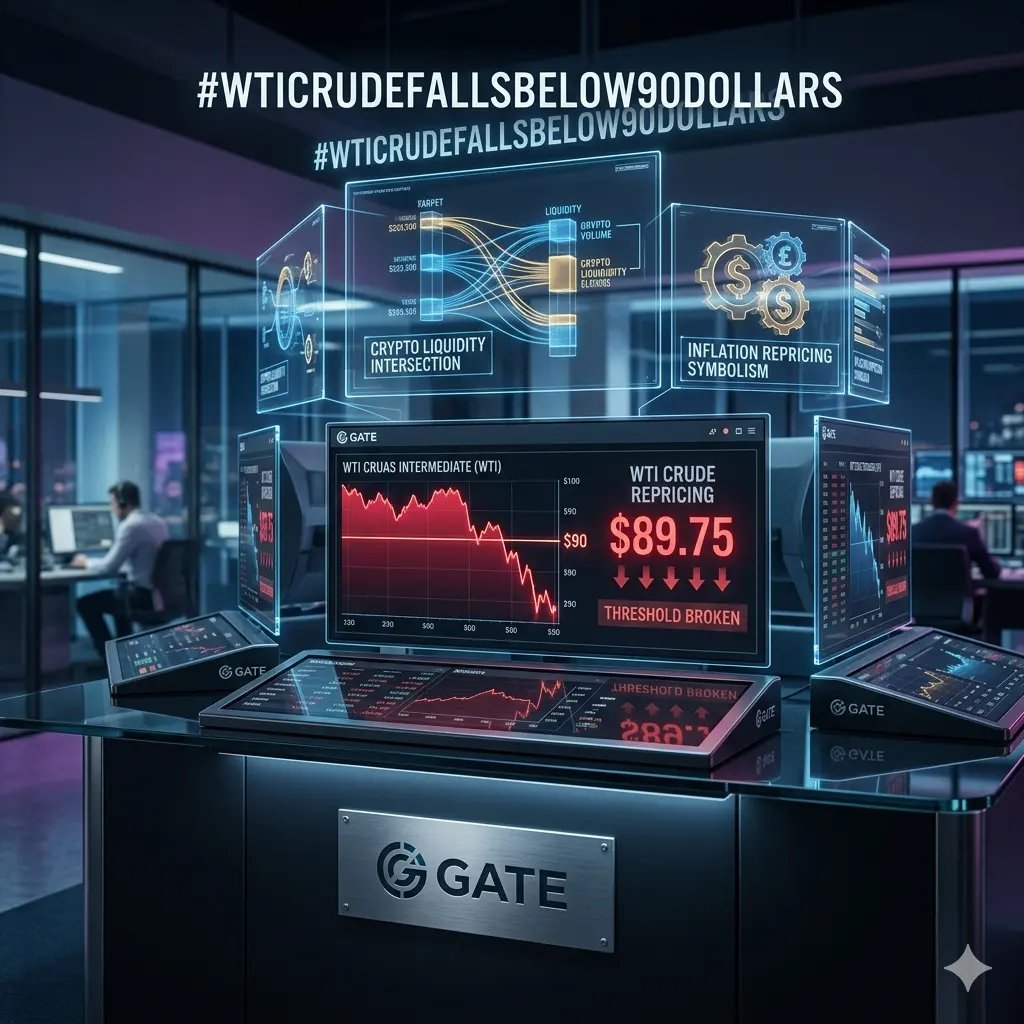
On May 28, WTI crude futures fell below the 90 US dollar mark, trading near 89 US dollars, with Brent crude also moving lower. After the White House urgently denied that a US-Iran memorandum of understanding had been reached, markets did not reprice war risks but continued to bet that the situation would not spiral out of control. Investor focus is shifting from supply shocks to demand suppression under high interest rates. Oil prices are under pressure in the short term, but low inventories suggest limited downside.

📢 Gate Square | 5/29 Hot Topics: #WTI原油失守90美元
On May 28, WTI crude oil futures fell below $90, and Brent crude oil also declined. The White House denied that the US and Iran reached a memorandum of understanding, and the market did not overreact to geopolitical risks; instead, focus shifted to high interest rates suppressing demand, but low inventories limited the downside. What do you think about the future oil prices?
🎁 Share your trades, and 5 lucky winners will split a $1,000 position experience voucher!
💬 This week's discussion:
1️⃣ The US-Iran memorandum of understanding has gained c
View Original
post-image
  • Reward
  • 19
  • Repost
  • Share
Engin1979:
2026 GOGOGO 👊
View More
#WTICrudeFallsBelow90Dollars | Oil Just Repriced Macro Fear
WTI below $90 is not an energy headline.
It is a liquidity signal.
When crude loses a major psychological level, markets immediately begin repricing inflation expectations, policy assumptions, and risk appetite.
#WTICrudeFallsBelow90Dollars matters because energy pricing quietly shapes the cost of money.
And the cost of money shapes crypto.
MACRO RESET
Oil is inflation psychology.
Not just fuel.
Not just supply.
Inflation expectations.
When crude weakens, markets start recalculating whether inflation pressure eases, whether central ba
BTC-0.4%
post-image
  • Reward
  • 2
  • Repost
  • Share
AmeliaGlow:
LFG 🔥
View More
#WTICrudeFallsBelow90Dollars #DailyPolymarketHotspot
#USIranNegotiationGame
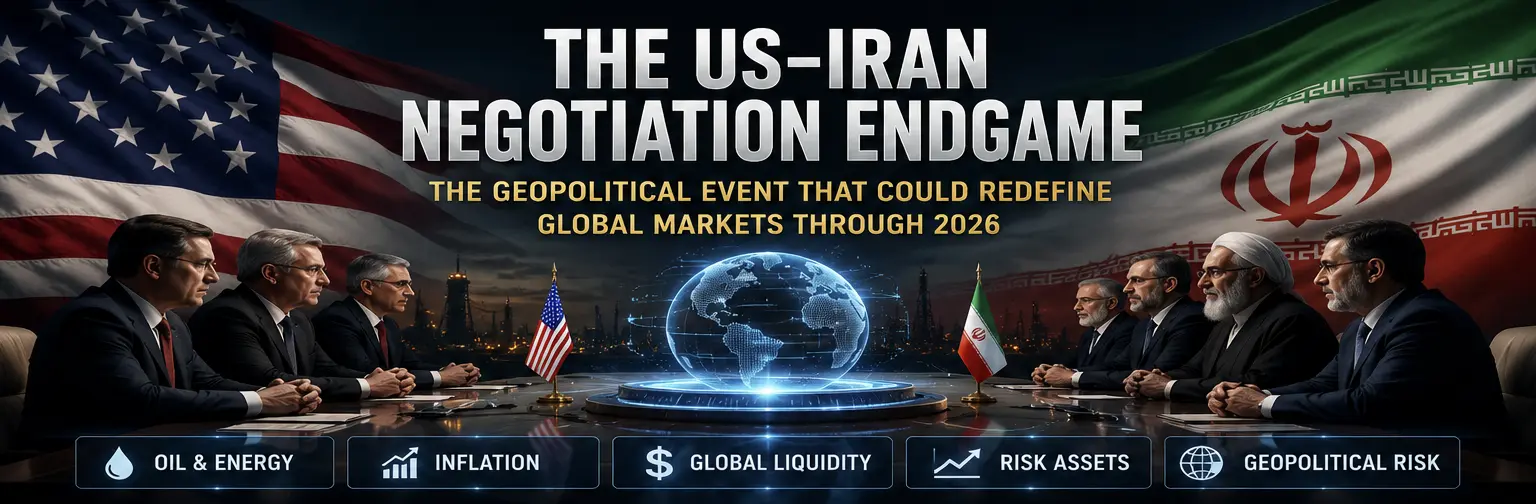
THE US–IRAN NEGOTIATION ENDGAME: A MACRO EVENT THAT COULD RESHAPE BITCOIN, OIL, GOLD, AND GLOBAL LIQUIDITY
The US–Iran negotiations have evolved far beyond a diplomatic dispute. They now represent one of the most important macroeconomic events of 2026, with the power to influence energy markets, inflation expectations, central-bank policy, and global risk assets.
At the center of the story is the Strait of Hormuz, a critical route for nearly 20% of global oil trade. Any progress toward a lasting agreement could reduce
BTC-0.4%
CryptoDiscovery
#DailyPolymarketHotspot
#USIranNegotiationGame
THE US–IRAN NEGOTIATION ENDGAME: A MACRO EVENT THAT COULD RESHAPE BITCOIN, OIL, GOLD, AND GLOBAL LIQUIDITY
The US–Iran negotiations have evolved far beyond a diplomatic dispute. They now represent one of the most important macroeconomic events of 2026, with the power to influence energy markets, inflation expectations, central-bank policy, and global risk assets.
At the center of the story is the Strait of Hormuz, a critical route for nearly 20% of global oil trade. Any progress toward a lasting agreement could reduce geopolitical risk premiums, increase energy supply stability, and ease inflation pressures worldwide. Lower inflation could improve liquidity conditions and strengthen investor appetite for risk assets.
Bitcoin sits directly in the middle of this equation. A successful deal could support capital inflows into crypto as oil prices stabilize and macro uncertainty declines. Conversely, failed negotiations could trigger higher energy prices, renewed inflation concerns, and increased market volatility.
Gold remains the primary safe-haven asset, while prediction markets continue acting as real-time indicators of global sentiment. Investors are no longer trading headlines—they are trading probabilities.
This is not just a geopolitical story. It is an inflation story, a liquidity story, and potentially the biggest Bitcoin catalyst of 2026. The outcome may help determine how financial markets perform through the remainder of the year.
#DailyPolymarketHotspot #USIranNegotiationGame
repost-content-media
  • Reward
  • 15
  • Repost
  • Share
Crypto_Buzz_with_Alex:
Ape In 🚀
View More
#WTICrudeFallsBelow90Dollars
WTI Crude Drops Below $90: Why Energy Markets Are Entering a New Phase
The oil market is undergoing a major transition. After spending months dominated by geopolitical fears and supply disruption concerns, traders are now reassessing crude oil based on economic realities rather than worst-case scenarios.
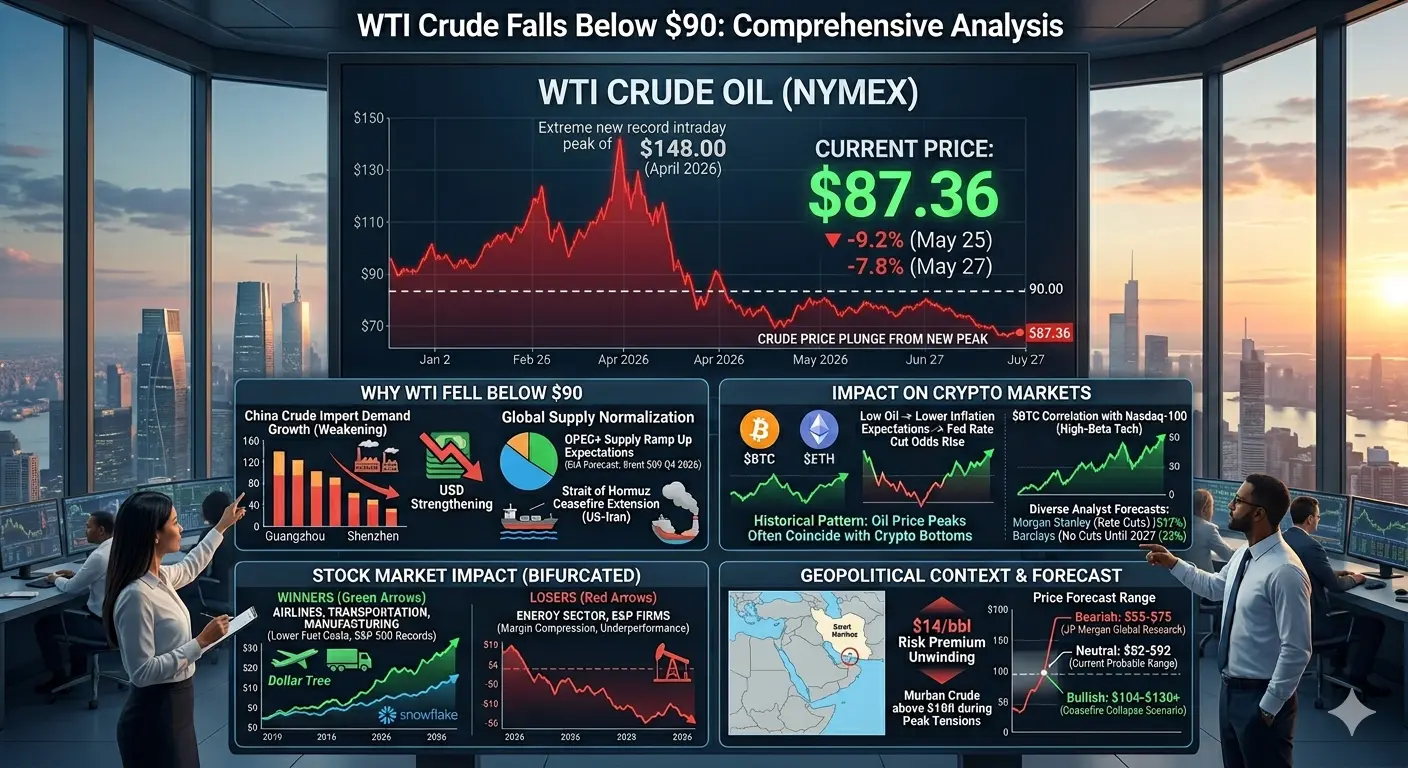
WTI crude is trading near $87 per barrel while Brent remains around $91. These levels represent a significant pullback from the extreme highs recorded earlier in 2026 when escalating Middle East tensions pushed Brent close to $140 and WTI above $120.
The correctio
BTC-0.4%
ETH-1.05%
post-image
post-image
  • Reward
  • 10
  • Repost
  • Share
SheenCrypto:
Ape In 🚀
View More
#WTICrudeFallsBelow90Dollars
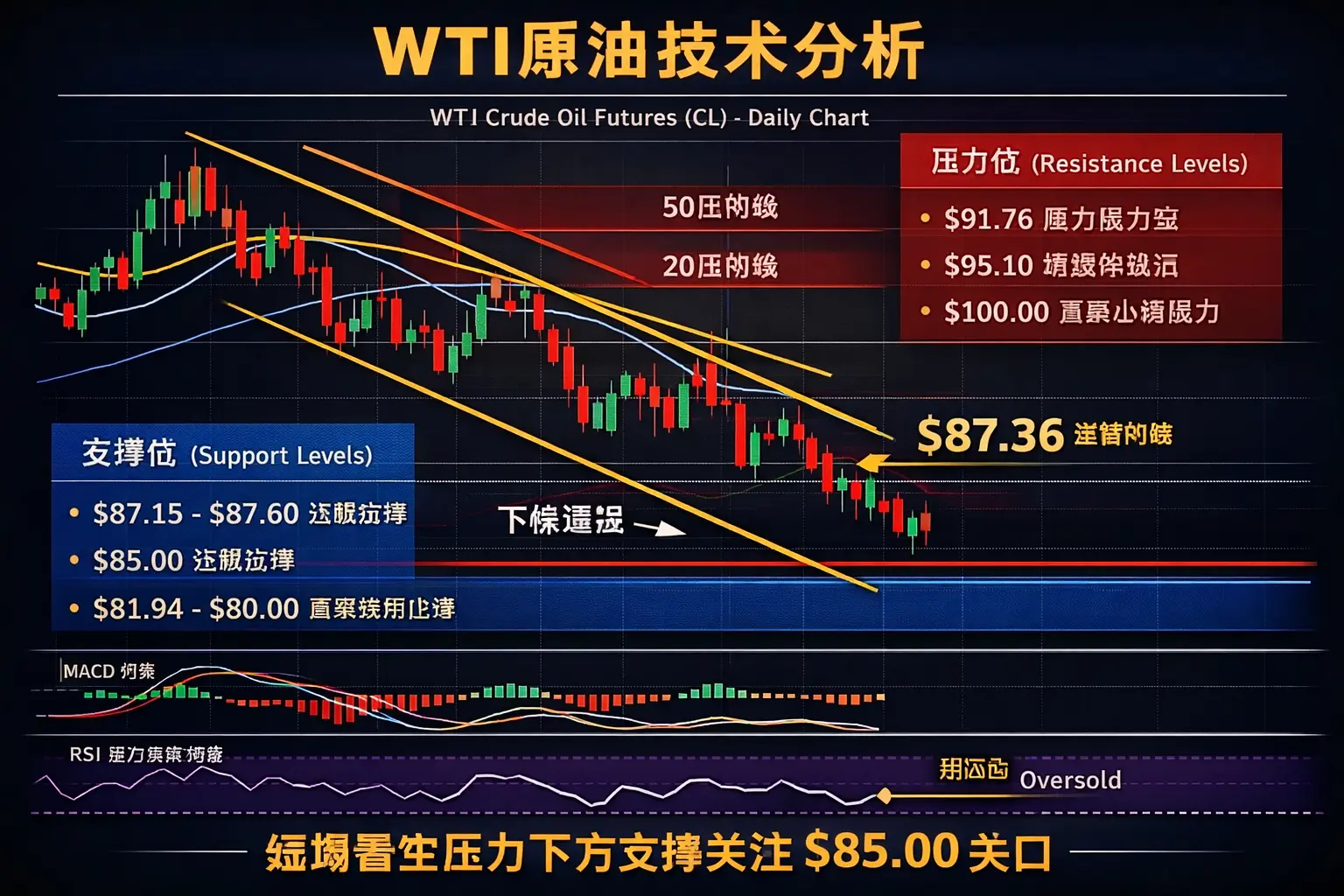
WTI crude oil is currently trading around $87.36 per barrel, while Brent crude remains near $91.12, marking a significant retreat from the extreme highs seen earlier in 2026. During the peak of Middle East tensions, Brent briefly surged toward $138, while WTI traded above $119, driven by fears of supply disruptions and risks surrounding the Strait of Hormuz.
The recent decline has erased a large portion of the geopolitical premium that was built into crude prices. WTI has now fallen more than 27% from its 2026 highs, bringing prices back toward levels last seen be
HighAmbition
#WTICrudeFallsBelow90Dollars
WTI crude oil is currently trading around $87.36 per barrel, while Brent crude remains near $91.12, marking a significant retreat from the extreme highs seen earlier in 2026. During the peak of Middle East tensions, Brent briefly surged toward $138, while WTI traded above $119, driven by fears of supply disruptions and risks surrounding the Strait of Hormuz.
The recent decline has erased a large portion of the geopolitical premium that was built into crude prices. WTI has now fallen more than 27% from its 2026 highs, bringing prices back toward levels last seen before the regional conflict intensified. Markets are gradually shifting their focus away from war-related risks and back toward supply, demand, and economic fundamentals.
Despite the sharp correction, crude remains elevated compared with historical averages, indicating that traders are still assigning some value to ongoing geopolitical uncertainty.
Why WTI Fell Below $90: The Three Driving Forces
Three major factors are driving the current decline.
The first is slowing demand growth from China. As the world's largest crude importer, China's industrial activity and manufacturing output play a major role in global energy consumption. Recent economic data has pointed to weaker-than-expected growth, reducing demand expectations for oil.
The second factor is the strong U.S. dollar. Since crude oil is priced globally in dollars, a stronger dollar increases costs for international buyers, reducing purchasing power and limiting demand.
The third and most influential factor is growing expectations that global oil supply will increase during the second half of 2026. OPEC+ producers are expected to gradually restore output, while concerns about major supply disruptions have eased following progress toward a temporary U.S.-Iran ceasefire.
The market is effectively transitioning from a fear-driven environment to a fundamentals-driven environment. As geopolitical risks cool, traders are reassessing whether current supply conditions justify prices above $100.
The Impact on Crypto Markets: Inflation, the Fed, and Bitcoin
Lower oil prices can have important consequences for cryptocurrencies.
Energy costs influence transportation, manufacturing, and consumer prices throughout the economy. When crude declines, inflation pressures often ease over time. Lower inflation can increase expectations that the Federal Reserve will adopt a more accommodative policy stance
For crypto investors, this relationship is important because easier monetary policy generally improves liquidity conditions. Historically, periods of expanding liquidity have supported risk assets such as Bitcoin, Ethereum, and major altcoins.
Bitcoin is currently trading near the psychological $100,000 region, and traders are closely watching macroeconomic developments. If declining oil prices help reduce inflation concerns, capital could continue flowing into digital assets.
At the same time, investors should remain cautious. Falling oil prices can sometimes signal weakening economic growth rather than improving conditions. If global demand deteriorates sharply, risk assets could face pressure despite lower energy costs.
The key question is whether oil is falling because supply is improving or because economic activity is slowing. The answer will heavily influence crypto performance during the coming months.
The Impact on Stock Markets: Airlines, Energy, and the S&P 500
The impact on equities is mixed.
Industries that consume large amounts of fuel generally benefit from lower crude prices. Airlines, logistics companies, transportation firms, shipping operators, and manufacturers often experience improved profit margins when energy costs decline.
Consumer-focused businesses may also benefit because lower fuel expenses can increase household spending power.
Meanwhile, energy producers face a different reality. Oil exploration and production companies generate less revenue when crude prices fall. Many upstream firms become less profitable as margins shrink, especially those with higher production costs.
The broader stock market has remained resilient. Investors continue to focus on corporate earnings, artificial intelligence investment, and expectations for future monetary easing. Lower oil prices may further support sectors such as technology, retail, industrials, and transportation.
If crude remains below $90 for an extended period, the balance of benefits may favor the wider economy more than the energy sector.
Geopolitical Context: Iran, the Middle East, and the Strait of Hormuz
The geopolitical story remains central to oil's outlook.
The Strait of Hormuz handles roughly 20% of global oil trade, making it one of the most important energy chokepoints in the world. Earlier fears that shipping routes could face major disruption caused traders to aggressively price in supply risks.
Those fears pushed oil sharply higher during the first half of 2026.
Now, improving diplomatic conditions and a temporary ceasefire have reduced immediate concerns. Tanker traffic expectations have improved, and traders believe the probability of a severe supply shock has declined.
However, risks remain elevated. Any renewed military escalation involving Iran, Israel, or U.S. forces could quickly reverse current sentiment and trigger another surge in prices.
This is why many institutional traders continue to maintain geopolitical hedges despite the recent correction.
WTI Price Forecast: Where Can Oil Go From Here?
Forecasts remain highly divided.
The bearish case suggests that increasing production, weaker Chinese demand, and improving supply conditions could push WTI toward the $80-$82 range, with a deeper correction potentially targeting $75.
A more moderate scenario sees WTI trading between $82 and $92 through much of the summer as traders wait for clearer economic and geopolitical signals.
The bullish case assumes renewed Middle East tensions or unexpected supply disruptions. Under that scenario, WTI could quickly recover toward $100-$105, while a major escalation could potentially send prices back above $115.
Technical traders are closely monitoring support around $85, while resistance remains concentrated near $95 and $100.
Current market positioning suggests that traders expect volatility to remain elevated throughout the remainder of 2026.
What Traders Are Thinking: Sentiment and Market Psychology
Market sentiment has shifted dramatically over the past several weeks.
During the conflict-driven rally, traders feared a prolonged supply crisis. Today, many are focused on the possibility that crude was overvalued due to excessive geopolitical risk premiums.
Bearish traders argue that slowing demand and rising production will continue pressuring prices. They expect rallies to be sold and view the recent decline as the beginning of a larger correction.
Bullish traders remain cautious but believe the market may be underestimating geopolitical risks. They point out that a single major headline from the Middle East could erase weeks of losses within days.
This division has created a highly volatile environment where sentiment can change rapidly.
Trading Strategy: Plans and Approaches for the Current Environment
For bearish traders, selling rallies toward $92-$95 while targeting $82-$85 remains a popular strategy. Risk management is essential because geopolitical headlines can trigger sudden reversals.
Bullish traders may prefer accumulating positions near major support zones while maintaining tight stop losses. A recovery above $95 would strengthen the bullish technical outlook.
Range traders can focus on the current $82-$92 trading corridor, buying near support and taking profits near resistance until a decisive breakout occurs.
Cross-market traders should also monitor Bitcoin, gold, and equity indices. Lower oil prices often influence inflation expectations, creating opportunities across multiple asset classes.
Position sizing should remain conservative because oil has demonstrated its ability to move $10-$20 per barrel within short periods when geopolitical conditions change.
Brief Summary: The Big Picture
WTI's drop below $90 per barrel represents one of the most important market developments of 2026. The decline reflects easing geopolitical fears, expectations of stronger supply growth, and concerns about global demand.
For crypto markets, lower oil could support risk assets if inflation continues cooling and central banks move toward easier policy. For stock markets, lower energy costs generally benefit transportation, manufacturing, technology, and consumer-focused sectors while creating challenges for oil producers.
Looking ahead, the most likely near-term range appears to be $82-$92, but volatility remains extremely high. Traders must closely monitor developments in the Middle East, Chinese economic data, OPEC+ production decisions, inflation trends, and Federal Reserve policy.
The next major move in crude oil will likely shape sentiment across global financial markets, making WTI one of the most important assets to watch throughout the remainder of 2026.@Gate_Square @Gate广场_Official

repost-content-media
  • Reward
  • 14
  • Repost
  • Share
MasterChuTheOldDemonMasterChu:
DYOR 🤓 🤓
View More
#WTICrudeFallsBelow90Dollars
WTI crude oil is currently trading around $87.36 per barrel, while Brent crude remains near $91.12, marking a significant retreat from the extreme highs seen earlier in 2026. During the peak of Middle East tensions, Brent briefly surged toward $138, while WTI traded above $119, driven by fears of supply disruptions and risks surrounding the Strait of Hormuz.
The recent decline has erased a large portion of the geopolitical premium that was built into crude prices. WTI has now fallen more than 27% from its 2026 highs, bringing prices back toward levels last seen be
post-image
post-image
post-image
post-image
  • Reward
  • 32
  • Repost
  • Share
Crypto_Buzz_with_Alex:
2026 GOGOGO 👊
View More
🛢️ #WTICrudeFallsBelow90Dollars — May 31 🛢️
A key shift in the global commodities market as WTI crude oil moves below the $90 level, signaling changing expectations around demand, supply stability, and global economic momentum. 🌍📉
This type of move in oil prices doesn’t stay isolated — it quickly spreads across inflation, interest rates, and risk assets. ⚡
🔥 Why traders are watching closely:
✔ Oil is a core driver of global inflation
✔ Lower crude prices can ease cost pressures on economies
✔ Energy stocks may face short-term volatility
✔ Macro sentiment across markets can shift rapidly
CL0.55%
post-image
  • Reward
  • 6
  • Repost
  • Share
Yajing:
LFG 🔥
View More
#WTI原油失守90美元
The recent dip in WTI futures below $90 highlights the delicate tightrope the oil market is walking. We are seeing a fierce tug-of-war between weak macroeconomic demand and structurally tight supplies.
The dynamics of this market reveal a highly volatile backdrop for future oil prices.
1. The US-Iran Rumors & The Middle East Landscape
The market's rapid cooling on May 28th underscores how much "geopolitical premium" was baked into oil prices earlier this year following the US-Iran conflict and disruptions around the Strait of Hormuz.
While rumors of a negotiated "memorandum o
CL0.55%
post-image
post-image
WTI
WTIWTI Crude Oil
Pump.Fun
MC:$2.43KHolders:1
0.00%
  • Reward
  • 28
  • Repost
  • Share
Falcon_Official:
To The Moon 🌕
View More
📊 MARKET UPDATE: Navigating the Dynamics of Gold & WTI Crude Oil! 📉🔥
Hey Gate Fam! The global commodity and crypto markets are putting on a fascinating show right now. With ongoing macroeconomic shifts, we are witnessing a massive tug-of-war between traditional safe-haven assets and risk-on markets.
First, let's talk about energy. The big question on everyone's mind is whether #WTICrudeFallsBelow90Dollars will establish a new long-term support level or if we are bound for a deeper correction. This drop below $90 inevitably impacts global inflation data, which heavily influences the Fed's ne
XAUUSD0.99%
CL0.55%
BTC-0.4%
  • Reward
  • 5
  • Repost
  • Share
BeautifulDay:
To The Moon 🌕
View More
#WTICrudeFallsBelow90Dollars#📢 Gate Square | 5/29 Hot Topics: #WTI原油失守90美元
On May 28, WTI crude oil futures fell below $90, and Brent crude oil also declined. The White House denied that the US and Iran reached a memorandum of understanding, and the market did not overreact to geopolitical risks; instead, focus shifted to high interest rates suppressing demand, but low inventories limited the downside. What do you think about the future oil prices?
🎁 Share your trades, and 5 lucky winners will split a $1,000 position experience voucher!
💬 This week's discussion:
1️⃣ The US-Iran memorandum
CL0.55%
FSLR-4.17%
HYPE5.06%
TIA-4.6%
post-image
Gate广场_Official
📢 Gate Square | 5/29 Hot Topics: #WTI原油失守90美元
On May 28, WTI crude oil futures fell below $90, and Brent crude oil also declined. The White House denied that the US and Iran reached a memorandum of understanding, and the market did not overreact to geopolitical risks; instead, focus shifted to high interest rates suppressing demand, but low inventories limited the downside. What do you think about the future oil prices?
🎁 Share your trades, and 5 lucky winners will split a $1,000 position experience voucher!
💬 This week's discussion:
1️⃣ The US-Iran memorandum of understanding has gained consensus at the negotiation level. How will the Middle East situation evolve?
2️⃣ Will short-term crude oil prices continue to decline or stabilize and rebound, given macro demand suppression versus low inventories?
Share now: https://www.gate.com/post
📅 Deadline: 5/31 18:00 (UTC+8)
repost-content-media
  • Reward
  • 27
  • Repost
  • Share
GateUser-9d4c13fe:
2026 GOGOGO 👊
View More
Load More