SpaceX released a 17-minute IPO roadshow video on local time June 4, with Chief Financial Officer Brad Johnson presenting the company's rocket, satellite, and artificial intelligence operations. On June 3, SpaceX priced its initial public offering at $135 per share, issuing approximately 556 million new shares to raise about $75 billion at a company valuation of approximately $1.77 trillion—the largest IPO in history. Johnson stated the capital raise supports the company's integrated hardware-software infrastructure spanning launch services, satellite internet, and AI compute. The presentation reaffirmed SpaceX's founding mission to transform human development and enable humanity to become a multi-planetary species.
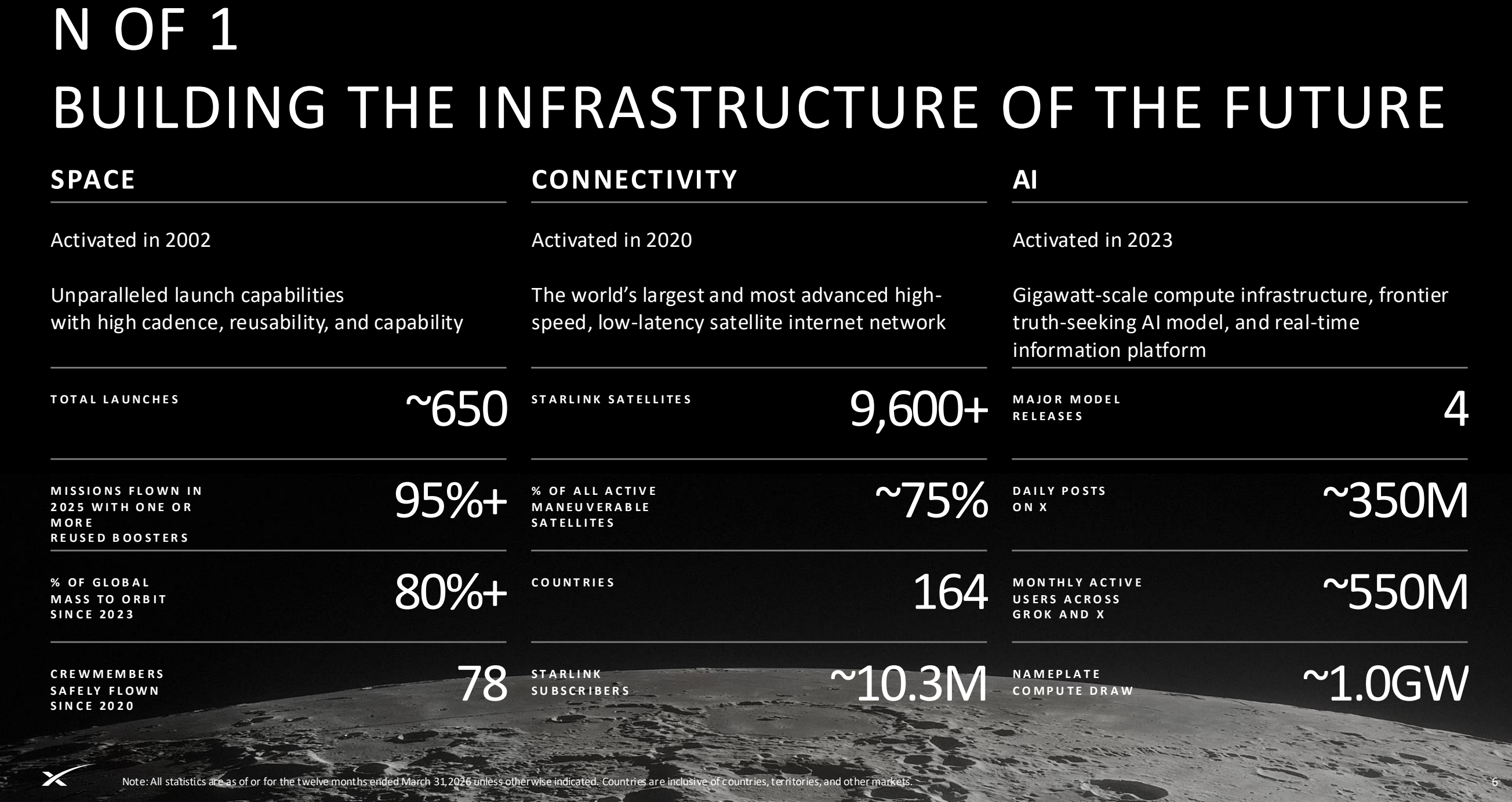
SpaceX Starship Targets Over 99% Launch Cost Reduction
Johnson outlined SpaceX's progression from Falcon 9 first-stage recovery to full Starship reusability. The video stated Falcon 9 completed 165 launches last year. Falcon 9 delivers 23 metric tons to orbit, Falcon Heavy 64 metric tons, and third-generation Starship approaches 100 metric tons capacity. Fourth-generation Starship remains in design phase with planned 200-metric-ton payload capacity.
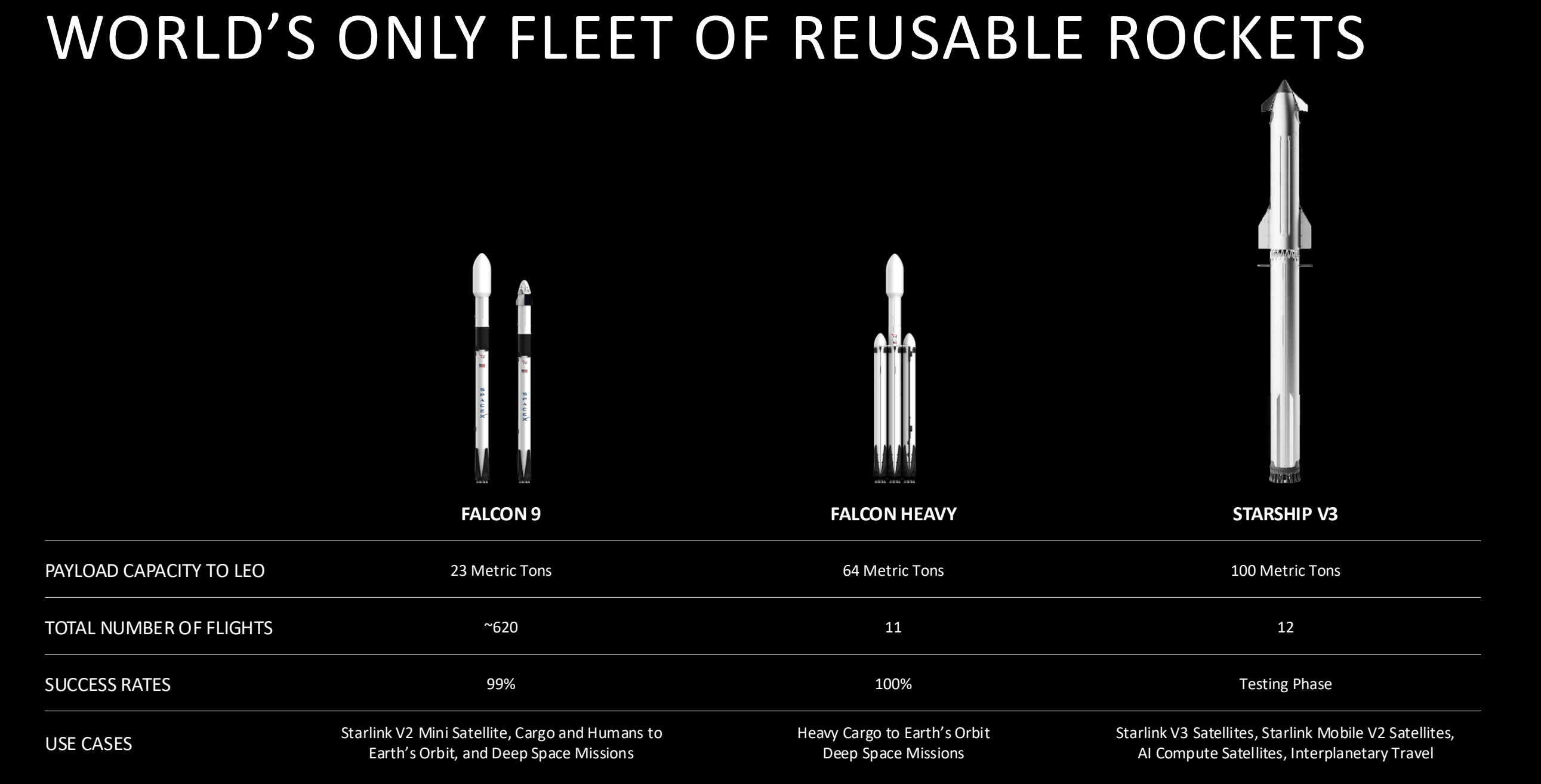
SpaceX's cost analysis chart showed global aerospace industry average launch cost from 1970 to 2000 at $18,500 per kilogram to low Earth orbit. Falcon 9 first-stage reuse reduced cost to $2,700/kg (85% reduction), Falcon Heavy to $1,400/kg (92% reduction). Fully reusable Starship targets cost reduction exceeding 99% versus historical average. Johnson stated, "From a cost perspective, Starship's advantage is incomparable."
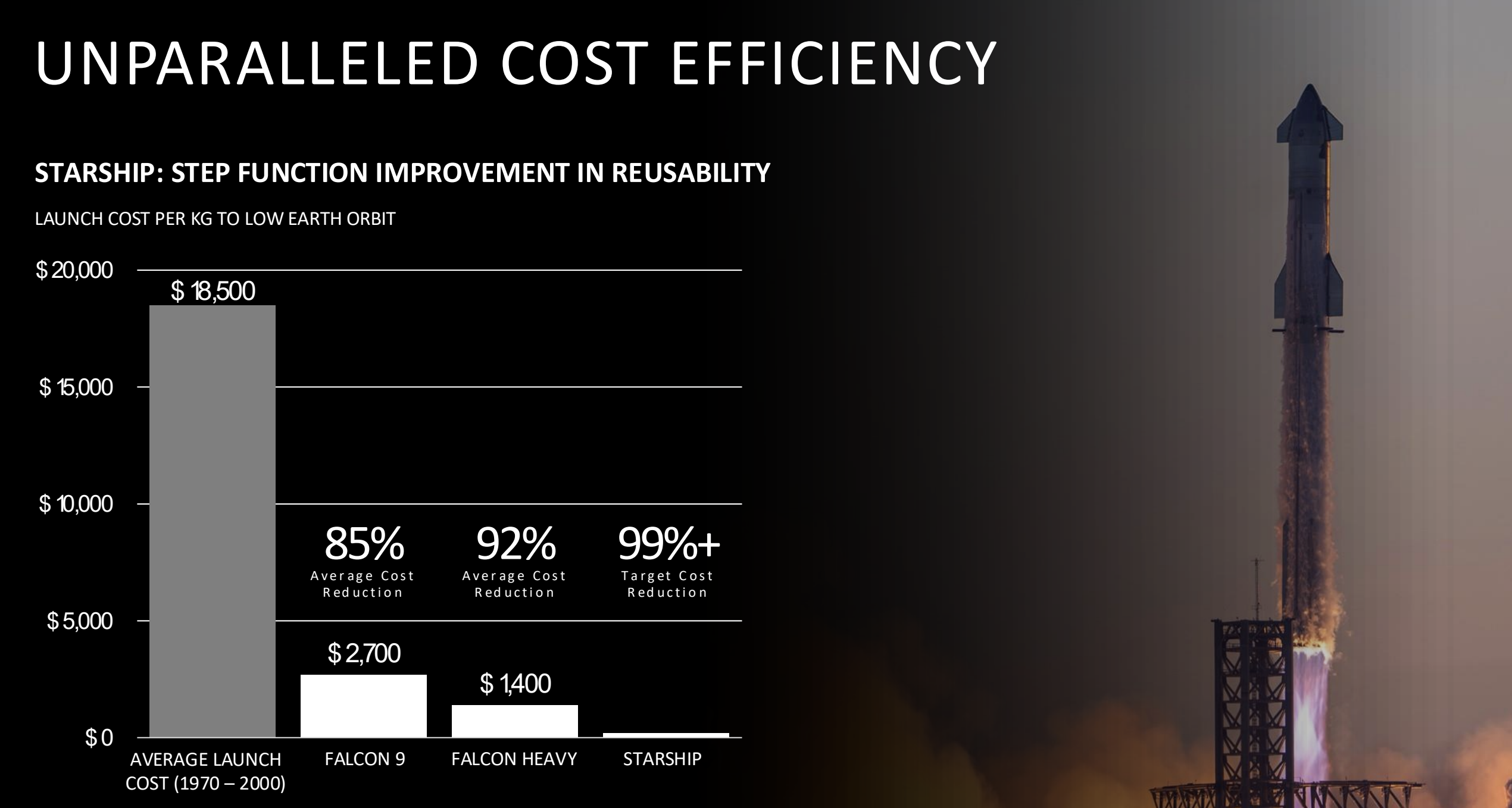
Starlink User Base Reaches 10.3 Million in Q1 2026
The video stated Starlink operates the world's largest controllable satellite constellation, representing 75% of global maneuverable satellites in orbit. User count reached 4.4 million at end of 2024, grew to 8.9 million by end of last year, and exceeded 10.3 million in Q1 this year. Service operates in 164 countries and regions, covering over 3 billion population.
SpaceX Builds Colossus AI Data Center with Nvidia Chips
Johnson stated SpaceX constructed the Colossus supercomputing data center, deploying Nvidia GB200 and GB300 AI chips to create the world's first gigawatt-scale AI training cluster. The facility includes gigawatt-scale Megapack energy storage. SpaceX plans to deploy space-based AI compute infrastructure in coming years, utilizing satellite solar power generation and natural space radiation cooling to reduce operational costs.
The company signed an agreement with Anthropic to provide supercomputing resources for large model hosting. SpaceX collaborates with Cursor to optimize proprietary code models using company compute capacity. Johnson stated, "The AI commercialization loop is clear: build compute foundation using proprietary space infrastructure, continuously iterate and optimize large models, compress per-unit compute costs, realize revenue through compute leasing, and reinvest proceeds into compute and proprietary model R&D."
SpaceX Reports $4.694 Billion Q1 2026 Revenue
According to the prospectus, SpaceX recorded revenue of $10.387 billion, $14.015 billion, and $18.674 billion from 2023 to 2025 respectively. Operating profit for the same periods was -$3.505 billion, $466 million, and -$2.589 billion. Net profit was -$4.628 billion, $791 million, and -$4.937 billion respectively.
For the first three months of 2026, the company reported revenue of $4.694 billion, up 15.4% year-over-year. Operating loss reached $1.943 billion, and net loss totaled $4.276 billion—nearly equal to full-year last year loss.
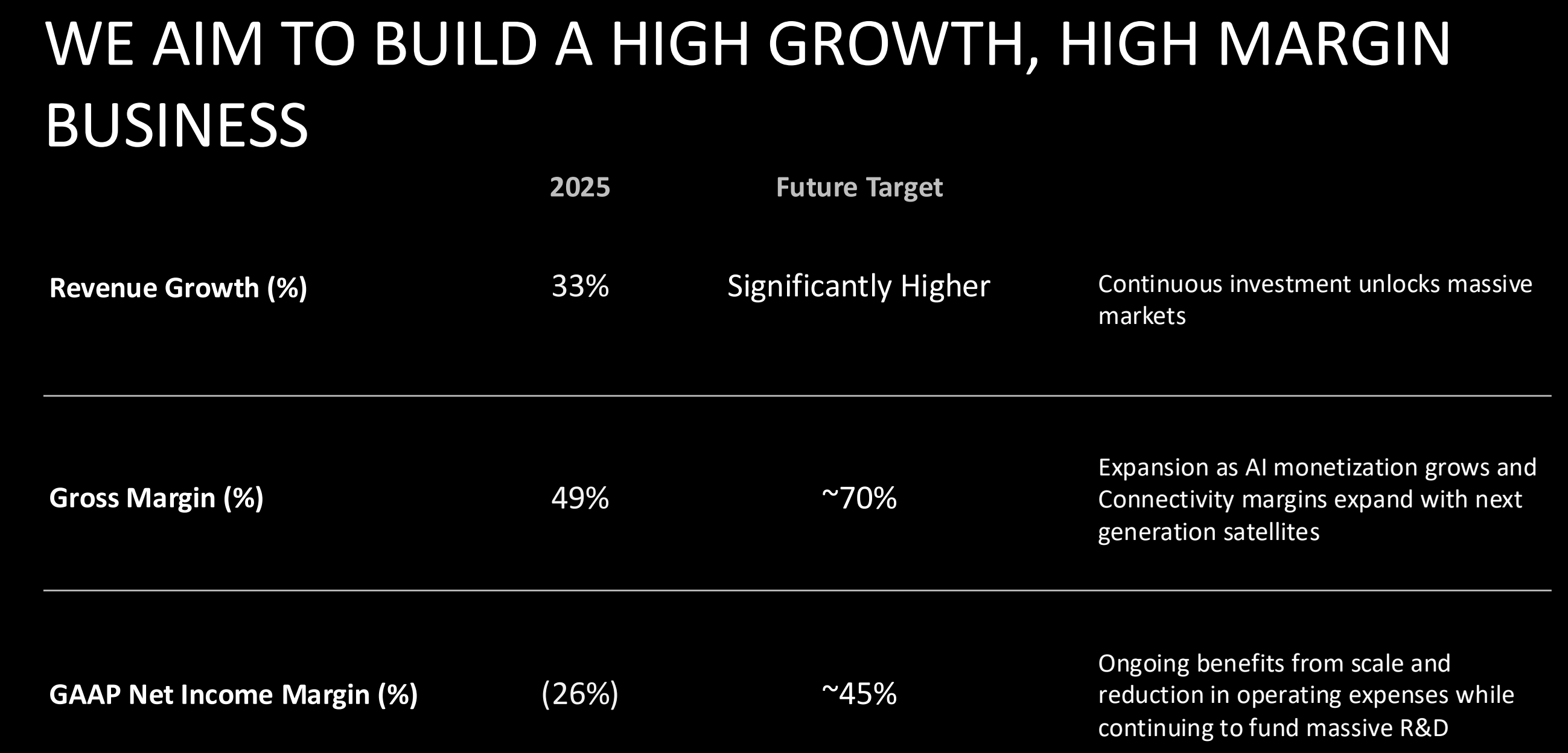
Johnson stated the company projects long-term gross margin of approximately 70% (compared to 49% last year) and GAAP net profit margin of approximately 45%. He did not provide a detailed timeline for achieving these targets. Over the past two years, total capital expenditure reached $21 billion, with the majority allocated to AI operations.
Company Projects $28.5 Trillion Addressable Market
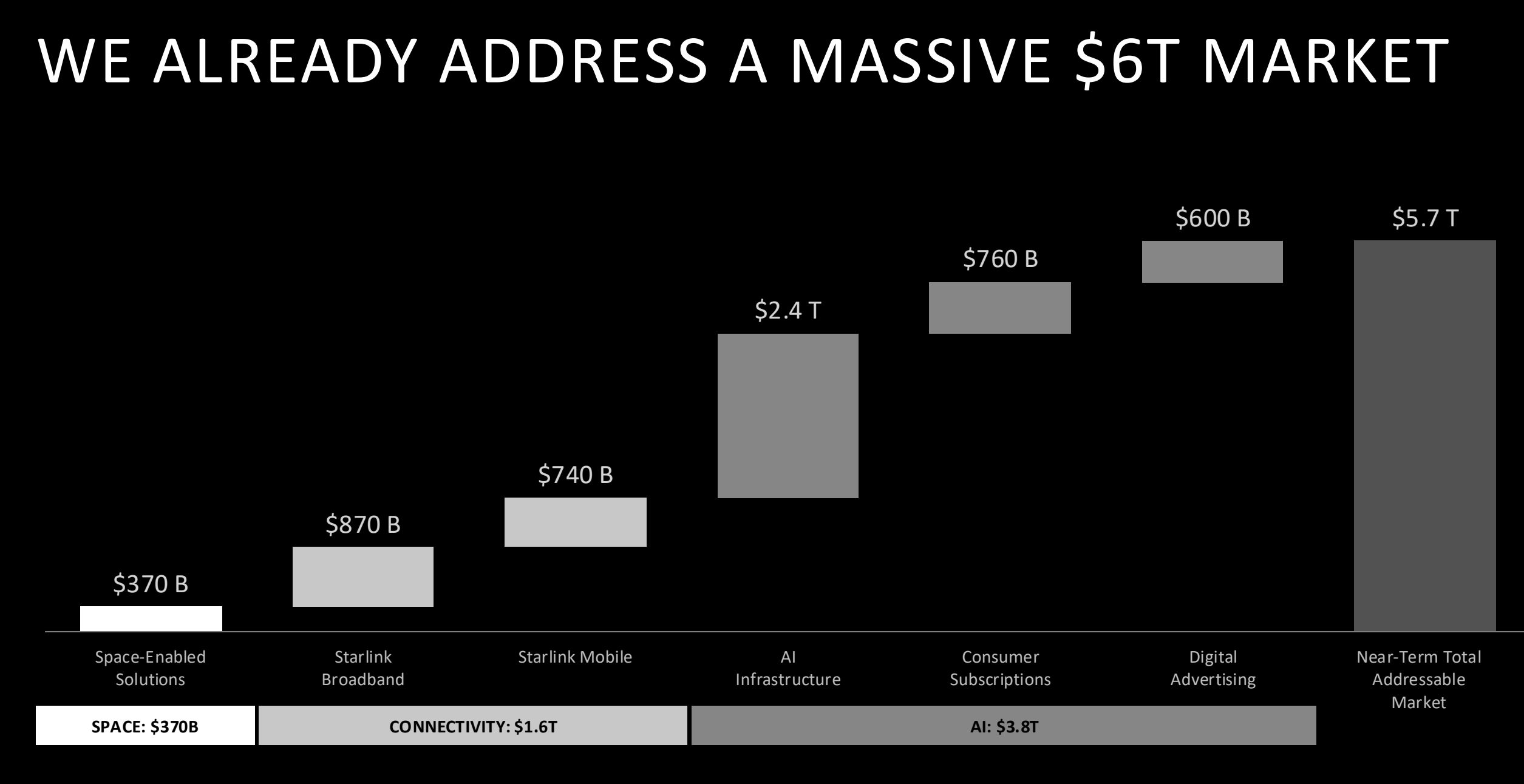
Johnson stated SpaceX targets three sectors—space, compute, and AI—with combined addressable market of approximately $6 trillion. The prospectus estimated potential market size at $28.5 trillion, with over 90% projected to come from AI, the vast majority from Enterprise AI.
Mid-to-long-term plans include cross-regional space point-to-point transportation, space intelligent manufacturing, asteroid resource extraction, and lunar industrialization. According to project schedule, the company plans crewed lunar landing in coming years and establishment of long-term sustainable lunar operations infrastructure.
FAQ
What did SpaceX announce on June 3 regarding its IPO?
On June 3, SpaceX priced its initial public offering at $135 per share, issuing approximately 556 million new shares to raise about $75 billion at a company valuation of approximately $1.77 trillion. This represents the largest IPO in history.
How many Starlink users did SpaceX report in Q1 2026?
SpaceX stated Starlink user count exceeded 10.3 million in Q1 this year, up from 8.9 million at end of last year and 4.4 million at end of 2024. Service operates in 164 countries and regions.
What is SpaceX's target cost reduction for Starship launches?
SpaceX's cost analysis chart showed fully reusable Starship targets launch cost reduction exceeding 99% versus the historical aerospace industry average of $18,500 per kilogram to low Earth orbit from 1970 to 2000.


