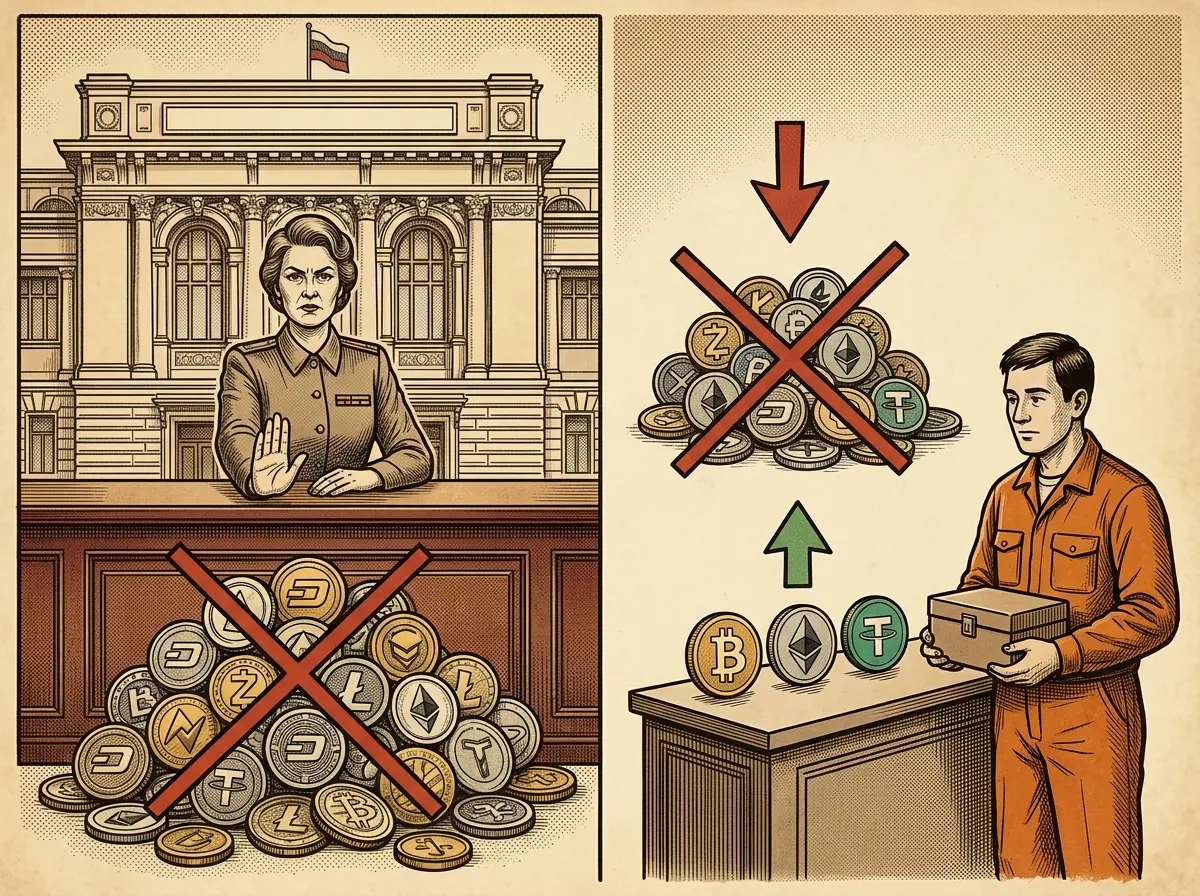
On June 8, Crypto Briefing reported that Vladimir Chistyukhin, Deputy Chairman of the Central Bank of Russia, confirmed in an interview with RBC Radio that after the new rules take effect, non-qualified investors (retail investors) will be allowed to trade only three major digital assets: Bitcoin (BTC), Ethereum (ETH), and USDT. The central bank rejected a proposal to immediately expand access to cryptocurrencies.
Confirmed terms and compliance requirements
According to information from the Central Bank of Russia and related legislation, the proposed new rules include: non-qualified investors may trade only BTC, ETH, and USDT, with an investment cap of 300,000 rubles; qualified investors and non-qualified investors must pass a mandatory knowledge test before buying any digital asset; starting in 2027, unlicensed crypto lending will be banned.
Legislative process: current status of approval
The State Duma completed its first reading in April 2026 and passed the measure with an overwhelming majority. Under Russia’s legislative procedure, the bill still needs to complete the second and third readings, be approved by the Federation Council (upper house), and be signed by the president before it can formally become law. Chistyukhin said the new rules are expected to take effect next month (July), but the full legislative process has not yet been completed.
FAQ
Why did the Central Bank of Russia specifically single out stablecoins as potentially being frozen, as a reason for maintaining strict limits?
In the RBC Radio interview, Chistyukhin listed reasons such as crypto’s high volatility, market risk, and the possibility that stablecoins could be restricted or frozen as justification for maintaining strict caps. The risk of “stablecoin freezing” refers to the issuer potentially freezing tokens at specific addresses due to regulatory requirements or sanctions, which has particular significance for Russian users affected by Western sanctions. Even so, USDT is still included in the list of allowed assets.
What scale does the 300,000-ruble investment cap represent in Russia’s financial context?
Based on Chistyukhin’s explanation, the cap of 300,000 rubles exceeds the average balance in Russian securities accounts. The central bank cited this to argue that the limit is sufficient for most retail investors. By maintaining this cap, the regulator reflects its cautious stance toward the risks of crypto assets.
What is the scope of the mandatory knowledge test requirements?
Under the proposed rules, qualified investors and non-qualified investors must pass a mandatory knowledge test before purchasing any digital asset. The test applies not only to retail investors but also to qualified (institutional or high-net-worth) investors. The specific content and format of the test, as well as which agency will be responsible for administering it, has not been further publicly disclosed so far.


