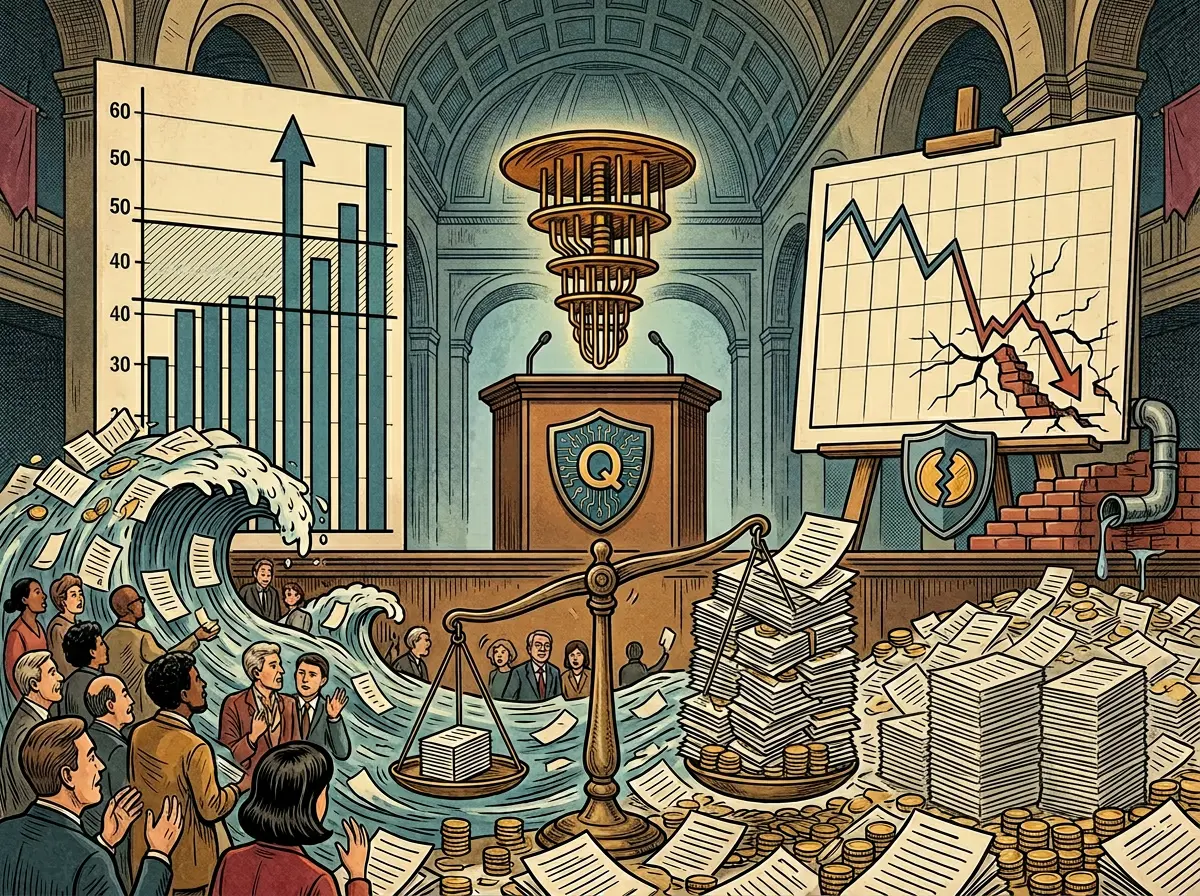
Quantinuum (QNT), a quantum computing company, completed its Nasdaq listing on June 4. The final price was $60 per share, above the previously announced $53 to $55 pricing range. The offering size was expanded to 28 million shares, raising $1.68 billion. Bloomberg, citing people familiar with the matter, confirmed that IPO subscription demand was more than 20 times the offering size, even though the company’s Q1 revenue fell 73% year over year.
IPO Pricing and Trading Performance: Confirmed Figures
According to Quantinuum’s official statement and Bloomberg coverage: the initial offering size was 26.5 million shares, with a $53 to $55 per-share pricing range; final terms were adjusted to 28 million shares and $60 per share, above the top end of the original range. IPO subscription demand exceeded the offering size by 20 times (Bloomberg cited people familiar with the matter). On the first day, QNT opened at $68, hit an intraday high of $71.35, and closed with a market capitalization of $15.7 billion. After-hours, it was reported at $59.20 (-$1.18, -1.95%).
Quantinuum was founded in 2021, formed by integrating Honeywell’s hardware capabilities from its quantum solutions division with software capabilities from Cambridge Quantum in the UK. After the IPO, Honeywell retained a majority stake and will continue to operate as a strategic customer and partner.
Financial Snapshot: Confirmed Q1 Data and Full-Year Outlook
Based on Quantinuum’s S-1 filing and updated financial data:
Q1 2026 revenue: $5.24 million (down 73% year over year; $19.1 million in the same period last year)
Q1 2026 net loss: $136.5 million (net loss of $30.5 million in the same period last year)
Q1 2026 bookings: $1.3 million (from $1.9 million in the same period last year)
Full-year 2025 net loss outlook: $136.6 million; net revenue: $5.2 million
Quantinuum CEO Rajeeb Hazra, in an interview with CNBC’s “Squawk on the Street,” said the company currently has customers already using its commercial hardware and software, adding that “there is no doubt about the demand for these computing resources.” Confirmed customers include JPMorgan Chase and Amgen.
Trump Administration’s $2.0 billion Quantum Program: Quantinuum Gets $100 million
A month before the IPO, the U.S. Department of Commerce confirmed it had signed preliminary agreements to provide $2.0 billion in funding and acquire equity through the 2022 CHIPS and Science Act for nine companies related to the quantum ecosystem. Under this, Quantinuum received $100 million, and IBM received $1.0 billion (the largest single award in the plan) to expand the scale of its quantum chip foundry facilities. Hazra said: “This has greatly validated quantum technology, and the value of Quantinuum as a strategic U.S. quantum industry asset.”
Frequently Asked Questions
Why did Quantinuum’s Q1 2026 revenue drop 73% year over year, yet it still received 20x subscription demand for the IPO?
Q1 2026 revenue fell from $19.1 million to $5.24 million, mainly reflecting that quantum computing remains in the early stages of commercial development, with revenue being volatile. The high demand from IPO investors was driven more by expectations of long-term growth potential for quantum computing, the $100 million endorsement from the Trump administration, and the anticipation of improving IPO market sentiment, rather than near-term financial performance.
What role does Honeywell play as the majority shareholder after Quantinuum goes public?
According to Quantinuum’s prospectus, Honeywell retained a majority stake after the IPO and confirmed it will continue to operate as Quantinuum’s strategic customer and partner. Honeywell did not cash out in this IPO. Its position as a majority shareholder means major strategic decisions for Quantinuum remain within Honeywell’s influence.
What impact does the Quantinuum IPO have on existing shares in quantum stocks such as IonQ, D-Wave, and Rigetti?
Based on comments from market traders and analysts on Stocktwits, Quantinuum’s strong IPO listing was interpreted as a positive signal for the quantum sector. Traders expected it could help lift the sector overall. As of early 2026, IonQ was up 52% year-to-date, Rigetti up 9%, and D-Wave up 5.4%; Defiance Quantum ETF (QTUM) was up 53% year-to-date.


