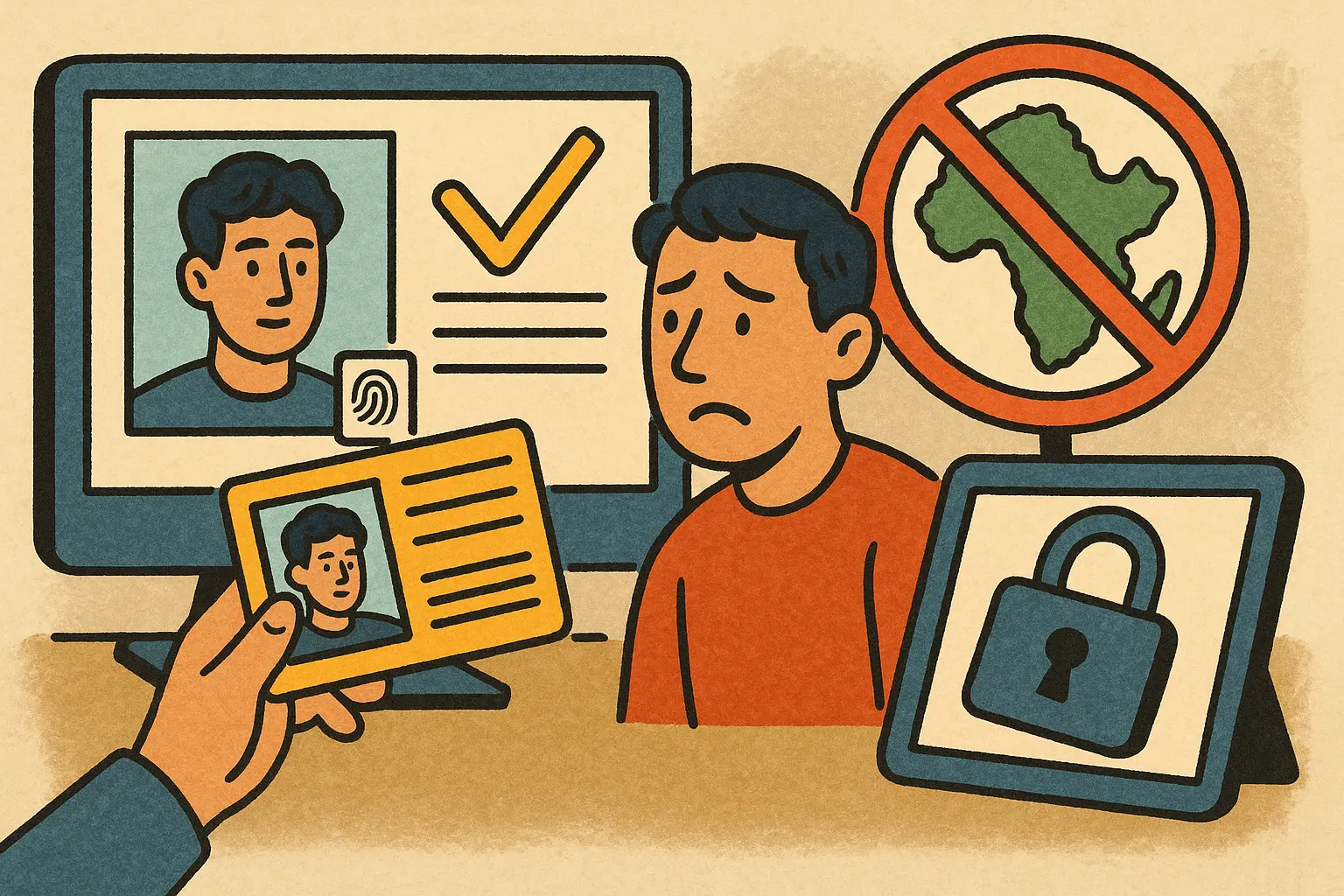
Anthropic has fully rolled out mandatory identity verification (KYC) on its Claude platform, carried out by the third-party service provider Persona Identities. The official defines this as routine “integrity checks” intended to prevent misuse, implement platform policies, and ensure regulatory compliance. After this measure was widely deployed in April 2026, its impact is most directly felt by users located in unsupported regions such as mainland China.
Trigger conditions for KYC verification and the official objectives
KYC (Know Your Customer) verification is a compliance mechanism used by financial and technology platforms to confirm a user’s real identity. With this initiative, Anthropic has introduced Persona Identities as the third-party enforcement party, requiring users to submit valid identification documents and complete real-time liveness verification.
The official lists three core goals for this measure:
Prevent misuse: Identify abnormal behavior such as batch-operated accounts and automated malicious use
Enforce usage policies: Ensure that platform usage complies with Anthropic’s Terms of Service
Regulatory compliance: Meet the increasingly stringent requirements from U.S. and international regulations for AI service providers
It is worth noting that even if a user successfully completes passport and liveness verification, if the system detects that the account’s actual usage location is in a region not supported by Anthropic, the account may still be disabled after verification.
Official recommended routes for affected users
For users whose KYC verification is triggered, Anthropic recommends that after the verification window appears, they promptly prepare valid government-issued identification documents and devices with a high-definition camera, and complete the review within the required timeframe to avoid service interruptions.
If an account has already been disabled, the official provides two formal channels:
Appeals channel: Fill out the official appeals form or email support@anthropic.com, describing the account usage and the reasons it was wrongly flagged
Refund request (paid users): If you just completed a subscription before the account was disabled, you can contact billing@anthropic.com to request a refund
Please note that, based on current community feedback, the appeals success rate is relatively limited, and refunds typically require multiple rounds of communication.
Broader context: AI platform compliance trends accelerating
Anthropic’s rollout of mandatory KYC is not an isolated case, but a reflection of how AI service platforms are responding to rising global regulatory pressure. In recent years, many major markets have continuously strengthened export controls on AI services and user verification requirements, prompting platforms to gradually tighten their identity verification mechanisms. For users in restricted regions, finding lawful alternative AI service platforms—such as other AI assistants that support the user’s location, or obtaining API access rights through official channels—is currently the most compliant and practical option.
Frequently asked questions
What is KYC verification, and why did Anthropic deploy it now?
KYC is short for “Know Your Customer.” It is the standard compliance process used by financial and technology platforms to verify a user’s real identity. Anthropic’s large-scale deployment, on the one hand, responds to the requirements from U.S. and international regulatory bodies for AI service providers’ compliance responsibilities; on the other hand, it also reflects internal management needs to prevent its platform from being misused (such as batch accounts and automated operations).
For users in unsupported regions, will accounts necessarily be banned?
Not necessarily. Whether KYC verification is triggered depends on the platform’s risk-control mechanism, and not all accounts in unsupported regions will face review immediately. However, once triggered—and if the system determines that the account’s actual usage location is in a restricted region—there is still a risk that the account will be disabled even after completing verification. At present, the official has not provided a clear exemption list.
What lawful alternative options are available for affected users?
For users who cannot pass Claude KYC verification, lawful alternative options to consider include: other AI service platforms that provide support in the local market (such as local or international AI services that support mainland China), obtaining usage authorization through an enterprise API partnership channel, or evaluating other open-source or commercial large language model services with equivalent capabilities.


