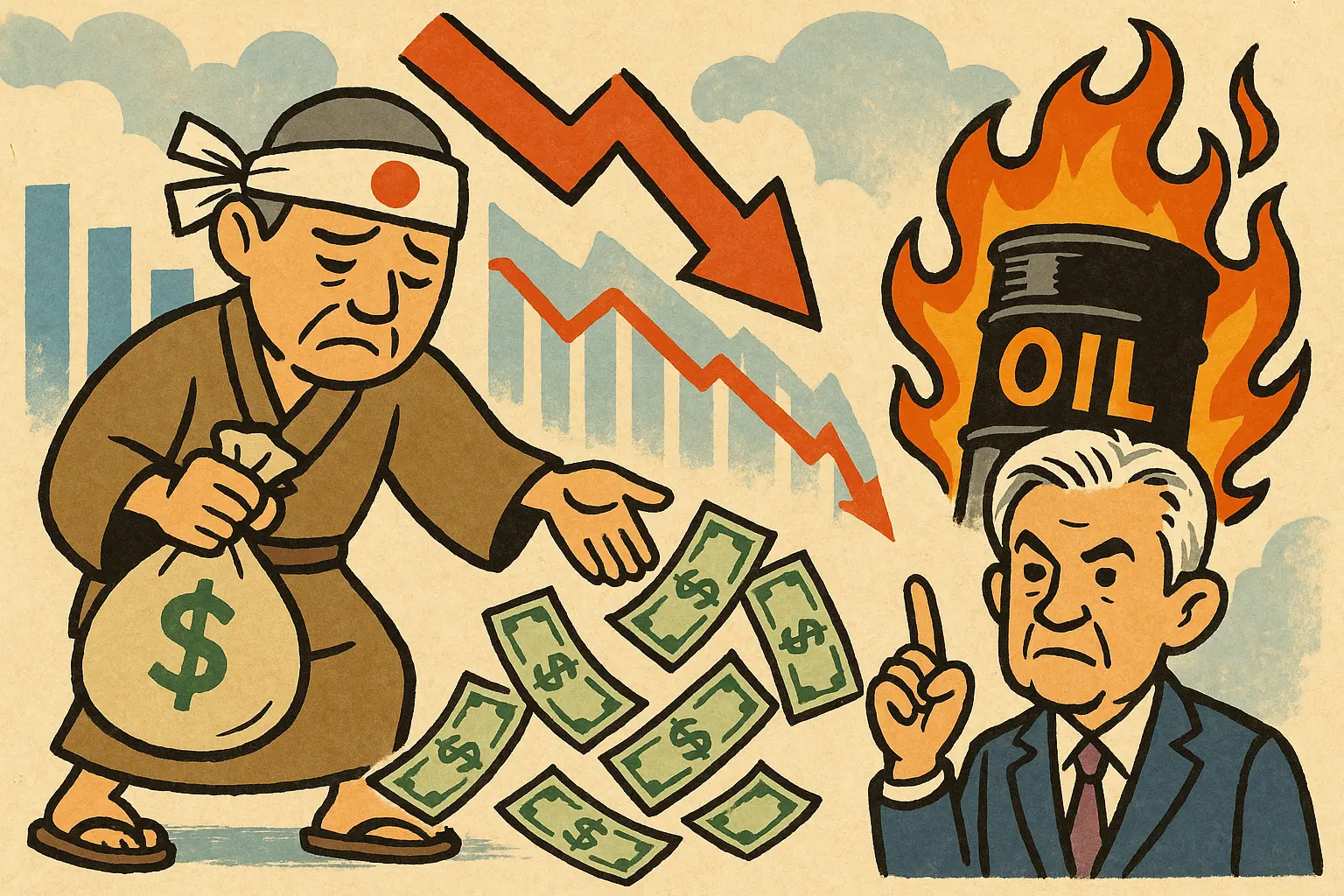
Japanese investors net sold U.S. government, agency, and local authority bonds totaling 4.67 trillion yen (about $29.6 billion) in the first quarter of 2026 (through March 31), according to balance of payments data released by Japan on Wednesday. This was the largest-scale selloff since Q2 2022. The key factor triggering this selloff was a roughly 50% surge in oil prices during the period, accelerating expectations of inflation.
Japan Q1 U.S. Treasury selloff data: Scale, types, and historical comparison
According to balance of payments data released by Japan’s Ministry of Finance:
Total net selloff: 4.67 trillion yen (about $29.6 billion)
Type of selloff: Various bonds issued by U.S. government securities, government agencies, and local authorities
Historical comparison: The highest selloff volume since Q2 2022
Data for the first two months (U.S. Treasury): Japanese investors additionally sold $4.14 billion of U.S. agency bonds in January–February
Inflation data triggers a shift in rate-cut expectations: Specific PPI and CPI figures
In February this year, overnight index swaps (OIS) showed that the market expected the FED to deliver two rate cuts. As oil prices rose by roughly 50%, inflation data released by the U.S. Department of Labor on Wednesday reinforced expectations of a shift toward rate hikes:
U.S. April PPI (Producer Price Index): +6.0% year over year (4.3% in March, market expectation 4.9%)
Core PPI (excluding volatile items): +5.2% year over year (4.0% in March, market expectation 4.3%)
U.S. April CPI (Consumer Price Index): +3.8% year over year, the highest since 2023
Analysts and FED officials confirm their remarks
Naokazu Koshimizu, a senior interest rate strategist at Nomura Securities, confirmed in his comments: “Investors are actively adjusting their positions. The outlook has become highly uncertain—not only how far rate cuts might be delayed, but also whether rate hikes could come next.” He added that previously, the market generally assumed that rate cuts would occur at some point, and this assumption supported buying demand, especially in mortgage-backed securities (MBS).
Boston FED President Susan Collins said on Wednesday that if inflation does not move closer to the 2% target set by the FED, it will be necessary to raise rates.
FAQ
Why is Japan an important overseas holder of U.S. Treasuries?
Japan is one of the largest holders of U.S. government bonds overseas. It has long held U.S. government and agency bonds worth tens of billions of Dollars. This holding reflects Japan’s long-term preference for dollar-denominated assets in asset allocation by major Japanese insurance companies, pension funds, and the central bank, making Japan’s investors’ position adjustments an important signal indicator for global interest-rate markets.
How does a surge in oil prices transmit to the FED’s rate-hike and rate-cut expectations? A roughly 50% increase in oil prices directly raises energy costs, and also raises production costs through the supply chain, which is reflected in the data showing +6% year over year for PPI and +3.8% year over year for CPI. The FED’s inflation target is 2%. When inflation keeps running above the target, the market adjusts its expectations for the FED’s future actions—shifting from expectations of rate cuts to bets on rate hikes based on this round of data.
Is this selloff a one-sided action by Japanese investors?
According to a Bloomberg report, the selloff scale hit a new four-year high, reflecting a systemic adjustment by Japanese institutional investors to expectations for U.S. interest-rate prospects. The data covers changes in combined holdings among major investors such as Japanese government agencies, life insurance companies, and banks, not a specific action by a single investor.


