# IranAttacksIsrael

2.62M

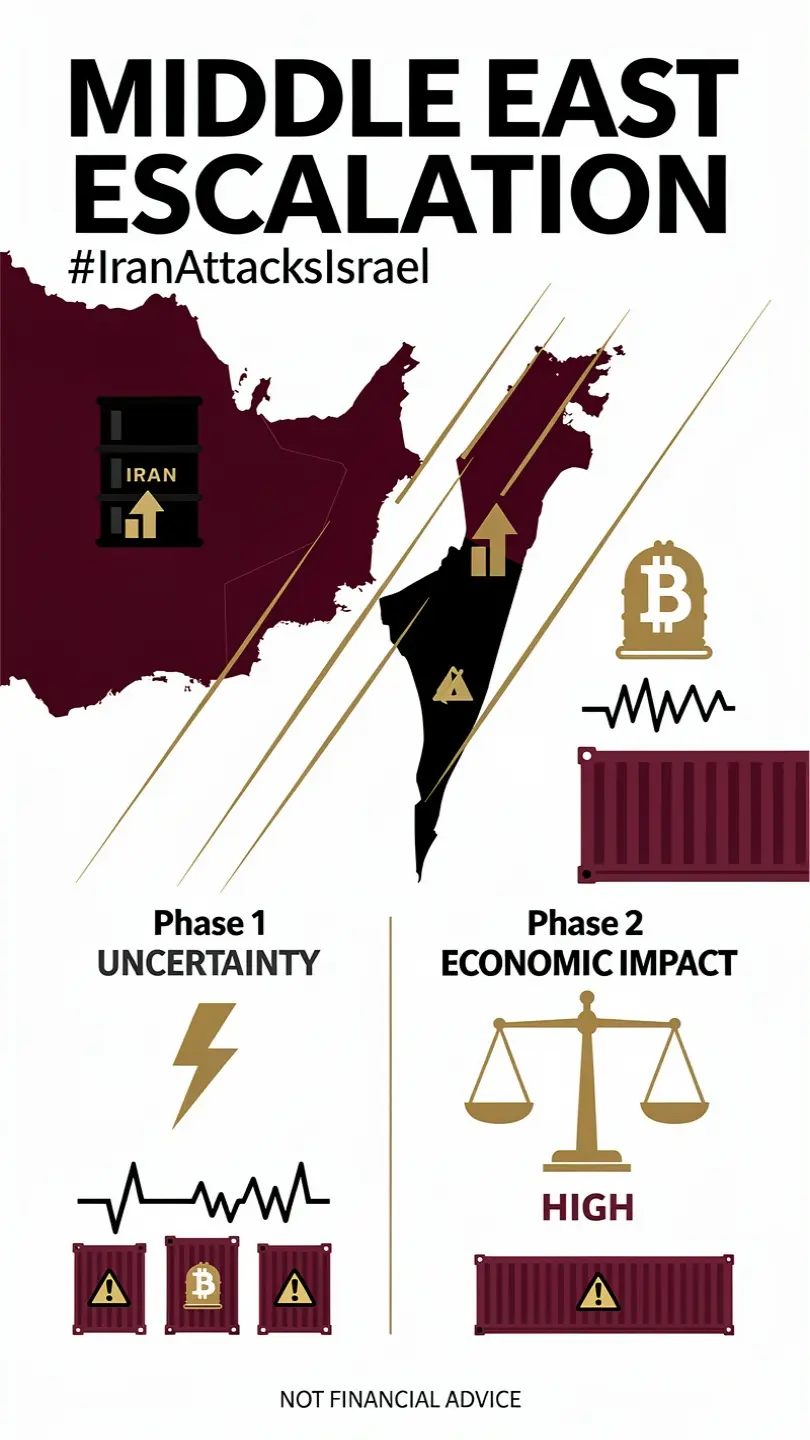
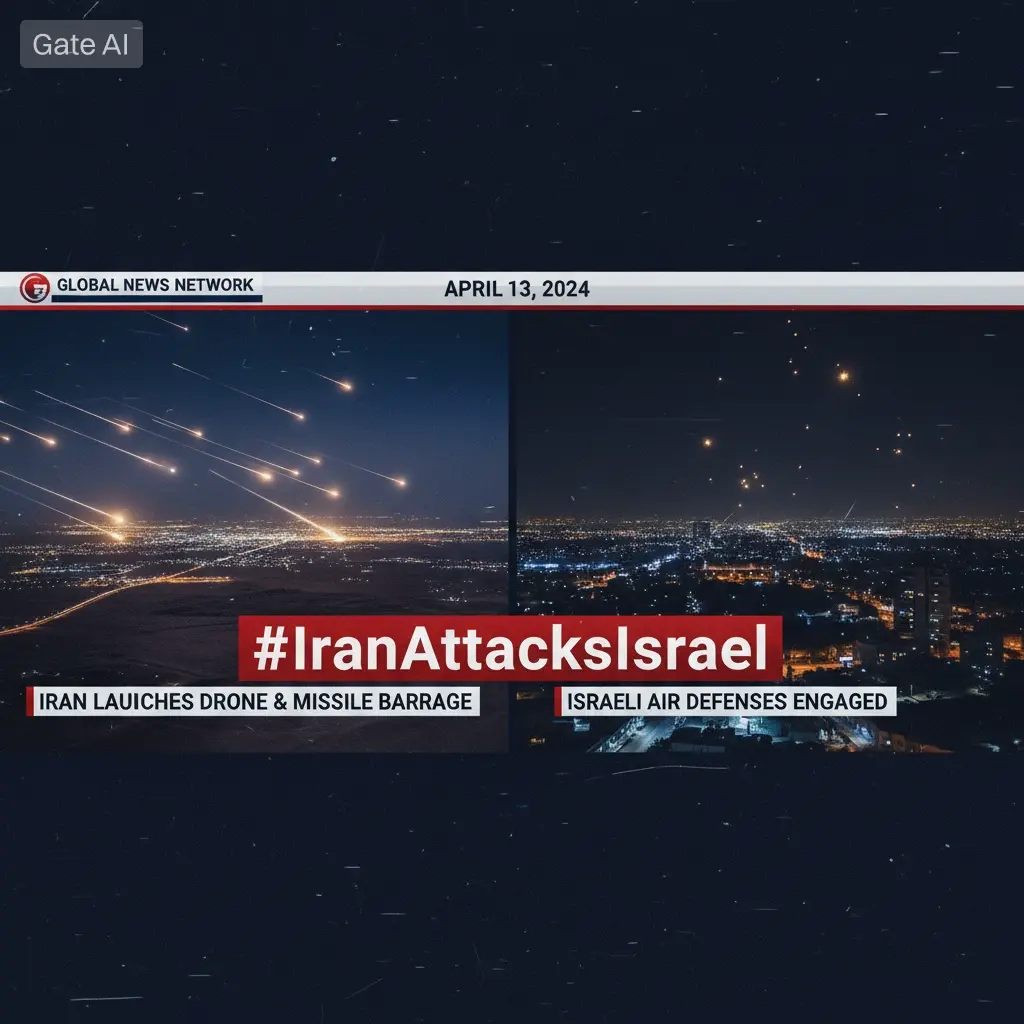
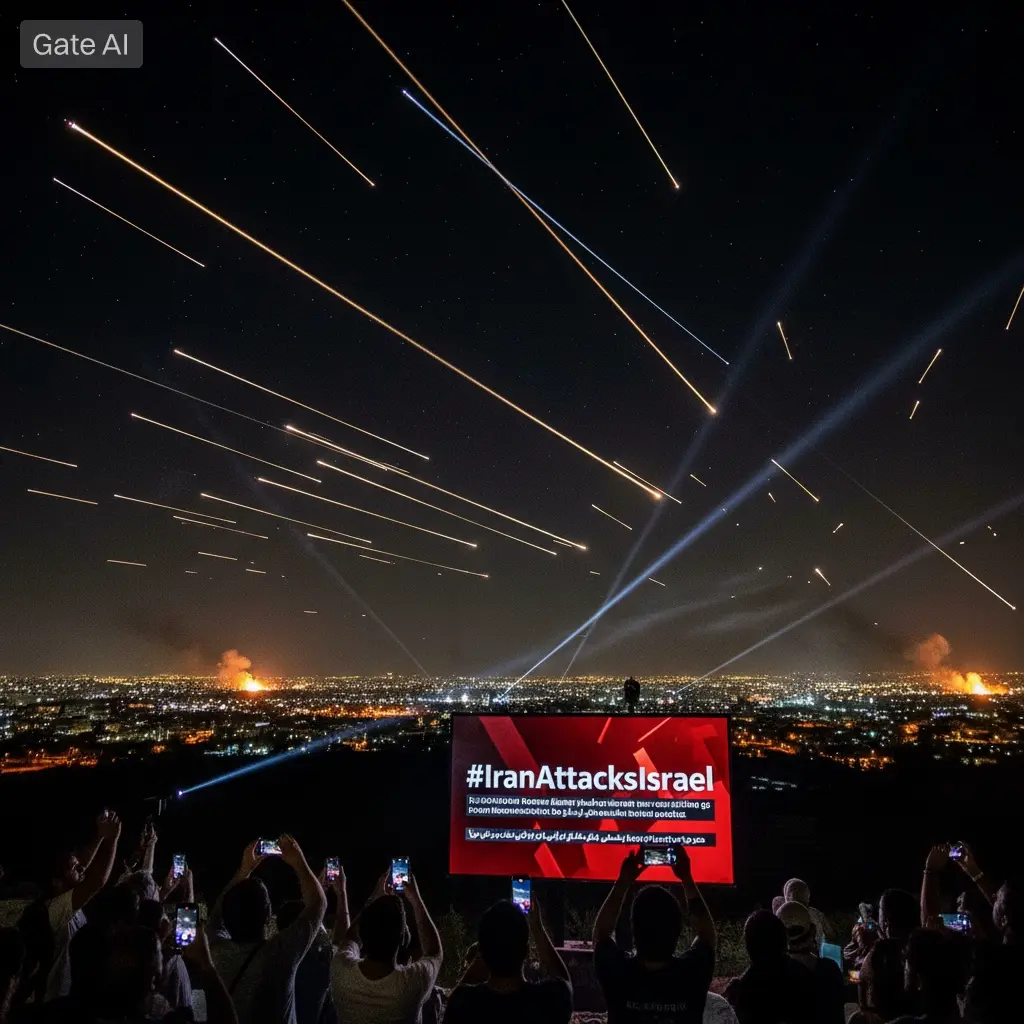
On June 7, Iran launched ballistic missiles at Israel's Ramat David Airbase in northern Israel, marking the first direct Iranian strike on Israeli territory since the April ceasefire. The attack followed an Israeli airstrike on Beirut's southern suburbs earlier that day. The IDF said all missiles were intercepted, but vowed a "strong response," closing border crossings and schools nationwide. Iran warned that any Israeli retaliation would be met with an even larger strike. President Trump urged Israel to show restraint.

#IranAttacksIsrael 🚨 Geopolitical Shockwaves Hit Global Markets
Global markets are once again facing a period of heightened uncertainty as tensions between Iran and Israel escalate, sending investors into risk-management mode. Historically, whenever geopolitical conflicts intensify in the Middle East, the immediate impact is felt across energy markets, equities, commodities, and increasingly, the cryptocurrency sector.
The first reaction from financial markets is usually a flight to safety. Investors tend to move capital away from high-risk assets and toward traditional safe havens such as go
BTC-4.5%
post-image
  • Reward
  • 20
  • Repost
  • Share
HighAmbition:
Steadfast HODL💎
View More
#IranAttacksIsrael
Iran Attacks Israel: Geopolitical Tensions Shake Global Markets
Geopolitical shocks often move faster than financial markets can fully process. The latest exchange of direct attacks between Iran and Israel has once again placed the Middle East at the center of global attention, triggering volatility across energy markets, traditional assets, and cryptocurrencies.
Over the weekend, Iran launched missile attacks against Israel following Israeli military operations in the region, marking one of the most significant direct confrontations between the two countries in recent mo
post-image
post-image
post-image
  • Reward
  • 23
  • Repost
  • Share
sercio_me:
Ape In 🚀
View More
#IranAttacksIsrael
The Middle East is back in focus after a significant exchange of fire between Iran and Israel, marking the most serious direct confrontation since the April ceasefire.
🔹 What Happened?
Iran launched multiple missiles toward Israel following Israeli strikes linked to Hezbollah targets in Beirut. Israel responded with airstrikes on military sites inside Iran, including missile infrastructure and defense-related targets.
🔹 Ceasefire Under Pressure
Both sides signaled a temporary halt to further attacks after international diplomatic pressure increased. However, each side w
BTC-4.55%
post-image
User_any
#IranAttacksIsrael
The Middle East is back in focus after a significant exchange of fire between Iran and Israel, marking the most serious direct confrontation since the April ceasefire.
🔹 What Happened?
Iran launched multiple missiles toward Israel following Israeli strikes linked to Hezbollah targets in Beirut. Israel responded with airstrikes on military sites inside Iran, including missile infrastructure and defense-related targets.
🔹 Ceasefire Under Pressure
Both sides signaled a temporary halt to further attacks after international diplomatic pressure increased. However, each side warned that new military action could follow if additional provocations occur.
🔹 Markets Reacted Immediately
The escalation briefly pushed oil prices higher as traders assessed risks to Middle East energy supplies and regional stability. Risk assets, including crypto and equities, also faced increased volatility as investors moved into defensive positions.
🔹 What Investors Are Watching
🟠 Further Iran-Israel military developments
🟠 Security around the Strait of Hormuz
🟠 Oil price volatility
🟠 U.S. diplomatic efforts
🟠 Impact on global risk sentiment
🔹 Why It Matters For Crypto
Geopolitical shocks often create short-term volatility across Bitcoin and altcoins as traders reduce leverage and manage risk.
At the same time, uncertainty can increase interest in alternative stores of value when market stress rises.
The next headlines from the region could have a major impact on oil, stocks, and crypto throughout the week.
Stay alert. Markets are reacting to every development.
Please always DYOR.
⚠️ Not financial advice.
Friends, do you think geopolitical tensions will have a bigger impact on oil markets or crypto markets in the coming days?

  • Reward
  • 6
  • Repost
  • Share
BeautifulDay:
To The Moon 🌕
View More
#IranAttacksIsrael #BitcoinRalliesOver5Percent 📈 Market Update: Bitcoin Reclaims $63,000—Is the Bottom In?
Bitcoin has staged an impressive, high-momentum comeback. After testing a multi-month low near $59,160, intense buying pressure triggered a sharp reversal, pushing BTC back above the critical $63,000 psychological threshold.
This rapid 5%+ bounce has injected fresh optimism into a market recently battered by macroeconomic tightening fears and geopolitical risks. Here is an institutional-grade breakdown of the mechanics driving this rally, the key technical levels to watch, and strategic
BTC-4.5%
post-image
post-image
  • Reward
  • 9
  • Repost
  • Share
Yusfirah:
2026 GOGOGO 👊
View More
#IranAttacksIsrael
⚠️ IRAN STRIKES ISRAEL
The Middle East Is Back on Edge as Missiles Fly and Markets Brace for Impact
The fragile calm that followed the April ceasefire may be over.
In a dramatic escalation that has once again placed the Middle East at the center of global attention, Iran launched multiple ballistic missiles toward Israel, prompting immediate Israeli retaliation against military targets inside Iran. The exchange marks the most serious direct confrontation between the two countries since the ceasefire was established earlier this year.
🚨 What Happened?
According to m
NG1.59%
BTC-4.5%
discovery
#IranAttacksIsrael
⚠️ IRAN STRIKES ISRAEL
The Middle East Is Back on Edge as Missiles Fly and Markets Brace for Impact
The fragile calm that followed the April ceasefire may be over.
In a dramatic escalation that has once again placed the Middle East at the center of global attention, Iran launched multiple ballistic missiles toward Israel, prompting immediate Israeli retaliation against military targets inside Iran. The exchange marks the most serious direct confrontation between the two countries since the ceasefire was established earlier this year.
🚨 What Happened?
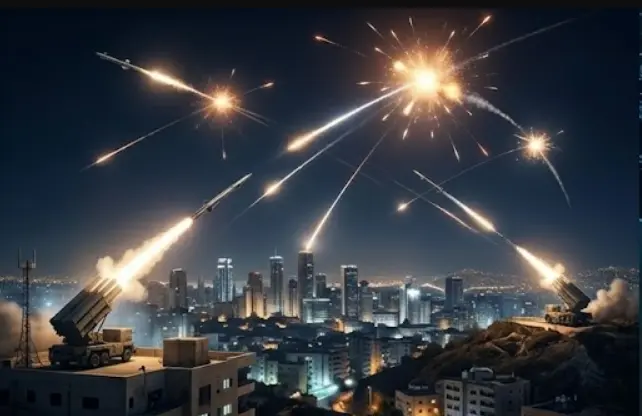
According to military and government reports, Iran fired 11 ballistic missiles toward Israel in several waves. Israeli defense systems intercepted most or all of the incoming projectiles, limiting casualties and damage.
Israel responded within hours.
Israeli aircraft reportedly struck missile-related military infrastructure and launch sites in multiple Iranian locations, including areas around Tehran, Isfahan, Tabriz, Karaj, and Kermanshah. The operation represents Israel's first direct strike on Iranian territory since the April ceasefire.
🌍 Why The World Is Paying Attention
This is no longer a proxy conflict.
For years, tensions between Iran and Israel were largely fought indirectly through regional allies and affiliated groups. This latest exchange involved direct missile launches and direct retaliatory strikes between the two nations themselves.
That distinction matters.
When two major regional powers engage each other directly, investors immediately begin assessing the risk of a broader conflict involving additional countries, energy infrastructure, shipping routes, and international military forces.
---
🛢️ Oil Markets React First
Whenever tensions rise in the Middle East, energy markets respond quickly.
Reports indicate that crude oil prices moved sharply higher as traders priced in the possibility of further escalation. Concerns are growing about potential disruptions involving critical energy infrastructure and regional transportation corridors.
For global markets, higher energy prices can create a chain reaction:
✔ Rising transportation costs
✔ Higher inflation pressures
✔ Increased production expenses
✔ Greater uncertainty for central banks
✔ Higher volatility across risk assets
📉 What Does This Mean For Investors?
Professional investors typically focus on three questions during geopolitical crises:
1. Will the conflict expand?
If additional countries become involved, markets could face prolonged uncertainty.
2. Will energy supplies be affected?
Oil and natural gas remain critical to the global economy.
3. Will inflation rise again?
Higher energy prices can quickly impact inflation expectations worldwide.
The answers to these questions will likely determine market direction over the coming weeks.
₿ Bitcoin's Position
Bitcoin is currently trading near the $63,000 region on Gate's BTC/USDT market, showing resilience despite the geopolitical shock.
Historically, digital assets often experience short-term volatility during major geopolitical events. Some investors reduce risk exposure, while others view Bitcoin as an alternative asset during periods of uncertainty.
This creates a battle between fear-driven selling and strategic accumulation.
For now, Bitcoin has remained relatively stable compared with the scale of the geopolitical headlines.
🎯 What Traders Are Watching Next
The next 48 hours could be critical.
Market participants are closely monitoring:
🔹 Additional Iranian missile launches
🔹 Further Israeli military responses
🔹 Statements from Washington
🔹 Energy market reactions
🔹 Regional airspace restrictions
🔹 Activity around key shipping routes
Any sign of escalation could trigger another wave of volatility across global markets.
💡 Market Insight
Financial markets dislike uncertainty more than bad news.
What concerns investors most is not what has already happened—but what could happen next.
The latest missile exchange has reminded the world that geopolitical risk remains one of the most powerful forces influencing commodities, equities, currencies, and digital assets.
For now, the situation remains fluid.
But one thing is certain:
The Middle East has once again become the focal point of global market attention.
repost-content-media
  • Reward
  • 9
  • Repost
  • Share
SoominStar:
LFG 🔥
View More
#IranAttacksIsrael
#ShareYourUSStocksWinNvidia
WTIUSDT Slides as Middle East Tensions Ease, Bears Target Key Support
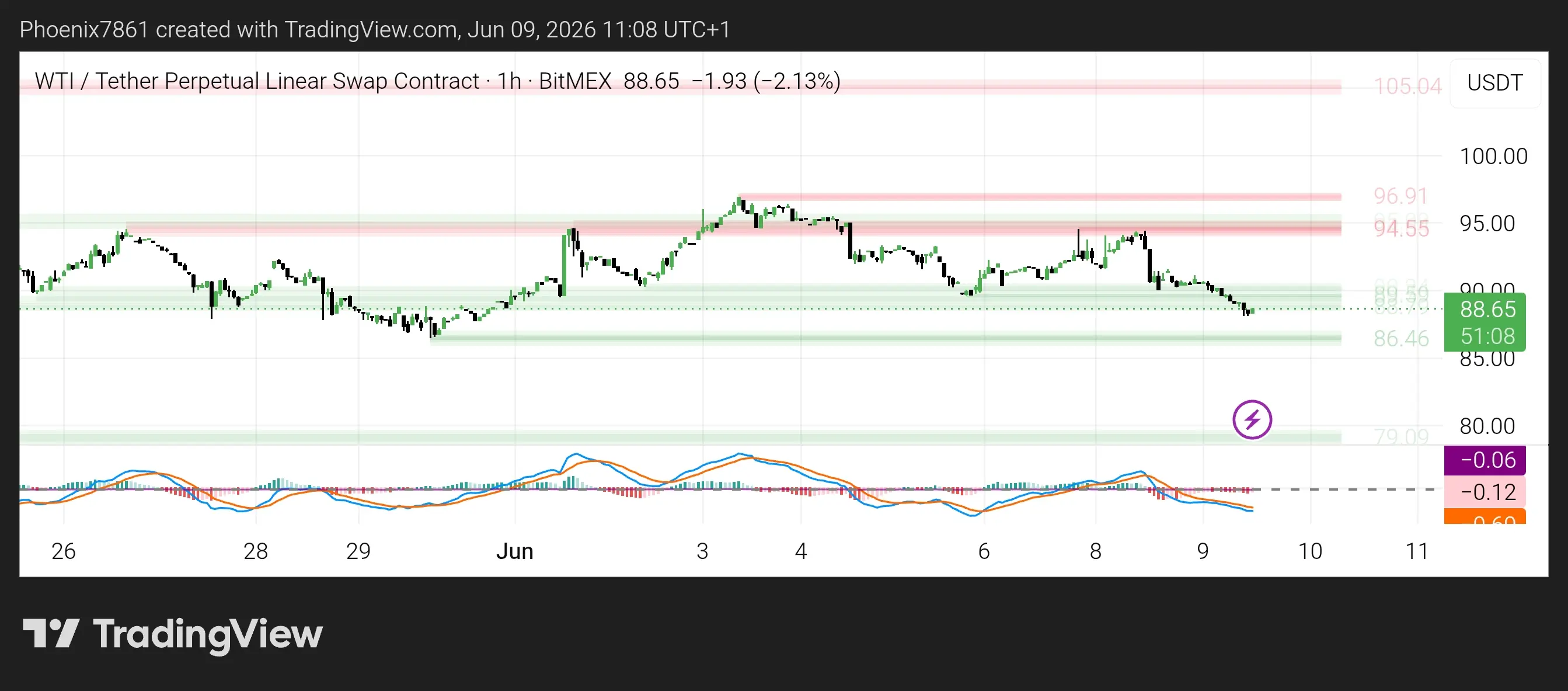
West Texas Intermediate (WTI) futures continue to retreat on Tuesday, falling nearly 1.8% to around $88.10 and extending losses of more than 6% from Monday's peak near $93.50. The sharp decline follows easing geopolitical concerns after Iran reportedly agreed to halt attacks on Israeli territory, reducing fears of a broader regional conflict.
Crude oil initially surged at the start of the week as renewed exchanges between Israel and Iran raised concerns about disruptions to th
XTIUSD-3.98%
post-image
  • Reward
  • 3
  • Repost
  • Share
ybaser:
2026 GOGOGO 👊
View More
#IranAttacksIsrael
The Middle East is back in focus after a significant exchange of fire between Iran and Israel, marking the most serious direct confrontation since the April ceasefire.
🔹 What Happened?
Iran launched multiple missiles toward Israel following Israeli strikes linked to Hezbollah targets in Beirut. Israel responded with airstrikes on military sites inside Iran, including missile infrastructure and defense-related targets.
🔹 Ceasefire Under Pressure
Both sides signaled a temporary halt to further attacks after international diplomatic pressure increased. However, each side w
BTC-4.5%
  • Reward
  • 6
  • Repost
  • Share
Yusfirah:
To The Moon 🌕
View More
#IranAttacksIsrael
Geopolitical Crisis Analysis: Shifting Risk Premiums After the June 7 Escalation
A high-profile structural shift has occurred in global risk metrics under the trending hashtag #IranAttacksIsrael . The provided event log confirms a critical friction point: the fragile April ceasefire shattered on **June 7, 2026**, when Iran launched a direct ballistic missile strike targeting Israel's **Ramat David Airbase** in northern Israel.
This military response followed an Israeli airstrike targeting command facilities in Beirut’s southern suburbs earlier that same day. While defensive
post-image
Luna_Star
#IranAttacksIsrael
The Middle East is back in focus after a significant exchange of fire between Iran and Israel, marking the most serious direct confrontation since the April ceasefire.
🔹 What Happened?
Iran launched multiple missiles toward Israel following Israeli strikes linked to Hezbollah targets in Beirut. Israel responded with airstrikes on military sites inside Iran, including missile infrastructure and defense-related targets.
🔹 Ceasefire Under Pressure
Both sides signaled a temporary halt to further attacks after international diplomatic pressure increased. However, each side warned that new military action could follow if additional provocations occur.
🔹 Markets Reacted Immediately
The escalation briefly pushed oil prices higher as traders assessed risks to Middle East energy supplies and regional stability. Risk assets, including crypto and equities, also faced increased volatility as investors moved into defensive positions.
🔹 What Investors Are Watching
🟠 Further Iran-Israel military developments
🟠 Security around the Strait of Hormuz
🟠 Oil price volatility
🟠 U.S. diplomatic efforts
🟠 Impact on global risk sentiment
🔹 Why It Matters For Crypto
Geopolitical shocks often create short-term volatility across Bitcoin and altcoins as traders reduce leverage and manage risk.
At the same time, uncertainty can increase interest in alternative stores of value when market stress rises.
The next headlines from the region could have a major impact on oil, stocks, and crypto throughout the week.
Stay alert. Markets are reacting to every development.
Please always DYOR.
⚠️ Not financial advice.
Friends, do you think geopolitical tensions will have a bigger impact on oil markets or crypto markets in the coming days?

repost-content-media
  • Reward
  • 9
  • Repost
  • Share
ShainingMoon:
To The Moon 🌕
View More
#IranAttacksIsrael
The latest escalation between Iran and Israel has once again reminded global markets that geopolitical risk remains one of the most powerful drivers of investor sentiment
. Following Iranian missile attacks and Israeli retaliatory strikes, the region has entered another period of heightened uncertainty, raising concerns about energy security, global trade routes, and broader financial market stability
. Reports indicate that both sides exchanged direct attacks before signaling a temporary halt, but the situation remains fragile and subject to rapid change.
From a technical
post-image
post-image
  • Reward
  • 5
  • Repost
  • Share
2In1:
To The Moon 🌕
View More
⚠️ Markets often react to uncertainty faster than they react to facts. In geopolitical events, managing exposure and controlling risk matters more than trying to predict every headline. Smart traders focus on discipline while volatility does the rest. 📊 #IranAttacksIsrael
DragonFlyOfficial
#IranAttacksIsrael
🚨 Middle East Tensions Escalate — Iran–Israel Direct Exchange Raises Risk Premium 📊
The situation on June 7 marks a dangerous escalation in regional conflict dynamics.
Reports indicate that Iran launched ballistic missiles toward Israel’s Ramat David Airbase in northern Israel — the first confirmed direct strike on Israeli territory since the April ceasefire framework. The move reportedly followed an Israeli airstrike on southern Beirut earlier the same day, signaling a rapid retaliation cycle between multiple fronts.
Israel’s defense systems reportedly intercepted the incoming missiles, according to IDF statements, but the political and military response was immediate:
“Strong response” vowed by Israeli leadership
Border crossings temporarily closed
Schools suspended nationwide as precaution
Heightened military readiness across multiple sectors
Iran, in turn, issued warnings that any Israeli retaliation would be met with a larger strike, further increasing escalation risk.
🧠 What This Really Means (Beyond Headlines)
This is not a single isolated incident — it reflects a multi-layer escalation loop:
Israel → Lebanon strike escalation
Iran → direct missile response
Mutual deterrence shifting toward active engagement
The key risk now is miscalculation, not intent.
When both sides publicly commit to retaliation, the probability of controlled de-escalation drops sharply.
📉 Market & Global Risk Impact
Historically, events like this trigger:
Oil price volatility (supply risk premium increases)
Gold demand spikes (safe-haven rotation)
Crypto short-term liquidation waves (risk-off correlation)
Equity pressure in global markets, especially tech-heavy indices
USD strengthening due to flight-to-safety flows
Even without confirmed damage, headline risk alone drives positioning shifts.
⚠️ Critical Risk Layer
The most dangerous phase is not the initial strike — it’s what comes next:
“Measured response” claims often turn into escalation cycles
Communication breakdown increases accidental targeting risk
Proxy networks may expand the conflict beyond direct actors
Markets begin pricing in worst-case scenarios, not base case
At this stage, verbal deterrence is no longer stabilizing behavior — it is part of escalation signaling.
🧠 Strategic Insight
What traders and analysts often miss:
This is not just geopolitics — it’s liquidity shock fuel.
Risk events like this compress decision time
Algorithmic trading reacts faster than human sentiment
Stop-loss cascades amplify volatility even if fundamentals don’t change
Early positioning matters more than directional accuracy
Dragon Fly Official insight: In geopolitical shocks, timing of exposure exit matters more than prediction of outcome.
🔮 Outlook Scenarios
1. Controlled de-escalation (low probability short-term)
Diplomatic pressure reduces immediate retaliation cycles.
2. Tit-for-tat continuation (base case risk)
Limited strikes continue without full-scale war but maintain volatility.
3. Regional escalation (tail risk)
Proxy involvement expands conflict footprint across multiple fronts.
💬 Final Question:
At what point does “contained retaliation” stop being containment and start becoming a new conflict cycle?
repost-content-media
  • Reward
  • 1
  • Repost
  • Share
HighAmbition:
Just charge forward 👊
Load More