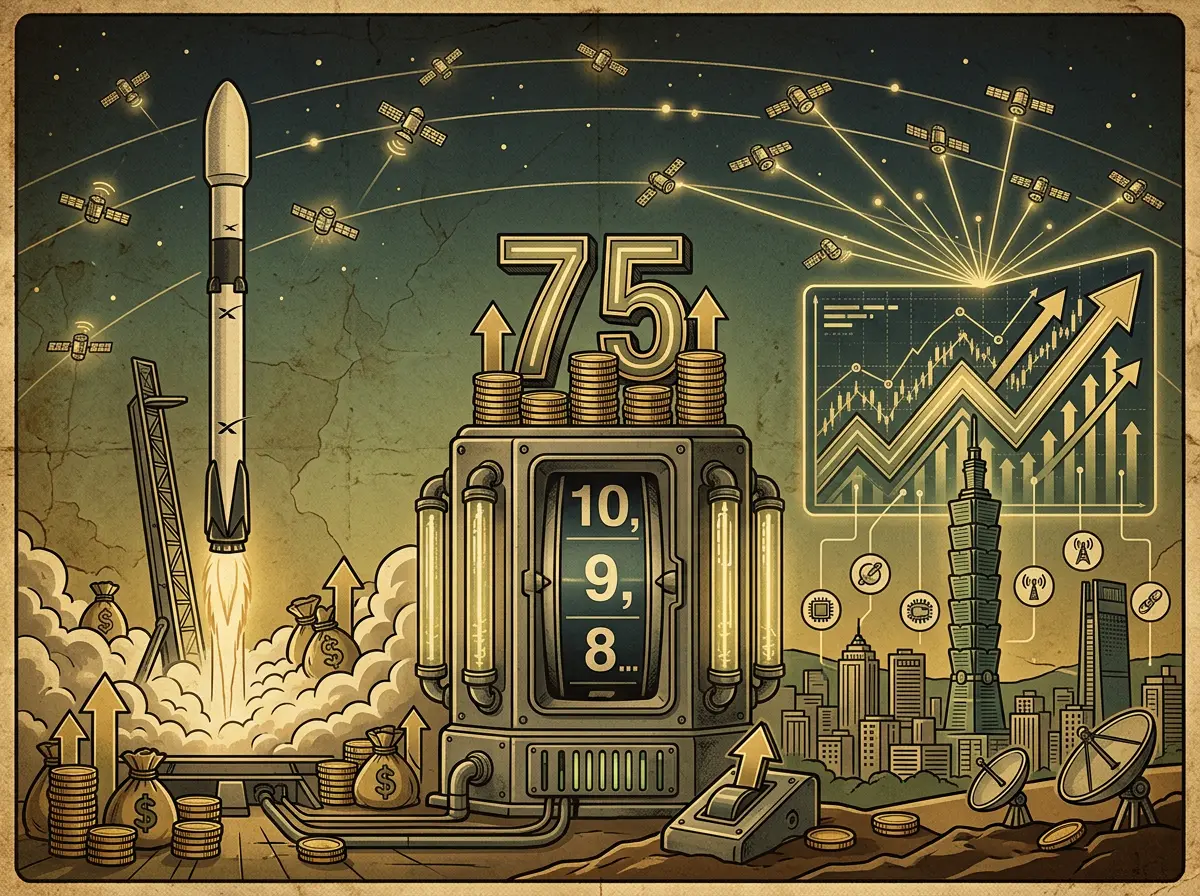
SpaceX has applied to be listed on Nasdaq under the code name SPCX. If completed on schedule, it could raise about $75 billion, with an estimated valuation of about $1.77 trillion. Driven by this news, Taiwan stocks’ low-Earth orbit satellite concept shares saw sharp gains on June 9 during intraday trading: Shengda Ke peaked at NT$1,920, Huatongda at NT$274, Qis i rose to NT$290, TAI-GUANGDIAN reached NT$5,040, and Lianmao hit NT$253.5.
SpaceX Three Major Business Financial Figures (2025)
In 2025, SpaceX’s consolidated revenue was $18.674 billion. Segment performance:
· Connectivity (Starlink) revenue of about $11.387 billion, contributing about $4.423 billion in operating profit—its only profitable segment;
· Space (aerospace launch) continued to post losses due to heavy Starship R&D investment (R&D expenses of about $3 billion);
· AI segment revenue of about $3.2 billion—its biggest loss driver due to large-scale GPU procurement and building data centers.
As of the first quarter of 2026, Starlink’s user base exceeded 10.3 million (2.3 million two years ago). TrendForce noted that SpaceX is actively laying out emerging areas such as direct-to-cellphone satellite connectivity, AI space computing, and space solar power, and strengthens vertical integration by expanding its in-house AI chip foundry, Terafab.
Taiwan Stock Low-Earth Orbit Satellite Concept Stocks (Supply-Chain Level Reference)
Important disclaimer: The “concept stocks” that the market associates with do not necessarily mean they all have actual SpaceX or Starlink orders. Before investing, distinguish four levels: “theme-related,” “indirect supply chain,” and “with actual orders,” and “no actual orders.”
Taiwan stocks commonly cited as related concept stocks:
Shengda Ke (3491): High-frequency microwave components and filter supplier; peaked at +7.56% on June 9 intraday
Huatong (2313): High-end, high-density interconnect board (HDI) manufacturer; rose more than 7% intraday
Qis i (6285): Has entered the Starlink satellite supply chain; up 6.03%
Tai-Guangdian (2383): High-end copper-clad laminate (CCL) manufacturer; up more than 4%
Lianmao: Also a high-frequency substrate materials maker; up 4.1%
How Taiwanese Investors Participate
Taiwan is not included in the public subscription arrangement for this IPO. The prospectus states that this issuance is not authorized for public sale or intermediation in Taiwan. Taiwanese investors are expected to be able to buy in the public market as early as June 12, after SPCX begins trading, via participating accounts/overseas brokers. However, volatility in the initial listing phase is usually higher.
ETFs with direct exposure to SpaceX include: XOVR (about 23%), DXYZ (about 16%), NASA (about 7–10%); S&P 500 (SPY, VOO) will not include SpaceX in the short term after listing because the S&P maintains a waiting period of at least 12 months.
Common Questions
How does SpaceX’s $75 billion IPO surpass Saudi Aramco’s record?
Saudi Aramco’s 2019 IPO raised about $29.4 billion, which was the previous record. If SpaceX completes a base offering of about 556 million shares at $135 per share, the fund-raising size would be about $75 billion, exceeding it by about 2.5 times. If underwriters exercise the over-allotment option, the scale could increase further.
Can Taiwanese investors apply to subscribe for SpaceX?
No, public subscription is not available through Taiwan channels. The prospectus states that this IPO is not publicly raised or sold in Taiwan. In practice, the most realistic way for typical Taiwanese investors is to wait until SPCX starts trading on June 12 and then buy in the public market through participating accounts or overseas brokers, but it’s important to note that volatility in the initial listing period is relatively high.
What are the main controversies behind SpaceX’s $1.77 trillion valuation?
Dividing $1.77 trillion by 2025 revenue of $18.674 billion implies a price-to-sales (P/S) ratio of about 95x, far higher than most mature tech stocks. The company still had net losses of about $4.937 billion in 2025, and Musk holds about 84–85% of voting rights, leaving public-market shareholders almost unable to influence company decisions. In the prospectus, SpaceX directly states: “We have a history of losses, and in the future we may not be able to realize profits.”


