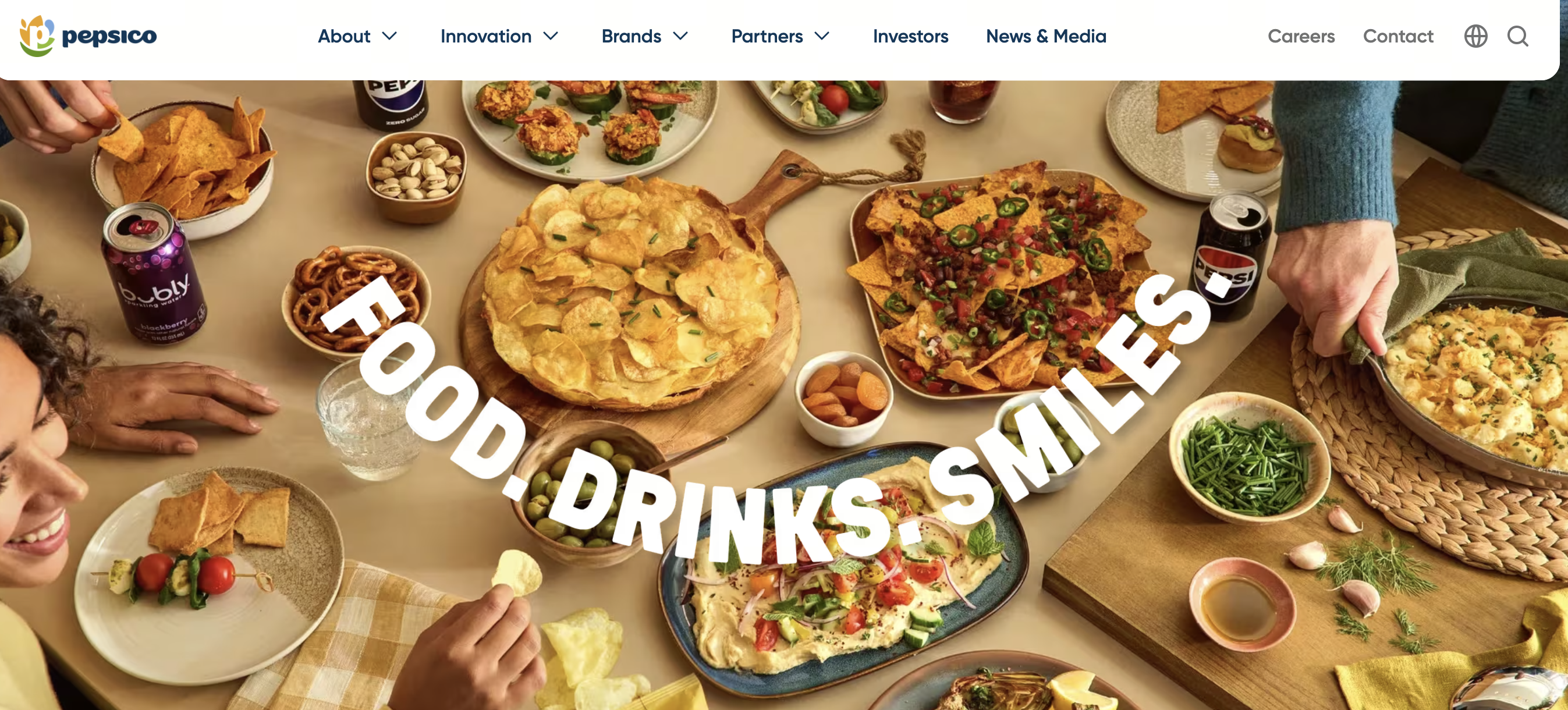
PepsiCo (PEP) stands as a global leader in the food and beverage sector, with core operations spanning carbonated drinks, sports beverages, snacks, cereal products, and more. Its portfolio features internationally recognized brands such as Pepsi, Lay’s, Doritos, Gatorade, and Quaker. Leveraging a global brand system, a robust supply chain, and a diversified product lineup, PepsiCo has solidified its role as a major player in the global consumer goods landscape.
As the global consumer market undergoes structural adjustments, the food and beverage industry is experiencing significant transformation—shifting consumer preferences, a growing focus on health, digital operations, and intelligent supply chain management. The traditional model of brand-driven growth is evolving into a new phase that combines data-driven strategies, precision marketing, and product innovation. For comprehensive consumer enterprises like PepsiCo, ongoing business structure adjustments are essential to keep pace with changing consumer demands.
From an industry standpoint, PepsiCo’s value lies not only in its beverage brands but also in the expansive global consumer ecosystem it has established. By integrating food and beverage offerings, consolidating channels, deploying digital technologies, and managing a worldwide supply chain, PepsiCo has developed a sustainable growth methodology for large-scale consumer goods companies—and stands as a prime example of digital transformation in the traditional consumer sector.
What Is PepsiCo (PEP)? Company Background and Evolution
PepsiCo was established in 1965 through the merger of Pepsi-Cola and Frito-Lay, laying the foundation for a core strategy that targets both the beverage and food markets, using diversification to minimize dependence on any single category.
Initially, PepsiCo focused on carbonated drinks, engaging in long-standing competition with The Coca-Cola Company. As market conditions evolved, the company recognized that relying solely on traditional sodas would not satisfy increasingly diverse consumer needs, prompting an expansion into the food segment.
The growth of Frito-Lay marked a pivotal turning point for PepsiCo. With snack brands like Lay’s and Doritos, PepsiCo captured a substantial share of the snack market, transforming from a beverage-only business into a comprehensive food and beverage conglomerate.
In the 21st century, PepsiCo accelerated global expansion and broadened its product range through acquisitions and internal innovation. The company has strengthened its presence in sports drinks, health foods, nutrition products, and convenience foods, covering a broader array of consumption scenarios.
In recent years, PepsiCo has confronted challenges from shifting consumer habits, including reduced sugar consumption, rising demand for healthy foods, and the digital transformation of retail channels. In response, the company has continually refined its product portfolio, advancing low-sugar beverages, functional foods, and sustainable packaging.
PepsiCo’s Core Business Segments
PepsiCo’s business is primarily divided into two major segments: food and beverages. The food segment accounts for a significant portion of revenue, setting the company apart from traditional beverage-focused enterprises.
Beverage Segment: From Pepsi to Functional Drinks
PepsiCo’s beverage segment encompasses carbonated drinks, sports beverages, energy drinks, and bottled water. Pepsi remains one of the company’s flagship brands with strong global recognition, while Gatorade has secured PepsiCo a leading position in the sports nutrition market.
In recent years, heightened consumer attention to health and functionality has transformed the beverage sector. Low-sugar, sugar-free, and functionally enhanced beverages are now key growth drivers.
PepsiCo continues to evolve its product mix—expanding sugar-free options, reducing sugar content in certain products, and developing new beverages tailored to younger consumers’ preferences.
Food Segment: Snacks as a Major Growth Engine
Unlike Coca-Cola’s focus on beverages, PepsiCo’s defining strength is its robust food business. Brands like Lay’s, Doritos, and Cheetos command strong positions in the global snack market, excelling in household, entertainment, and on-the-go consumption scenarios.
The food segment not only delivers revenue growth but also strengthens PepsiCo’s consumer ecosystem. While consumers may not purchase sodas daily, snacks are consumed more frequently, increasing user engagement and loyalty.
Nutrition and Health Food Portfolio
With the health-conscious trend gaining momentum, PepsiCo has also expanded its nutrition brands, such as Quaker, targeting the breakfast, healthy snack, and functional food markets.
This approach reflects the broader industry shift from simply “satisfying taste” to “fulfilling lifestyle needs.”
How Beverages and Snacks Power PepsiCo’s Growth Engine
A core advantage for PepsiCo is the synergy between its food and beverage offerings. While traditional beverage companies often depend on a single category for growth, PepsiCo addresses a wider range of consumption scenarios with its diverse product suite—Gatorade for sports, Lay’s or Doritos for entertainment, and Pepsi for everyday refreshment.
This integrated approach delivers several benefits:
-
Diversification reduces business volatility. When consumer preferences shift in one category, other business lines can offset the impact.
-
Food and beverage products share distribution channels. Whether through major retailers, convenience stores, or e-commerce platforms, PepsiCo boosts operational efficiency with bundled sales strategies.
-
A multi-brand portfolio enhances marketing power. The company leverages cross-brand campaigns around sporting events, entertainment, and social media to elevate consumer awareness.
As the consumer sector becomes increasingly data-driven, PepsiCo is leveraging digital technologies to optimize production, supply chains, and consumer engagement.
In supply chain management, artificial intelligence (AI) and data analytics help forecast demand, optimize inventory, and improve logistics efficiency.
Demand forecasting is one of the food and beverage industry’s greatest challenges. Consumer preferences shift with seasons, weather, holidays, and market trends, requiring sophisticated data models for accurate production planning.
Through its digital supply chain system, PepsiCo enhances production planning and delivery efficiency, enabling faster product distribution to sales channels.
On the marketing front, PepsiCo leverages consumer data analytics for precision marketing, reaching target audiences more effectively than traditional mass advertising.
AI is also transforming product development. By analyzing consumer feedback and market data, PepsiCo can quickly identify emerging trends and adapt its product strategies.
PepsiCo’s Competitive Advantages in the Global Consumer Goods Market
PepsiCo’s sustained global leadership is underpinned by several key competitive advantages:
-
Brand equity: Decades of development have established a suite of global brands that foster strong consumer habits and emotional connections.
-
Global supply chain: The company’s extensive production and distribution networks enable rapid response to diverse market demands worldwide.
-
Product portfolio: Unlike single-category competitors, PepsiCo’s presence in both food and beverage markets allows it to adapt to evolving consumption trends.
-
Continuous innovation: PepsiCo consistently refines its product mix—reducing sugar, introducing new flavors, and expanding into functional foods—to stay ahead of health and wellness trends.
PepsiCo vs. Coca-Cola, Mondelez, and Nestlé
PepsiCo’s greatest distinction among global consumer goods giants is its diversified business structure.
Coca-Cola’s strength is concentrated in beverages, with brand influence centered on sodas, juices, and bottled water.
In contrast, PepsiCo’s robust food and beverage businesses deliver a more balanced revenue stream.
Mondelez International specializes in snacks, with brands like Oreo and Cadbury dominating the global snack segment.
Nestlé operates on an even broader scale, covering coffee, infant nutrition, health products, and more.
In summary:
-
PepsiCo: integrated food and beverage ecosystem;
-
Coca-Cola: global beverage brand leadership;
-
Mondelez: snack market specialization;
-
Nestlé: comprehensive food and nutrition system leadership.
Each company has chosen a unique development path, with PepsiCo’s strategy emphasizing broad coverage of consumption scenarios.
Key Risks to Consider When Investing in PEP Stock
Despite its stability as a major consumer company, investing in PEP stock involves several risks:
Shifting consumption trends: Growing consumer emphasis on healthy eating and reduced intake of high-sugar, high-salt foods could impact long-term growth if legacy products aren’t adapted promptly.
Cost pressures: Volatility in raw material prices—grains, packaging, energy, and transportation—can affect profit margins.
Market competition: The consumer goods sector is fiercely competitive, with challenges not only from established players but also from emerging health-focused brands.
Additionally, global operations expose PepsiCo to currency fluctuations, regional economic shifts, and policy changes.
PepsiCo’s Future Direction and Long-Term Growth Potential
Looking ahead, PepsiCo’s growth strategy is likely to focus on several key areas:
First, advancing health-oriented transformation by expanding low-sugar beverages, healthy snacks, and functional foods to meet evolving consumer needs.
Second, enhancing digital capabilities—AI and data analytics will become even more critical in supply chain management, marketing, and product innovation.
Third, expanding into emerging markets—Asia, Latin America, and other developing regions offer significant growth potential, and localization strategies can unlock new opportunities.
Fourth, promoting sustainability—eco-friendly packaging, carbon reduction, and green supply chains are becoming strategic imperatives for major consumer brands.
Over the long term, PepsiCo’s core strength lies not in any single product, but in its comprehensive ecosystem built around the consumer. By combining brand, channel, supply chain, and technological capabilities, PepsiCo maintains formidable market competitiveness.
Conclusion
PepsiCo (PEP) is a global food and beverage powerhouse whose evolution demonstrates how traditional consumer companies can achieve sustainable growth through diversification, globalization, and digital transformation.
From the Pepsi beverage brand to Lay’s snacks, health foods, and AI-driven operational upgrades, PepsiCo has evolved from a single-product company into an integrated ecosystem serving multiple consumption scenarios.
As consumer demands continue to evolve, the food and beverage sector will face new competitive dynamics. Health trends, digital transformation, and global market shifts will be critical for PepsiCo’s continued competitiveness. For those tracking the consumer sector, PepsiCo offers a compelling case study in global brand management, supply chain excellence, and innovation in legacy enterprises.