In the global credit rating industry, Moody’s, S&P Global Ratings, and Fitch Ratings have long held dominant positions. Among them, MCO (Moody’s) has become one of the world’s most influential credit rating agencies, supported by more than a century of rating experience, a vast database, and broad market recognition.
Definition of a Credit Rating Agency
The main role of a credit rating agency is to assess the credit quality of borrowers and reflect their level of default risk through a standardized rating system.
When a company issues bonds, a bank issues debt instruments, or a government raises funds, investors usually cannot directly see the issuer’s true risk profile. Through financial analysis, industry research, and risk assessment, credit rating agencies provide the market with independent credit opinions.
A credit rating is not, in essence, an investment recommendation. It is a tool for measuring risk. A higher rating usually indicates lower default risk, while a lower rating points to higher potential risk.
Credit ratings have become one of the important pillars of the global bond market and are widely used in fixed income investing.
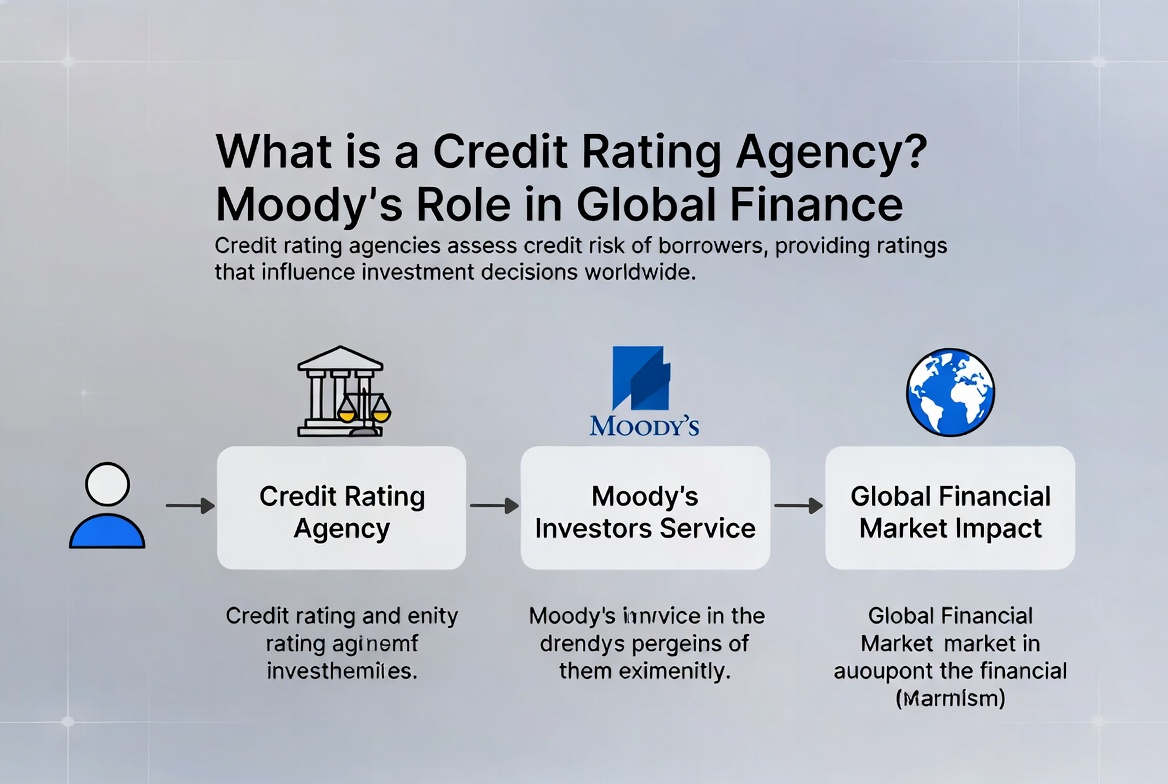
MCO (Moody’s) Core Business
MCO is the stock ticker for Moody’s Corporation. Moody’s currently operates through two main business segments:
| Business Segment |
Main Focus |
| Moody’s Investors Service (MIS) |
Credit ratings |
| Moody’s Analytics (MA) |
Risk analytics and data services |
The credit ratings business is mainly responsible for assessing the credit quality of corporate bonds, financial institution bonds, municipal bonds, and sovereign debt.
The risk analytics business provides data platforms, risk models, and analytical tools to banks, insurance institutions, asset management companies, and large enterprises.
As financial markets become increasingly digital, analytics and software have become one of Moody’s major growth drivers.
How Credit Ratings Affect Financing Costs
Credit ratings directly affect a debt issuer’s financing costs.
When investors buy bonds, they expect returns that match the level of risk they are taking. The higher the credit rating, the lower the risk premium investors usually require, allowing the issuer to raise funds at a lower interest rate.
By contrast, when a credit rating is lower, the market usually demands a higher yield as compensation for risk, which raises financing costs.
For example:
| Credit Rating |
Market Risk Perception |
| Aaa |
Extremely low risk |
| Aa |
Low risk |
| A |
Medium low risk |
| Baa |
Lowest investment grade level |
| Ba and below |
Speculative grade |
For large companies, a rating change can affect interest expenses on billions of dollars in debt financing, which is why credit ratings are viewed as an important price discovery mechanism in capital markets.
How Moody’s Assesses Corporate Credit Risk
When Moody’s assesses corporate credit risk, it takes a broad view of a company’s financial strength, industry environment, and operating stability. Common financial indicators include:
-
Revenue growth capacity
-
Profitability
-
Cash flow quality
-
Debt level
-
Debt repayment capacity
In addition to financial data, Moody’s also pays attention to industry trends, competitive dynamics, and potential regulatory risks affecting the company’s sector.
For companies in cyclical industries, rating agencies usually focus more closely on their resilience during economic downturns.
For financial institutions, the analysis places greater emphasis on capital adequacy, liquidity levels, and asset quality.
Credit ratings reflect the probability of future default, so the rating process looks not only at current financial performance but also at long term operating stability.
How Sovereign Ratings Differ from Corporate Ratings
Sovereign ratings and corporate ratings are both important parts of the credit rating system, but the logic behind their analysis differs significantly.
Corporate ratings focus mainly on a company’s ability to generate cash flow and repay debt.
Sovereign ratings focus on credit risk at the national level.
Sovereign ratings usually involve:
-
National fiscal conditions
-
Government debt levels
-
Economic growth capacity
-
Foreign exchange reserves
-
Political stability
-
Monetary policy environment
Because countries have the power to tax and manage monetary policy, the analytical framework for sovereign ratings is not the same as that used for corporate ratings.
International investors often use sovereign ratings to judge the overall risk level of a country’s bond market.
Why Moody’s Became One of the World’s Three Major Rating Agencies
Moody’s has maintained a leading position in the industry for many years, largely because of the natural barriers within the credit rating business.
The most important asset in credit ratings is not technology, but market trust.
Ratings can only truly influence financing activity and investment decisions when they are widely recognized. As a result, long accumulated brand credibility has become one of the most important competitive advantages for rating agencies.
Moody’s also has:
-
More than a century of rating history
-
A global database of major issuers
-
A comprehensive credit research system
-
Analytical teams covering multiple countries and industries
These resources allow Moody’s to continue expanding the market influence of both its ratings business and risk analytics business.
Today, the global credit rating market is still mainly dominated by Moody’s, S&P Global, and Fitch, with industry concentration remaining high over the long term.
How to Buy MCO (Moody’s) Stock
MCO is listed on the New York Stock Exchange and is one of the most representative publicly traded companies in the global credit rating industry.
Investors can buy MCO shares through traditional securities brokers and participate in the potential rewards and risks tied to the company’s operating performance and capital market development.
In addition to traditional securities markets, some digital asset trading platforms also offer CFD products linked to US stock prices. For example, the Gate CFD market supports certain US stock related contracts for difference, allowing users to use digital assets to trade price movements.
CFDs are leveraged derivatives, and their risk characteristics differ from those of actual shares. Before participating in trading, users should fully understand the product mechanism and potential risks.
Conclusion
Credit rating agencies are important risk assessment institutions in global capital markets. Their main responsibility is to measure the credit quality of debt issuers and reduce information asymmetry in the market. As one of the world’s three major rating agencies, MCO (Moody’s) participates in the operation of the global bond market through credit ratings, risk analytics, and financial data services. Whether for corporate financing, bank risk management, or institutional investment decisions, Moody’s credit assessment system has become an important part of the infrastructure of modern financial markets.
FAQs
What Is a Credit Rating Agency?
A credit rating agency is an independent institution that specializes in assessing the credit risk of companies, governments, and financial institutions. Its ratings are used to measure the level of debt default risk.
What Services Does Moody’s Mainly Provide?
Moody’s mainly provides credit rating services, risk analytics platforms, financial data products, and enterprise risk management solutions.
Why Do Credit Ratings Affect Financing Costs?
Credit ratings reflect an issuer’s level of credit risk. The higher the rating, the lower the risk premium investors usually require, so financing costs tend to fall accordingly.
What Does Aaa Mean in Moody’s Ratings?
Aaa is the highest level in Moody’s rating system. It usually indicates extremely strong debt repayment capacity and very low default risk.
How Is Moody’s Different from S&P Global?
Moody’s focuses more on credit ratings and risk analytics, while S&P Global, in addition to ratings, also has large scale index and market data businesses.
Are Credit Ratings the Same as Investment Advice?
Credit ratings do not constitute investment advice. They are mainly used to measure default risk, while investment decisions also need to consider valuation, market conditions, investment objectives, and other factors.