SYY (Sysco) Business Model Explained: How Sysco Makes Money Through Foodservice Distribution and Supply Chain Logistics

Last Updated 2026-05-26 03:35:32
Reading Time: 8m
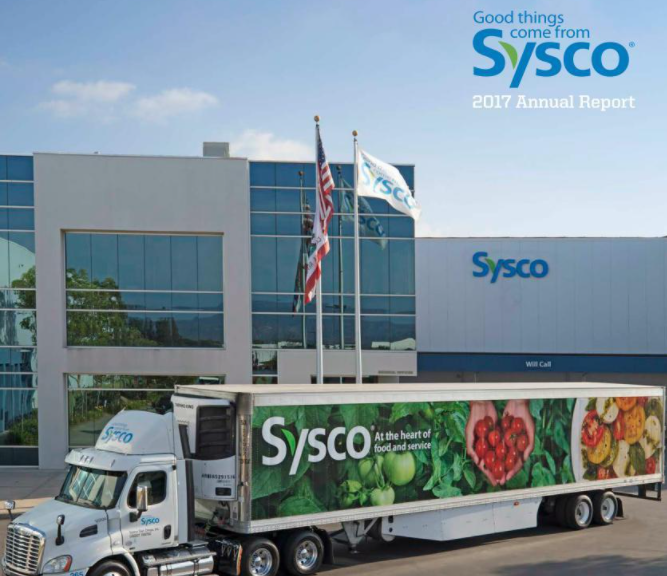
SYY is the stock ticker of Sysco Corporation, a U.S. foodservice distribution company. Its core business includes food procurement, warehouse management, cold chain logistics, and restaurant delivery services. As one of the world’s largest Foodservice distribution platforms, Sysco has long held an important position in the U.S. restaurant supply chain system.

In the modern restaurant industry, most restaurants, hotels, schools, and hospitals do not purchase all of their raw materials directly from farms or food processing plants. Instead, they rely on large food distribution platforms to handle centralized procurement and delivery. Food distribution companies therefore serve as important infrastructure connecting food producers with restaurant and institutional consumers.

From an industry structure perspective, Sysco represents more than a food delivery company. It reflects a “scaled restaurant supply chain platform” model. As cold chain logistics, digital procurement systems, and the trend toward restaurant chains continue to develop, the Foodservice industry has gradually become a key part of the modern consumption system.

Sysco Corporation

Source: sysco.com

The Profit Model of Food Distribution Companies

The core profit logic of food distribution companies is essentially a “low margin + high turnover” business model. Compared with technology companies that rely on high margin products, food distribution platforms place greater emphasis on logistics efficiency, purchasing scale, and supply chain management capability.

For Sysco, the company first purchases products from food producers at large scale, then sells them to restaurants, hotels, and institutional customers through its warehousing and delivery system. Platform profits usually come from the difference between purchase prices and selling prices, as well as delivery service capability.

At the same time, the Foodservice industry depends heavily on long-term customer relationships. Because restaurants need a stable supply of ingredients every day, food distribution platforms are often able to generate recurring orders.

From an industry perspective, the true competitive strength of food distribution platforms is not simply selling food, but building a highly efficient supply chain network.

Sysco’s Core Revenue Sources

Sysco’s revenue sources mainly include food sales, cold chain delivery, restaurant supply chain services, and private label products. Its customer base also covers restaurants, hotels, schools, hospitals, corporate cafeterias, and many other fields.

Revenue Source Core Logic
Food sales Large-scale procurement and delivery
Cold chain logistics Temperature-controlled transportation services
Private labels Improving profit margins
Restaurant supply chain services Long-term customer partnerships
Warehousing and delivery High-turnover logistics system

Food delivery is the company’s most important revenue source. Restaurants usually need large quantities of fresh food, frozen products, and seasonings, and Sysco can provide unified supply through its scaled warehousing and logistics system.

In addition, private labels are another important source of profit. Many large food distribution platforms launch private label products to improve profit margins and customer stickiness.

From a business model perspective, Sysco’s core logic is not single product sales, but maintaining customer relationships through long-term supply chain services.

How Restaurant Supply Chains Work

The core logic of modern restaurant supply chains is to connect food producers with end restaurants through large distribution centers. Most food does not move directly from factories to restaurants. Instead, it first enters regional warehouse centers and is then distributed through delivery networks.

This system can improve overall delivery efficiency. Large distribution platforms are able to integrate different food categories and deliver them to restaurants in a single shipment.

At the same time, the restaurant industry has very high requirements for delivery speed. Many restaurants have limited storage space and therefore need frequent replenishment, which means food distribution platforms must have stable logistics capabilities.

From an industry structure perspective, the U.S. restaurant supply chain is essentially a highly scaled, standardized, and data driven operating system.

The Importance of Cold Chain Logistics

Cold chain logistics is one of the most important pieces of infrastructure in the Foodservice industry. Because many foods are fresh, frozen, or short shelf life products, temperature control during transportation and storage directly affects food quality.

For Sysco, cold chain capability determines not only delivery efficiency, but also food safety and customer stability. If there is a problem with the cold chain system, restaurant operations themselves may also be affected.

At the same time, cold chain logistics usually costs more than ordinary logistics. Companies need to maintain refrigerated warehouses, freezer trucks, and temperature control systems, which means the industry has very high requirements for operating efficiency.

From an industry perspective, cold chain logistics capability has become one of the key competitive barriers for large food distribution platforms.

The Logic of Restaurant Procurement Systems

The modern restaurant industry increasingly relies on centralized procurement systems because restaurant operations are becoming more complex. For large restaurant chains, unified procurement helps maintain stable quality and cost control.

For example, a national restaurant chain usually needs to make sure stores in different cities use the same raw ingredients, so it depends more heavily on large Foodservice platforms for unified supply.

At the same time, centralized procurement can also reduce the difficulty of inventory management. Restaurants do not need to communicate separately with dozens of suppliers, but can manage orders through a single platform.

From a business structure perspective, restaurant procurement systems are essentially built around “scaled operating efficiency.”

Why Food Distribution Emphasizes Scale

Scale is one of the most important competitive advantages in the food distribution industry. Because food distribution is a low margin industry, platforms must improve overall efficiency through larger purchasing volume and higher delivery density.

For Sysco, its nationwide warehousing and delivery network helps reduce unit transportation costs while improving purchasing bargaining power.

At the same time, scale can also improve customer stability. Large platforms can usually offer a more complete SKU, or stock keeping unit, system and more stable supply capability.

For this reason, the Foodservice industry often has clear “economies of scale.” The larger the platform, the stronger its logistics efficiency and purchasing advantages usually become.

Warehousing and Delivery Cost Structure

Warehousing and delivery are among the most important cost components in the Foodservice industry. Because food categories are diverse and many products require cold chain management, operating complexity is much higher than in ordinary retail logistics.

For example, food distribution platforms need to:

  • Build regional warehouse centers

  • Maintain refrigerated and frozen facilities

  • Manage transportation fleets

  • Control inventory loss

  • Maintain delivery timeliness

At the same time, changes in oil prices, labor costs, and warehouse rents can directly affect industry profit margins.

From an industry structure perspective, the Foodservice industry is a typical sector with “high operating costs + high supply chain efficiency requirements.”

The Profit Logic of the Foodservice Industry

Although the Foodservice industry is large, its overall profit margins are usually not high. The industry is highly competitive, while logistics, warehousing, and food procurement costs remain under long-term pressure.

Therefore, the truly important capabilities for large food distribution platforms are improving operating efficiency and maintaining customer stability. Platforms need to rely on long-term contracts, stable orders, and scaled logistics to sustain profits.

At the same time, digital systems are changing how the industry operates. More companies are beginning to use AI and data analysis to optimize inventory, delivery routes, and demand forecasting.

Looking at the long-term trend, the Foodservice industry is likely to continue developing toward “automated logistics + digital supply chains + AI procurement management,” and large food distribution platforms represented by Sysco will continue to play an important infrastructure role in the U.S. restaurant system.

Conclusion

SYY’s (Sysco) business model is essentially a combination of “food procurement + warehousing logistics + restaurant supply chain services.” Compared with ordinary retail companies, Sysco places greater emphasis on scaled delivery capability and long-term restaurant customer relationships.

At the same time, the development of the U.S. Foodservice industry also reflects the modern restaurant market’s growing reliance on professional supply chain systems. As cold chain logistics, automated warehousing, and digital procurement continue to develop, the food distribution industry is likely to keep evolving toward higher efficiency and stronger data capabilities.

FAQs

What Kind of Company Is SYY (Sysco)?

SYY is the stock ticker of Sysco Corporation, a U.S. foodservice distribution company.

How Does Sysco Make Money?

It mainly generates revenue through food sales, warehousing and delivery, and restaurant supply chain services.

What Is the Foodservice Industry?

Foodservice refers to the industry system that provides food and catering services to restaurants, hotels, schools, and institutions.

Why Is Cold Chain Logistics Important?

Because many foods are fresh or frozen products and require stable temperature controlled transportation and storage.

Are Profit Margins High in the Foodservice Industry?

Overall profit margins are usually not high, so the industry places strong emphasis on scale and operating efficiency.

What Is the Difference Between Sysco and Costco?

Sysco mainly serves restaurant businesses, while Costco is more focused on consumer retail and membership-based wholesale.

Author: Juniper
Translator: Jared
Disclaimer
* The information is not intended to be and does not constitute financial advice or any other recommendation of any sort offered or endorsed by Gate.
* This article may not be reproduced, transmitted or copied without referencing Gate. Contravention is an infringement of Copyright Act and may be subject to legal action.

Related Articles

How Does PAXG Work? In-Depth Overview of the Physical Gold Tokenization Mechanism
Beginner

How Does PAXG Work? In-Depth Overview of the Physical Gold Tokenization Mechanism

PAXG (Pax Gold) is a tokenized asset backed by physical gold, issued by the fintech company Paxos and traded on the Ethereum blockchain as an ERC-20 token. The core concept is to tokenize physical gold on-chain, with each PAXG token representing ownership of a certain amount of gold. This structure enables investors to hold and trade gold in the form of a digital asset.
2026-03-24 19:12:51
How is the price of PAXG determined? Pegging mechanism, trading depth, and influencing factors
Beginner

How is the price of PAXG determined? Pegging mechanism, trading depth, and influencing factors

PAXG (Pax Gold) is a tokenized asset backed by physical gold reserves, launched by fintech firm Paxos and issued as an ERC-20 token on the Ethereum blockchain. The core concept is to digitally represent real-world gold assets, allowing investors to hold and trade gold via the blockchain network. Because each PAXG token corresponds to a specific quantity of physical gold, its price is theoretically expected to closely track the global gold market.
2026-03-24 19:11:40
Reflections on Ethereum Governance Following the 3074 Saga
Intermediate

Reflections on Ethereum Governance Following the 3074 Saga

The Ethereum EIP-3074/EIP-7702 incident reveals the complexity of its governance structure: in addition to the formal governance processes, the informal roadmaps proposed by researchers also have significant influence.
2026-04-07 01:56:21
Gate Research: 2024 Cryptocurrency Market  Review and 2025 Trend Forecast
Advanced

Gate Research: 2024 Cryptocurrency Market Review and 2025 Trend Forecast

This report provides a comprehensive analysis of the past year's market performance and future development trends from four key perspectives: market overview, popular ecosystems, trending sectors, and future trend predictions. In 2024, the total cryptocurrency market capitalization reached an all-time high, with Bitcoin surpassing $100,000 for the first time. On-chain Real World Assets (RWA) and the artificial intelligence sector experienced rapid growth, becoming major drivers of market expansion. Additionally, the global regulatory landscape has gradually become clearer, laying a solid foundation for market development in 2025.
2026-03-24 11:56:16
Gate Research: BTC Breaks $100K Milestone, November Crypto Trading Volume Exceeds $10 Trillion For First Time
Advanced

Gate Research: BTC Breaks $100K Milestone, November Crypto Trading Volume Exceeds $10 Trillion For First Time

Gate Research Weekly Report: Bitcoin saw an upward trend this week, rising 8.39% to $100,550, breaking through $100,000 to reach a new all-time high. Support levels should be monitored for potential pullbacks. Over the past 7 days, ETH price increased by 6.16% to $3,852.58, currently in an upward channel with key breakthrough levels to watch. Grayscale has applied to convert its Solana Trust into a spot ETF. Bitcoin's new ATH coincided with surging Coinbase premiums, indicating strong buying power from U.S. market participants. Multiple projects secured funding this week across various sectors including infrastructure, totaling $103 million.
2026-04-05 05:58:38
Altseason 2025: Narrative Rotation and Capital Restructuring in an Atypical Bull Market
Intermediate

Altseason 2025: Narrative Rotation and Capital Restructuring in an Atypical Bull Market

This article offers a deep dive into the 2025 altcoin season. It examines a fundamental shift from traditional BTC dominance to a narrative-driven dynamic. It analyzes evolving capital flows, rapid sector rotations, and the growing impact of political narratives – hallmarks of what’s now called “Altcoin Season 2.0.” Drawing on the latest data and research, the piece reveals how stablecoins have overtaken BTC as the core liquidity layer, and how fragmented, fast-moving narratives are reshaping trading strategies. It also offers actionable frameworks for risk management and opportunity identification in this atypical bull cycle.
2026-04-01 09:50:42