Intensifying Volatility in Global Stock Markets: Core Market Drivers
Recently, major global stock markets have shown heightened volatility. Multiple factors—including geopolitical conflicts, surging energy prices, inflation expectations, and policy uncertainty—have combined to trigger significant corrections in US and European markets, with key indices experiencing short-term swings. European equities remain under pressure from energy price shocks, while Asian markets have diverged, with some regions weighed down by slowing external demand and export pressures. This volatility affects not only traditional securities investors but also drives more traders to seek flexible price exposure tools.
Against this backdrop, Gate Stock Tokens have emerged as a new trading instrument drawing increasing attention. They enable investors to participate in global stock price movements within a digital assets platform, without the need for a traditional securities account or being restricted by local trading hours.
Fundamental Principles and Positioning of the Gate Stock Token Zone
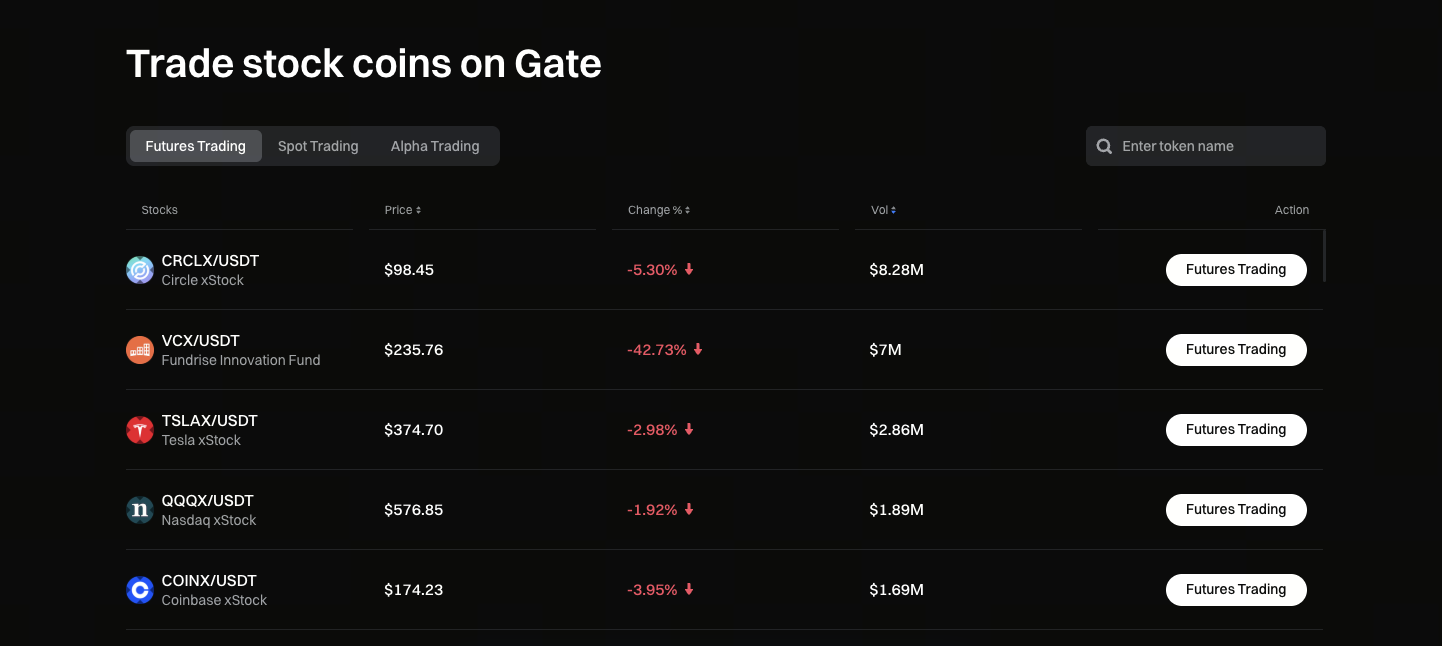 Image source: Gate Stock Token Zone
Gate Stock Tokens are digital assets that map traditional stock price movements into the crypto ecosystem. Stock token prices typically track the market performance of their underlying stocks on major global exchanges. However, they do not represent actual equity ownership and do not confer shareholder rights such as dividends or voting.
The Gate Stock Token Zone is positioned as a price participation tool, ideal for traders seeking to capture returns from price volatility rather than serve as a substitute for long-term equity investment. This positioning is especially relevant during periods of heightened market volatility, as it does not rely on traditional securities infrastructure yet provides opportunities to engage with price movements.
How Stock Tokens Reflect Stock Market Dynamics
Stock token prices are closely linked to traditional markets but may show short-term price deviations due to:
- Global Stock Market Linkage: When US or European equities experience significant swings, stock token prices quickly reflect those movements.
- Market Supply and Demand Changes: Internal supply and demand within the crypto market can also cause short-term price deviations in tokens.
- Crypto Market Sentiment and Liquidity: Unlike traditional markets, sentiment shifts and liquidity changes are more frequent in crypto, introducing additional volatility to prices.
As a result, Gate Stock Tokens can amplify or anticipate major global stock market price trends, providing users with more trading signals during turbulent periods.
Core Advantages of the Gate Stock Token Zone
24/7 Trading
While traditional stock markets are limited by trading hours, Gate Stock Tokens support 24/7 trading, allowing investors to respond flexibly to market movements across different global time zones.
No Need for a Traditional Securities Account
Investors can participate without opening complex securities accounts or going through broker intermediaries. This significantly lowers the entry barrier, making it easier for individual investors to access global stock price movements.
Multi-Market Access and Low Entry Threshold
Stock tokens cover a wide range of underlying stocks, including US, European, and major Asian indices. Users can manage assets and build cross-market portfolios on the Gate platform.
This low-barrier, cross-market participation model is especially attractive during periods of global market volatility.
How to Use Gate Stock Tokens for Strategic Positioning in Volatile Markets
When global market volatility intensifies, sound trading strategies are critical:
1. Monitor Key Market Indicators and Event Drivers
Recent volatility drivers include central bank policy decisions, inflation data, and energy supply-demand shifts. When tracking stock token prices, investors can consider these macro indicators to gauge market direction.
For example, when oil prices surge, energy-related stock tokens often attract capital flows. When inflation rises and expectations for higher interest rates intensify, some growth stock tokens may come under pressure.
2. Set Dynamic Stop-Loss and Take-Profit Strategies
Price swings can widen in volatile markets. By leveraging the features of Gate Stock Tokens and setting appropriate stop-loss and take-profit strategies for each trade, investors can better manage risk and lock in returns.
3. Diversify Across Sectors and Underlyings
Market turbulence often leads to sector rotation. Investors can mitigate single-asset risk and enhance portfolio resilience by diversifying holdings across multiple sectors or regions with different stock tokens.
4. Monitor Market Sentiment and Liquidity in Real Time
Shifts in crypto market sentiment also impact stock token prices. Investors should closely monitor sentiment indicators—such as volume and position changes—to adjust trading strategies promptly.
Key Differences from Traditional Stock Investing
| Item |
Traditional Stocks |
Gate Stock Tokens |
| Equity Rights |
Yes (e.g., dividends, voting) |
No |
| Trading Hours |
Limited |
24/7 |
| Entry Threshold |
High |
Low, no securities account required |
| Market Structure |
Exchange and intermediary influenced |
Decentralized or direct on crypto platforms |
| Liquidity Source |
Exchange market |
Multi-platform liquidity, potentially more fragmented |
Risk Reminder: Factors to Watch in Volatile Markets
While Gate Stock Tokens offer flexible trading opportunities, they also carry risks:
- Market Volatility Risk: Prices may be influenced by volatility in both traditional and crypto markets.
- Liquidity Risk: Some stock tokens may have low liquidity, leading to slippage during sharp market moves.
- Regulatory Policy Risk: Regulatory approaches to tokenized assets vary by country, which may introduce policy risks.
- Psychological Risk: Emotional trading in high-volatility markets can increase investment losses.
Therefore, investors should assess their risk tolerance, manage positions prudently, and implement sound risk management when trading.
Outlook: The Integration Trend of Stock Tokens and Traditional Finance
As blockchain technology and digital asset markets mature, stock tokens are positioned to serve as a bridge between traditional finance and the crypto ecosystem. As more underlying assets become tokenized, stock tokens will play an increasingly important role in asset allocation and global market integration.
Summary
Amid intensifying global stock market volatility, the Gate Stock Token Zone not only offers investors a flexible way to participate in global price movements but also provides opportunities to capture market swings through 24/7 trading, low entry barriers, and cross-market portfolio strategies.
However, traders should fully understand the nature and risks of stock tokens, adopt appropriate strategies, and practice sound risk management to navigate volatile markets with resilience.







