The business model of LS Electric (010120) is not about selling individual power distribution equipment, but rather combining power equipment, automation systems, and project delivery. The company manufactures SWGR, transformers, GIS, PLCs, servos, and inverters to deliver total solutions for power grids, industrial customers, data centers, and overseas projects.
Investors often mistakenly label LS Electric as just a "power distribution stock" or an "AI data center play." Both descriptions capture only part of the reality. While its power equipment is vital, the automation segment, metals business, project orders, and overseas deliveries also significantly influence results.
A clearer framework is to first identify the products LS Electric offers, then how its capabilities serve power grids, factories, and data centers, and finally examine order structure and delivery cycles. A comparison of Korean power equipment peers highlights the structural differences between LS Electric, heavy electrical equipment companies, and automation-focused firms.
Where Does LS Electric's Power Equipment Business Come From?
LS Electric's power segment core products include SWGR (switchgear), medium/low-voltage transformers, GIS, HVDC, protection and metering devices, ESS, and microgrid solutions. SWGR and transformers are critical components of distribution systems, handling power distribution, protection, conversion, and connection.
The power equipment business derives its value from strong project orientation. Power grid upgrades, industrial plant construction, data center power systems, and overseas infrastructure projects can all generate large orders. Order size, delivery progress, certification requirements, and customer type collectively drive the revenue recognition pace of the power segment.
SWGR manages switching, protection, and control in distribution systems, while transformers handle voltage conversion and power transmission interfaces. Both are high-demand products in data centers, substations, industrial distribution, and overseas projects.
LS Electric holds a strong competitive position in the Korean SWGR market, with high-voltage transformers and GIS also forming key parts of the power value chain. SWGR and transformer order volumes and delivery schedules are core metrics for assessing the revenue visibility of LS Electric's power segment.
| Product Type |
Main Function |
Typical Scenarios |
| SWGR |
Distribution, protection, control |
Data centers, industrial plants, power grids |
| Transformer |
Voltage conversion, power connection |
Substations, distribution systems |
| GIS |
High-voltage gas-insulated switchgear |
Transmission, large distribution projects |
| ESS |
Energy storage access and management |
Microgrids, renewable energy integration |
This table shows that LS Electric's power segment is not product-driven by a single item but comprises multiple distribution and transmission devices. Different products carry distinct order cycles, certification barriers, and gross margins.
How Does LS Electric's Automation Segment Function?
LS Electric's automation segment supplies PLCs, servo systems, inverters, HMIs, motion controllers, and smart factory solutions, serving manufacturing, rail transit, and industrial equipment control. The automation business creates synergies with power equipment: factory and data center projects simultaneously need power distribution systems, process control, equipment drives, and monitoring.
The automation segment is more sensitive to industrial cycles. Manufacturing capital spending, equipment upgrades, export orders, and smart factory modernization drive demand for PLCs, servos, and inverters. The power segment leans toward infrastructure projects, while automation follows industrial cycles—their cyclical drivers are different.
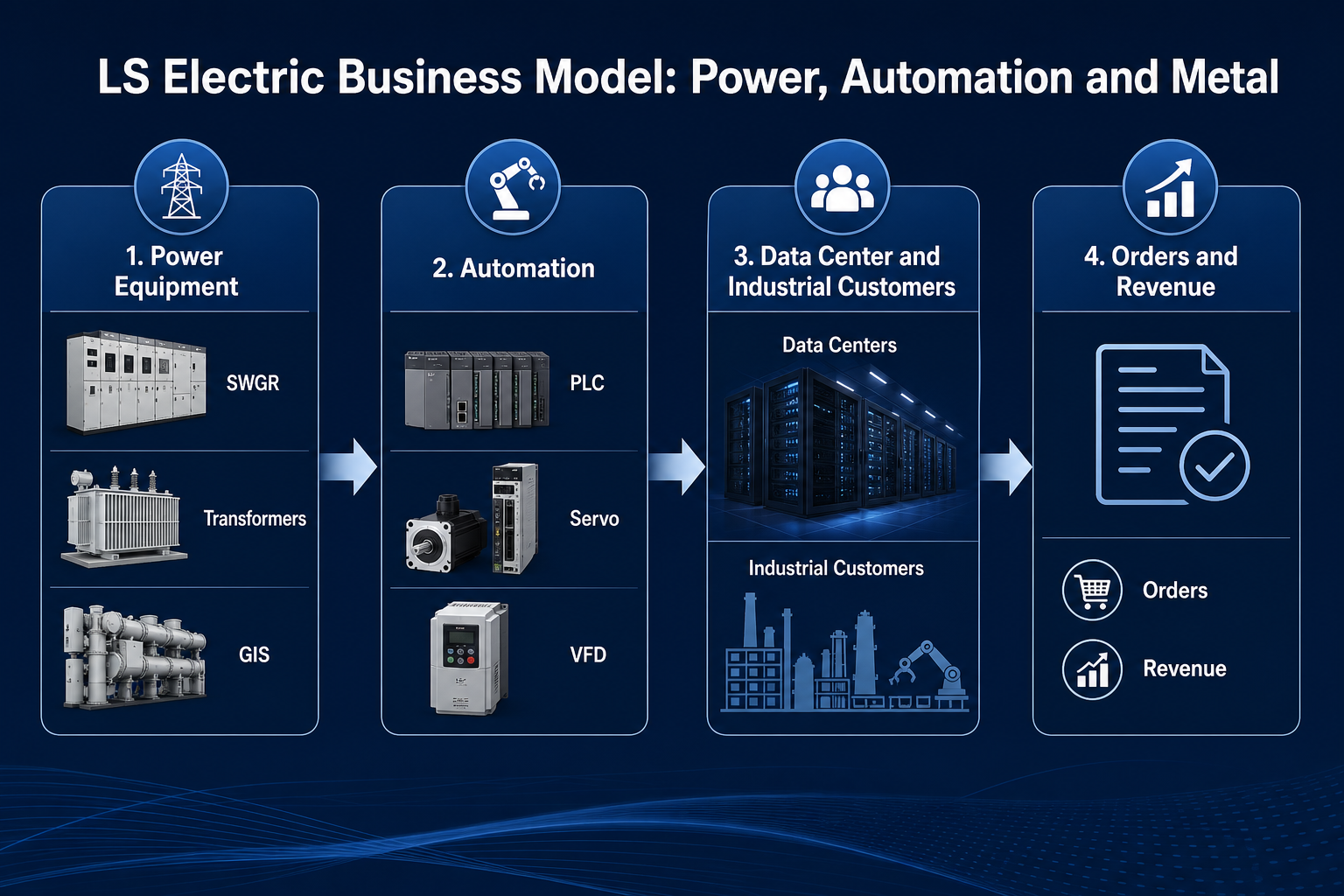 Figure 1. LS Electric business model flow: power equipment and automation systems connect industrial customers and data center power demand through project orders.
How Do AI Data Center Orders Affect LS Electric's Revenue Structure?
AI data centers demand higher power distribution density, reliability, and scalability, boosting demand for SWGR, transformers, PDUs, distribution cabinets, and DC power solutions. LS Electric is rolling out tailored power solutions for data centers in North America and beyond, linking with equipment orders from global tech giants.
Data center orders follow a project-based model. Contract signing, certification, delivery, acceptance, and subsequent expansions all influence revenue recognition. AI demand has focused attention on power distribution equipment, but project delivery timeliness, customer concentration, and overseas certification progress require separate assessment.
Data center orders can raise the share of SWGR and transformers in the power segment and also drive demand for PDUs, distribution cabinets, and monitoring systems. If projects concentrate on a few large clients, revenue visibility improves, but customer concentration and delivery milestones also increase. Continuous tracking of backlog and acceptance progress in the LS Electric risk indicators is essential.
How Do LS Electric's Overseas Projects Affect the Business Model?
LS Electric is advancing power and automation projects in North America, Europe, the Middle East, and Southeast Asia. Overseas revenue share is a key variable for gauging business model internationalization. Overseas projects typically involve longer certification cycles, different voltage standards, local compliance requirements, and more complex logistics and installation.
Overseas expansion opens incremental markets, particularly tailored data center power solutions and UL-certified distribution systems. However, it also introduces risks from exchange rates, tariffs, local competition, and project execution. When analyzing LS Electric, separate "overseas order signing" from "overseas revenue recognition."
What Other Synergies Does LS Electric Have?
Beyond power and automation, LS Electric supplies materials like copper and stainless steel pipes through its Metal segment, and complements its core through LS Group subsidiaries in e-Mobility, building energy efficiency, and servo-related businesses. EV relays, BDU solutions, building DR services, and servo motion control can all create synergies with the main power and automation units.
These synergies expand customer touchpoints and solution depth, but also add business complexity. When analyzing LS Electric, prioritize the power and automation segments, then examine how the Metal segment and subsidiaries affect consolidated results.
What Are the Limitations and Risks of LS Electric's Business Model?
LS Electric's business model faces limitations: long project cycles, sensitivity to raw material costs, complex overseas certifications, and automation cycle volatility. Power equipment orders depend on infrastructure investment, data center construction, and overseas project progress; automation orders depend on manufacturing capital spending and equipment replacement cycles.
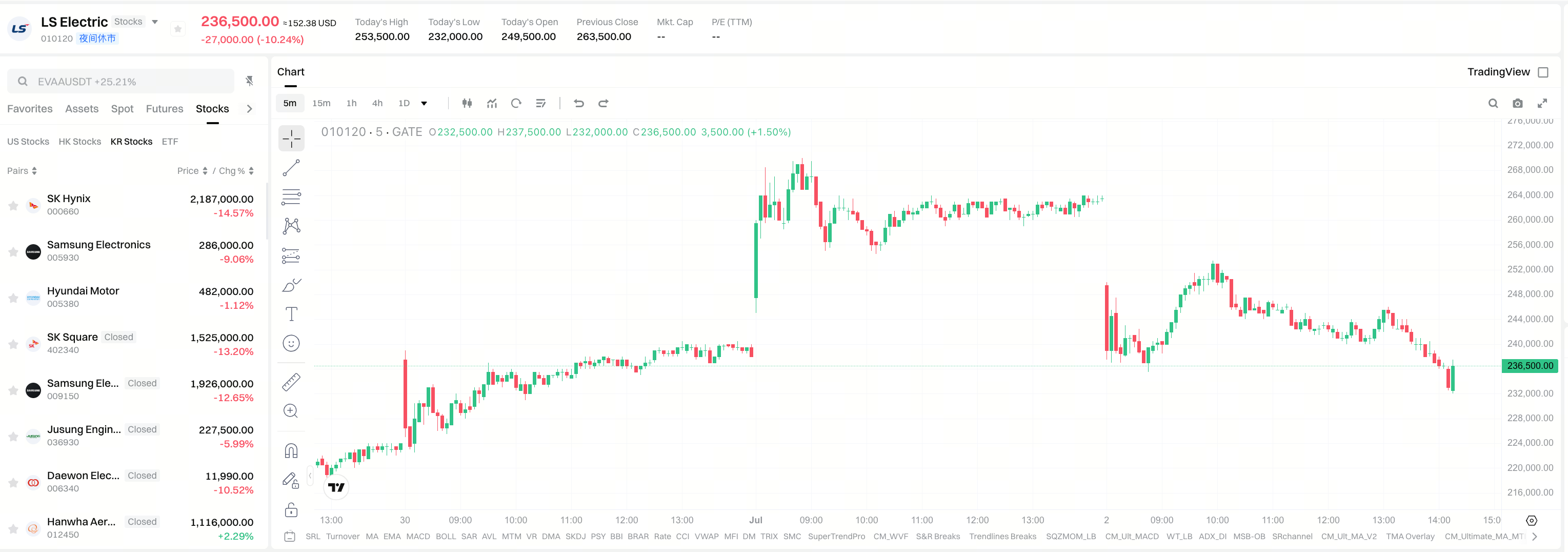
If you wish to trade via Gate Stocks, first review the LS Electric trading process for code search and order rules—treat this separately from fundamental analysis.
Another risk is narrative oversimplification. Data center and AI power demand have indeed raised the profile of distribution equipment, but the company's performance still hinges on order delivery, project certification, customer structure, and cost management. When analyzing LS Electric, separate macro demand, project execution, and the financial and trading checks in the LS Electric risk indicators into distinct layers.
Summary
LS Electric's business model can be summarized as: power equipment and automation systems at its core, serving power grids, industrial customers, and data center projects with SWGR, transformers, PLCs, servos, and other products. AI data centers are a major demand driver, but not the only variable. A more complete framework should cover power orders, automation cycles, overseas deliveries, material costs, and project execution risks.
FAQ
How does LS Electric primarily generate revenue?
LS Electric earns revenue mainly through power equipment, automation systems, project orders, and materials. SWGR, transformers, and automation products are core revenue sources, but order structure and delivery timing also determine when revenue is recognized. The power segment focuses on infrastructure projects, while the automation segment follows industrial cycles—their revenue rhythms may not align.
Why is SWGR important to LS Electric?
SWGR (switchgear) is a core component of power distribution systems, handling distribution, protection, and control, widely used in power grids, industrial plants, and data centers. LS Electric has strong competitiveness in the Korean SWGR market, making SWGR order volume and delivery progress a key indicator for power segment performance.
What is the relationship between the automation segment and the power segment?
LS Electric's automation segment provides PLCs, servos, and inverters, while the power segment offers SWGR and transformers. They often work in synergy: factory and data center projects require both power distribution and process control, drive, and monitoring. LS Electric thus emphasizes total solution integration.
Will AI data centers directly reshape LS Electric's business model?
AI data centers increase demand for high-density power distribution solutions, but LS Electric's business model still relies on project delivery, certifications, order structure, and market competition. Data center orders are an important variable but cannot replace independent tracking of backlog, gross margin, and overseas certification progress.
What should be prioritized when analyzing LS Electric's business model?
Prioritize SWGR and transformer orders, automation product demand, data center project delivery, overseas expansion, and raw material cost changes. Order backlog, project acceptance progress, and gross margin are the three core indicators for evaluating business model execution quality.