LG Electronics, listed on Korea’s KRX exchange and covering home appliances, TVs, and automotive solutions, requires risk analysis that goes beyond simply labeling it as “OLED TVs” or “smart home appliances.” Critical risk factors for LG Electronics span the income structures of its three main business segments, dual consumer and automotive cycles, KRW exchange rates, intra-group related transactions, and Gate Stocks’ order and settlement rules.
When evaluating LG Electronics stock, focusing only on segment themes or quarterly revenue can lead to missing segment gross margin details, automotive project award timing, and platform trading standards—making it difficult to distinguish between fundamental risks and order execution risks.
A comprehensive risk framework should include financial and operational metrics, industry cycles, exchange rates and trading rules, group structure, and competitive dynamics. The LG Electronics business model details the revenue structure for H&A, HE, and VS segments, while LG Electronics vs Samsung Electronics helps differentiate the cycle exposures between consumer electronics and semiconductor leaders.
Which financial and operational metrics should you monitor?
LG Electronics’ financial and operational metrics are analyzed by segment. H&A focuses on shipment volume and raw material costs; HE tracks OLED and QNED TV sales and display competition; VS monitors OEM project awards and vehicle platform cycles. At the company level, revenue growth, gross margin, operating margin, operating cash flow, and capital expenditures are standard checkpoints.
| Metric Level |
Key Observation Points |
Related Segment |
| Revenue Structure |
Segment revenue share and year-over-year growth |
H&A / HE / VS |
| Profitability |
Gross margin, operating margin, expense ratio |
All segments |
| Operating Efficiency |
Inventory turnover, accounts receivable, capital expenditures |
All segments |
| Segment Operations |
Appliance shipments, TV sales, automotive orders |
By segment |
| Cash Quality |
Operating cash flow, free cash flow, debt level |
Company-wide |
These metrics reflect core financial and operational health. Revenue structure indicates cycle strength, gross margin shows cost pass-through capability, and VS project awards don’t always translate into short-term margin improvement. For segment checks: H&A focuses on promotions and market share, HE on technology roadmap and panel costs, VS on OEM projects and model upgrades—segment details cannot be replaced by consolidated revenue.
What are the cyclical risks for appliances and TVs?
LG Electronics is exposed to both consumer and automotive industry cycles. Appliance and TV demand are linked to household income, real estate activity, replacement cycles, and promotional cadence; automotive component demand is tied to vehicle production, new model launches, smart cockpit penetration, and OEM capital expenditures. These cycles may move together or diverge, such as weakening appliances and strengthening automotive.
| Cycle Type |
Main Impact Segment |
Typical Risk Source |
| Consumer Cycle |
H&A, HE |
Demand slowdown, deeper promotions, inventory adjustments |
| Display Competition |
HE |
OLED vs QLED rivalry, panel pricing |
| Automotive Cycle |
VS |
Production swings, project award delays, platform changes |
| Cost Cycle |
All segments |
Raw materials, logistics, panel and chip costs |
When mature appliance markets slow, competition may shift to price, pressuring gross margins. The TV segment is also affected by display technology upgrades; if OLED’s advantage is eroded by competitors, HE’s pricing power may be limited. VS relies heavily on OEM project awards; disappointing sales or project delays heighten volatility—consumer and automotive cycles must be analyzed separately.
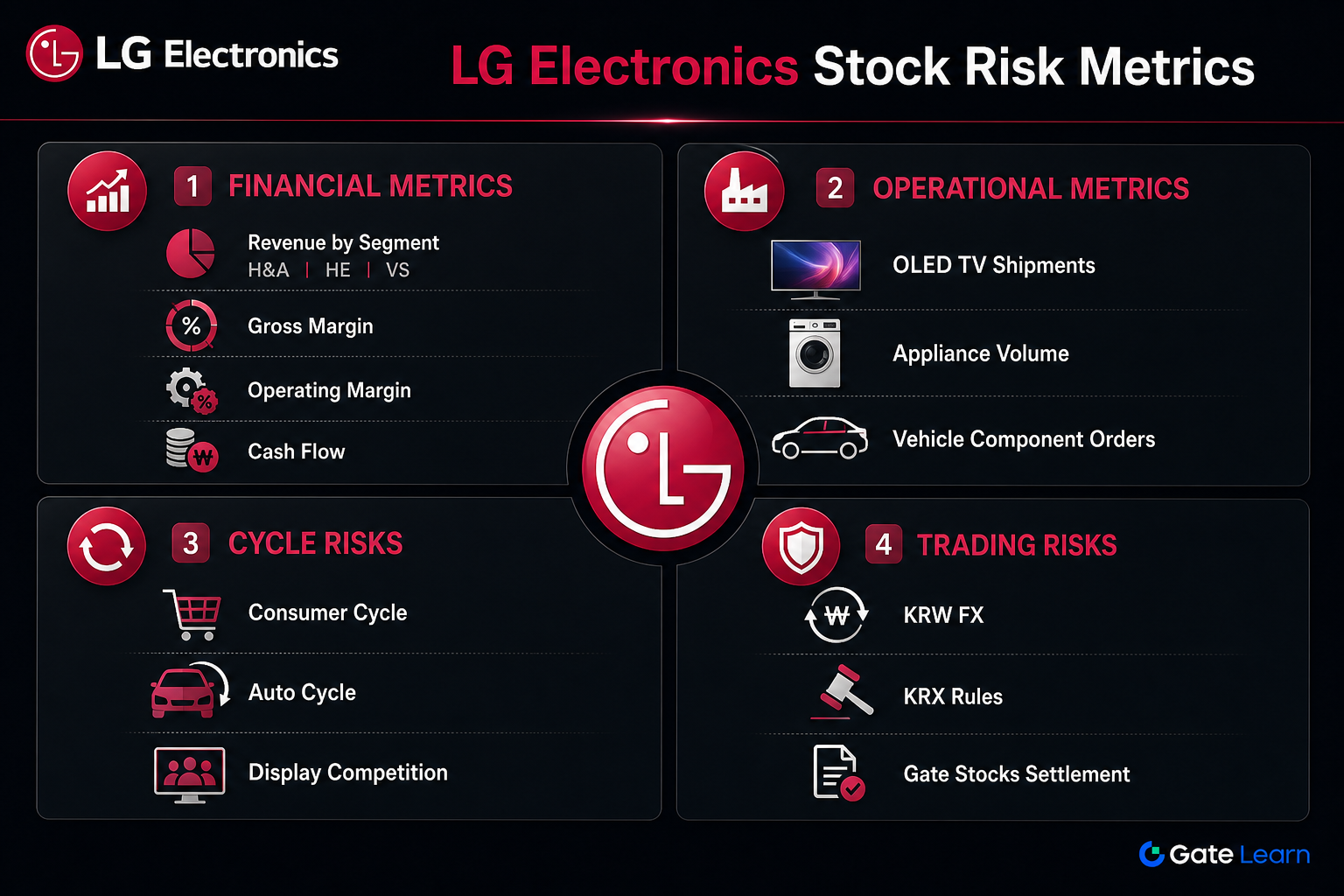 Figure 1. LG Electronics stock risk indicator framework: financial and operational metrics, cycle risks, and trading risks form three core observation layers.
LG Electronics’ consolidated reports are denominated in KRW. When trading via Gate Stocks using USDT, account performance is affected by KRW stock price, exchange rate changes, platform fees, and settlement standards; conversion displays may differ from local investor experience.
Korean stocks must comply with KRX trading hours, price fluctuation limits, and minimum trading units. Gate Stocks’ quotes, fee schedules, and position fields should be reviewed individually; KRW quotes and USDT balance conversion logic may differ from local brokers. Order types, fee rules, off-hours orders, and corporate action handling are trading layer variables and cannot substitute for fundamental segment analysis.
LG Electronics, LG Display, and LG Chem are independent listed entities. The HE segment may purchase panels from LG Display, forming related transactions; panel prices and supply cadence affect HE costs. Finished products and panel manufacturing must be distinguished to avoid confusion in financial statements.
Appliances and TVs face competition from Samsung Electronics, Haier, Sony, etc.; automotive faces suppliers like Bosch and Continental. Samsung Electronics and LG Electronics overlap in TV and appliances, but semiconductors have a higher share for Samsung, resulting in different cycle exposures. Transparency in related transactions and competitor investments in QLED and Mini LED technologies can shift competitive positions within segments.
Liquidity and order execution risks
LG Electronics trades on KOSPI, generally with higher liquidity than small and mid-cap Korean stocks, but cross-border platforms may still face mismatched trading hours, widened spreads, or partial fills. During news releases or market volatility, limit and market order outcomes may diverge.
Order execution must also guard against code and company name selection errors. When searching, verify the full name LG Electronics Inc. to avoid confusion with LG Display and other group entities. The Gate stock page LG Electronics can confirm tradable assets. Buying LG Electronics with USDT explains account preparation, search, order placement, and fee checks; liquidity and order execution are trading layer risks—not necessarily linked to fundamental analysis.
LG Electronics risk checklist at a glance
LG Electronics risk indicators can be summarized into business, financial, group, and trading dimensions, enabling thorough checks before placing orders. The table below is not investment advice—only lists common check directions.
| Dimension |
Key Questions |
Main Information Source |
| Business Segment |
Are H&A, HE, VS revenue and growth differentiated? |
Segment disclosures, performance notes |
| Profitability |
Do gross margin, expense ratio, and cash flow match revenue? |
Consolidated reports, cash flow statements |
| Cycle Exposure |
What is the cycle position for appliances, TVs, automotive? |
Industry data, competitor updates |
| Group Structure |
How do panel purchases and related transactions affect HE? |
Related transaction disclosures |
| Competitive Landscape |
How are TV technology paths and appliance market share changing? |
Peer comparison, market research |
| Exchange Rate Impact |
How does KRW fluctuation affect conversion standards? |
Exchange rate data, platform display |
| Trade Execution |
Are code, hours, fees, liquidity confirmed? |
Gate Stocks page, order history |
These checkpoints cover the main areas. Business and financial dimensions assess operating quality, group and competitive dimensions identify structural constraints, and trading dimension confirms order conditions. Each dimension is independent and cannot substitute for the others.
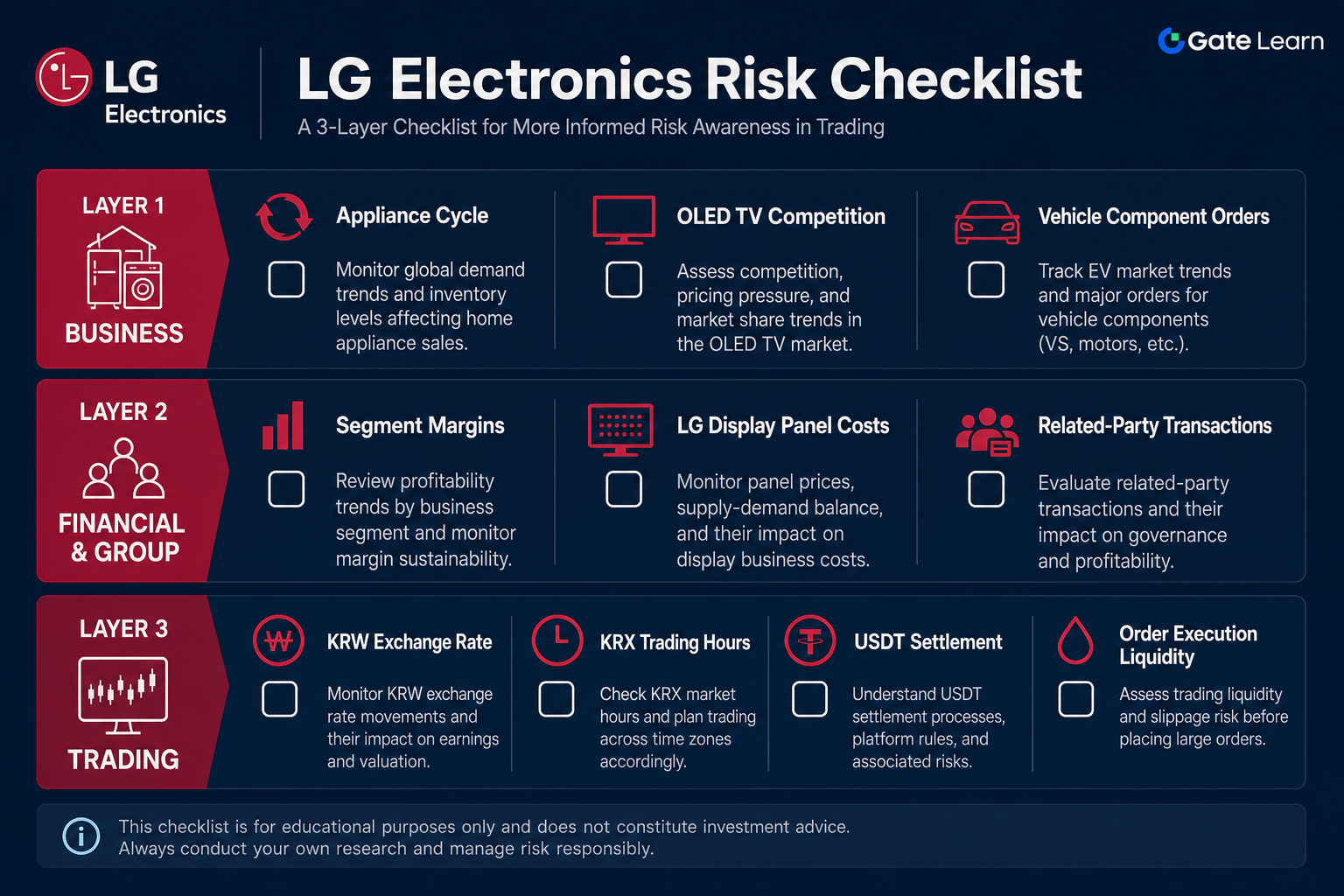 Figure 2. LG Electronics risk checklist three-layer structure: business cycle, financial and group factors, and trading execution rules should be checked separately.
Summary
LG Electronics risk indicators should be structured around the revenue and gross margin of its three main segments, dual cycle exposures, KRW exchange rates, group related transactions, and Gate Stocks execution rules. H&A, HE, and VS segment cycles may diverge; confirm the listed entity before trading and cross-check business, financial, and trading metrics.
FAQ
What are the most important metrics for analyzing LG Electronics?
Key metrics include revenue share and growth for the three segments, gross margin and operating cash flow, OLED TV sales and competitive landscape, automotive component project awards and progress, KRW exchange rate, and Gate Stocks trading fees and order rules. Combining segment-specific and company-wide financial metrics provides a more accurate view of LG Electronics’ risk exposure than relying solely on consolidated revenue.
Where do LG Electronics’ main risks come from?
LG Electronics’ primary risks include fluctuations in appliance and TV consumer cycles, display technology competition, automotive project awards and production changes, raw material and panel costs, group related transaction structure, KRW exchange rate, and differences in trading hours, liquidity, and settlement standards on cross-border platforms. Business and trading risks must be checked separately.
Does a weak appliance cycle necessarily drag down all of LG Electronics?
Not necessarily. LG Electronics’ three segments have distinct cycle drivers: H&A and HE are closely tied to consumer cycles, while VS is more aligned with automotive industry cycles. When appliances are weak, the VS segment may still benefit from new project awards or vehicle platform upgrades—segment-level analysis is essential rather than assuming uniform movement.
How do LG Electronics and LG Display differ in risk?
LG Electronics manufactures appliances, TVs, and automotive electronics, with the HE segment potentially sourcing panels from LG Display. LG Display focuses on panel manufacturing, with different revenue and profit drivers. Both are independent listed entities under the LG Group; stock codes and financial statements must be checked separately.
What must be confirmed before trading LG Electronics on Gate?
Before trading, confirm the full company name LG Electronics, Korean stock code, order type, fees, tradable hours, USDT balance, and post-trade position. Code and company name selection errors are common execution risks—distinguish LG Electronics from LG Display and other group listed entities.
How does exchange rate fluctuation affect LG Electronics’ account display?
LG Electronics’ stock price is denominated in KRW; for cross-border accounts displayed in USDT, KRW/USD exchange rate fluctuations will change the converted account P&L display. Exchange rate effects are trading layer variables and should be considered separately from KRW-denominated stock price movements.