The U.S. stock market has long been a central pillar of global capital markets. NASDAQ, the S&P 500, and U.S. technology companies not only influence traditional financial markets, but are also becoming increasingly connected with the digital asset market. Industry trends such as AI, semiconductors, cloud computing, and energy infrastructure have kept technology assets such as NVIDIA, Microsoft, Apple, and TSMC firmly in focus for global investors.
As the digital asset industry develops, more users are beginning to access the stock market through crypto platforms. Compared with traditional brokerages, which often rely on local banking systems and regional account structures, digital asset platforms usually support stablecoin settlement, unified accounts, and multi asset trading models. This makes it easier for global users to access stock CFDs, ETFs, indexes, and on-chain stock assets. At the same time, the development of RWA, or real world assets, and stock tokenization is further advancing the convergence of TradFi and Crypto Finance.
U.S. stock trading usually refers to market trading involving shares of U.S. listed companies, indexes, and related financial products. Its core markets include the New York Stock Exchange (NYSE) and NASDAQ. These markets have long been at the center of the global financial system and continue to influence global capital flows, technology sector valuations, and shifts in risk appetite.
In recent years, global asset trading has gradually evolved from regional markets toward an around the clock, multi asset, and cross market structure. Traditional brokerages are usually limited by account opening regions, banking systems, and trading hours, while digital asset platforms lower the barrier for global users to participate in stock markets through stablecoins and unified account models.
Stablecoins are gradually becoming an important medium connecting the digital asset market with global stock markets. Stablecoins such as USDT and USDC can be used for cross market settlement and can reduce the time and regional constraints often found in traditional bank transfers. At the same time, the development of RWA and asset tokenization is also pushing traditional financial assets such as stocks, ETFs, and commodities into the on-chain financial system.
What Are the Main Ways to Participate in the U.S. Stock Market Through Gate?
At present, Gate has launched a stock trading service, providing users with stock and ETF trading services through connections with regulated brokerages, rather than on-chain mapped assets or tokenized derivatives. Users can directly use USDT on the platform to trade assets such as stocks and ETFs from major U.S. securities markets.
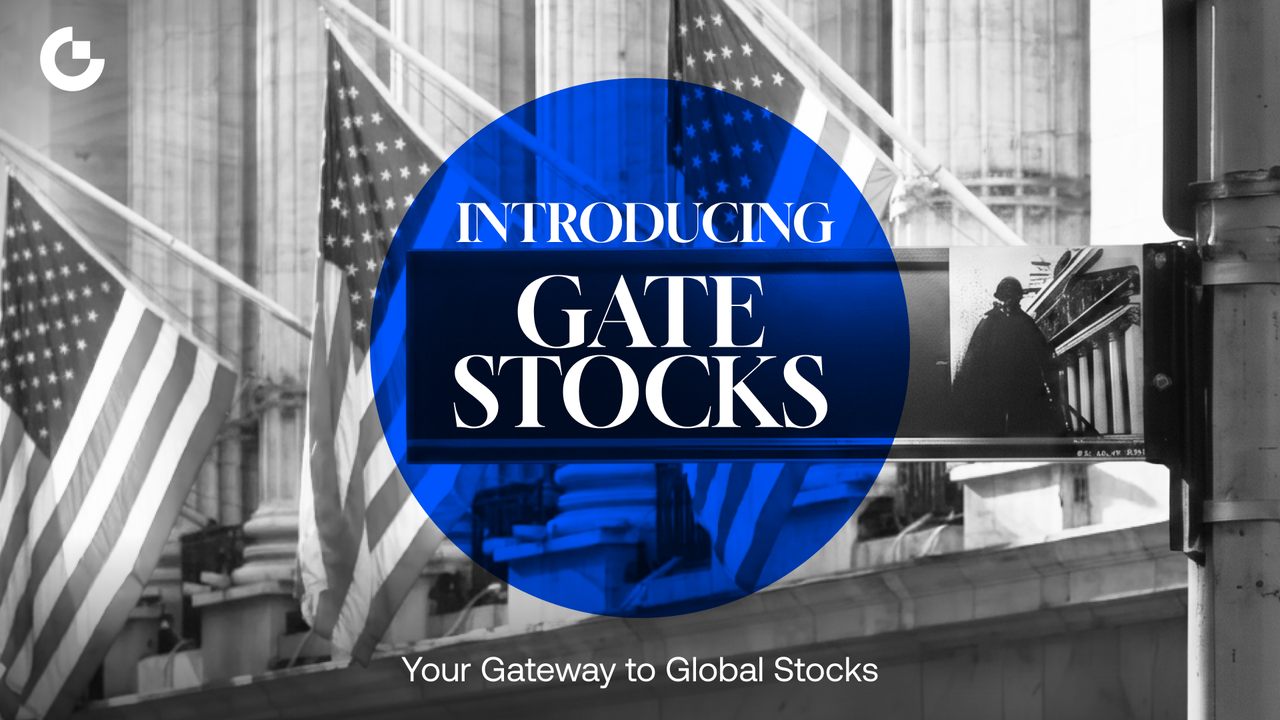
In terms of tradable asset coverage, most tokenized stock platforms usually support only a few hundred assets. By comparison, Gate currently supports more than 10,000 stocks and ETFs, covering assets and liquidity networks across major U.S. securities markets such as the NYSE, Nasdaq, NYSE Arca, NYSE American, and BATS. This gives users a broader and more comprehensive set of choices for global securities allocation. At present, Gate Stocks supports intraday trading and plans to gradually expand to 24/7 trading in the future, bringing global users a more flexible and efficient trading experience.
At the user experience level, Gate has seamlessly integrated stock trading into its existing app ecosystem. Users who have completed platform KYC verification and meet the access requirements of their region can enter the stock section through the TradFi tab in the Gate App to view market quotes, then participate in stock trading after transferring stablecoins through the trading page or asset page.
In addition to real stock trading services, Gate also provides a multi market trading structure covering stock indexes, ETFs, stock CFDs, and tokenized stock assets. These products differ in trading methods, risk characteristics, and the logic of their underlying asset mapping.
Stock CFDs
Stock CFDs, or contracts for difference, are financial derivatives based on price movements. Users do not directly hold the underlying stock. Instead, they settle the price difference based on changes in the asset’s price. U.S. stock CFDs usually support leveraged trading, so their returns and risk fluctuations are typically higher than those of the traditional stock market.
Compared with traditional stock accounts, CFDs place greater emphasis on short term market volatility and margin mechanisms, so users generally need to pay closer attention to risk control, position management, and changes in market liquidity.
ETFs and Index Assets
Index assets can help users gain exposure to broader market segments. For example, NAS100 represents the structure of U.S. technology stocks, while US500 is more focused on the overall performance of large U.S. listed companies. Outside the U.S. market, index assets such as GER40, HK50, and Nifty 50 correspond to major stock markets in Europe, Hong Kong, China, and India respectively.
ETFs are usually built around specific industries or investment themes. For example, semiconductor ETFs such as SOXX and SMH have long been viewed as important representative assets for the AI chip value chain. They are widely used to observe the business cycle of the global technology industry and changes in the semiconductor industry cycle.
Stock Tokenization and xStock
Stock tokenization is a structure that brings traditional stock assets into the digital asset market through on-chain mapping. Its core goal is to improve asset liquidity, global accessibility, and compatibility with on-chain finance.
xStock is one of the important directions in stock tokenization. These assets are usually mapped to real stock assets and combined with stablecoin settlement, on-chain clearing, and digital asset account systems, allowing users to access stock market related assets within the on-chain finance ecosystem.
Compared with traditional securities accounts, tokenized stock assets place greater emphasis on on-chain liquidity, cross market trading, and coordination between digital financial infrastructures. For that reason, they are also seen as an important part of RWA development.
What Common U.S. Stock Index and ETF Assets Are Available on Gate?
Index and ETF assets in global stock markets are usually used to reflect the overall performance of a specific industry, country, or market segment. For users who want to access global stock markets through digital asset platforms, technology stock indexes, semiconductor ETFs, and energy assets are usually among the most closely watched areas.
Technology Stock Indexes
NASDAQ related assets have long been seen as important representatives of global technology stocks. NAS100 leans more toward AI, chips, cloud computing, and internet technology companies, while US500 covers a broader range of large U.S. listed companies. As a result, the two differ clearly in technology stock weightings and sector structure.
Outside the U.S. market, indexes such as GER40, HK50, and Nifty 50 also represent major stock markets in Germany, Hong Kong, China, and India respectively, while reflecting the industrial structures and market cycles of different regions.
Semiconductor and AI ETFs
AI and the semiconductor value chain have become major themes in global stock markets. ETFs such as SOXX and SMH are often used to observe AI chip demand, semiconductor cycles, and changes in capital expenditure across the global technology industry.
Related value chain companies also include NVIDIA, AMD, TSMC, Intel, and KLA. These companies cover key areas such as GPUs, AI chips, wafer manufacturing, data centers, and semiconductor equipment, and together they form an important part of today’s AI infrastructure.
Gold, Energy, and Defensive Assets
Beyond technology stocks, commodities and energy related assets are also important parts of global asset allocation. Assets related to gold mining ETFs, WTI crude oil, and silver are usually viewed as important areas for observing macroeconomic cycles, inflation expectations, and global risk sentiment.
During periods of heightened market volatility or rising global economic uncertainty, some investors also use gold, energy, and defensive assets for risk hedging and diversified allocation.
What Is the Difference Between Stock CFDs, ETFs, and Tokenized Stocks?
Although stock CFDs, ETFs, and tokenized stock assets are all related to the stock market, their underlying logic and risk structures are clearly different.
Stock CFDs are derivative structures. Their core function is to settle price differences based on price movements, and they do not directly correspond to stock ownership. ETFs are fund structures that track the performance of an industry, index, or specific market theme through a basket of assets.
Tokenized stock assets place greater emphasis on on-chain mapping, digital asset clearing, and RWA structures. Their goal is to bring traditional financial assets into the on-chain financial system and improve global liquidity and cross market accessibility.
As a result, these three product types differ clearly in trading methods, asset ownership, risk structure, and regulatory framework.
What Risks Should Users Pay Attention to When Trading Global Stock Assets Through Gate?
Global stock market assets usually involve market volatility, leverage risk, and changes in macroeconomic cycles. Different products also have clearly different risk structures.
Stock CFDs usually involve leverage and margin mechanisms, so price movements can be amplified. During periods of high market volatility, leveraged trading may amplify both gains and losses.
Although ETFs and index assets have some diversification characteristics, they may still be affected by industry cycles, macroeconomic conditions, and shifts in market sentiment. For example, semiconductor ETFs are usually closely linked to the AI industry cycle, technology capital expenditure, and global economic expectations.
Tokenized stock assets may involve risks related to asset mapping, custody structures, on-chain liquidity, and compliance. Different projects may also vary in their underlying asset management methods and legal structures.
In addition, stocks, ETFs, CFDs, and on-chain stock assets may all be affected by interest rate cycles, the global economic environment, industry conditions, and changes in market liquidity. Before participating in these markets, users generally need to fully understand the trading logic and risk structure of different products.
Conclusion
Global stock markets are gradually evolving from traditional regional financial systems into multi asset, cross market, and digital structures. The development of stablecoins, RWA, stock tokenization, and multi asset trading platforms allows global users to access markets including technology stocks, ETFs, indexes, commodities, and on-chain assets through unified accounts.
NASDAQ, US500, semiconductor ETFs, AI chip companies, and energy assets are together forming an important global asset ecosystem in the digital finance era. At the same time, the convergence of TradFi and Crypto Finance is also pushing stock assets to expand gradually from traditional securities systems into on-chain financial structures.
FAQs
How can users participate in the U.S. stock market through Gate?
Gate provides a multi market trading structure covering stock CFDs, index assets, ETFs, and tokenized stock assets. Users can access assets related to global stock markets through a unified account using stablecoins.
What is the difference between NAS100 and US500?
NAS100 leans more toward a technology stock structure and includes many AI, chip, and internet technology companies. US500 covers a broader range of large U.S. listed companies, so its sector distribution is more balanced.
What is the difference between stock CFDs and real stocks?
Stock CFDs are contracts for difference. Users mainly trade based on price movements and do not directly hold the underlying stocks themselves. As a result, CFDs place greater emphasis on leverage, margin, and short term market volatility.
What is stock tokenization?
Stock tokenization is a structure that brings traditional stock assets into the digital financial system through on-chain mapping. It is usually considered part of RWA, or real world assets.
What are the main risks of stock-based assets?
Stock based assets may be affected by market volatility, liquidity changes, leverage mechanisms, and macroeconomic cycles. Different products may also involve custody, compliance, asset mapping, and on chain liquidity risks.