Global capital markets are undergoing a digital transformation. In the past, investors who wanted to participate in overseas stock markets often had to open multiple brokerage accounts, arrange cross-border bank transfers, and manage assets in different currencies. With the development of blockchain technology and stablecoins, digital asset accounts are gradually becoming an important bridge to traditional financial markets, allowing investors to access global stock markets more efficiently.
Against this backdrop, Gate Stocks is building a stock trading ecosystem that covers global markets. Through a unified account, users can not only manage digital assets but also use stablecoins such as USDT to trade Hong Kong stocks, U.S. stocks, and, in the future, stocks from more international markets.
Why Are More People Choosing to Invest in Stocks with USDT?
Traditional overseas stock investing typically requires a bank account, cross-border remittances, and currency exchange procedures.
For users who already hold digital assets, using USDT can reduce the number of fund conversion steps and enable faster connections between digital asset accounts and stock accounts.
At the same time, a unified account system allows users to manage stocks, digital assets, and other investment products within a single platform, improving overall asset management efficiency.
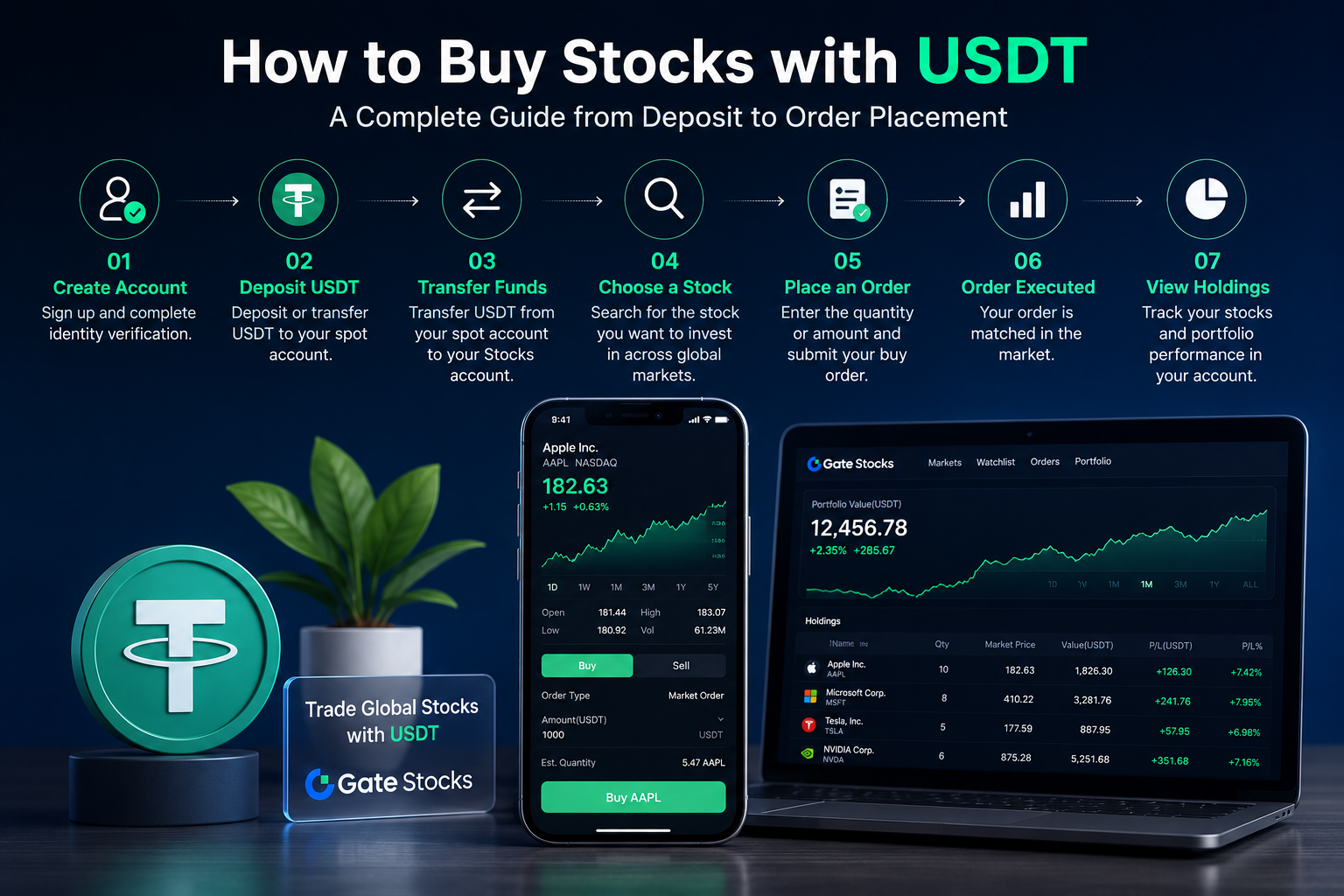
Step 1: Register and Complete Account Verification
Before starting stock trading, users must first register an account on the platform.
After registration, users need to complete the identity verification (KYC) process according to platform requirements. Identity verification is generally required to comply with regulatory standards and ensure the security and compliance of stock trading services.
Step 2: Open a Stocks Trading Account
A stock account is specifically designed to manage stock trading funds and positions.
On Gate Stocks, users can apply to open a Stocks account after completing basic verification. Once approved, they can access the stock market section and browse available tradable assets.
The stock account is separate from the spot account, but funds and assets can be transferred and managed within the unified account system.
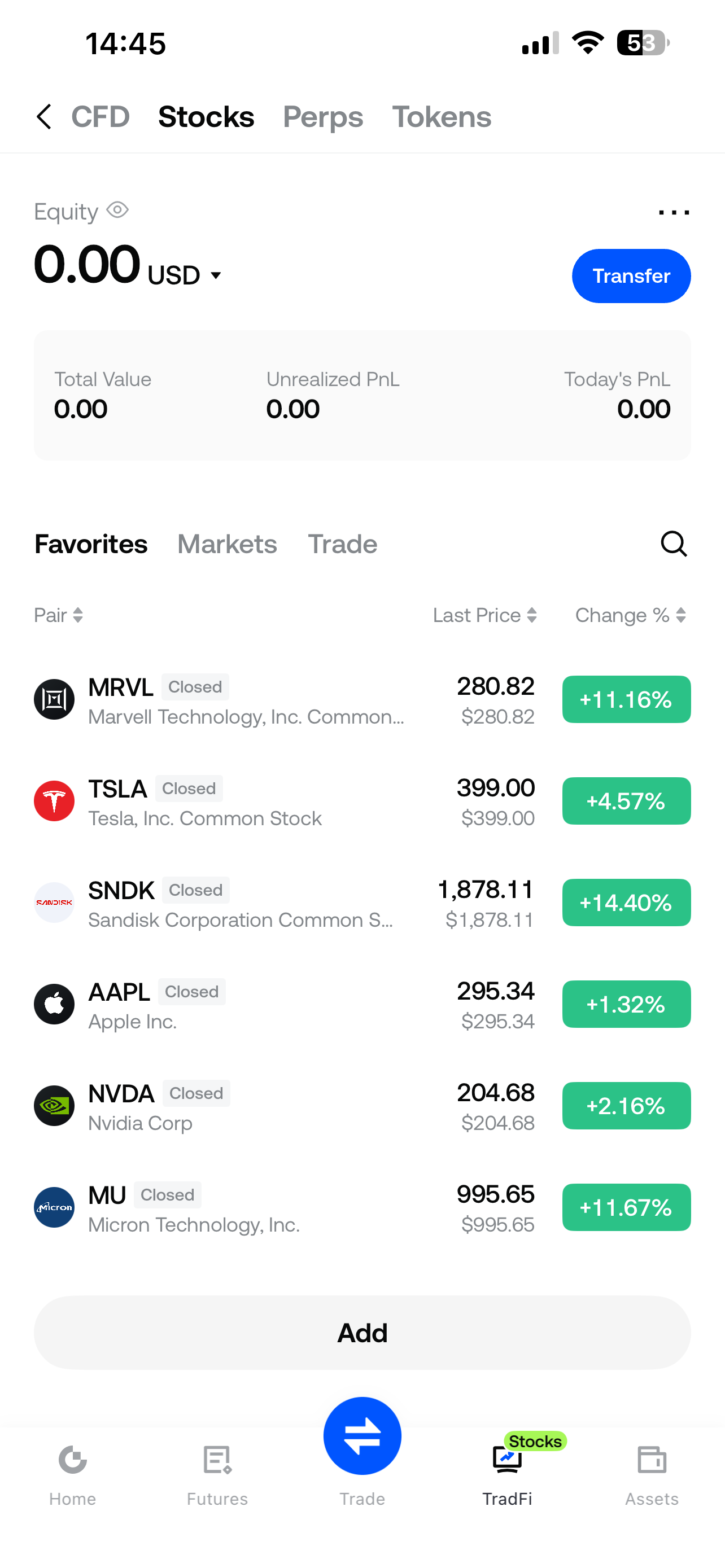
Step 3: Deposit or Hold USDT
Before trading stocks, the account must have available funds.
Users can obtain USDT through supported methods on the platform and store it in their spot account. As a key funding medium for stock trading, USDT will be used to prepare funds for the stock account.
After the deposit is completed, users can check their account balance on the asset page.
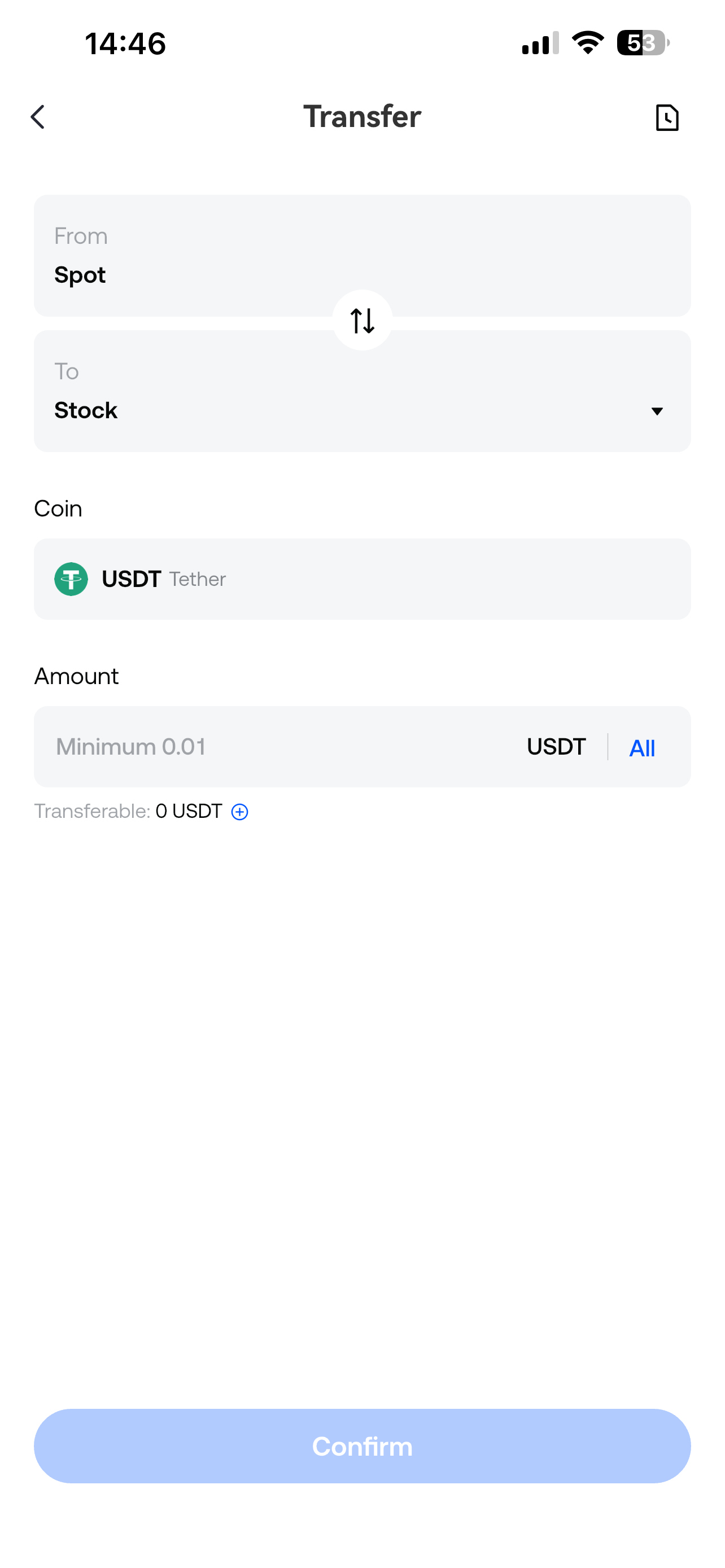
Step 4: Transfer USDT to the Stock Account
Once funds are prepared, users need to transfer USDT from their spot account to their Stocks account.
This transfer is usually completed through the platform’s account management page. After the funds arrive, the stock account balance will display the amount available for stock trading.
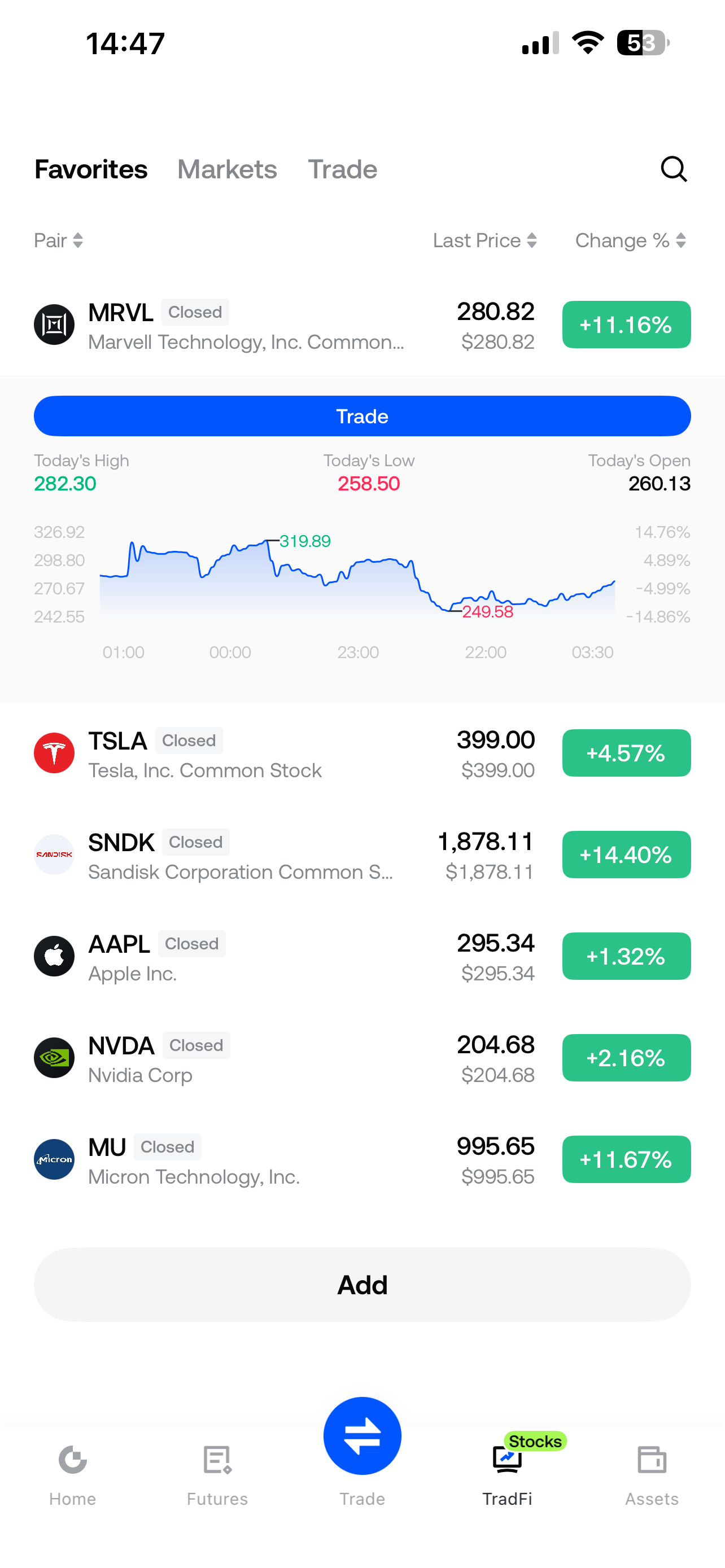
Step 5: Search for the Stocks You Want to Buy
After entering Gate Stocks, users can browse stocks across different markets.
For example:
U.S. Stock Market
-
Apple
-
Microsoft
-
NVIDIA
-
Amazon
Hong Kong Stock Market
-
Tencent Holdings
-
Alibaba Group
-
Xiaomi Corporation
-
Meituan
South Korean Stock Market (Coming Soon)
-
Samsung Electronics
-
SK Hynix
-
Hyundai Motor
Users can search for target assets by stock name, ticker symbol, or industry category.
Step 6: Submit a Stock Buy Order
After finding the target stock, users can enter the stock details page to view relevant information.
This includes the current price, historical performance, market data, and trading options. After entering the intended purchase quantity or amount, the system will display the order details, including the estimated transaction value. Once everything is confirmed, the order can be submitted.
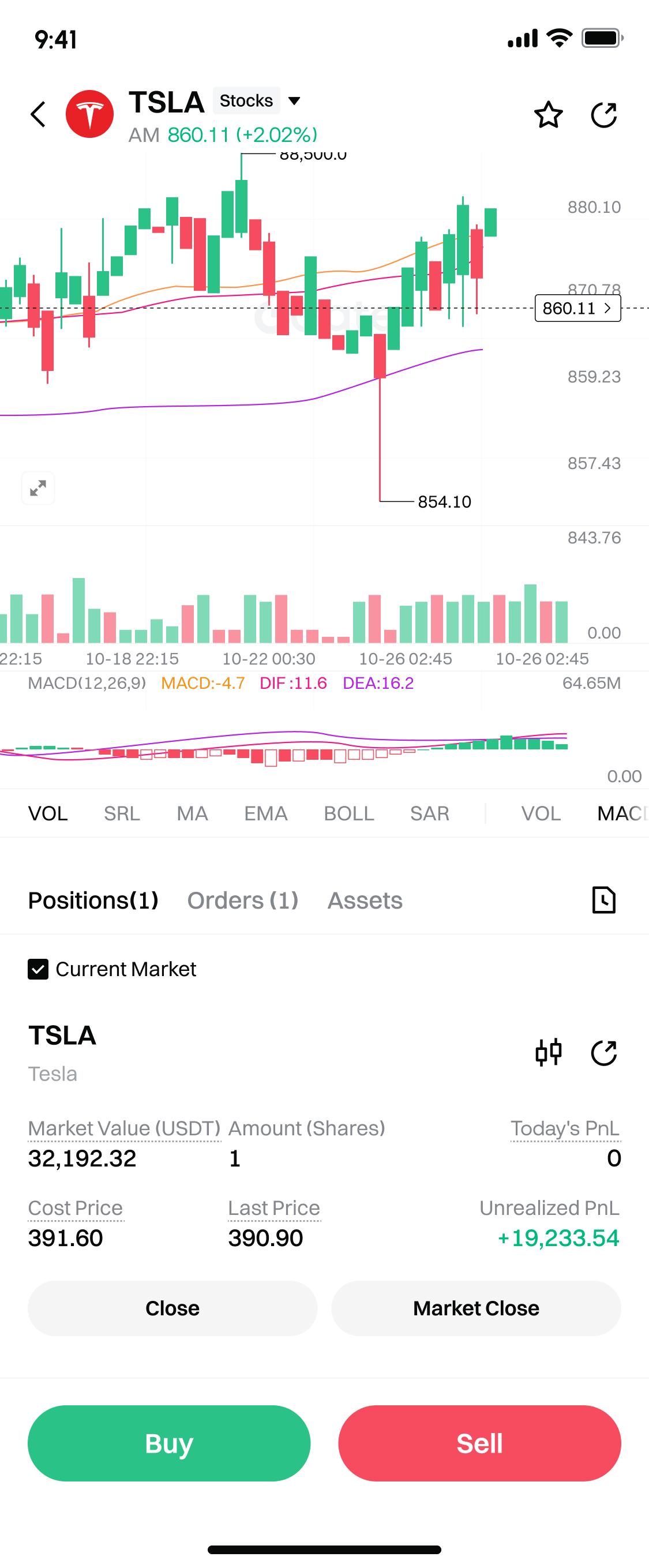
Step 7: Review Order Execution and Holdings
After an order is executed, the stock assets will be recorded in the Stocks account.
Users can view their holdings, number of shares, current market value, historical orders, and account performance on the holdings page. The unified account system allows users to monitor both digital assets and stock assets simultaneously.
What Is the Process for Selling Stocks?
The selling process is generally similar to the buying process.
Users can go to the holdings page, select the stock they wish to sell, and submit a sell order. Once the order is executed, the funds will be returned to the stock account balance.
Depending on platform rules, users may continue holding the funds, purchase other stocks, or carry out further fund management activities.
What Are the Advantages of Investing in Stocks with USDT?
Unified Account Management
Manage digital assets and stock assets within a single account.
Access to Global Markets
Gain exposure to U.S. stocks, Hong Kong stocks, and other international markets.
Stablecoin-Based Funding
Reduce the need for cross-border remittances and multiple currency conversions.
Global Asset Allocation
Help build a more diversified investment portfolio.
What Risks Should Be Considered When Buying Stocks with USDT?
Stock investing inherently involves market risk.
Investors should pay attention to stock price volatility, industry cycle risks, global economic changes, exchange rate and policy risks, as well as market liquidity risks. In addition, both digital asset markets and traditional capital markets may be affected by macroeconomic conditions. Therefore, investors should allocate assets according to their own risk tolerance.
How Does Buying Stocks with USDT Differ from Traditional Brokerage Investing?
| Comparison Category |
Buying Stocks with USDT |
Traditional Brokerage Investing |
| Funding Source |
USDT |
Bank Account |
| Deposit Method |
Digital Asset Transfer |
Bank Transfer |
| Account Management |
Unified Account |
Multiple Accounts |
| Global Asset Allocation |
Digital Assets + Stocks |
Primarily Stocks |
| Operational Process |
Highly Digitalized |
Traditional Financial Procedures |
Conclusion
By buying stocks with USDT, users can connect their digital asset accounts with global stock markets and complete the entire investment process—from deposits, account activation, and fund transfers to stock trading and portfolio management. Gate Stocks provides a unified account system that enables investors to participate more conveniently in Hong Kong stocks, U.S. stocks, and future international stock markets.
FAQs
Can USDT Be Used Directly to Buy Stocks?
USDT can be used as a funding source for stock trading. After opening a stock account and transferring funds, users can trade in supported stock markets.
Do I Need a Bank Account to Buy Stocks with USDT?
Specific requirements depend on platform rules. For users who already hold digital assets, USDT can serve as an important funding medium for accessing stock markets.
Can I Use USDT to Buy U.S. Stocks and Hong Kong Stocks?
Yes. Gate Stocks supports trading U.S. stocks and Hong Kong stocks using USDT and is gradually expanding access to additional international markets.
Where Are My Assets Stored After Purchasing Stocks?
After execution, stock assets are recorded in the Stocks account, where users can view and manage them through the holdings page.
Where Do the Funds Go After Selling Stocks?
After a sell order is executed, the funds are typically returned to the stock account balance. Specific rules are subject to the platform’s actual operating mechanism.