How GDX Works: A Clear Guide to the Gold Miners ETF and Its Market Drivers

Last Updated 2026-05-28 03:52:55
Reading Time: 6m
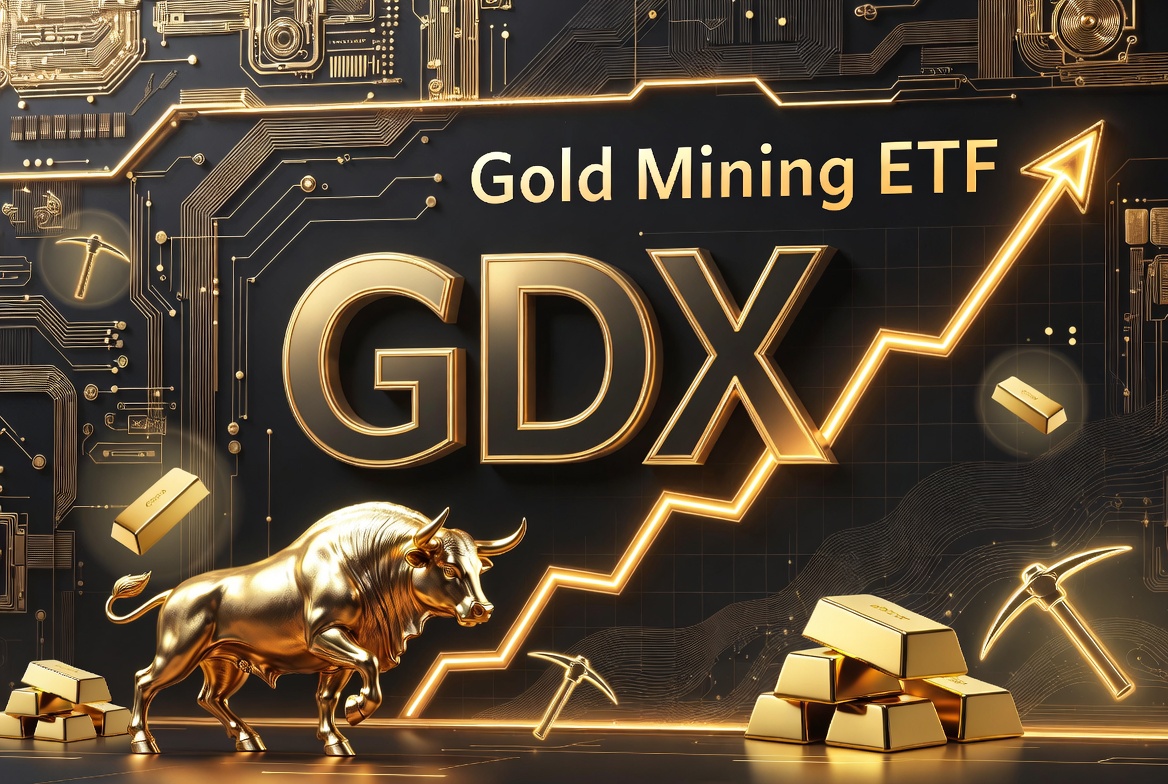
GDX is an ETF that tracks the performance of the gold industry by holding shares of gold mining companies. Unlike direct investment in gold, GDX places greater emphasis on the relationship between mining companies’ profitability, resource reserves, and fluctuations in the gold market.

The core logic of a gold miners ETF is to use mining companies as a “profit amplifier” for changes in gold prices. When gold prices rise, some mining companies may see their profits grow by an even larger margin. As a result, GDX often fluctuates more sharply than gold itself.

GDX’s market performance is influenced not only by gold prices, but also by the stock market, energy costs, global interest rates, and safe haven sentiment. For that reason, GDX has characteristics of both a gold asset and an equity asset.

GDX

What Is GDX’s Core Role

GDX’s core role is to provide the market with a concentrated investment vehicle for global gold mining companies.

Structurally, GDX does not hold gold directly. Instead, it holds shares of large gold mining companies. As a result, GDX is closer to a gold industry equity index.

First, the fund screens gold mining companies according to index rules.

Next, the ETF allocates holdings based on market capitalization and liquidity.

Then, changes in mining company share prices affect the ETF’s net asset value.

Ultimately, GDX becomes an important industry ETF linking the gold market and the stock market.

This structure means that GDX is usually more volatile than physical gold.

Why Does GDX Track Gold Mining Companies

GDX tracks gold mining companies mainly because mining company profits are usually closely tied to gold prices.

Gold mining companies generate most of their revenue from gold sales, so rising gold prices usually improve their profit margins.

First, mining companies continuously carry out gold extraction and production.

Next, gold enters the global market for sale after refining.

Then, gold sales revenue affects corporate cash flow and profitability.

Finally, the market adjusts mining company valuations based on earnings expectations.

Because GDX holds a large number of gold mining stocks, the ETF usually fluctuates as gold prices change.

This mechanism means that GDX is more like a “basket of gold industry stocks.”

How GDX’s Holdings Structure Is Formed

GDX’s holdings structure is mainly built around large global gold mining companies.

Large gold producers usually have more stable mine reserves and production capacity, so they tend to account for a higher weight in the ETF.

First, the index provider screens gold mining companies that meet the eligibility criteria.

Next, the fund allocates holdings based on market capitalization, industry characteristics, and liquidity.

Then, the ETF regularly adjusts its constituent weightings to maintain effective index tracking.

The table below shows common holding structures in GDX:

Holding Type Main Features
Large gold mining companies Stable production
Global mine operators Geographic diversification
Mid-sized mining companies Higher volatility
Gold mine developers Clear growth characteristics

This structure means that GDX is closer to a global gold mining industry index.

How the Revenue Model of Gold Mining Companies Works

The revenue model of gold mining companies is essentially based on the difference between gold sales revenue and extraction costs.

Mining companies must continuously invest in equipment, labor, energy, and mine maintenance, so their profitability is affected by their cost structure.

First, mining companies obtain gold resources through mine extraction.

Next, gold enters the sales process after processing and refining.

Then, gold sales revenue is reduced by extraction costs and operating costs.

Finally, the remaining amount becomes corporate profit.

This mechanism means that when gold prices rise, mining company profits may often be amplified.

For example, when gold prices rise, some mining companies may see profit growth that exceeds the increase in the gold price.

How Changes in Gold Prices Affect GDX Volatility

Changes in gold prices directly affect GDX volatility because the profitability of gold mining companies depends heavily on market gold prices.

First, higher gold prices increase mining companies’ sales revenue.

Next, if energy and operating costs remain stable, mining company profit margins usually expand.

Then, the market reassesses mining companies’ future profitability.

Finally, rising mining company share prices drive changes in GDX’s net asset value.

However, when the gold market declines, mining company profit margins may also shrink quickly.

This structure means that GDX often amplifies fluctuations in the gold market.

As a result, GDX is usually viewed as an industry ETF with a certain “gold leverage characteristic.”

How GDX Differs From a Gold ETF

The biggest difference between GDX and a gold ETF lies in the underlying assets.

Gold ETFs usually hold gold directly, while GDX holds shares of gold mining companies.

First, gold ETFs focus more on changes in the gold price itself.

Next, in addition to being affected by gold prices, GDX is also influenced by the stock market and company operations.

Then, operational risks at mining companies can also affect GDX volatility. Examples include mine accidents, policy changes, and rising energy costs.

The table below shows the main differences between GDX and gold ETFs:

Comparison Dimension GDX Gold ETF
Underlying asset Mining stocks Gold
Volatility Higher Relatively lower
Source of return Corporate earnings Gold price changes
Stock market influence Significant Weaker

Therefore, GDX is more of a gold industry equity investment tool.

What Are the Main Use Cases for GDX

GDX’s main use cases usually center on gold trading, safe haven markets, and inflation driven trading phases.

Some traders use GDX to participate in upward moves in the gold market. Because mining company profits often amplify changes in gold prices, GDX may be more volatile than gold itself.

Safe haven markets are also an important use case for GDX. During periods of rising global economic risk, gold and gold miners ETFs usually attract market attention.

Some institutional investors also use GDX for sector allocation. Gold mining companies are generally seen as an important part of resource related assets.

At the same time, some multi-asset trading platforms have also begun offering CFD products related to gold ETFs. Products such as Gate CFD, launched by Gate, are gradually expanding digital asset platforms’ coverage of gold, ETFs, and global market assets.

However, it is important to note that GDX itself is already a high volatility industry ETF. If it is further combined with leverage or a CFD structure, overall market risk usually rises as well.

Summary

GDX is one of the world’s most representative gold miners ETFs. It mainly reflects changes in the gold industry by holding shares of gold mining companies.

Unlike directly holding gold, GDX places greater emphasis on mining companies’ profitability, production structure, and stock market volatility. As a result, GDX’s market volatility is usually higher than that of gold itself.

Gold prices, movements in the U.S. dollar, global interest rates, and safe haven sentiment all continue to affect GDX’s market structure and capital flows.

FAQs

What Is GDX?

GDX is a gold miners ETF that mainly holds shares of global gold mining companies and is used to reflect the overall performance of the gold mining industry.

Why Does GDX Move With Gold Prices?

Gold mining companies generate most of their revenue from gold sales, so changes in gold prices usually affect mining company profits and stock prices.

What Is the Difference Between GDX and a Gold ETF?

Gold ETFs usually track gold prices directly, while GDX holds shares of mining companies. As a result, it is also affected by company operations and the stock market.

Why Is GDX Usually More Volatile Than Gold?

Mining company profits are amplified by changes in gold prices, so GDX often fluctuates more sharply than gold itself.

Is GDX a High Risk ETF?

GDX is an industry ETF that is affected by both the gold market and the stock market, so its volatility is usually higher than that of ordinary index ETFs.

Author: Juniper
Translator: Jared
Disclaimer
* The information is not intended to be and does not constitute financial advice or any other recommendation of any sort offered or endorsed by Gate.
* This article may not be reproduced, transmitted or copied without referencing Gate. Contravention is an infringement of Copyright Act and may be subject to legal action.

Related Articles

How Does PAXG Work? In-Depth Overview of the Physical Gold Tokenization Mechanism
Beginner

How Does PAXG Work? In-Depth Overview of the Physical Gold Tokenization Mechanism

PAXG (Pax Gold) is a tokenized asset backed by physical gold, issued by the fintech company Paxos and traded on the Ethereum blockchain as an ERC-20 token. The core concept is to tokenize physical gold on-chain, with each PAXG token representing ownership of a certain amount of gold. This structure enables investors to hold and trade gold in the form of a digital asset.
2026-03-24 19:12:51
How is the price of PAXG determined? Pegging mechanism, trading depth, and influencing factors
Beginner

How is the price of PAXG determined? Pegging mechanism, trading depth, and influencing factors

PAXG (Pax Gold) is a tokenized asset backed by physical gold reserves, launched by fintech firm Paxos and issued as an ERC-20 token on the Ethereum blockchain. The core concept is to digitally represent real-world gold assets, allowing investors to hold and trade gold via the blockchain network. Because each PAXG token corresponds to a specific quantity of physical gold, its price is theoretically expected to closely track the global gold market.
2026-03-24 19:11:40
Gate Research: 2024 Cryptocurrency Market  Review and 2025 Trend Forecast
Advanced

Gate Research: 2024 Cryptocurrency Market Review and 2025 Trend Forecast

This report provides a comprehensive analysis of the past year's market performance and future development trends from four key perspectives: market overview, popular ecosystems, trending sectors, and future trend predictions. In 2024, the total cryptocurrency market capitalization reached an all-time high, with Bitcoin surpassing $100,000 for the first time. On-chain Real World Assets (RWA) and the artificial intelligence sector experienced rapid growth, becoming major drivers of market expansion. Additionally, the global regulatory landscape has gradually become clearer, laying a solid foundation for market development in 2025.
2026-03-24 11:56:16
What Are the Risks of TSLA? Understanding Tesla’s Competitive Landscape and Investment Challenges
Intermediate

What Are the Risks of TSLA? Understanding Tesla’s Competitive Landscape and Investment Challenges

The main investment risks of TSLA come from intensifying industry competition, pricing pressure, swings in profitability, and changes in market valuation. As one of the global leaders in the new energy vehicle industry, Tesla has strong brand and technology advantages, but it still faces mounting competition from both traditional automakers and emerging EV brands. When evaluating TSLA, investors should pay close attention to Tesla’s market share, margin trends, technological progress, and the broader market environment in order to form a more complete view of its long-term investment value and risk.
2026-04-21 06:59:56
GoldFinger Use Cases in DeFi: How Gold Assets Enter the On-chain Financial System
Beginner

GoldFinger Use Cases in DeFi: How Gold Assets Enter the On-chain Financial System

Through asset tokenization and a Proof of Reserve mechanism, GoldFinger brings gold into the DeFi ecosystem, allowing it to take part in on-chain financial activity as collateral, a liquidity tool, and a component of yield strategies. Once tokenized, gold assets such as ART can function as collateral, liquidity instruments, and building blocks in yield strategies across lending markets, decentralized exchanges, and structured returns, turning a traditional store of value into composable on-chain financial infrastructure.
2026-04-15 03:47:31
How Does GoldFinger Work? Gold Asset Tokenization, Proof of Reserve, and on-chain Circulation Explained
Beginner

How Does GoldFinger Work? Gold Asset Tokenization, Proof of Reserve, and on-chain Circulation Explained

GoldFinger operates through a process that includes asset custody, Proof of Reserve, token minting, and on-chain circulation. By placing physical gold within a compliant custody framework and mapping it on-chain through ART tokens, GoldFinger turns gold into a digital, programmable asset. At the same time, its Proof of Reserve mechanism ensures that on-chain tokens correspond to the underlying assets, supporting trading, collateralization, and redemption in DeFi scenarios.
2026-04-15 03:01:54