In multi-game environments, assets are typically locked within a single system, preventing users from bringing them into other games. This limitation fragments asset value and reduces overall resource efficiency. The emergence of cross-game asset mechanisms addresses this issue by enabling assets to circulate across environments.
This process generally involves three stages: asset creation, protocol processing, and cross-system usage. Together, these stages form a complete flow.
What Is Nexira’s Cross-Game Asset Mechanism
Nexira centers its cross-game asset mechanism on building an “asset middleware layer” that exists independently of any specific game. This layer abstracts assets from different games into a unified structure, allowing them to be recognized and used across systems.
At the mechanism level, once assets enter the protocol, their original attributes are mapped into standardized data, including type, scarcity, and value relationships. This mapping allows assets to be identified across systems without relying on their original game logic.
Structurally, the mechanism consists of three key components: the asset mapping layer, the value conversion layer, and the application interface layer. The mapping layer standardizes representation, the value conversion layer establishes exchange relationships, and the interface layer introduces assets into the target game.
This design transforms assets from “in-game objects” into “protocol-level resources,” enabling cross-system circulation.
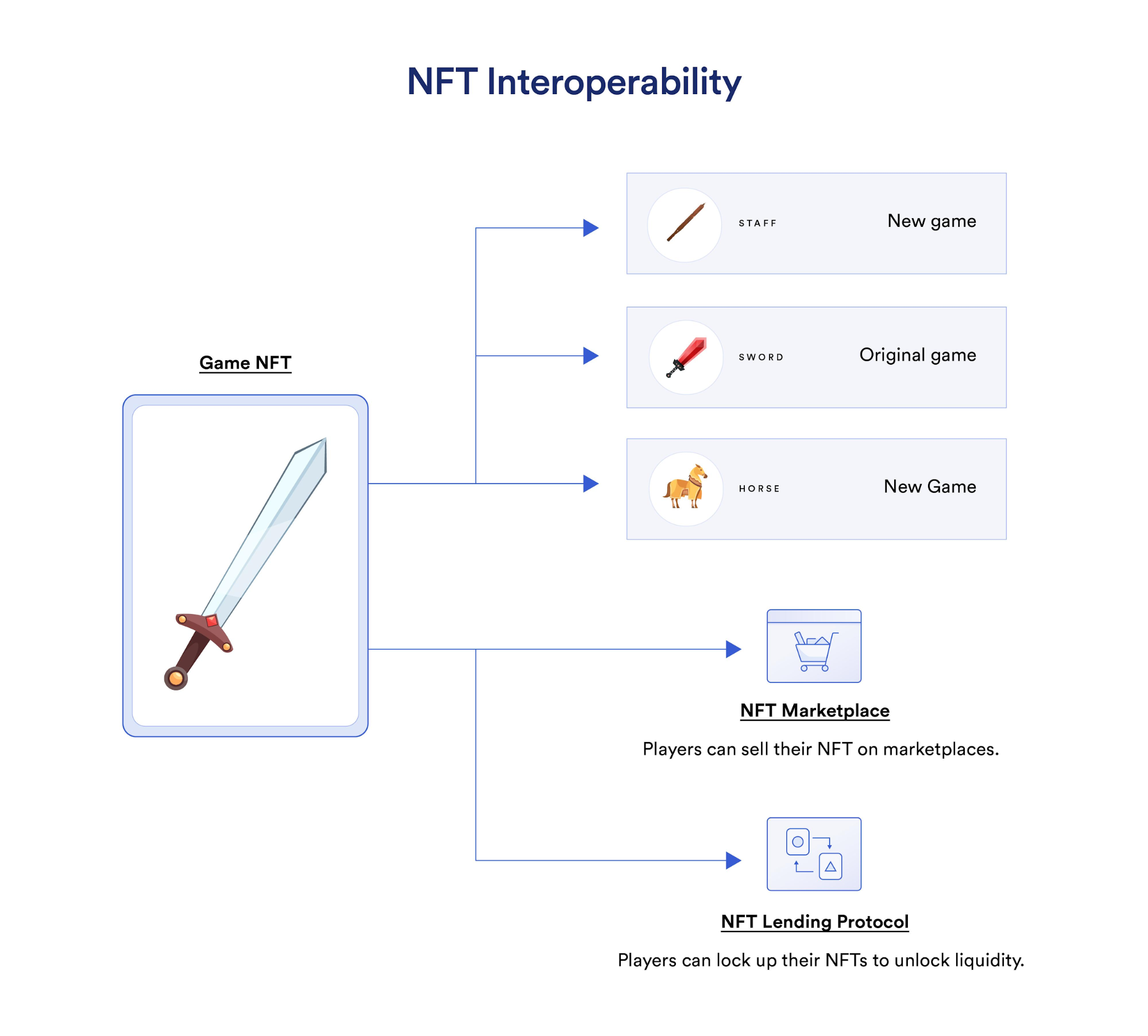
How Users Generate and Hold Assets in Games
Assets typically originate within specific game environments, where they are created according to the game’s rules. For example, items, equipment, or NFTs are generated within the game and assigned to player accounts.
In on-chain systems, these assets are usually recorded as digital assets with ownership properties. This means players can not only use them but also transfer or trade them.
From a structural perspective, once created, assets carry two layers of information: in-game logic, such as functionality and attributes, and on-chain identifiers, such as ownership and ID. This dual-layer structure provides the foundation for entering the protocol later.
This stage is critical because it determines whether an asset can be abstracted and used across systems.
How Assets Enter the Nexira Trading and Protocol Layer
When users want to enable cross-game circulation, assets must move from the game environment into the protocol layer. This is typically achieved through asset locking or mapping.
During this process, the original asset may be locked in its native system while a corresponding representation is created within the protocol. This ensures the asset cannot be used twice while preserving its value relationship.
Structurally, this process relies on smart contracts or protocol interfaces. These interfaces receive asset data and convert it into a standardized format, allowing it to enter a unified asset pool.
The key here is “asset abstraction,” converting assets from different sources into objects that can be handled within a unified system.
How Assets Circulate Between Games Through Ruby
During cross-game circulation, Ruby acts as a unified unit of account.
Once assets enter the protocol, their value is typically expressed in Ruby, allowing different assets to be compared and exchanged. This unified pricing mechanism avoids conflicts between value systems across games.
In practice, assets are first converted into a Ruby-denominated value, then transformed into the appropriate asset form based on the rules of the target game. This process resembles cross-market trading using an intermediary currency.
Ruby ensures continuity and predictability in asset flow, improving overall efficiency.
What Happens Internally During Cross-Game Usage
When an asset is used in a target game, the system performs a series of internal processes to ensure proper recognition and application.
First, the protocol layer transmits asset data to the target game’s interface, where it is adapted according to that game’s rules. The asset is then mapped into a recognizable object within the game, such as an item or resource.
Throughout this process, the asset’s original value and attributes must remain consistent while adapting to the logic of the target system. This is typically achieved through standardized interfaces and rule-based transformations.
These internal mechanisms ensure that assets retain functional consistency across different environments, enabling true cross-game usability.
Differences Between Cross-Game Asset Mechanisms and Traditional NFT Trading
| Dimension |
Traditional NFT Trading |
Nexira Cross-Game Asset Mechanism |
| Core Function |
Asset buying and selling |
Asset circulation and usage |
| Scope of Use |
Single platform or ecosystem |
Multi-game environments |
| Asset State |
Static holding |
Dynamic flow |
| Value Realization |
Through trading |
Through usage and circulation |
| System Structure |
Market-driven |
Protocol-driven |
This comparison shows that traditional NFT trading focuses on asset exchange, while cross-game mechanisms emphasize usability across systems. The two address different problems, one prioritizes liquidity, the other usability.
Key Constraints and Conditions in Cross-Game Asset Flow
Although this mechanism enables cross-system circulation, its implementation is still subject to several constraints.
First, compatibility between games directly affects how assets can be used. If the target game does not support the protocol, the asset cannot be utilized.
Second, differences in asset attributes may create adaptation challenges. For instance, similar asset types may be defined differently across games, affecting how they function.
In addition, system security and rule design are critical. Safeguards must ensure that assets are not duplicated or tampered with during circulation.
These limitations highlight that cross-game asset mechanisms are not purely technical, they also require coordination and standardized rules across systems.
Summary
Nexira’s cross-game asset mechanism builds a unified asset framework at the protocol layer, allowing assets from different games to circulate and function across multiple environments.
From asset creation to protocol processing and cross-system application, the mechanism forms a complete pipeline, transforming assets from single-application resources into cross-ecosystem resources.
FAQ
How are cross-game assets implemented?
Through protocol-layer mapping and transformation, enabling assets to be recognized and used across different systems.
Why is Ruby needed in the process?
Because different assets require a unified unit of account, Ruby establishes value relationships.
Can assets be transferred directly from one game to another?
Typically, they must pass through the protocol layer rather than being transferred directly.
How does this differ from NFT trading?
NFT trading focuses on buying and selling, while cross-game mechanisms focus on asset usage and circulation.
Can all games support cross-game assets?
This depends on whether they integrate the relevant protocol and support system compatibility.







